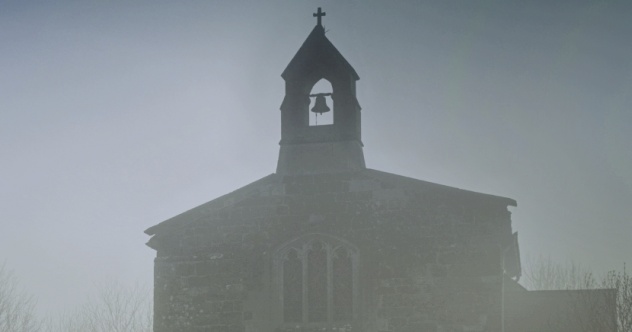
Note: The ghost stories below are presented as folklore, local legend, and travel-history storytellingnot as proven paranormal fact. Bring curiosity, respect the sacred spaces, and maybe do not whisper “show yourself” in a crypt unless you enjoy instant regret.
Where Sacred Architecture Meets Spooky Folklore
Churches and cathedrals were built to lift the human spirit upwardstone by stone, bell by bell, stained-glass window by stained-glass window. Yet some of the world’s most beautiful sacred places also come with ghost stories that cling to the arches like candle smoke. Maybe it is the age. Maybe it is the silence. Maybe it is the fact that old churches often sit beside graveyards, crypts, battlefields, and centuries of human drama. Whatever the reason, haunted churches and cathedrals have become irresistible destinations for travelers who like their history with a goosebump garnish.
This list of the top 10 haunted churches and cathedrals blends real history with famous legends. You will find colonial churches, Gothic cathedrals, shadowy crypts, folklore icons, mysterious windows, and one famous footprint that allegedly belongs to the worst contractor in supernatural history: the Devil himself. These places are not just “spooky” in the cheap plastic-skeleton sense. They are architectural time capsules where faith, grief, war, memory, and local imagination have braided together over generations.
1. St. Louis Cathedral – New Orleans, Louisiana
The haunted heart of the French Quarter
Few haunted cathedrals have a better stage than St. Louis Cathedral in New Orleans. Rising over Jackson Square with its triple spires, it looks like the city’s spiritual lighthouseif lighthouses were surrounded by jazz, tarot readers, artists, and the smell of beignets. The site has been central to New Orleans since the colonial era, and the present cathedral remains one of the most recognizable religious landmarks in the United States.
The most famous ghost associated with the cathedral is Père Antoine, the beloved Capuchin friar who served the city for decades. Local legend says his spirit still appears near the altar, in the balcony, and around the nearby alley that bears his name. Some stories also mention Père Dagobert, another early priest, whose ghost is said to walk the aisles with quiet dignity. In a city where history never seems fully buried, St. Louis Cathedral feels less like a building and more like a witness with perfect posture.
Why it ranks high: the combination of colonial history, French Quarter atmosphere, famous priestly legends, and active sacred use makes St. Louis Cathedral one of America’s essential haunted church stories.
2. San Fernando Cathedral – San Antonio, Texas
Shadows, old burials, and Alamo-era echoes
Founded in 1731, San Fernando Cathedral is one of the oldest continuously functioning religious communities in Texas. It stands in downtown San Antonio like a stone memory book, holding layers of Spanish colonial history, Texas Revolution lore, civic ceremony, and modern worship. By day, it is elegant and welcoming. By night, especially around Main Plaza, it becomes the kind of place where even skeptics check over their shoulder and then pretend they were just admiring the architecture.
Ghost stories here often focus on shadowy figures, mysterious faces, and strange lights in photographs. Some legends connect the hauntings to burials associated with the cathedral’s long history. Others lean into the dramatic presence of the Alamo era, including the sarcophagus said to contain remains of Alamo defenders. Whether one believes the stories or not, the cathedral has the perfect haunted ingredients: deep history, sacred ritual, old stone, and a city that knows how to tell a story with a straight face and a raised eyebrow.
Why it ranks high: San Fernando Cathedral blends documented antiquity with powerful regional legend, making it a must-know site for anyone researching haunted churches in America.
3. Old North Church – Boston, Massachusetts
Revolutionary history above, crypts below
Old North Church is best known for the “one if by land, two if by sea” signal linked to Paul Revere’s ride. That alone would earn it a permanent seat at the American history table. But beneath the sanctuary lies another story: a crypt containing the remains of more than 1,100 people. Suddenly the phrase “historic church tour” starts carrying a little more emotional weight.
The crypt includes tombs associated with early congregants, clergy, and notable figures from colonial Boston. While Old North is not primarily marketed as a ghost factory, its after-hours crypt tours and centuries-old burial practices give it a naturally eerie presence. Visitors descend from the bright, patriotic story of the Revolution into the quieter reality of mortality, memory, and old Boston customs. It is not theatrical horror. It is the kind of haunting that comes from realizing how close the past isliterally under your feet.
Why it ranks high: Old North Church proves that a place does not need jump scares to be spooky. Sometimes all it needs is a crypt, candlelit history, and 300 years of silence.
4. Holy Name Cathedral – Chicago, Illinois
Phantom gunshots and Prohibition-era shadows
Holy Name Cathedral is the seat of the Archdiocese of Chicago, a grand Gothic Revival landmark completed in the 19th century. It is also tied to one of Chicago’s most infamous gangster-era stories. In 1926, North Side gang leader Earl “Hymie” Weiss was killed across the street during the Prohibition violence that made Chicago’s underworld nationally notorious. According to the cathedral’s own historical timeline, Fr. Bernard J. Sheil conditionally anointed Weiss on the cathedral steps.
The ghost lore centers on phantom gunshots reportedly heard near the cathedral and the lingering presence of Weiss. Some stories also point to marks on the cathedral exterior associated with bullets from the event, although modern accounts carefully distinguish between real damage, later repairs, and urban myth. That tension makes Holy Name especially interesting: it is not just a haunted cathedral story, but a case study in how documented crime history becomes local legend.
Why it ranks high: few churches connect sacred architecture, big-city history, and gangster folklore as dramatically as Holy Name Cathedral.
5. St. Philip’s Church – Charleston, South Carolina
The mourning ghost of the churchyard
Charleston does atmosphere the way some cities do traffic: constantly and with commitment. St. Philip’s Church, one of the city’s most historic religious sites, sits among old streets, iron gates, and graveyards that feel designed for whispered stories. The present church dates to the 19th century, while the congregation’s roots reach much deeper into Charleston’s colonial past.
The best-known ghost story here is the mourning spirit of Sue Howard Hardy. Local legend says a mysterious figure appeared in a photograph taken in St. Philip’s graveyard in 1987, bent near a child’s grave. The story is tied to the grief of a young mother and child from the late 19th century, and it has become one of Charleston’s classic ghost tales. The tale works because it is not loud. It is sorrowful, visual, and strangely intimatethe kind of ghost story that asks for hush rather than screams.
Why it ranks high: St. Philip’s combines Charleston’s old-world beauty with one of the South’s most emotionally memorable churchyard legends.
6. St. Mary of the Seven Sorrows – Nashville, Tennessee
A former cathedral with Civil War echoes
St. Mary of the Seven Sorrows is Nashville’s oldest standing church structure, completed in the 1840s and once serving as the city’s cathedral. Its Greek Revival design is calm and dignified, but the stories attached to it are anything but ordinary. During the Civil War, the building was used as a hospital, and local history notes that hundreds of soldiers died there during that period.
Ghost stories often mention phantom clergy, spectral worshippers, and strange sensations in the sanctuary. One of the church’s most unusual historical details involves Bishop Richard Pius Miles, the first Catholic Bishop of Nashville, whose body was discovered in a notably preserved condition when moved during 20th-century renovations. That detail has fueled plenty of spooky retellings, though the real significance is historical and religious rather than horror-movie dramatic.
Why it ranks high: St. Mary’s has the rare mix of former cathedral status, Civil War history, sacred continuity, and ghostly parish folklore.
7. Old Dutch Church – Sleepy Hollow, New York
The churchyard that helped launch an American ghost legend
The Old Dutch Church of Sleepy Hollow may be the most literary haunted church in the United States. Founded around 1685, it appears in Washington Irving’s “The Legend of Sleepy Hollow,” the 1820 tale that helped define American ghost fiction. The church and its old burying ground sit in the landscape forever associated with Ichabod Crane, the Headless Horseman, and the kind of autumn fog that deserves its own agent.
Unlike many haunted locations, the Old Dutch Church does not need to invent atmosphere. Its connection to Irving’s story gives it cultural power that renews every Halloween season. Visitors come for the Headless Horseman legend, but the site itself also offers colonial history, early Dutch architecture, and a churchyard that feels suspended between literature and reality. The result is a rare haunted church where the ghost is partly folklore, partly fiction, and partly national tradition.
Why it ranks high: no list of haunted churches would be complete without the real churchyard behind one of America’s most famous ghost stories.
8. Greyfriars Kirk – Edinburgh, Scotland
The kirkyard of the Mackenzie Poltergeist
Greyfriars Kirk and its surrounding kirkyard are among Edinburgh’s most atmospheric sites. The burial ground dates to the 16th century and is associated with major moments in Scottish religious and political history, including the Covenanters. It is also home to the story of Greyfriars Bobby, the loyal dog whose statue has become one of Edinburgh’s most photographed landmarks.
But the darker legend belongs to the Mackenzie Poltergeist, said to be connected with the tomb of Sir George Mackenzie. Ghost tours have long included tales of strange sensations, cold spots, and unsettling encounters around the Black Mausoleum and Covenanters’ Prison area. The site’s reputation has grown so large that Greyfriars is now a centerpiece of haunted Edinburgh tourism. It is a place where history already feels heavy, even before the ghost stories show up wearing dramatic cloaks.
Why it ranks high: Greyfriars offers one of Europe’s most famous churchyard hauntings, layered with real religious conflict, old monuments, and Edinburgh’s famously gothic mood.
9. St. Mary the Virgin – Clophill, England
A ruined church with an unsettling reputation
St. Mary the Virgin in Clophill is not a polished cathedral with velvet ropes and postcard lighting. It is a roofless medieval ruin on a hill, and that is exactly why its reputation feels so powerful. The old church, likely dating in major part to the 14th century, was abandoned after a replacement church was built closer to the village center in the 19th century.
Over time, the ruin became associated with rumors of hauntings, alleged occult activity, and graveyard vandalism, especially in the 20th century. One detail often repeated is that the church appears unusually oriented compared with traditional church layouts, which has fed local speculation and spooky storytelling. Today, the site is protected and should be treated as a historic ruin, not a playground for midnight dares. In other words: admire the atmosphere, do not become the reason signs get stricter.
Why it ranks high: Clophill’s ruined setting, unusual orientation, and long-standing local legends make it one of England’s most talked-about haunted church sites.
10. St. Michan’s Church – Dublin, Ireland
Crypts, mummies, and the chill of preservation
St. Michan’s Church in Dublin has roots reaching back to the medieval period, with the current structure largely dating to the late 17th century. Its most famous feature has long been the underground vaults, where environmental conditions naturally preserved some remains over the centuries. The result made St. Michan’s one of Dublin’s most unusual and eerie church attractions.
The haunting reputation here comes less from a single named ghost and more from the total experience: narrow stairs, old vaults, preserved remains, and the sense that time has not passed normally underground. Recent damage to the crypt and its historic remains has also reminded visitors that these places are not spooky props; they are fragile heritage sites. The real lesson of St. Michan’s is that dark tourism should come with respect. Take the tour, listen carefully, and leave everything exactly where history placed it.
Why it ranks high: few haunted churches combine medieval roots, crypt tours, preservation science, and chilling atmosphere quite like St. Michan’s.
What Makes Churches and Cathedrals Feel Haunted?
Haunted churches are powerful because they combine beauty with vulnerability. A cathedral is designed to make people look upward, but its history often pulls them backward. Every stone has outlived generations of worshippers. Every bell has rung through weddings, funerals, wars, fires, epidemics, renovations, and ordinary Tuesdays when someone probably complained about the pews.
There is also the architecture. Gothic arches create shadows that move as the light changes. Stained glass can turn a quiet room red, blue, or gold in a way that feels almost supernatural. Crypts and graveyards add another layer, reminding visitors that churches were not separate from death in earlier centuries. They were where communities gathered to mourn, remember, and make meaning.
Finally, haunted church stories survive because they often express unresolved emotion. A phantom priest may represent devotion. A churchyard woman may represent grief. A Headless Horseman may embody war, fear, and local identity. These stories are less about proving ghosts exist and more about showing how communities remember what they cannot fully explain.
Extra Experiences: Visiting Haunted Churches and Cathedrals Like a Smart Traveler
Visiting haunted churches and cathedrals is not like visiting a theme park haunted house. There is no fog machine operator named Brad hiding behind the altar with a Bluetooth speaker. These are sacred, historic, and sometimes still-active places of worship. The best experience comes from balancing curiosity with respect.
Start by visiting during official hours. Many haunted church legends become tempting after dark, but nighttime trespassing is not brave; it is just a fast way to meet local security, and they are rarely impressed by “I was researching vibes” as a legal argument. If a church offers approved crypt tours, cemetery walks, or historical programs, choose those. You will usually get better stories, safer access, and details you would never find by wandering around with your phone flashlight at 11 p.m.
Pay attention to sound. Old churches have acoustic personalities. A footstep may echo like three people walking. A door may sigh because of air pressure, not because an 18th-century monk has opinions about your sneakers. That does not make the experience less fun. In fact, part of the magic is learning how buildings create mystery. Stone, wood, temperature, wind, and distance can all collaborate like a very dramatic orchestra.
Photography can be rewarding, but be thoughtful. In graveyards, do not climb, lean on monuments, move objects, or treat graves like Halloween props. If you photograph a churchyard, frame it as heritage, not as a jump-scare backdrop. The best haunted travel content respects the people connected to the site. A little dignity goes a long way, especially when the location is literally full of memorials.
For a richer experience, read the history before you go. Knowing who worshipped there, what conflicts touched the site, why the architecture matters, and how the legend developed makes the visit much more memorable. Suddenly a “spooky old church” becomes a layered cultural landmark. You are not just hunting ghostsyou are tracking memory.
Finally, leave room for ambiguity. Maybe the cold spot is a draft. Maybe the photo blur is dust. Maybe the strange feeling in the crypt is your perfectly reasonable nervous system saying, “Friend, we are underground with centuries of history and I would like a snack.” Haunted churches work best when you do not force belief or disbelief too hard. Let the stories breathe. Let the bells ring. Let the old stones do what they do best: make modern people feel wonderfully small.
Conclusion
The world’s most haunted churches and cathedrals are not merely spooky attractions. They are places where architecture, belief, history, loss, and folklore meet under one roofor, in Clophill’s case, under no roof at all. From the priestly legends of St. Louis Cathedral to the crypts beneath Old North Church, from Sleepy Hollow’s literary churchyard to the eerie vaults of St. Michan’s, these sites remind us that ghost stories are often history wearing a long black coat.
Whether you are a paranormal enthusiast, a history lover, a dark-tourism traveler, or just someone who enjoys a good goosebump with their Gothic arches, haunted churches offer more than chills. They invite us to listen carefully to the past. And if the floor creaks while you are listening? Well, obviously it is the building settling. Probably. Almost certainly. Let’s move along.