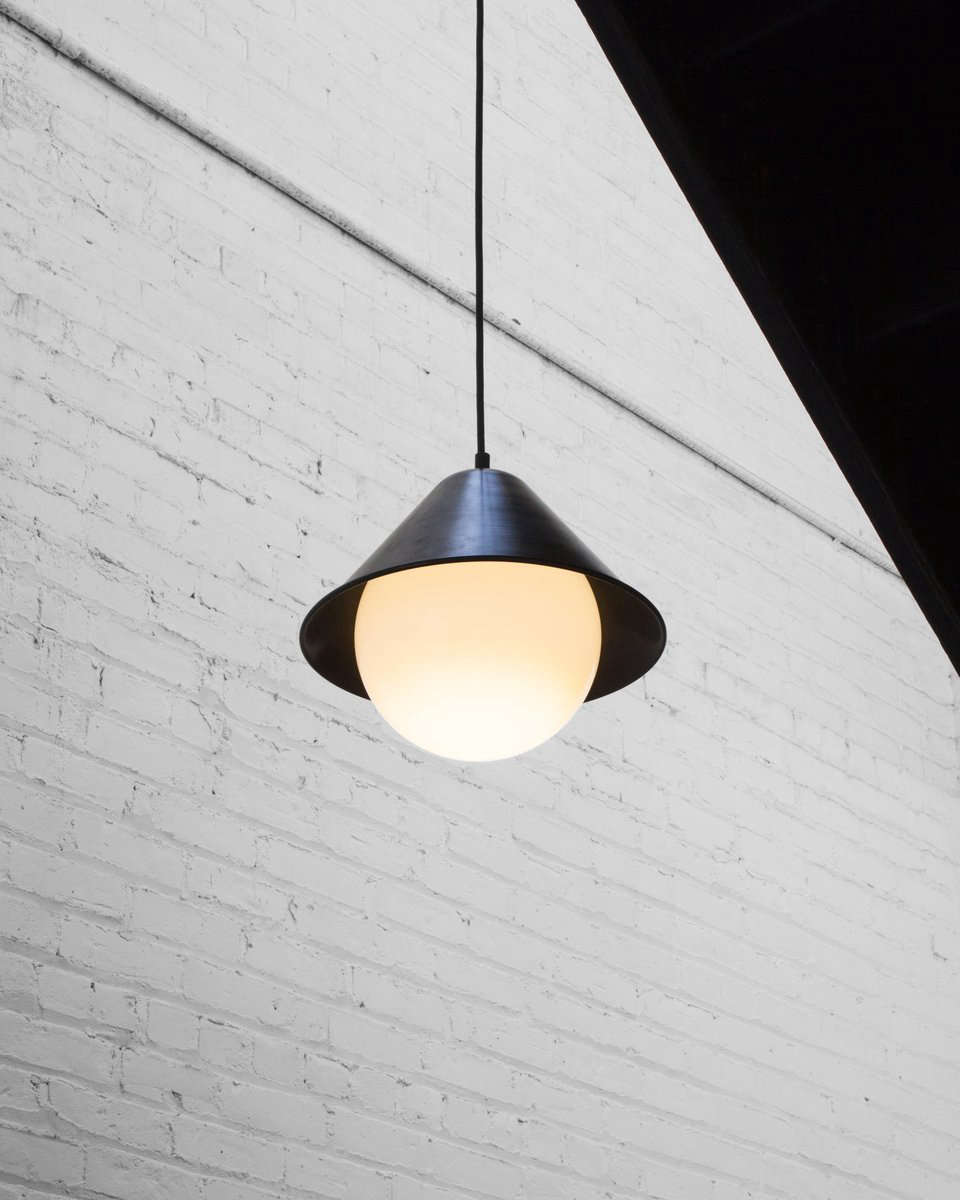
Some light fixtures politely illuminate a room. Others walk in wearing a tailored jacket, say “good evening,” and make your kitchen island look like it finally hired a stylist. The Tipi Pendant – Brushed Steel belongs to the second group. It is clean, sculptural, practical, and just shiny enough to feel special without turning your ceiling into a disco ball. That is a rare achievement. Many metallic pendants try too hard; this one understands the assignment.
At its heart, a brushed steel pendant light is about balance. It brings the cool confidence of metal, the visual softness of a satin finish, and the architectural shape that makes a room feel designed rather than merely decorated. The word “Tipi” hints at a tapered, shelter-like silhouette: simple, grounded, and quietly geometric. In a world full of oversized chandeliers, smoky glass globes, and fixtures that look like they require their own insurance policy, the Tipi Pendant keeps things refreshingly focused.
This article explores what makes the Tipi Pendant in brushed steel appealing, where it works best, how to style it, what to consider before buying or installing it, and how it behaves in real homes where people cook pasta, open mail, forget where they put the tape measure, and occasionally stare at the ceiling wondering whether the lighting is “too cold.” Spoiler: with the right bulb, dimmer, and placement, this pendant can be the calm metallic punctuation mark your space has been waiting for.
What Is the Tipi Pendant in Brushed Steel?
The Tipi Pendant – Brushed Steel is best understood as a modern metal pendant light with a tapered profile and a refined satin-like surface. Unlike polished chrome, which reflects everything from cabinet hardware to your questionable late-night snack choices, brushed steel has a more forgiving texture. Its fine linear grain softens reflections, hides minor fingerprints better than mirror finishes, and gives the fixture a professional, architectural look.
In design terms, brushed steel sits between industrial and minimalist. It has enough edge to work in lofts, modern kitchens, and office spaces, but it is not so severe that it refuses to coexist with wood, stone, linen, ceramic tile, or warm paint colors. Think of it as the lighting equivalent of a crisp white shirt: simple, versatile, and somehow always appropriate.
Why the Brushed Steel Finish Matters
Finish is not just a cosmetic detail. It changes how a pendant light interacts with the entire room. Brushed steel reflects light softly instead of sharply, which helps prevent glare and visual clutter. In open-plan interiors, this matters because every surface is already competing for attention: countertops, appliances, cabinet pulls, faucets, stools, tile, artwork, and probably one heroic fruit bowl trying to look casual.
A brushed steel pendant pairs naturally with stainless steel appliances, nickel hardware, matte black accents, concrete counters, pale oak, walnut, marble, quartz, and white or dark cabinetry. It also makes a strong bridge between warm and cool elements. If your kitchen has stainless appliances but warm wood floors, the pendant can tie the two worlds together instead of making the room feel like it cannot decide whether it is a cabin or a laboratory.
Design Personality: Minimal, Modern, and Surprisingly Friendly
The Tipi Pendant has a shape that feels compact but expressive. Its tapered shade gives it direction and intention, which is especially useful over counters, dining tables, reading corners, and work surfaces. A cone-like or tent-inspired form naturally draws the eye downward, helping define the area beneath it. That is why pendant lighting is so effective over islands and tables: it does not simply add brightness; it marks a zone.
In a kitchen, one Tipi Pendant can create a focused pool of light over a small island or breakfast nook. Two can create symmetry over a medium island. Three can produce that polished magazine-photo effect, assuming you also removed the cereal boxes before taking the picture. In dining areas, a single pendant can look intimate and intentional, especially when centered over a round or square table.
Where This Pendant Works Best
The brushed steel Tipi Pendant is especially useful in spaces that need a little structure without visual heaviness. It works well in:
- Kitchen islands: The classic location for pendant lights because it combines task lighting, decorative impact, and everyday practicality.
- Dining nooks: A brushed steel pendant can modernize a small eating area without overwhelming it.
- Home offices: Its focused shape makes it useful above desks or compact work zones.
- Entryways: A single pendant can add a clean first impression, especially in homes with modern or transitional design.
- Bedrooms: Used as bedside pendants, it can free up nightstand space and make the room feel custom.
- Retail or hospitality spaces: Brushed metal pendants are durable-looking, stylish, and easy to coordinate across repeated installations.
How to Style the Tipi Pendant – Brushed Steel
Styling a brushed steel pendant is mostly about contrast. Metal looks best when it has something softer nearby. Pair it with oak shelves, woven counter stools, ceramic dishes, linen curtains, plaster walls, honed stone, or a muted rug. This keeps the room from feeling too sterile. Nobody wants a kitchen that looks like it might ask you to sign a liability waiver before making toast.
Modern Kitchen Styling
For a modern kitchen, pair the Tipi Pendant with flat-panel cabinets, slab backsplashes, quartz countertops, and simple hardware. Brushed steel looks excellent with white, charcoal, navy, sage, black, and natural wood finishes. If the kitchen already has stainless steel appliances, the pendant will feel coordinated without being matchy-matchy.
Use warm-white bulbs to keep the space inviting. Around 2700K creates a cozy glow, while 3000K feels slightly cleaner and more task-friendly. For kitchens, many homeowners prefer 3000K because it helps with food prep while still avoiding the icy, dentist-office effect. Your salad should look fresh, not clinically inspected.
Industrial and Loft Styling
In industrial spaces, brushed steel feels right at home with exposed brick, black window frames, concrete floors, open shelving, and leather seating. The key is to avoid going too heavy with metal everywhere. If the pendant, stools, shelves, table legs, faucet, and bar cart are all screaming “factory chic,” the room may start to feel like it has a time clock near the pantry.
Balance the steel with wood and warm textures. A walnut table, vintage rug, or handmade tile backsplash can make the pendant feel curated rather than cold.
Transitional and Soft Contemporary Styling
Brushed steel is not limited to ultra-modern rooms. In transitional interiors, it can sharpen classic elements like shaker cabinets, marble counters, framed art, and upholstered seating. The contrast between traditional details and a clean metal pendant often feels fresh and expensive, even when the rest of the room is powered by smart shopping and emotional support coffee.
Choosing the Right Size and Placement
Even the most beautiful pendant can look awkward if it is hung too high, too low, too close to another pendant, or directly in the path of a tall person’s forehead. Placement matters. A lot.
Over a Kitchen Island
A common guideline is to hang pendant lights about 30 to 36 inches above the countertop. This usually provides enough clearance for sightlines while keeping the light close enough to be useful. If the pendant hangs too high, it can feel disconnected. If it hangs too low, it becomes less “design feature” and more “ceiling-based obstacle course.”
For spacing, pendants are often placed around 24 to 36 inches apart, depending on fixture size and island length. Smaller pendants can be grouped more closely, while larger pendants need room to breathe. If you are using multiple Tipi Pendants, center the group over the island rather than pushing each fixture toward the ends. Balanced spacing looks intentional; random spacing looks like math gave up halfway through.
Over a Dining Table
Above a dining table, the bottom of the pendant typically sits around 30 to 36 inches above the tabletop. The goal is to create intimacy without blocking faces. Dinner conversation is difficult when your pendant is visually sitting in the mashed potatoes.
A single Tipi Pendant can work beautifully over a small table. For a longer rectangular table, consider two fixtures or a larger linear lighting plan. The pendant should relate to the table’s proportions, not fight them.
In Open Spaces
In living rooms, foyers, and bedrooms, clearance becomes more important. If people will walk under the fixture, leave enough headroom. A general approach is to keep the bottom of the pendant at least around seven feet from the floor in traffic areas. Over furniture, you can hang it lower because nobody is supposed to stroll through the coffee table, although pets may disagree.
Light Quality: Bulbs, Brightness, and Dimmers
The fixture is only half the story. The bulb determines whether your brushed steel pendant glows like a boutique hotel or blasts the room like an interrogation scene. Look for LED bulbs with the right brightness, color temperature, and dimming compatibility.
Color Temperature
For most homes, 2700K to 3000K is the sweet spot. A 2700K bulb feels warm, relaxed, and evening-friendly. A 3000K bulb feels slightly brighter and cleaner, making it useful for kitchens, work areas, and bathrooms. Anything much cooler can make brushed steel look bluish and clinical, which may be fine for a surgical suite but not ideal for taco night.
Brightness and Lumens
Instead of thinking only about wattage, pay attention to lumens. Lumens measure brightness. A pendant over a task surface should provide useful light without glare. If the Tipi Pendant has a more directional shade, it may concentrate light downward, so you may need fewer lumens than you would with a fully diffused globe. However, if the room relies heavily on the pendant for general illumination, choose a bulb bright enough to support the space or combine it with recessed, under-cabinet, or wall lighting.
Dimmers Are Worth It
A dimmer switch is one of the easiest upgrades you can make. Bright light is useful when chopping vegetables, reading labels, or locating the tiny screw you dropped during installation. Softer light is better for dinner, conversation, and pretending the kitchen is clean even when one pan is “soaking” for the third day. Make sure the bulb and dimmer are compatible to avoid flickering.
Installation Considerations
Pendant lighting often requires hardwiring, a junction box, correct ceiling support, and safe electrical connections. If you are replacing an existing pendant, the project may be straightforward. If you are adding a new fixture location, moving a ceiling box, or installing multiple pendants, it is wise to hire a qualified electrician. Electricity is wonderful in lights and deeply rude everywhere else.
Before installation, confirm the pendant’s mounting type, cord or rod length, canopy size, bulb requirements, maximum wattage, and whether it is rated for the room where you plan to use it. For bathrooms, laundry rooms, covered porches, or humid areas, look for the appropriate damp or wet location rating. A dry-rated fixture should stay in dry interior spaces.
Care and Maintenance for Brushed Steel
Brushed steel is easier to live with than polished metal, but it still benefits from gentle cleaning. Use a soft microfiber cloth for dusting. For smudges, lightly dampen the cloth with water and wipe with the direction of the grain. Avoid abrasive pads, harsh cleaners, ammonia-heavy products, and anything that sounds like it belongs in a garage rather than near a pendant light.
If the pendant has a diffuser or glass component, clean it according to the manufacturer’s instructions. Always turn off the power before removing parts or changing bulbs. This is less glamorous than styling advice, but it is significantly better than learning electrical safety through interpretive dance.
Pros and Cons of the Tipi Pendant – Brushed Steel
Pros
- Timeless finish: Brushed steel works with many design styles and is less trendy than high-shine metallics.
- Great coordination: It pairs well with stainless appliances, nickel hardware, black accents, and natural materials.
- Soft reflectivity: The brushed surface reduces harsh reflections compared with polished chrome.
- Architectural shape: The tapered Tipi-inspired form adds structure without looking bulky.
- Flexible placement: It can work over islands, tables, desks, bedsides, and entry areas.
Cons
- Can feel cool: Without warm bulbs or natural textures nearby, brushed steel may look too cold.
- Needs proper placement: Height and spacing mistakes are noticeable with minimalist fixtures.
- May show grain direction: Cleaning against the brushed pattern can create streaks.
- Not always enough alone: In kitchens, pendant lighting usually works best as part of a layered lighting plan.
How It Compares with Other Pendant Finishes
Compared with matte black, brushed steel feels lighter and more reflective. Matte black is dramatic and graphic, but it can dominate a small space. Brushed steel is quieter and more adaptable.
Compared with brass, brushed steel is cooler and more contemporary. Brass brings warmth and vintage charm; steel brings precision and crispness. If your room already has warm wood and beige tones, steel can provide needed contrast. If your room is mostly gray and white, brass may add warmth more easily.
Compared with polished chrome, brushed steel is more subtle. Chrome is shiny, glamorous, and sometimes a little needy. Brushed steel has confidence without requiring applause.
Buying Checklist
Before choosing a Tipi Pendant in brushed steel, review the following details:
- Measure the ceiling height and surface height before deciding cord length.
- Confirm whether the fixture is hardwired, plug-in, surface-mounted, or adjustable.
- Check bulb base type, wattage limit, LED compatibility, and dimming support.
- Look for safety certifications and location ratings suitable for the room.
- Consider how the brushed steel finish will coordinate with appliances, faucets, cabinet hardware, and furniture legs.
- Plan lighting layers so the pendant is not responsible for doing every job in the room.
- Order finish samples when possible, especially if matching other metals closely matters.
Real-Life Experience with the Tipi Pendant – Brushed Steel
Living with a brushed steel Tipi Pendant is a little different from admiring one in a styled product photo. In real life, the fixture becomes part of the daily rhythm of the room. It is there in the morning when coffee is technically brewing but emotionally not fast enough. It is there at night when the kitchen lights are dimmed, the counters are mostly clear, and the whole house finally exhales.
The first thing people tend to notice is how quietly polished the pendant makes a room feel. It does not need a wild shape or oversized scale to get attention. The brushed steel finish catches light in a soft, linear way, so the fixture changes slightly throughout the day. In morning light, it may look cool and crisp. Under warm bulbs in the evening, it becomes gentler and more atmospheric. That flexibility is one of its best qualities.
In a kitchen, the Tipi Pendant feels especially useful when hung over an island where people naturally gather. The downward shape helps define the island as a destination. It says, “This is where the chopping happens, the homework happens, the snacks happen, and occasionally the serious conversation about why we bought three kinds of mustard happens.” With two or three pendants in a row, the island can feel more finished even if no other major renovation has occurred.
One practical experience worth mentioning is that brushed steel is forgiving, but not magical. Fingerprints and dust can still appear, especially near installation day when everyone seems compelled to touch the fixture as if confirming that metal is, indeed, metal. A microfiber cloth usually solves the problem quickly. The key is not to overclean it. Aggressive scrubbing can make the finish look uneven. Gentle care keeps the pendant handsome without turning maintenance into a weekend hobby.
Another real-world lesson is that bulb choice can completely change the mood. A cool bulb may make the pendant look sleek but slightly harsh, especially in white kitchens. A warm or soft-white LED usually makes the fixture feel more residential and welcoming. A dimmer adds even more control. Bright mode is excellent for food prep; low mode is perfect for dinner, late-night tea, or creating the illusion that you are the sort of person who always has fresh flowers on the counter.
For renters or homeowners working with a modest design budget, a pendant like this can deliver a surprisingly strong visual upgrade. Lighting sits at eye level more often than people realize. You may not touch the ceiling every day, but you see the fixture constantly. Swapping a generic builder-grade pendant for a brushed steel design can make cabinets, counters, and furniture look more intentional. It is the home-design version of getting a good haircut: technically only one thing changed, but suddenly everything else looks better.
The Tipi Pendant also works well because it does not lock the room into a single trend. If you later change cabinet hardware from nickel to black, add wood shelves, paint the island green, or replace stools with leather seats, brushed steel can adapt. That makes it a smart choice for people who like modern design but do not want to redecorate every time the internet discovers a new “must-have” finish.
Overall, the experience of using the Tipi Pendant – Brushed Steel is about subtle improvement. It makes a room feel calmer, cleaner, and more deliberate. It is not loud. It is not fussy. It does not arrive wearing feathers and demanding a feature wall. It simply adds form, focus, and a refined metallic note exactly where the room needs it.
Conclusion
The Tipi Pendant – Brushed Steel is a strong choice for anyone who wants modern pendant lighting with restraint, versatility, and architectural character. Its brushed steel finish coordinates beautifully with contemporary kitchens, transitional dining areas, loft-style interiors, and compact workspaces. Its tapered shape gives it focus, while its satin-metal surface keeps the look sophisticated rather than flashy.
To get the best result, treat the pendant as part of a complete lighting plan. Hang it at the right height, space multiple fixtures carefully, choose warm or neutral LED bulbs, and add dimming when possible. Pair the steel with wood, stone, fabric, or warm paint to create balance. With those details in place, this pendant can do what good lighting always does: make the room more useful, more beautiful, and slightly more flattering to everyone standing under it.
Note: This article is based on synthesized real-world lighting design principles, pendant placement guidelines, finish-care practices, and modern interior styling considerations. Product specifications, availability, electrical ratings, and installation requirements should always be verified with the seller or manufacturer before purchase or installation.