Some cats enter the world with a grand announcement: a healthy squeak, a wobbly stretch, and the instant confidence of a tiny landlord. Fedya, a gray rescue cat from Russia with a famously wide-eyed, cross-eyed expression, did not get that kind of beginning. His start was fragile, uncertain, and heartbreakingly quiet. Born to a stray mother cat named Lisa, he was weak, underdeveloped, and so ill that his future looked painfully short.
Yet Fedya’s story became one of those rare animal rescue stories that reminds people why hope keeps showing up in the least convenient places. He almost did not survive, but a caring family refused to give up on him. Then another cat, a neighbor’s young male named Handsome, stepped in as an unlikely adoptive father. Together, human care and feline affection helped a sick kitten grow into a beloved internet personality.
Today, Fedya is known for his unusual face, surprised-looking eyes, gentle personality, and slightly cartoonish charm. But behind the viral photos is a deeper story about orphaned kittens, special needs cats, responsible rescue, and the power of patient care.
The Fragile Beginning of a Unique-Looking Cat
Fedya was one of two kittens born to Lisa, a stray cat who had found shelter near the home of Natalya Zhdanova. One kitten appeared healthy. Fedya, however, was noticeably different. He was weak, sick, and slow to develop. Soon after giving birth, Lisa died, leaving the kittens without the warmth, milk, and cleaning care that newborn kittens need around the clock.
For a neonatal kitten, losing a mother is not just sad; it can be life-threatening. Newborn kittens cannot regulate their body temperature well, cannot eat solid food, and often need help eliminating waste. Without a nursing mother or a skilled caregiver, a tiny kitten can decline quickly. Fedya’s condition made that danger even more serious.
His rescuers did what good rescuers do: they paid attention. They noticed that he needed help, brought him into care, and nursed him through the dangerous early stage. That meant warmth, feeding, monitoring, and patience. It also meant living with uncertainty, because no one knew exactly why Fedya looked and developed differently.
Why Fedya’s Face Captured the Internet
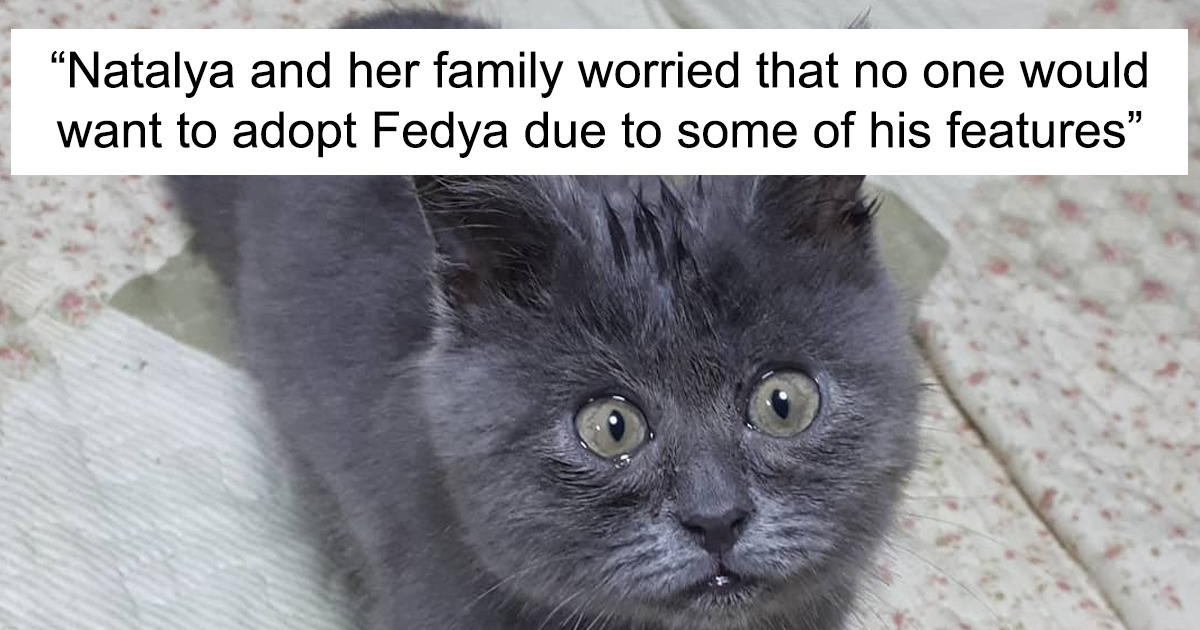
Fedya’s most recognizable feature is his face. His round gray head, yellow eyes, and permanently startled expression make him look like he just overheard the vacuum cleaner making weekend plans. Many people describe him as cross-eyed, cartoon-like, or delightfully confused. The look is memorable, but it is not just a meme. It may be connected to early illness, developmental differences, a genetic condition, or a neurological issue, though his family has said no genetic testing confirmed a specific cause.
In cats, crossed eyes can sometimes be linked to strabismus, a condition in which the eyes do not align in the same direction. In some cats, this is congenital and does not prevent them from living comfortable lives. In others, sudden eye misalignment, wobbliness, head tilt, or coordination problems can indicate a medical concern that deserves veterinary care. The important lesson is simple: adorable should never replace medical attention.
Fedya’s appearance made him famous, but his survival made him meaningful. People did not fall in love with him simply because he looked funny. They loved him because he was a reminder that animals with unusual features are not broken decorations. They are living beings with needs, personalities, routines, preferences, and, in Fedya’s case, a talent for looking mildly scandalized by everyday life.
The Adoptive Father Cat Who Changed Everything
One of the most touching parts of Fedya’s story is the role played by Handsome, also known as Krasavchik. Handsome was a neighbor’s cat who began visiting Natalya’s home. When he noticed Fedya, he did something remarkable: he cared for him. He cleaned him, stayed close to him, and behaved like an adoptive father.
Male cats are not usually famous for stepping into kitten-care roles, at least not in the way mother cats are. Many adult cats need slow introductions to kittens, and some prefer to keep their royal distance. Handsome did the opposite. He bonded with Fedya, and the two became inseparable. His presence likely gave Fedya comfort, social contact, and a model for normal cat behavior.
That relationship matters because kittens learn from other cats. They learn boundaries, grooming habits, play behavior, and confidence. A caring companion can help a vulnerable kitten feel safe. Handsome did not perform veterinary miracles, but he offered something medicine cannot bottle: companionship with whiskers.
What Fedya’s Rescue Teaches About Orphaned Kittens
Do Not Rush to “Rescue” Every Outdoor Kitten
One important lesson from kitten welfare groups is that not every outdoor kitten has been abandoned. Sometimes the mother cat is nearby, hunting or hiding from people. Clean, quiet, plump kittens may be under their mother’s care. Dirty, cold, thin, crying kittens, however, may be orphaned or in danger. In those cases, intervention can save lives.
Fedya’s situation was different because his mother had died and he was clearly weak. That made human help essential. For anyone who finds kittens outside, the first step is observation. Look for the mother. Check whether the kittens are warm, clean, and calm. If they seem sick, injured, cold, or abandoned, contact a veterinarian, shelter, or rescue group quickly.
Warmth Comes Before Food
With tiny kittens, people often want to feed immediately. That instinct is kind, but it can be dangerous if the kitten is cold. A chilled kitten may not digest properly. Experienced rescuers focus first on safe warming, then feeding with an appropriate kitten milk replacer. Cow’s milk is not a good substitute and can upset a kitten’s stomach.
Fedya’s survival likely depended on this kind of careful, staged care. Neonatal kittens are not just miniature cats. They are tiny emergency projects wearing fur.
Frequent Feeding and Monitoring Matter
Orphaned newborn kittens may need feeding every two to three hours, including overnight. They also need to be weighed regularly so caregivers can see whether they are gaining. A kitchen scale can become the most dramatic object in the house when a kitten’s life is measured in grams.
Weight gain, hydration, warmth, breathing, stool, appetite, and energy all matter. A kitten who stops eating, cries constantly, feels cold, develops diarrhea, or struggles to breathe needs professional help fast.
Special Needs Cats Are Not “Less Adoptable”
Fedya’s family worried that people might not want to adopt him because of his unusual features. That fear is common in animal rescue. Cats with medical differences, facial differences, missing limbs, one eye, neurological quirks, chronic allergies, or slower development are often overlooked. Yet many special needs cats live joyful, affectionate, funny lives with the right support.
The phrase “special needs” can sound intimidating, but it does not always mean constant crisis. Sometimes it means a cat needs regular checkups, a safer indoor environment, a predictable routine, or small adjustments at home. A cat with coordination challenges may need low-sided litter boxes, stable food dishes, soft landing areas, and fewer high shelves. A cat with vision issues may need furniture kept in consistent places. A cat with allergies may need veterinary management and environmental changes.
What these cats need most is not pity. They need people who see the whole animal, not just the diagnosis or the unusual face. Fedya is not inspiring because he looks different. He is inspiring because he was given the chance to become himself.
Why the Internet Loves Cats Like Fedya
Fedya became popular because the internet has a long-standing weakness for cats with expressive faces. Grumpy cats, surprised cats, sleepy cats, cats who look like they pay taxes, cats who appear to have seen a ghost in the laundry basketthe public cannot resist them. But Fedya’s appeal goes beyond comedy.
His story has emotional layers. There is the tragedy of losing his mother. There is the anxiety of his early illness. There is the kindness of the family that saved him. There is the unexpected sweetness of Handsome, the adoptive father cat. And there is Fedya himself, growing into a gentle, affectionate pet with a face that seems to ask, “You paid how much for that cat tree?”
That combination turns a cute animal post into a rescue story people remember. It gives readers a reason to care, not just scroll.
Responsible Cat Rescue: What People Can Do
Support Foster Programs
Foster caregivers are the quiet heroes behind many kitten survival stories. Shelters can be stressful and crowded, especially during kitten season. Foster homes provide warmth, socialization, feeding, and observation. Even a short-term foster commitment can free shelter space and give young animals a better chance.
Spay and Neuter Community Cats
Fedya’s story also points to a larger issue: unplanned litters. Trap-neuter-return programs for community cats can reduce the number of vulnerable kittens born outdoors. Spaying and neutering owned pets also prevents accidental litters and helps reduce shelter pressure.
Adopt the Cat Others Overlook
When visiting a shelter, it is easy to notice the bold kitten climbing the cage door like a tiny parkour instructor. But the shy cat in the corner, the adult cat with cloudy eyes, or the funny-looking rescue cat may become the most loving companion you have ever had. Ask shelter staff about personality, health, and care needs. They often know which cats are secretly comedians, couch potatoes, or emotional support muffins.
Living With a Unique-Looking Rescue Cat
Caring for a cat with an unusual appearance or medical history begins with a veterinary exam. A veterinarian can check vision, movement, dental health, breathing, allergies, weight, and overall development. From there, the goal is not to “fix” what makes the cat unique. The goal is to make sure the cat is comfortable, healthy, and able to enjoy daily life.
At home, simple changes can help. Keep food and water easy to access. Use soft bedding. Offer gentle play rather than chaotic roughhousing. Provide scratching posts, hiding spots, and safe climbing options. Watch for changes in appetite, litter box habits, grooming, movement, or behavior. Cats are skilled at hiding discomfort, because apparently being mysterious is part of the job description.
Socially, let the cat set the pace. Some rescues become affectionate quickly; others need weeks or months to trust. Fedya’s family described him as kind, affectionate, intelligent, and wonderfully sincere in the way he cuddles. That kind of bond grows from patience, not pressure.
The Deeper Meaning of Fedya’s Survival
Fedya’s story is not just about a cat with a funny face. It is about what happens when someone chooses care over convenience. A weak kitten required time, worry, and effort. A neighbor’s cat formed a bond that no one planned. A family saw value where others might have seen only difficulty.
That is the heart of animal rescue. It is rarely glamorous. It involves laundry, vet visits, late-night feeding, strange noises, and the occasional mystery stain that everyone agrees not to discuss. But it also creates second chances. Fedya’s life became bigger than survival. He became a companion, a social media star, and a small gray ambassador for cats who look different.
Personal Experiences and Reflections Related to Fedya’s Story
Anyone who has spent time around rescued cats knows that the most unforgettable ones are not always the “perfect” ones. They are the cats with a tilted walk, a missing tooth, a suspicious stare, a squeaky meow, or a habit of sleeping in positions that raise serious questions about feline engineering. Fedya’s story feels familiar because rescue animals often arrive with a past written into their bodies. Some are thin. Some are scared. Some look unusual. Some act like they have never been touched gently before.
The first experience many rescuers describe is the fear of doing something wrong. A tiny kitten feels impossibly delicate. Feeding, warming, cleaning, weighing, and watching for danger signs can be stressful. You learn quickly that love is important, but information is just as important. Good intentions need good instructions. That is why rescue groups, veterinarians, and foster networks matter so much. They turn panic into a plan.
Another common experience is the slow miracle of trust. A rescue cat may not understand safety at first. It may hide under furniture, flinch at footsteps, or stare at a food bowl as if expecting it to vanish. Then one day, the cat blinks slowly. Another day, it eats while you are in the room. Later, it sits near you, then beside you, then directly on your keyboard during an important email. Progress is not always dramatic, but it is deeply rewarding.
Fedya’s bond with Handsome also reflects something many cat owners have seen: cats can surprise us with their emotional intelligence. People like to joke that cats are aloof, but anyone who has watched one comfort another animal knows the truth is more complicated. Cats form friendships. They grieve. They teach. They choose favorite humans and favorite sunbeams with equal seriousness. A calm, confident cat can help a nervous one learn that the world is not always dangerous.
Living with a unique-looking cat also changes the way people think about beauty. At first, someone might notice crossed eyes, unusual posture, or a strange expression. After a week, they notice personality. After a month, they cannot imagine the cat looking any other way. The unusual feature becomes part of the charm, like a signature. Fedya’s face may have made strangers stop scrolling, but his sweetness is what made them stay.
There is also a practical lesson: rescue is not only for experts. Not everyone can bottle-feed newborn kittens or manage complex medical cases, and that is okay. People can help by fostering older kittens, donating supplies, sharing adoptable animals, transporting cats to appointments, supporting spay-neuter programs, or adopting adult and special needs cats. Rescue is a team sport, even when the team captain is a six-pound cat sitting in a cardboard box.
Fedya almost did not survive, but his story did more than save one cat. It encouraged people to look again at the vulnerable animal, the odd-looking kitten, the overlooked shelter cat, and the small life that needs extra time. Sometimes survival begins with one person saying, “Let’s try.” Sometimes it continues because another cat decides to help. And sometimes it ends with a once-fragile kitten becoming an internet celebrity whose face says what we are all thinking: life is strange, snacks are important, and love can arrive from the most unexpected direction.
Conclusion
Fedya’s journey from a weak orphaned kitten to a beloved unique-looking cat is more than a feel-good rescue tale. It is a reminder that vulnerable animals often need quick action, patient care, and open hearts. His unusual face made him famous, but the compassion behind his survival is the real story. With help from his human family and his adoptive father cat, Handsome, Fedya became proof that being different does not make a cat less worthy of love. It may simply make the world notice him a little faster.
Note: This article is based on real public reporting about Fedya’s rescue story and reputable animal-welfare and veterinary guidance on orphaned kitten care, special needs cats, and responsible rescue practices.