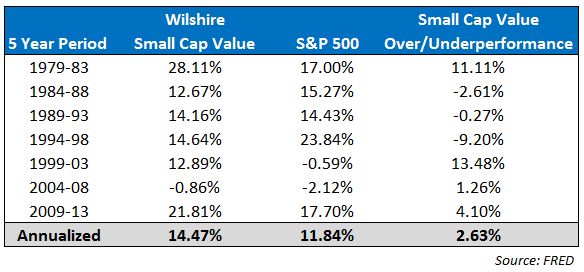
Small-cap value investing has a peculiar talent for becoming popular only after it has already worked. When inexpensive smaller companies are struggling, investors call the strategy outdated. When those same stocks begin climbing, everyone suddenly discovers a lifelong passion for price-to-book ratios.
That emotional U-turn is part of the small cap value cycle: a recurring pattern in which smaller, cheaply valued companies move through long periods of neglect, recovery, enthusiasm, and eventual disappointment. The cycle does not follow a precise schedule, and it rarely sends a polite calendar invitation before changing direction. Still, understanding its underlying forces can help investors avoid the classic mistake of buying after optimism peaks and selling when expected returns may be improving.
What Is Small-Cap Value Investing?
Small-cap value stocks sit at the intersection of two investment characteristics. The first is company size. A small-cap company has a relatively low total market value compared with large corporations. Definitions vary among index providers, so there is no universal dollar cutoff engraved on a stone tablet somewhere on Wall Street.
The second characteristic is value. A value stock trades at a relatively low price compared with one or more business fundamentals, such as earnings, book value, sales, cash flow, or dividends. Some indexes use a single valuation ratio, while others combine several measures to avoid treating one accounting statistic as an all-knowing oracle.
A small-cap value portfolio therefore emphasizes smaller businesses whose shares appear inexpensive relative to their financial fundamentals. The category often includes regional banks, manufacturers, distributors, insurers, homebuilders, transportation companies, energy producers, retailers, and specialized service businesses.
These companies may lack the glamour of a dominant technology platform. Nobody gathers around the office coffee machine to discuss an industrial fastener distributor’s quarterly inventory turnover. Yet boring businesses bought at reasonable prices can produce surprisingly interesting returns.
How Major Indexes Define the Category
The Russell 2000 Value Index selects value-oriented companies from the Russell 2000 small-cap universe. S&P’s small-cap value indexes evaluate companies using measures that may include book value, earnings, and sales relative to price. Morningstar’s style framework considers both valuation and growth characteristics, while MSCI offers indexes that deliberately increase exposure to securities with stronger value scores.
These methodological differences matter. Two funds labeled “small-cap value” may own different companies, carry different sector weights, and behave differently during the same market environment. The label on the package is useful, but the ingredient list remains required reading.
Why a Small Cap Value Premium Might Exist
Academic research has long documented differences in average returns associated with company size and relative price. The Fama–French framework identifies a size factor, commonly described as small stocks minus big stocks, and a value factor, commonly described as high book-to-market stocks minus low book-to-market stocks.
Historical evidence does not prove that small-cap value will outperform during every decade. It does suggest that smaller, lower-priced companies have delivered higher average returns over long samples. Researchers generally offer two broad explanations for that pattern.
1. Investors May Be Compensated for Greater Risk
Small companies tend to have narrower product lines, less access to capital, thinner trading volume, and less predictable earnings than large corporations. Their customers may be concentrated, their management teams may be less experienced, and their balance sheets may have less room for unpleasant surprises.
Value companies often face additional uncertainty. Some are inexpensive because their industries are under pressure. Others have declining profits, excessive debt, weak management, or assets that looked much better in a spreadsheet from three years ago.
Under the risk-based explanation, the higher expected return is compensation for owning companies that are financially and economically uncomfortable. Investors do not receive a premium merely for clicking the “value” filter. They earn it, when it appears, by enduring uncertainty and periods of painful underperformance.
2. Investors May Systematically Misprice Unpopular Companies
The behavioral explanation begins with a familiar observation: people love a good story. Investors may overpay for companies with exciting growth narratives while becoming excessively pessimistic about businesses experiencing temporary problems.
Analysts may extrapolate recent growth too far into the future. Meanwhile, disappointing companies can be priced as though their difficulties will last forever. When reality turns out to be less wonderful for the favorites and less terrible for the neglected stocks, valuations can move back toward more reasonable levels.
Small-cap value stocks are especially vulnerable to neglect because fewer analysts cover them, institutional ownership may be limited, and their business stories rarely dominate financial headlines. That creates potential opportunity, but it also creates a neighborhood filled with genuine value traps. Cheap and good are not synonyms.
The Four Phases of the Small Cap Value Cycle
No two market cycles are identical, but small-cap value performance often moves through four recognizable phases.
Phase One: Neglect and Valuation Compression
The cycle frequently begins with prolonged disappointment. Large growth companies dominate market returns, investors become comfortable paying premium valuations for stability, and smaller businesses struggle with financing costs or weak economic expectations.
Capital flows toward recent winners. Small-value funds experience withdrawals, financial coverage becomes gloomy, and commentators begin asking whether the size and value premiums have permanently disappeared. In finance, “permanently” often means “long enough to make everyone miserable.”
During this phase, valuation gaps can widen. Cheap stocks become cheaper, not necessarily because their fundamentals collapse, but because investors demand a larger discount for uncertainty. That discount may improve future return potential, although it provides no reliable signal about when performance will turn.
Phase Two: Stabilization and Early Recovery
The second phase begins when conditions stop getting worse. Economic data may remain unimpressive, but expectations have already fallen so far that merely avoiding disaster becomes positive news.
Credit conditions can stabilize, earnings estimates may stop declining, and distressed sectors may begin repairing their balance sheets. Interest rates do not always need to fall dramatically. Sometimes the market simply needs confidence that financing pressure is no longer accelerating.
Early recoveries can be sharp because small-value stocks often begin from depressed prices. A regional lender, manufacturer, or homebuilder does not need to become a flawless business. It may only need to prove that bankruptcy is not on next Tuesday’s agenda.
Phase Three: Broadening Participation
As economic confidence improves, market leadership often broadens beyond a handful of dominant large companies. Investors become more willing to own cyclical businesses, domestically focused companies, and firms with operational leverage.
Operational leverage is especially important. A smaller company with high fixed costs can experience rapid profit growth when revenue recovers. Once factories, distribution networks, or administrative systems are in place, additional sales may contribute disproportionately to earnings.
Merger activity may also increase. Larger companies and private equity buyers can view inexpensive public businesses as attractive acquisition targets. Meanwhile, improved liquidity encourages institutions to revisit parts of the market they previously ignored.
Phase Four: Enthusiasm and Deteriorating Discipline
Eventually, the trade becomes fashionable. Fund flows accelerate, valuations expand, and investors begin treating every cheap-looking company as an undiscovered masterpiece.
Quality standards weaken. Businesses with fragile balance sheets are described as “deep value,” even when “deep trouble” might be more accurate. Investors assume recent outperformance will continue indefinitely and increase allocations after much of the valuation advantage has disappeared.
This phase plants the seeds of the next downturn. Higher prices reduce expected returns, weaker companies gain easier access to capital, and economic sensitivity becomes a liability when growth slows. The cycle then returns to neglect, completing Wall Street’s favorite circular journey from skepticism to excitement and back again.
What Drives the Small Cap Value Cycle?
Interest Rates and Credit Availability
Small companies generally depend more heavily on banks and other external lenders than established corporations with large cash reserves and direct access to bond markets. They may borrow at floating rates, refinance more frequently, and pay higher risk premiums.
When rates rise or banks tighten lending standards, interest expense can consume a larger share of profits. Expansion plans are delayed, acquisitions become harder to finance, and weaker borrowers face refinancing risk. These pressures help explain why small-cap stocks can struggle during restrictive credit environments.
Falling rates can help, but the relationship is not mechanical. A rate cut caused by a severe recession may initially coincide with declining earnings. The more favorable environment usually combines moderating financing costs with resilient or improving economic activity.
Economic Growth
Many small-cap companies generate most of their revenue within the United States. Compared with multinational corporations, they may have less geographic diversification and greater exposure to domestic employment, construction, business spending, and consumer demand.
That sensitivity can create powerful upside during an economic recovery. It can also create substantial downside when growth slows. Small-cap value investors are not buying a quiet cabin in the woods. They are boarding a smaller boat that feels every wave.
Market Concentration
Periods dominated by a small group of large growth companies can leave small-value stocks far behind. Capitalization-weighted indexes naturally allocate more money to companies whose market values have already increased, reinforcing the influence of the largest winners.
If leadership broadens, the relative opportunity can reverse. The market does not need its largest companies to collapse. Small-value stocks can outperform simply by delivering better earnings growth than expected while their valuations rise from unusually depressed levels.
Inflation and Pricing Power
Moderate inflation can benefit some value-oriented sectors, particularly businesses connected to commodities, financial services, construction, or industrial production. However, inflation is not automatically good for small caps.
Companies with weak pricing power may face higher wages, transportation expenses, materials costs, and borrowing rates without being able to pass those increases to customers. Investors should therefore examine margins and competitive position rather than assuming every inexpensive company is an inflation hedge.
Quality Matters More Than the Cheapest Possible Price
One of the most important developments in modern small-cap investing is the recognition that size and value should not be evaluated in isolation. Profitability, balance-sheet strength, momentum, and investment discipline can help distinguish potentially mispriced businesses from companies that are cheap for excellent reasons.
Research has repeatedly identified a particularly weak group: small, expensive companies with poor profitability. Many sophisticated strategies reduce exposure to these businesses. Small-cap value portfolios may also apply quality screens to avoid firms with excessive leverage, unstable earnings, aggressive accounting, or uncontrolled asset growth.
This does not mean investors should buy only pristine companies. If every problem has already been solved, the valuation may no longer be attractive. The goal is to find situations in which the market price discounts more trouble than the company is likely to experience.
Useful Fundamental Questions
- Does the company generate positive operating cash flow?
- Can it meet interest payments under conservative assumptions?
- Is management issuing shares merely to keep the lights on?
- Are profit margins temporarily depressed or structurally broken?
- Does the company have a durable customer base or competitive niche?
- Is the valuation attractive across earnings, cash flow, sales, and assets?
- What event could cause investors to reassess the business?
A low price-to-book ratio cannot answer these questions. It can only introduce them.
Why Timing the Cycle Is So Difficult
Small-cap value cycles are obvious in historical charts and maddening in real time. Valuations can remain depressed for years. Economic indicators are revised. Interest-rate expectations change daily. A recession may be widely predicted and never arrive, or appear after experts have declared the coast clear.
Even correct macroeconomic forecasts may produce incorrect investment results. The stock market discounts expectations rather than waiting for official confirmation. By the time economic data improve, share prices may have already moved substantially.
Investors also face a two-decision problem. They must know when to buy and when to sell. Successfully entering a recovery means little if the position is abandoned after the first frightening decline. Conversely, holding forever without rebalancing can turn a sensible allocation into an unintended concentration.
For most long-term investors, a disciplined strategic allocation is more realistic than trying to jump in and out of the category. Rebalancing can increase exposure after underperformance and trim it after strong gains without requiring heroic forecasting abilities.
How to Invest Across the Small Cap Value Cycle
Use Diversification Instead of Heroic Stock Picking
Individual small companies carry substantial business risk. A diversified fund can spread exposure across industries and hundreds of securities, reducing the damage caused by a single bankruptcy, accounting surprise, or management team that treats shareholder capital like complimentary casino chips.
Examine the Fund’s Methodology
Investors should review how a fund defines small-cap value, how frequently it rebalances, whether it screens for profitability, and how much exposure it has to micro-cap stocks. Expense ratios, bid-ask spreads, turnover, tax efficiency, and assets under management also matter.
A broad index may offer low costs and extensive diversification. A more selective strategy may pursue stronger value and profitability exposure but charge a higher fee. Neither approach is automatically superior; the key is understanding what the portfolio actually owns.
Choose a Sustainable Allocation
The appropriate position is one an investor can maintain through an ugly cycle. A theoretically optimal allocation becomes useless when abandoned at the first three-year period of disappointment.
Small-cap value should generally complement, not replace, a diversified core portfolio. The exact allocation depends on risk tolerance, time horizon, financial goals, tax circumstances, and the investor’s ability to tolerate tracking error against popular large-cap benchmarks.
Rebalance Systematically
Calendar-based or threshold-based rebalancing can impose discipline. For example, an investor might review the allocation annually or rebalance when it moves a predetermined percentage away from its target.
This process encourages buying after relative declines and trimming after strong advances. It will not identify the exact market bottom or top, but neither will the gentleman shouting predictions on financial television.
Allow Enough Time
Factor premiums are unreliable over short periods. Small-cap value can lag the broad market for many years, and that underperformance is not necessarily proof that the strategy has failed.
However, patience should not become blind loyalty. Investors should periodically verify that the fund still follows its stated process, maintains reasonable costs, and provides the exposure it was selected to deliver.
Practical Experience: What Living Through the Cycle Teaches Investors
The practical experience of owning small-cap value is very different from studying its historical average return. On a chart covering several decades, the premium may look like a tidy upward slope. In an actual portfolio, it often feels like a series of false starts interrupted by long stretches in which every fashionable asset appears smarter.
The first lesson is that conviction is easiest before money is involved. Investors may enthusiastically discuss valuation discipline when large growth stocks look expensive. After small-value holdings trail the market for 18 months, that enthusiasm often develops a mysterious scheduling conflict.
During periods of underperformance, the temptation is to search constantly for proof that the strategy is broken. Every struggling company becomes evidence. Every successful technology stock becomes a personal insult. Investors begin comparing a diversified small-value fund with whichever large growth stock performed best that week, which is roughly as fair as comparing a family sedan with a rocket during liftoff.
The second lesson is that rebounds rarely feel comfortable at the beginning. A recovery may start while economic headlines remain weak, corporate defaults are still rising, or analysts continue reducing earnings estimates. Waiting for universal optimism usually means waiting until prices have already adjusted.
Investors commonly make the mistake of demanding both a cheap valuation and perfect news. Markets rarely provide that combination. When the outlook is clearly favorable, the discount often disappears. The opportunity exists because uncertainty remains.
The third lesson is that portfolio construction matters more than finding a clever narrative. A modest, diversified allocation can be maintained through a severe drawdown. An oversized allocation can transform ordinary volatility into an emotional emergency.
Investors who place half their portfolio into small-cap value because a backtest looked impressive may discover that statistical confidence and personal comfort are unrelated species. The best allocation is not the one producing the highest theoretical return. It is the one that survives contact with real behavior.
The fourth lesson is that quality filters can change the experience considerably. Deep-value portfolios containing heavily indebted, persistently unprofitable businesses may rise spectacularly during speculative rallies, but they can also suffer permanent losses. Portfolios emphasizing reasonable profitability and financial strength may miss some dramatic rebounds while offering a more durable path through the cycle.
The fifth lesson concerns rebalancing. Adding money after several weak years feels like rewarding bad behavior. Yet that is often when relative valuations are most attractive. Trimming after a powerful run feels unnecessary because recent returns create confidence. Yet that is precisely when risk may be increasing.
A written rebalancing policy helps separate decisions from emotion. It turns “What do I feel about small caps today?” into “Has the allocation moved beyond its permitted range?” The second question is far less exciting, which is one reason it is usually more useful.
The sixth lesson is that tracking error can be more difficult than volatility. Investors often claim they can tolerate a 25% decline. What they struggle to tolerate is watching their portfolio decline 10% while a neighbor’s large-cap index fund rises 15%. Relative disappointment creates social pressure, regret, and the fear of looking foolish.
Finally, the small cap value cycle teaches humility. No valuation spread, economic forecast, or factor model can identify the exact turning point. A disciplined investor does not need certainty. The investor needs diversification, reasonable costs, a durable process, and enough patience to remain invested when the strategy looks least impressive.
That last requirement is the hard one. Small-cap value does not typically reward investors for discovering a secret. It rewards them, when conditions cooperate, for maintaining a sensible position through periods when the secret appears to have stopped working.
Conclusion: The Cycle Rewards Discipline, Not Prediction
The small cap value cycle is driven by a changing mixture of valuations, credit conditions, economic expectations, market concentration, investor psychology, and corporate fundamentals. These forces can create extended periods of underperformance followed by rapid recoveries that are difficult to anticipate.
Historical research supports the idea that smaller and more reasonably priced companies may offer higher expected returns. That potential comes with greater volatility, business risk, liquidity risk, and the possibility of waiting years for the thesis to pay off.
The most practical approach is not to predict every turn. It is to hold a diversified allocation, favor financially credible businesses, understand the chosen fund’s methodology, control costs, and rebalance according to a predetermined plan.
Small-cap value will periodically look outdated. That is not a bug in the cycle; it is one of the reasons a premium may survive. An investment strategy that felt rewarding every year would attract unlimited capital, push prices higher, and politely eliminate its own opportunity.