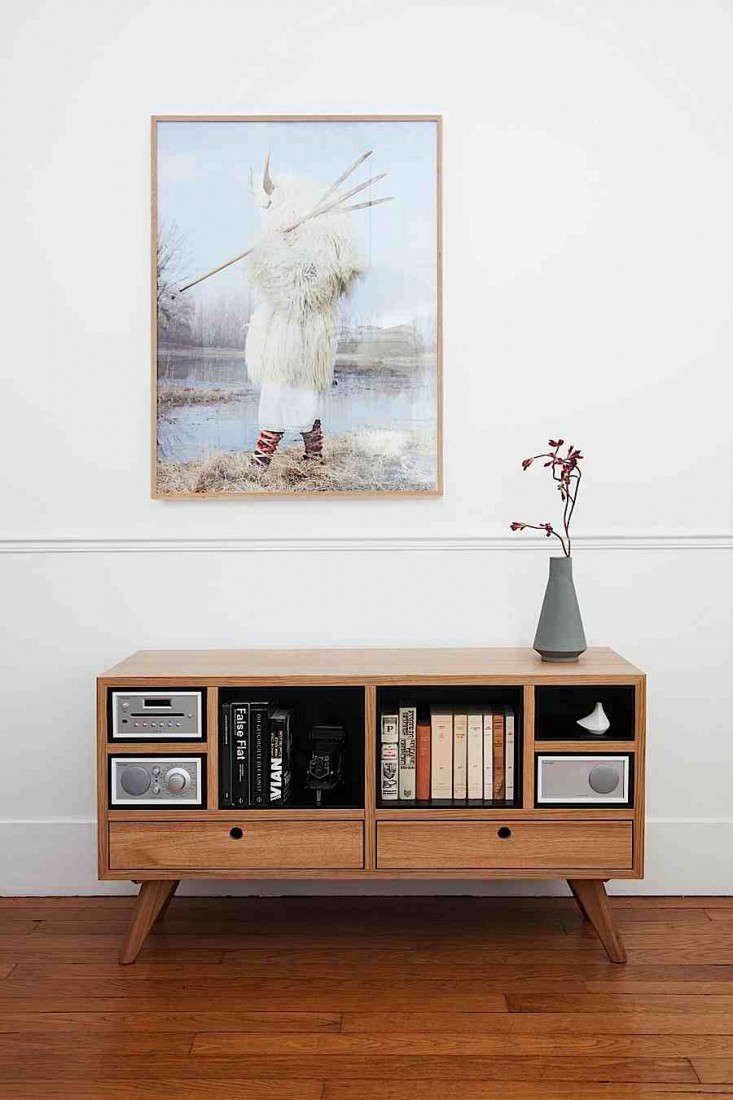
The Remix Sound Sideboard is what happens when furniture stops pretending the stereo does not exist. Instead of hiding your music system in a corner, burying cables behind a plant, or balancing a beloved radio on a suspiciously wobbly shelf, this design says: let the audio gear have a proper home. Designed by Gesa Hansen for The Hansen Family and created in connection with Tivoli Audio, the Remix Sound Sideboard blends Scandinavian craftsmanship, mid-century warmth, and modern cable-management sanity into one very elegant piece of storage furniture.
At first glance, it looks like a stylish wooden sideboard with clean geometry, warm materials, and a confident mix of open and closed compartments. Look closer, and the cleverness begins to hum. The piece was designed to give Tivoli’s radio components a visible, intentional place while hiding less attractive devices, cords, and electrical clutter in the lower sections. In other words, it understands the eternal household truth: music is beautiful, but power strips are not.
What Is The Remix Sound Sideboard?
The Remix Sound Sideboard is an audio-focused storage cabinet from The Hansen Family’s Remix universe. The design is associated with Gesa Hansen, a designer whose work often combines Scandinavian heritage, Japanese craft influence, Bauhaus education, and family woodworking tradition. The sideboard was created for Tivoli Audio, a brand known for compact radios with classic wood cabinets, simple controls, and an old-school love of sound quality.
The core idea is simple but unusually thoughtful: create a furniture piece that makes audio equipment feel like part of the room rather than an electronic afterthought. The Tivoli radio combo can sit visibly in the open section, while cables and less attractive components can disappear behind doors and within the cabinet. The back panel opens for cable access, making setup and maintenance far less dramatic than the usual living-room yoga routine of crawling behind furniture with a flashlight.
Reported specifications list the sideboard at approximately 715 mm high, 1300 mm wide, and 450 mm deep. Materials include solid wood, wood, and MDF, with oak noted in related listings. The visual palette is restrained: natural wood paired with black and white elements. It is not loud furniture, even though it is built around sound. That restraint is part of the charm.
Design Background: A Remix of Craft, Sound, and Storage
The name “Remix” is a useful clue. This is not just a cabinet; it is a reinterpretation. The Hansen Family’s Remix collection is known for taking familiar furniture types and updating them with modern function, color, and craft. Other pieces in the collection include desks, sideboards, tables, and storage designs that use solid oak, clean lines, and small architectural compartments.
Gesa Hansen’s background helps explain why the sideboard feels so balanced. She grew up in a Scandinavian family of carpenters, designers, and architects, studied at Bauhaus University, worked in studios including Jean Nouvel’s, and developed a design language that respects both craft and contemporary life. That combination matters. The Remix Sound Sideboard is not simply a nostalgic throwback to old console stereos. It is a modern answer to the same question those vintage consoles solved beautifully: where should music live in the home?
Old console record players were furniture first and machines second. They gave audio equipment dignity, presence, and a permanent place in daily life. Today, music has become smaller, wireless, and sometimes invisible. Yet our living rooms are still full of devices: radios, streamers, speakers, chargers, routers, remotes, adapters, and cables with mysterious emotional attachment. The Remix Sound Sideboard brings back the idea of an intentional music station without dragging a 200-pound walnut beast into the apartment.
Why It Works So Well in Modern Interiors
The Remix Sound Sideboard works because it solves several design problems at once. First, it gives audio equipment a natural visual frame. A Tivoli radio already has a furniture-like quality thanks to its compact cabinet and simple face. Placing it inside a well-designed sideboard makes the whole system feel curated rather than collected by accident.
Second, the sideboard improves the room’s organization. Open storage creates a display zone for the radio or decorative items, while closed compartments keep visual noise under control. That is especially useful in smaller homes, apartments, studios, and open-plan spaces where every object is basically auditioning for attention. A good sideboard should store things, yes, but a great sideboard should make the room exhale.
Third, the design handles cables intelligently. Cable management is one of those details that separates “nice furniture” from “furniture made by someone who has actually lived with electronics.” The opening rear panel allows cords and electrical connections to be managed behind the unit. This is practical, but it is also aesthetic. The difference between a peaceful listening corner and a nest of black cables is not small. It is the difference between “design magazine” and “tech drawer exploded.”
Materials and Craft: Warm Wood Meets Practical MDF
The Remix Sound Sideboard uses solid wood and MDF, a combination that makes sense for a piece balancing craft, structure, and finish. Solid wood brings warmth, texture, and longevity. MDF allows precision in painted or colored elements and can help achieve crisp geometry. In listings, the piece is described with wood and MDF construction, while related Hansen Family Remix pieces emphasize oak, matte lacquer, and handcrafted production.
This material strategy fits The Hansen Family’s larger identity. The brand emphasizes handmade furniture, homegrown wood, and new Scandinavian design. Its work often feels fresh without losing touch with the workshop. That is important for a product like The Remix Sound Sideboard because it must satisfy two audiences at once: design lovers who care about proportion and finish, and music lovers who care about usability.
The finish options associated with the piece are understated: black and white with wood. That palette gives the sideboard flexibility. It can sit comfortably in a mid-century modern living room, a Scandinavian apartment, a minimalist office, or a music corner with more personality than square footage. It does not demand that the whole room dress around it. It simply improves the room and waits politely for compliments.
The Tivoli Audio Connection
The Remix Sound Sideboard was created for Tivoli Audio, and that relationship gives the piece much of its character. Tivoli Audio became known for the Model One tabletop radio, designed by Henry Kloss and introduced in 2000. The Model One’s appeal came from its simple controls, compact wooden cabinet, strong reception, and surprisingly rich sound for its size. It proved that audio equipment could be technically capable and visually welcome in a living room.
That philosophy fits perfectly with The Remix Sound Sideboard. Tivoli radios are not meant to be hidden away like routers or old DVD players. They are designed to be seen, touched, tuned, and enjoyed. The sideboard extends that idea from product to environment. Instead of treating the radio as a standalone object, it builds a small world around it: a place for sound, storage, display, and domestic order.
The result is furniture that behaves like a quiet host. It says, “Put the beautiful radio here. Put the messy stuff down there. Put the cables behind the panel. Now please enjoy your jazz, news, podcast, or suspiciously dramatic cooking playlist.”
Best Rooms for The Remix Sound Sideboard
Living Room
In a living room, The Remix Sound Sideboard can act as a media console, music station, and display cabinet. Its width gives it enough presence under artwork, near a sofa, or along a feature wall. The open section keeps the audio gear accessible, while closed storage can hold remotes, records, chargers, manuals, and the small accessories nobody wants to admit they own.
Home Office
In a home office, the sideboard becomes a refined productivity companion. It can hold a radio, compact speaker system, printer supplies, notebooks, or reference books. The design feels warm enough to soften a work setting but disciplined enough not to turn the office into a storage cave.
Bedroom
In a bedroom, it works best as a larger storage and audio piece rather than a standard dresser replacement. It can create a calm listening zone for morning radio, evening playlists, or weekend reading. Because the design is low and wide, it can also anchor a wall without making the room feel crowded.
Dining Area
Placed in a dining room, the sideboard can serve double duty: music center by night, serving and storage piece by dinner party. It is especially appealing for people who like background music during meals but dislike the look of random speakers sitting on the floor like confused robots.
How to Style The Remix Sound Sideboard
The best styling approach is restraint. This is not a piece that needs to be buried under objects. Let the wood, geometry, and radio placement breathe. A small stack of art books, a ceramic vase, a framed print, and one sculptural lamp can be enough. If you are adding records, keep them in a clean vertical row or a dedicated crate nearby. The point is to support the design, not challenge it to a duel.
Because the sideboard has a strong relationship with sound, consider styling around rituals rather than decoration alone. Place a lounge chair nearby. Add a reading lamp. Keep a favorite record, radio preset, or playlist device within reach. A sideboard like this shines when it is part of a daily habit: morning news, Sunday coffee, evening music, or the sacred fifteen minutes when nobody is allowed to ask where the scissors are.
Color-wise, the natural wood and black-and-white accents pair beautifully with warm neutrals, soft grays, deep blues, olive greens, and muted terracotta. For a cleaner Scandinavian look, use white walls, pale textiles, and light-toned flooring. For a richer mid-century mood, pair it with walnut, leather, brass, and low lighting.
Who Should Consider This Sideboard?
The Remix Sound Sideboard is ideal for people who love design but also actually use their homes. It is not a glass-box museum object. It is functional furniture with a clear purpose. Audiophiles who appreciate compact systems, design fans who dislike electronic clutter, and homeowners who want storage with personality will understand its appeal immediately.
It is also a smart reference point even for shoppers who cannot easily find the original piece. Because the design is somewhat specialized and tied to a specific collaboration, availability may vary by market and retailer. Still, the principles behind it are highly useful: choose media furniture with open and closed storage, provide cable access, respect the look of your audio equipment, and avoid buying a generic TV stand if what you really need is a music-focused sideboard.
Buying and Placement Tips
Before buying any sideboard inspired by this design, measure carefully. The Remix Sound Sideboard’s reported footprint is about 130 cm wide and 45 cm deep, which makes it substantial but not oversized. Leave breathing room on both sides so the piece does not look wedged into place. If placing audio equipment inside, check ventilation needs and cable reach before committing to the final layout.
Also consider the height. At roughly 71.5 cm tall, the sideboard is comfortable for display and access. It is not as low as many TV consoles, which makes it better suited for audio, storage, and decorative use than for every television setup. If using it beneath a wall-mounted TV, test sightlines first. Your neck deserves design consideration too.
For cable planning, gather everything before installation: power strip, audio cables, adapters, charging cords, and labels. Yes, labels. Future you will be grateful when you are not unplugging the router to find the radio. A beautiful sideboard deserves a clean setup behind the scenes.
Experience Section: Living With The Remix Sound Sideboard
The experience of living with The Remix Sound Sideboard is less about owning a cabinet and more about creating a dedicated music ritual at home. Imagine walking into the living room in the morning, pressing one simple button, and hearing the radio come alive from a piece of furniture that looks like it belongs there. No tangled wires. No awkward plastic speaker shoved between books. No frantic search for a charger under the sofa. Just sound, wood, and a small sense of domestic victory.
One of the biggest pleasures is how naturally the sideboard organizes behavior. When audio gear has a proper place, people tend to use it more intentionally. You might listen to the radio while making coffee, play a quiet playlist while reading, or turn on weekend music while cleaning the house. The sideboard becomes a cue: this is where listening happens. That may sound simple, but in a world where music often comes from tiny phone speakers, intentional listening feels almost luxurious.
The closed storage also changes the mood of a room. Many homes have a hidden battlefield of cables, remote controls, manuals, batteries, and forgotten adapters. The Remix Sound Sideboard gives those objects somewhere to go without pretending they do not exist. The hinged or openable back panel is especially useful because it allows access without ruining the clean front view. That feature alone can save a household from the classic “pull the entire cabinet forward and hope nothing falls” situation.
There is also a tactile pleasure to the design. Wood has a way of making technology feel calmer. A radio or compact sound system set into a wooden sideboard feels less like a gadget and more like part of the architecture of the room. This is where the Hansen Family approach is so appealing: the furniture does not compete with technology, and the technology does not cheapen the furniture. They meet in the middle, shake hands, and agree not to show the cables.
For families, the sideboard can become a shared zone. Children may associate it with morning songs or weekend stories. Guests may notice it because it looks different from typical media furniture. Even people who do not care about design will appreciate that it makes the room feel tidy. And people who do care about design will probably ask where it came from before casually checking whether they can rearrange their own living room around one.
The best experience comes when the sideboard is not overstyled. Leave room for use. Keep the radio accessible. Let the top surface hold only a few meaningful objects. If the piece becomes too decorative, it loses some of its everyday magic. Its real charm is that it invites interaction. It wants you to open a door, choose a station, adjust the volume, hide the cable mess, and return later for one more song.
In that sense, The Remix Sound Sideboard is more than a storage solution. It is a reminder that good furniture can improve habits. It encourages slower listening, cleaner rooms, better organization, and a warmer relationship with technology. That is a lot for one sideboard to handle, but this one seems up for the job.
Conclusion
The Remix Sound Sideboard stands out because it understands a modern design problem that many homes still struggle with: how to enjoy technology without letting it visually take over the room. Designed by Gesa Hansen for The Hansen Family and created for Tivoli Audio, it combines solid materials, Scandinavian influence, thoughtful storage, and clever cable access in a piece that feels both nostalgic and practical.
Its charm lies in balance. It celebrates the beauty of audio equipment while hiding the clutter that usually follows. It references vintage console stereos without feeling old-fashioned. It works as storage, display, and a listening station. Most importantly, it proves that functional furniture does not have to be boring. Sometimes, the smartest object in the room is the one quietly making your music soundand lookat home.