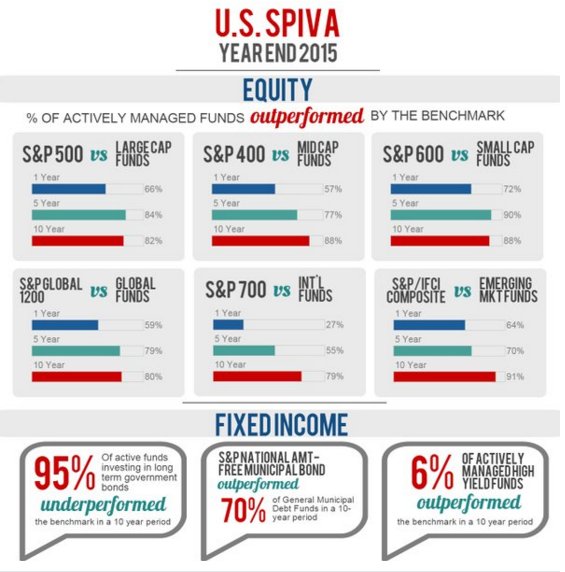
Benchmarking sounds wonderfully sensible. Who would object to comparing your company, team, department, hospital, nonprofit, website, sales funnel, or coffee machine maintenance schedule against “the best”? It feels scientific. It feels mature. It feels like something that belongs in a board deck with clean charts and serious people nodding at 9:07 a.m.
But benchmarking has a sneaky downside: it can make smart organizations behave like anxious copycats. Used well, benchmarking helps leaders understand performance gaps, identify useful practices, and set realistic improvement goals. Used poorly, it becomes corporate astrology with spreadsheets. Everyone points at the same “industry average,” nobody asks whether the average is good, and suddenly the strategy meeting turns into a room full of people trying to become a slightly shinier version of everyone else.
The real problem is not benchmarking itself. The problem is lazy benchmarking: comparing the wrong things, using weak data, chasing numbers without context, copying competitors without understanding why their methods work, and turning helpful metrics into targets that employees learn to game. In short, benchmarking can reveal realityor quietly replace reality with a dashboard wearing a fake mustache.
What Benchmarking Is Supposed to Do
At its best, benchmarking is a learning tool. It compares your performance, process, costs, outcomes, or capabilities against relevant peers or high-performing organizations. The goal is not to win a beauty contest. The goal is to understand what is possible, what is practical, and what might be improved.
Good benchmarking asks questions like: Why does one customer support team resolve issues faster without lowering satisfaction? Why does one hospital reduce readmissions while serving a complex patient population? Why does one manufacturer maintain quality while cutting waste? Why does one sales team convert better leads without burning out half the staff and making the other half update the CRM with the enthusiasm of a wet sock?
Those are useful questions. The trouble begins when leaders skip the “why” and sprint directly to the “copy this.” Benchmarking should create insight. Too often, it creates imitation.
The Biggest Pitfalls of Benchmarking
1. Comparing Apples to Avocados Wearing Apple Stickers
The first pitfall is poor comparability. Organizations often compare themselves with companies that look similar on the surface but operate under completely different conditions. Same industry? Great. Same customer mix, geography, pricing model, regulatory burden, labor market, technology stack, and strategic priorities? Usually not.
For example, a small regional bank may benchmark its digital response times against a national fintech platform. That comparison might be interesting, but it is not automatically fair. The fintech may have a newer system, narrower product range, different compliance structure, and a customer base that expects self-service. Meanwhile, the bank may serve older customers, offer more complex advisory services, and carry legacy systems that were apparently installed during the Bronze Age.
Without context, the benchmark becomes a guilt trip instead of a guide. Leaders see a gap and assume underperformance, when the real explanation may be business model differences, customer complexity, or deliberate strategic trade-offs.
2. Worshiping the Industry Average
“Industry average” sounds authoritative, but averages can be deeply underwhelming. Being average in a mediocre industry is not a strategy; it is a nap with a logo on it.
If the average customer satisfaction score in your sector is low, matching it does not make you competitive. It makes you equally annoying. If the average employee turnover rate is high, aiming for the average may normalize a problem that deserves serious attention. If the average website conversion rate is weak, copying it will not make your digital experience better. It will merely confirm that everyone in the room has successfully located the same uninspiring number.
Benchmarks should inform ambition, not replace it. The best organizations use external data as one input, then ask, “What standard would actually serve our customers, employees, and strategy?” Sometimes the right goal is above the benchmark. Sometimes it is below the benchmark because another priority matters more. The point is to choose deliberately.
3. Copying Best Practices Without the Operating System
Best practices are seductive because they seem pre-approved. Someone else already succeeded with them, so why not borrow the magic? Unfortunately, best practices rarely travel alone. They depend on culture, incentives, leadership behavior, technology, talent, budget, customer expectations, and timing.
Copying a best practice without the system behind it is like buying a chef’s knife and expecting dinner to applaud. A company may adopt another firm’s agile process, daily standups, compensation model, self-service portal, or hiring methodbut without the supporting habits, skills, and decision rights, the practice becomes theater. Everyone stands in a circle at 9:15, says words like “blocker,” and then goes back to the same approval bottlenecks as before.
Benchmarking should uncover principles, not merely rituals. Instead of asking, “What do they do?” ask, “What problem does this practice solve, why does it work there, and what would need to be true for it to work here?”
4. Treating Metrics as Truth Instead of Clues
Metrics are helpful, but they are not reality. They are simplified signals about reality. A metric can tell you that call duration dropped, but it cannot automatically tell you whether customers are happier, agents are rushing people off the phone, or the phone system has developed a new hobby of disconnecting everyone.
This is one of the classic dangers in performance measurement: when a measure becomes a target, people often optimize the measure rather than the mission. If employees are rewarded only for closing tickets quickly, they may close tickets before problems are truly solved. If hospitals are judged only by length of stay, they may face pressure to discharge patients too soon. If sales teams are pushed only on monthly volume, they may discount heavily or sell to customers who are a terrible fit.
The dashboard improves. The business does not. Congratulations, the thermometer looks healthier than the patient.
5. Ignoring Statistical Noise
Benchmarking often creates rankings, and rankings create drama. But not every difference is meaningful. A team that scores 86 may not be truly better than a team that scores 84. A hospital with a slightly higher complication rate may not be worse if its patient population is more complex. A branch with higher costs may be serving a market that requires more staff time.
Small sample sizes, seasonal effects, one-time events, data collection differences, and random variation can all distort comparisons. When leaders treat noisy rankings as absolute truth, they reward luck, punish complexity, and send everyone chasing ghosts.
A better approach is to look for patterns over time, use ranges instead of single-point comparisons, and combine quantitative benchmarks with qualitative investigation. Numbers should start the conversation, not slam the door and declare themselves emperor.
6. Using Unreliable or Poorly Defined Data
Benchmarking depends on data quality. If the definitions are inconsistent, the comparison collapses. One company’s “customer churn” may include only canceled contracts, while another includes downgrades, unpaid accounts, and customers who vanished into the fog. One HR team may count “time to fill” from requisition approval; another may count from first interview. One nonprofit may measure “people served” as unique individuals; another may count every interaction.
These differences sound boring until they produce expensive decisions. A leader may conclude that staffing is inefficient, pay is uncompetitive, service is slow, or productivity is weakwhen the real issue is that the benchmark and internal measure are speaking different dialects of spreadsheet.
Before using benchmark data, define terms precisely. Ask how the data was gathered, how recent it is, what organizations are included, and whether the sample truly resembles your environment. If the answer is “we found it in a slide from 2019,” proceed with caution and perhaps a snack.
7. Benchmarking Backward Instead of Forward
Most benchmarks describe what has already happened. That is useful, but it can also anchor organizations to the past. A retailer benchmarking store staffing against pre-pandemic patterns may miss the shift to omnichannel shopping. A software company benchmarking support volume against last year may ignore the impact of AI self-service. A marketing team benchmarking content output against competitors may miss that customers are tired of generic posts that all sound like they were assembled by a committee of beige office chairs.
Benchmarking can reveal the current game, but strategy requires asking how the game is changing. The most valuable question is not always “How do we compare?” Sometimes it is “What will customers expect next, and are we building toward that?”
Why Benchmarking Can Quietly Kill Innovation
One of the most overlooked pitfalls of benchmarking is strategic sameness. If every company studies the same competitors, adopts the same best practices, hires the same consultants, tracks the same KPIs, and attends the same conference where everyone receives the same tote bag, differentiation gets difficult.
This is especially dangerous in competitive markets. Benchmarking can help you catch up, but it rarely helps you leap ahead. If your goal is merely to match what others already do, you are building tomorrow’s strategy from yesterday’s evidence. That may be safe, but safe can be expensive when customers are moving faster than your planning cycle.
Innovation often comes from questioning the benchmark, not obeying it. Southwest Airlines did not become distinctive by copying traditional airline assumptions. Apple did not build its brand by asking what the average computer maker was doing. Netflix did not transform entertainment by benchmarking late fees at video stores and deciding to be slightly less irritating.
The lesson is not “ignore competitors.” That would be brave in the same way that throwing away your map in a cave is brave. The lesson is to study competitors without becoming hypnotized by them.
How to Benchmark Without Falling Into the Trap
Start With the Strategic Question
Do not begin with available data. Begin with the decision you need to make. Are you trying to improve customer experience, reduce cost, redesign compensation, shorten cycle time, increase quality, or evaluate whether a process is truly underperforming? The benchmark should serve the question, not the other way around.
Choose the Right Peer Group
Look beyond obvious competitors. Sometimes the best comparison is internal: one branch, team, region, or product line outperforming another. Sometimes it is cross-industry: a healthcare system can learn service design from hospitality; a bank can learn digital onboarding from e-commerce; a government agency can learn queue management from logistics.
But be disciplined. A benchmark is only useful when the comparison is relevant enough to teach you something and different enough to challenge your assumptions.
Study Processes, Not Just Outcomes
If one organization outperforms another, the interesting part is not the number. The interesting part is the system behind the number. What practices, resources, technologies, incentives, training, leadership behaviors, and customer choices produce the result?
A benchmark that says “their cost per transaction is 20% lower” is incomplete. A useful benchmark explains whether they automated more steps, simplified policies, reduced exceptions, outsourced work, changed customer behavior, or quietly defined “transaction” in a way that would make a statistician sigh into a pillow.
Use Multiple Measures
Single metrics are fragile. A strong benchmarking program balances efficiency, quality, customer experience, employee experience, risk, and long-term capability. If you only measure cost, quality may suffer. If you only measure speed, trust may suffer. If you only measure revenue, margin and retention may suffer.
The best dashboards create productive tension. They make it harder to “win” by damaging something important offstage.
Adapt, Do Not Copy
The final step is translation. A best practice from another organization should be treated like a recipe, not a religious text. Adjust it for your culture, customers, constraints, and strategy. Test it in a pilot. Learn from the results. Improve it. Then scale what works.
Benchmarking should make your organization more intelligent, not less original.
Practical Examples of Benchmarking Gone Sideways
Imagine a customer service department that benchmarks average handle time and discovers it is slower than competitors. Leadership launches a campaign to reduce call length. Agents respond by rushing customers, avoiding complex conversations, and transferring difficult calls. The metric improves, but repeat contacts increase and customer satisfaction drops. The benchmark created motion, not progress.
Or consider a company benchmarking compensation against the market median. That sounds reasonable, but the company is trying to hire specialized talent in a high-cost city while requiring employees to work on-site. The median benchmark may be too low for the actual talent market. Leadership saves money on paper and loses candidates in reality.
Another example: a nonprofit compares fundraising efficiency with larger organizations. It looks less efficient, but the larger organizations have brand recognition, legacy donors, and dedicated development teams. The smaller nonprofit may need higher near-term fundraising costs to build capacity. Benchmarking without maturity-stage context may push it to underinvest in growth.
In each case, the issue is not the benchmark. The issue is interpretation. Benchmarks do not make decisions. People do. And people, as history has repeatedly confirmed, are fully capable of turning a helpful tool into a decorative hammer.
Field Notes: Experiences With the Pitfalls of Benchmarking
Anyone who has worked around planning meetings has seen benchmarking take on a life of its own. A number appears on a slide, and suddenly it becomes the adult in the room. People stop asking whether it is useful and start asking how quickly they can move toward it. This is where the trouble begins.
One common experience is the “benchmark ambush.” A manager presents a performance gap without context: “Our competitors respond in two hours; we take six.” The room reacts as if six hours is a moral failure. But after a little digging, the comparison may reveal that competitors are counting automated acknowledgments as responses, while your team counts actual human resolution. In that case, the company is not necessarily slower; it is measuring a more meaningful event. The fix might still involve faster service, but the original comparison was not as clean as it looked.
Another familiar experience is the “best practice costume party.” A leadership team visits a high-performing company, sees an impressive process, and returns determined to install the same thing by Monday. New meeting structure? Done. New scorecard? Done. New terminology? Absolutely. But the deeper conditions are missing: decision rights, trust, training, technology, and management discipline. Within three months, the practice becomes another corporate ritual. People attend, nod, and privately wonder who keeps buying all these whiteboards.
Benchmarking also creates emotional side effects. Teams that are constantly compared to external stars may feel energizedor they may feel dismissed. If leaders use benchmarks as weapons, employees learn to defend themselves instead of improve the work. They challenge the data, hide problems, or optimize what is measured while neglecting what matters. Nobody wakes up excited to be told, “Congratulations, you are below the 63rd percentile.”
The most useful benchmarking experiences tend to feel different. They begin with curiosity, not accusation. Leaders ask what the data suggests, what it misses, and what can be learned from both high and low performers. They involve the people closest to the work, because frontline employees often know exactly why a gap exists. They test changes before declaring victory. Most importantly, they connect every benchmark to a real purpose: better service, better quality, better decisions, stronger teams, healthier margins, or more durable impact.
The lesson from experience is simple: benchmarking works best when it is humble. It should say, “Here is something worth investigating,” not “Here is your new personality.” A benchmark can open the door to improvement, but it cannot walk through the door for you, reorganize your culture, update your systems, and make everyone care. That is still management’s job. Sorry about that.
Conclusion: Benchmarking Is a Compass, Not a Steering Wheel
Benchmarking can be powerful when it is used as a disciplined learning process. It helps organizations identify gaps, challenge assumptions, and discover practices worth adapting. But the pitfalls of benchmarking are real: poor comparisons, weak data, metric gaming, backward-looking targets, average thinking, and blind imitation can all turn a smart tool into a strategic trap.
The best leaders do not reject benchmarking. They use it carefully. They ask better questions. They demand context. They study causes, not just rankings. They balance metrics. They adapt ideas instead of copying them wholesale. And they remember that the goal is not to look like everyone else. The goal is to perform better in a way that fits the organization’s mission, customers, people, and future.
So benchmark, by all means. Just do not let the benchmark drive the bus. It does not have a license, and frankly, it keeps staring at the dashboard.