The BBC micro:bit started life as a tiny board with a giant mission: get kids excited about coding before they decide computers are only for “serious people” in hoodies arguing about semicolons. It was small, approachable, and just a little bit magical. Press a button, lights flash. Shake it, something happens. Add code, and suddenly a student is not just using technology but telling it what to do. That is a big leap, even if it fits in a pocket.
Then came an important twist in the story. The micro:bit did not stay a one-time media campaign or a clever classroom gadget. It got something much more durable: a foundation. And that matters more than it sounds. When an education device gets a nonprofit home, it stops being just a product and starts becoming infrastructure. It gains stewardship, continuity, research, partnerships, and a mission that can outlast hype cycles, hardware revisions, and whatever buzzword is currently sprinting through the edtech world wearing sunglasses.
That is what makes the Micro:bit Educational Foundation such a smart development. It turned a successful launch into a long-term movement for coding education, physical computing, and digital creativity. In plain American English, it gave the micro:bit a future.
From Big Splash to Long Game
The original micro:bit launch was already ambitious. The device was designed as a pocket-sized programmable computer to help young people get hands-on with computer science and digital making. It was not just another screen-based coding lesson where students drag blocks and hope for the best. The magic was physical. The code controlled a real object. That one design choice made the experience more immediate, more playful, and far more memorable.
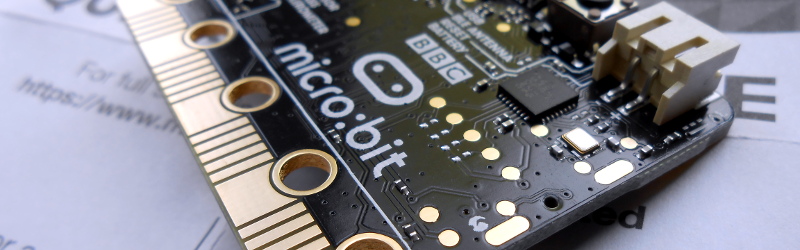
At first glance, the micro:bit looked delightfully simple: a 5×5 LED display, two buttons, onboard sensors, wireless communication, and pins for connecting external electronics. But simple is not the same thing as limited. A student could build a name badge, step counter, compass project, mini game, moisture monitor, classroom thermometer, or a radio-linked invention that made the room feel like a tiny research lab with snack breaks.
The original rollout helped prove there was enormous appetite for this kind of learning. Once the device landed in students’ hands, the obvious question was not whether the idea worked. The question was what happened next. Was micro:bit going to be a memorable one-off, like a school assembly with free pizza, or was it going to become a stable part of how schools teach computing?
That is where the foundation changed the story.
Why a Foundation Matters
When people hear the word “foundation,” they sometimes imagine a quiet administrative body in a sensible blazer, gently organizing paperwork in the corner. In reality, a foundation can be the difference between a cool invention and a lasting educational platform.
For the micro:bit, a nonprofit structure made a lot of sense. Education technology has a habit of burning bright and fading fast. A device launches with fanfare, teachers try it, the company pivots, support dries up, and suddenly there is a box of “revolutionary” hardware collecting dust next to an overhead projector. The Micro:bit Educational Foundation helps avoid that fate by keeping the mission centered on learners, teachers, and access rather than short-term commercial pressure.
That shift matters because the micro:bit is not merely a board. It is an ecosystem. It needs curriculum materials, coding tools, teacher training, documentation, accessibility resources, reseller relationships, community support, research, and hardware evolution. None of that happens reliably by accident. Someone has to own the mission, keep the standards clear, and make sure the platform stays useful for real classrooms instead of becoming an orphaned gadget beloved only by nostalgic engineers and one extremely committed robotics club.
In other words, the foundation gave the micro:bit institutional memory. It also gave schools confidence. Teachers are far more likely to invest time in learning a platform when they believe it will still be around, still supported, and still improving next year.
What the Micro:Bit Educational Foundation Actually Does
It turns hardware into a learning platform
A lot of coding devices can blink lights. The hard part is making them truly teachable. The Micro:bit Educational Foundation has helped turn the board into a complete learning experience. That includes classroom resources, project guides, teaching sequences, code editors, and pathways for beginners as well as more advanced learners.
That support is one reason the micro:bit has become so versatile in STEM learning. Beginners can start with block coding in Microsoft MakeCode, which lowers the barrier beautifully. Students who are ready for the next step can move into Python and begin to understand text-based programming in a way that feels less intimidating because the device is already familiar. The transition is natural. First the student makes a pixel heart blink. Next thing you know, they are debugging variables and feeling oddly proud about it.
It keeps physical computing accessible
The micro:bit works because it connects code to the real world. Students can use buttons, LEDs, motion sensing, temperature readings, radio communication, Bluetooth, and GPIO pins to build interactive projects that feel alive. On newer hardware, added features such as a microphone and touch-sensitive logo expand what can be explored without turning the board into an overcomplicated science-fiction sandwich.
This physical computing angle is one of the platform’s biggest strengths. Many students do not fall in love with code because of abstract syntax. They fall in love with code when it makes something happen. A wearable badge that reacts to movement, a classroom data logger, a game controller, or a model alarm system gives code a job. Suddenly programming is not a school subject floating in the air. It is a tool for making stuff.
It supports teachers, not just students
Here is an underrated truth about computing education: students are not the only people who need confidence. Teachers do too. Plenty of educators are enthusiastic about coding but did not train as computer scientists. A platform that expects every teacher to become a firmware wizard by Tuesday morning is going to have a short and awkward life.
The foundation’s approach helps by offering structured resources, approachable editors, and examples that teachers can actually use. Research around micro:bit has repeatedly pointed to improved teacher confidence, willingness to recommend the platform, and broader skill development in learners. That is not a side benefit. That is the engine. If teachers feel capable, students get more opportunities. If teachers feel lost, even the cutest microcontroller in the world is not going to save the lesson plan.
It keeps inclusion on the agenda
One of the smartest things about the foundation model is that it makes room for accessibility and inclusion as part of the mission instead of treating them as optional extras. The micro:bit platform includes resources designed to support learners with different needs, including tactile materials and guidance for adapting activities.
That matters because digital creativity should not be reserved for the students who already feel technically confident. The most important sentence in modern computing education might be this: “This is for you too.” A foundation can keep saying that sentence in practical ways, through design, resources, outreach, and partnerships.
Why the Foundation Helps the Micro:Bit Grow Up
The phrase “The Micro:Bit Gets A Foundation” sounds almost like a coming-of-age movie, and honestly, it fits. The device had a wildly successful early chapter. But to become globally relevant, it needed a structure that could support scale without losing purpose.
The foundation gives the micro:bit a more stable identity. It is not just “the BBC coding board” anymore, though its origins still matter. It is a nonprofit-led educational platform with a broader global mission. That gives it room to develop partnerships, expand internationally, and keep evolving around what schools actually need.
And evolve it has. The micro:bit is no longer just a basic introductory board. It now sits inside a wider ecosystem that includes classroom tools, mobile and tablet programming options, Scratch integration, AI-related learning experiences, and experimentation that stretches beyond the desktop. That matters because computing education is changing. Students are expected to understand not just code, but systems, sensors, data, interaction, automation, and increasingly, machine learning concepts. The micro:bit can serve as a bridge into all of that.
That bridge is especially valuable because it does not begin with intimidation. It begins with curiosity. It invites a learner to ask, “What happens if I try this?” Good educational technology does not just deliver content. It provokes questions. The micro:bit does that very well, and the foundation helps preserve that spirit while adding structure around it.
The Real Educational Win: Agency
The most important thing the foundation protects is not the board. It is the idea behind the board. The micro:bit encourages agency. Students are not just passive users of apps. They become inventors, testers, debuggers, and designers. That shift is enormous.
In a traditional classroom, technology can sometimes feel like a vending machine. Push buttons, receive answers, move along. With the micro:bit, students are building cause and effect from the inside. They can write a program, test it, watch it fail, fix it, improve it, and show it off. That process teaches far more than syntax. It teaches logic, iteration, patience, creativity, and resilience. It also teaches the timeless engineering lesson that things rarely work perfectly on the first try, which is good preparation for both careers and flat-pack furniture.
The foundation model strengthens this by giving educators and communities the support to keep that experience alive year after year. That means more students can move from “I used a computer” to “I made a computer do something useful.” The second sentence is where confidence starts to grow.
Experiences From Classrooms, Clubs, and Real-World Projects
One of the best ways to understand why the micro:bit needed a foundation is to look at how people actually use it. In real classrooms and maker spaces, the device tends to create a very particular kind of excitement. It is not the flashy excitement of a giant screen or a polished consumer gadget. It is the quieter thrill of realizing, “Wait, I can build this myself.” That moment is educational gold.
Teachers often start with simple projects because they lower the panic level for everyone involved. A name badge on the LED display, a digital counter, or a temperature-based alert can get a room moving quickly. Then the ideas get more creative. Students turn the micro:bit into a step counter, a game controller, a burglar alarm, a reaction timer, or a communication tool that sends messages between devices. Those are not just coding exercises. They are small acts of invention.
What is especially interesting is how often micro:bit projects connect to real problems. In some classrooms, students have used the platform with sensors to automate scoring systems or create notifications for everyday issues such as a refrigerator door being left open. In other settings, micro:bit projects have moved outdoors into fieldwork, biodiversity monitoring, and environmental observation. That kind of work is powerful because students stop seeing computing as a separate subject trapped in a lab. It becomes part of science, art, design, teamwork, and problem-solving.
The rise of portable programming tools around the micro:bit pushes that idea even further. Instead of needing a full computer setup every time, new approaches have explored how students can code the device more flexibly, even away from a desk. That may sound like a small technical improvement, but in educational terms it is huge. It means computing can happen in more places: hallways, playgrounds, field trips, community projects, and spaces where curiosity appears before a laptop does.
Another recurring experience is teacher growth. Many educators begin with some hesitation, especially if they do not identify as “tech people.” But the micro:bit often works because it is welcoming. The board is tangible, the first wins come quickly, and the project ideas feel adaptable. That combination can turn nervous experimentation into real teaching confidence. Once that happens, the technology spreads beyond the computing classroom and starts showing up in math, science, art, and interdisciplinary projects.
This is exactly why the foundation matters. Experiences like these do not scale on charm alone. They need curriculum support, thoughtful documentation, accessible tools, and a steady organization keeping the ecosystem healthy. The Micro:bit Educational Foundation helps make sure the first spark is not the last spark. It gives schools something more dependable than a trend. It gives them a platform they can grow with.
Conclusion
The story of the micro:bit is not just about a tiny computer. It is about what happens when a good idea gets the structure it needs to last. The Micro:bit Educational Foundation transformed the device from a successful initiative into a durable mission-driven platform for coding education, physical computing, and digital creativity.
That matters for teachers because it means support. It matters for students because it means access. It matters for education because it proves that the future of computing literacy is not just about teaching kids to consume technology more efficiently. It is about helping them shape it.
So yes, the micro:bit got a foundation. Fortunately, it was not the makeup kind. It was the far more useful kind: mission, stewardship, scale, and staying power. For a tiny board with big ambitions, that is exactly the upgrade it needed.