Solar lights are the overachievers of the outdoor decor world. They brighten paths, highlight your landscaping, add curb appeal, and help people avoid doing that awkward “is this a step or a shadow?” shuffle after dark. Best of all, they do it without hardwiring, trenching, or sending your electric bill into a dramatic monologue.
But here’s the catch: even the best-looking solar lights can flop if you put them in the wrong place. A gorgeous stake light buried in dense shade is basically a lawn ornament with big dreams. Placement matters just as much as style, brightness, and weather resistance. If you want your outdoor solar lighting to look good and work well, you need to install it where it supports safety, atmosphere, and proper daytime charging.
This guide breaks down the best places to install solar lights in your outdoor space, how to match each area with the right kind of fixture, and which common placement mistakes can leave your yard looking less “designer retreat” and more “confused airport runway.”
Why Solar Light Placement Matters So Much
Outdoor solar lights are easy to install and generally low maintenance, but they still rely on one stubborn thing: sunlight. The panel collects energy during the day, stores it in a battery, and powers the light at night. That means your layout has to do two jobs at once. It must make sense for nighttime illumination, and it must also make sense for daytime charging.
In practical terms, that means the best solar lighting plan starts with a simple question: Where does your yard actually get enough direct sun? Not “where you wish it got sun.” Not “where it kind of feels bright at lunch.” Real, direct sunlight. If the panel is tucked under a tree canopy, blocked by a fence, or shaded by the roofline most of the day, performance will usually drop.
Good placement also prevents another common mistake: overlighting. Outdoor spaces rarely need harsh, stadium-level brightness. In fact, the best solar landscape lighting often works because it creates soft pools of light, subtle edges, and gentle definition. You want your yard to feel welcoming, not interrogated.
The Best Places to Install Solar Lights Outdoors
1. Along Walkways and Garden Paths
If you install solar lights in only one place, make it the walkway. Paths are the MVP of solar lighting because they combine beauty and function in one easy move. A softly lit walkway improves safety, guides guests to the front door, and instantly makes the yard look more finished.
The trick is to avoid placing path lights in perfectly rigid rows on both sides unless you genuinely want your home to look like it clears small aircraft for landing. A better approach is to stagger them or place them where they guide movement naturally. This creates a softer, more organic look that blends into planting beds and shrubs.
For many path-light layouts, spacing around 10 to 15 feet apart works well. Solar path lights often need to be placed a little closer together, especially when you want continuous glow rather than dramatic spotlighting. If your walkway is short, narrow, or bends through landscaping, tighter spacing usually looks better than huge dark gaps.
2. On Front Steps and Stair Risers
Steps are one of the smartest places for solar lights because they solve a real problem. Uneven elevation is charming in the daytime and a toe-stubbing conspiracy at night. Solar step lights or riser lights make each tread easier to see without flooding the whole entry with brightness.
This is especially useful for front entries, garden stairs, deck stairs, and side-yard access points. Low-profile fixtures mounted into risers, along stair walls, or on rail posts create enough definition to make footing safer while still looking polished. The light should skim the tread, not blast directly into someone’s eyes.
If the stair area itself is shady, look for solar lights with a separate panel or position the fixture where the panel can receive better sun exposure during the day. Otherwise, your beautifully lit staircase may clock out before bedtime.
3. Around the Front Entry and Porch
Your entryway deserves more than a lonely overhead bulb that gives off “dentist office at midnight” energy. Solar lighting around the front door adds warmth, improves visibility, and boosts curb appeal with very little effort.
Good spots include either side of the entry path, near porch steps, on columns, or as mounted solar sconces if the area gets enough daylight. Even a pair of solar lantern-style fixtures can help frame the doorway and make the entrance feel intentional.
This is also one of the best places to combine function and style. You want enough illumination to see the lock, house numbers, and packages near the door, but you also want the house to look inviting. Warm white light is usually the sweet spot here. It feels more welcoming than a stark cool-white beam that makes your porch look like a convenience store parking lot.
4. Beside the Driveway and Near the Garage
Driveways often get ignored in outdoor lighting plans until someone has to navigate them at night in rain, fog, or while balancing takeout and car keys. Solar lights along the edge of a driveway can improve visibility without requiring extensive wiring.
For a subtle effect, place low-profile lights along the borders rather than aiming bright fixtures straight at vehicles. This outlines the driveway and helps define the space. Near the garage, mounted solar downlights or motion-sensor fixtures can brighten parking and entry areas while supporting security.
This is a strong zone for solar flood lights or motion lights if you want more brightness. These work especially well when mounted where the solar panel gets direct sun during the day. Look for durable outdoor-rated designs with solid water resistance, particularly if your driveway gets exposed to weather from every possible angle, including the one Mother Nature invents on weekends.
5. On Deck Railings, Posts, and Stairs
Decks are one of the best places to use solar lighting because the fixtures can define the perimeter without cluttering the space. Solar post-cap lights, under-rail lighting, and deck-rail lights help guests see the boundaries of the deck and make evening gatherings feel more atmospheric.
The most effective deck lighting usually outlines the structure instead of dumping bright light into the middle of the seating area. Rail lights can help people find handrails and steps in the dark, while post-cap lights add just enough glow to make the deck feel finished.
Solar deck lights work best when the panels receive real sun during the day, so think carefully before installing them under heavy shade sails or dense tree cover. If the deck itself is shady, mounting nearby solar downlights from a sunny tree trunk, pergola, or post can be a better strategy than forcing every fixture onto the deck surface.
6. Over a Patio, Pergola, or Outdoor Dining Area
If your patio is where you eat, talk, host friends, or pretend you’re the kind of person who always remembers to water herbs, lighting should support comfort as much as visibility. Solar string lights are excellent over patios, pergolas, and decks because they create an easy, café-style atmosphere with relatively little installation fuss.
String them overhead to define the gathering area, or weave them through pergola rafters to soften the space. The key is to keep the solar panel in a location with direct sun. That often means mounting the panel on a nearby roof edge, post, fence, or open section of railing rather than hiding it in permanent shade.
For patios, overhead or elevated lighting is usually more flattering than lights installed too low. People seated at a table or lounge area do not need direct light aimed at face level. Nobody looks relaxed while squinting into a fixture during dinner.
7. In Flower Beds and Along Garden Borders
Solar lights can do more than guide traffic. They can also make landscaping visible after sunset, which is good news if you have spent real money and emotional energy on hydrangeas, ornamental grasses, or that one dramatic container arrangement that finally made the yard feel expensive.
Taller path lights work well in flower beds because they cast light downward over blooms and foliage. Small solar spotlights are useful for larger shrubs, specimen plants, or layered beds where you want more depth. The goal is not to light every leaf evenly. The goal is to create contrast, texture, and interest.
When placing lights in planting beds, make sure mature plants will not block the panel later in the season. A fixture that gets great sun in early spring can end up smothered by enthusiastic summer growth. Plants love to humble our planning.
8. At Trees, Yard Ornaments, and Architectural Features
Accent lighting is where solar lights start to feel less purely practical and more like outdoor design. Spotlights placed near ornamental trees, sculptures, stone walls, or the base of the house can add drama and dimension after dark.
Uplighting a Japanese maple, washing light up a textured facade, or placing a spotlight near a garden statue creates focal points that make the yard feel layered and intentional. You can also mount solar downlights higher in trees to create a moonlight effect across the lawn or walkway below.
This works best when used selectively. Highlight one or two great features rather than trying to illuminate every decorative object you own. A little restraint makes the whole yard look more sophisticated.
9. Around Water Features
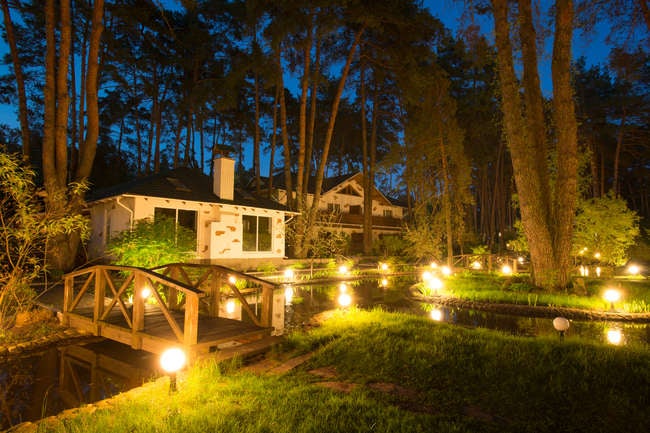
Ponds, fountains, and small waterfalls become much more dramatic at night with the right light. Solar spotlights aimed at moving water can create shimmer, depth, and a surprisingly calming focal point. Submersible solar options are especially handy here because they reduce the need for traditional wiring near water.
Water features are one of those places where even a small amount of light has a big visual payoff. You do not need to turn the pond into a neon aquarium. A few carefully placed lights can make the movement of water visible and give the whole yard a more finished nighttime personality.
10. On Fences, Side Yards, and Other Dark Transition Zones
Fence posts, side passages, and narrow zones between the house and property line are often the forgotten corners of the yard. They also happen to be the areas where people feel least confident walking at night. Solar fence lights, small mounted sconces, or motion-triggered fixtures are great here.
These areas benefit from targeted light rather than decorative glow. If you have a gate, trash-bin path, AC access route, or side door, solar-mounted lights can improve everyday usability. They can also add a welcome layer of security, especially when motion sensors are involved.
Common Solar Light Placement Mistakes to Avoid
Ignoring Shade Patterns
A spot that looks sunny at 2 p.m. may be in shadow for most of the day. Before installing anything, watch the area over time. Trees, rooflines, fences, and tall shrubs can all affect charging performance.
Choosing Style Before Function
Pretty lights are nice. Lights that actually stay on are nicer. Match the fixture to the job: path lights for pathways, step lights for stairs, mounted lights for entries, and flood or motion lights for security zones.
Using Too Many Lights
More fixtures do not automatically create better results. Too many bright points can make a yard look cluttered and flatten the space visually. Let darkness do some of the design work.
Forgetting Weather Exposure
Not every outdoor light handles weather the same way. Water-resistant models are often fine for normal rain, but movable or decorative lights may need protection in severe storms, deep freezes, or relentless seasonal weather.
A Simple Rule for Planning Your Layout
If you are not sure where to start, use this order:
First, light where people walk. That means paths, steps, and entries.
Second, light where people gather. That means patios, decks, porches, and dining zones.
Third, light what you want people to notice. That means flower beds, focal trees, water features, and architectural details.
That sequence keeps your solar lighting plan grounded in usefulness first and aesthetics second. Thankfully, the two usually end up helping each other.
Real-World Experiences With Solar Lights in Outdoor Spaces
One of the most common experiences homeowners report is that the front walkway changes everything faster than expected. A house can look perfectly nice during the day, but once the sun goes down, an unlit path tends to make the whole property feel unfinished. Add a few solar path lights, though, and suddenly the front yard has direction, rhythm, and a welcoming glow. It is one of those upgrades that feels minor on paper and surprisingly dramatic in real life. Guests stop hesitating at the curb, deliveries land in the right place, and the house starts looking cared for around the clock.
Deck lighting creates a similar before-and-after effect, especially for people who actually use their outdoor space in the evening. During the day, a deck is easy to navigate. At night, those same steps and edges can become vague shapes surrounded by optimism. Solar post-cap lights or rail lights tend to make the deck feel larger and more defined, even when the fixtures themselves are subtle. Homeowners often find that they spend more time outside once the deck perimeter is softly lit. The space feels less like a platform floating in darkness and more like an outdoor room with boundaries and purpose.
Garden beds are another area where experience tends to change expectations. Many people install lights assuming they need maximum brightness, only to realize later that softer light is usually more beautiful. A small spotlight aimed at a hydrangea, a taller path light washing over ornamental grasses, or a gentle uplight catching the trunk of a small tree often creates more visual impact than a bright fixture aimed everywhere at once. Instead of exposing every inch of the yard, the light reveals selected textures and shapes. That is what makes a landscape feel layered instead of overlit.
There is also a practical lesson many people learn with driveways and side yards: the darkest parts of a property are often the most frequently used. It is not always the patio that needs help. Sometimes it is the narrow strip by the garbage bins, the gate near the side fence, or the garage corner where someone unloads groceries after sunset. In those spots, solar motion lights can feel less like decoration and more like everyday problem-solvers. They do not need to be glamorous. They just need to activate when you are carrying too much and pretending you still have one free hand.
Weather also plays a bigger role than first-time buyers expect. In sunny months, almost any reasonably placed solar light can seem like a genius purchase. But after a stretch of cloudy days, rain, or winter shade, the weak points in a layout show up fast. Panels mounted in partial shade start fading earlier. Lights hidden by overgrown plants stop pulling their weight. Movable fixtures may need a seasonal adjustment to keep up. People who get the best long-term results usually treat solar lighting as something worth checking once in a while rather than a set-it-and-forget-it miracle. The good news is that these tweaks are usually simple: trim a shrub, shift a panel, clean off dirt, or move a stake light a few feet into better sun.
That is really the most useful experience-based takeaway of all: solar lights work best when placement is intentional. The winning setups are not necessarily the most expensive or the most elaborate. They are the ones that respect how the yard is actually used, where the sun really falls, and what the homeowner wants to see after dark. When those things line up, solar lights stop being random accessories and start acting like part of the landscape design.
Conclusion
The best places to install solar lights in your outdoor space are the areas that improve safety, extend usability, and add visual depth without overdoing it. Walkways, steps, entries, driveways, decks, patios, flower beds, focal trees, water features, and dark side-yard transitions are all strong candidates. The secret is to pair each space with the right type of solar fixture and make sure the panel gets enough direct sunlight to do its job.
In other words, think like a designer, but also think like the sun. If the light can charge well during the day and serve a clear purpose at night, you are on the right track. Do that, and your yard will feel safer, prettier, and a lot more inviting after sunset.