Note: This article is written as a fresh, publish-ready buying guide inspired by the smart thermostat models highlighted in Popular Mechanics testing and supported by current manufacturer and energy-efficiency information.
Smart thermostats used to feel like luxury gadgets for people who alphabetize their spice racks and say things like “home automation ecosystem” at dinner parties. Not anymore. Today, the best smart thermostats are practical upgrades for regular households that want lower energy bills, fewer hallway temperature arguments, and the magical ability to warm up the house without leaving the couch.
Popular Mechanics has tested and evaluated several top smart thermostat models from brands like ecobee, Google Nest, Honeywell Home, Mysa, and Amazon. Their picks cover a wide range of homes: central HVAC systems, Google-powered smart homes, budget-conscious apartments, baseboard heating setups, and households where one room feels like Miami while another feels like a walk-in freezer.
The big promise is simple: a smart thermostat helps your heating and cooling system run when you need it, ease off when you do not, and give you better control through apps, sensors, schedules, voice assistants, and energy reports. The reality is slightly more nuanced. The right model depends on your wiring, HVAC system, preferred smart home platform, budget, and how much you enjoyor violently dislikeinstalling things with tiny screws.
Below is a clear, homeowner-friendly guide to the six best smart thermostats featured by Popular Mechanics, rewritten with practical analysis, specific examples, and just enough humor to keep the C-wire conversation from causing drowsiness.
Quick Comparison: The 6 Best Smart Thermostats
| Thermostat | Best For | Standout Feature | Best Smart Home Fit |
|---|---|---|---|
| ecobee Smart Thermostat Premium | Best Overall | Room sensor, air quality monitoring, broad integrations | Alexa, Siri, Google Assistant |
| Honeywell Home T9 Smart Thermostat | Best Value | Smart room sensors and geofencing | Alexa, Google Assistant, Apple Home, SmartThings |
| Google Nest Learning Thermostat (4th Gen) | Best for Google Smart Homes | Learning schedule, premium display, included sensor | Google Home, Alexa, Apple Home via Matter |
| Honeywell Home Smart Color Thermostat | Easy-to-Read Display | Large customizable color touchscreen | Alexa, Google Assistant |
| Mysa Smart Thermostat | Best for Electric Baseboards | Designed for high-voltage electric heating | Apple HomeKit, Alexa, Google Home |
| Amazon Smart Thermostat | Best Basic Smart Model | Low price and Alexa app control | Alexa and Ring households |
Why Smart Thermostats Are Worth Considering
Heating and cooling are major pieces of the average American household energy bill, which is why temperature control matters more than most people realize. A smart thermostat does not magically turn a drafty old house into an energy-efficient palace. That requires insulation, sealing, and possibly a conversation with your attic that neither of you will enjoy. But it can help reduce waste by adjusting temperatures based on your schedule, occupancy, and habits.
The U.S. Department of Energy notes that setting a thermostat back 7 to 10 degrees Fahrenheit for eight hours a day can save as much as 10 percent per year on heating and cooling. ENERGY STAR also reports that certified smart thermostats are independently verified to deliver savings, with average savings around 8 percent of heating and cooling bills. Translation: the thermostat is not just being cute on your wall. It can do actual financial work.
Smart thermostats also solve everyday annoyances. You can turn down the air conditioning from bed. You can warm the house before you get home. You can track energy use. You can set vacation mode. You can stop pretending you remember to change the furnace filter, because some models will gently shame you with reminders. Useful? Yes. Emotionally humbling? Also yes.
1. ecobee Smart Thermostat Premium: Best Overall
The ecobee Smart Thermostat Premium earns its top spot because it feels like the Swiss Army knife of smart thermostats, only less likely to get confiscated at airport security. It combines strong climate control, smart home compatibility, an included SmartSensor, air quality monitoring, and a polished touchscreen design. For most homes with central HVAC, this is the model that checks the most boxes.
What Makes It Stand Out
The included room sensor is one of ecobee’s biggest advantages. Instead of measuring temperature only at the hallway thermostat, the sensor can help prioritize the rooms where people actually spend time. That matters because many homes have one “official” thermostat location that was apparently chosen by someone who had never experienced sunlight, drafts, or upstairs bedrooms.
The ecobee Premium also supports major voice assistants and smart home platforms, making it flexible for households that are not fully loyal to one ecosystem. It can work well in homes where one person uses Alexa, another uses an iPhone, and someone else still calls every smart speaker “the robot.”
Best For
Choose the ecobee Smart Thermostat Premium if you want a full-featured smart thermostat with excellent ecosystem support, room sensing, and premium extras. It is especially useful for homes with uneven temperatures, families with different comfort preferences, or anyone who wants one device that can handle more than basic scheduling.
Potential Drawbacks
The price is higher than budget models, and installation may require attention if your system does not have a C-wire. ecobee includes a Power Extender Kit for many homes without a C-wire, but if wires make you sweat more than the broken air conditioner, hiring a pro is a respectable life choice.
2. Honeywell Home T9 Smart Thermostat: Best Value
The Honeywell Home T9 is a strong value pick because it focuses on the features most people actually use: remote control, scheduling, geofencing, smart room sensors, humidity readings, and practical energy alerts. It does not try to become the centerpiece of your living room. It wants to control temperature well, save energy, and stay out of drama.
What Makes It Stand Out
The T9’s smart room sensor system is the star. Sensors can help the thermostat focus on occupied rooms or average conditions across different spaces. That is helpful in homes where the bedroom runs hot, the kitchen warms up during cooking, and the guest room has the personality of an ice cave.
Geofencing is another useful feature. With your phone’s location, the thermostat can shift between home and away modes automatically. Forget to lower the heat before leaving? The T9 can step in. It is like having a tiny energy-conscious house manager, minus the clipboard.
Best For
The Honeywell Home T9 is a smart choice for homeowners who want multi-room comfort without paying for every luxury feature under the sun. It is especially good for families, larger homes, and people who care more about dependable performance than futuristic wall jewelry.
Potential Drawbacks
To get the most from the T9, you need smart room sensors. Some bundles include them, while others require buying sensors separately. That means the low upfront price may rise depending on how many rooms you want to monitor.
3. Google Nest Learning Thermostat (4th Gen): Best for Google Smart Home Integration
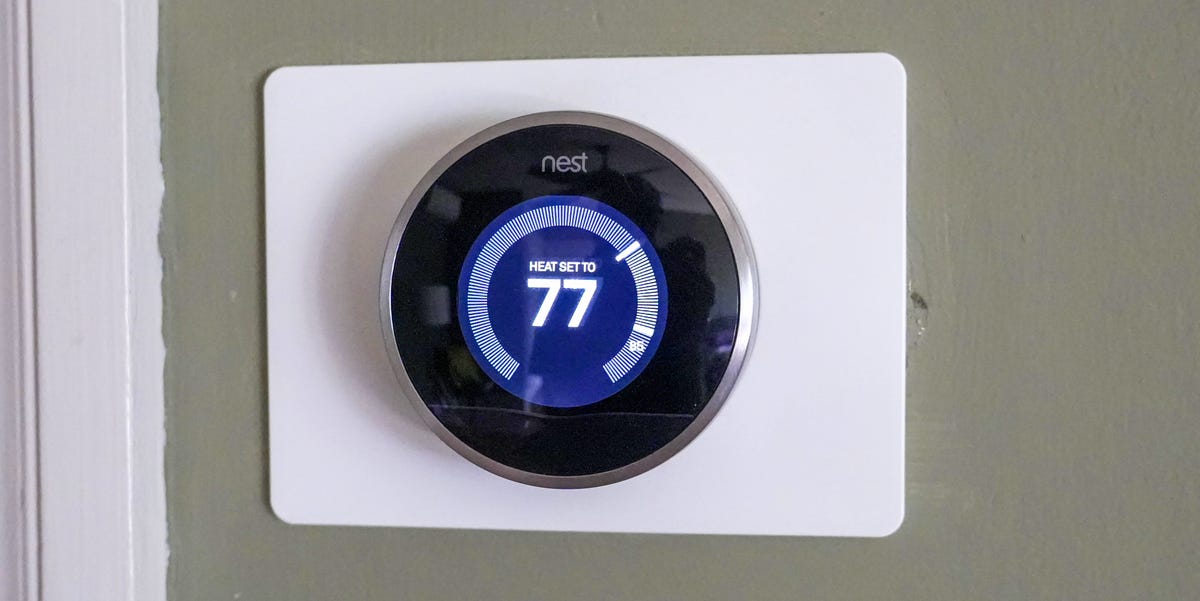
The Google Nest Learning Thermostat has always had a certain “look at me, I’m tasteful technology” energy, and the fourth-generation model doubles down on that. It has a larger, more polished display, improved learning features, Google Home app setup, and an included Nest Temperature Sensor. If your smart home already revolves around Google, this thermostat slides in naturally.
What Makes It Stand Out
The Nest Learning Thermostat is built around adaptive scheduling. It learns the temperatures you prefer and suggests or creates smarter routines over time. It can also use presence sensing and weather-aware features to reduce wasted heating or cooling. In plain English: it pays attention, but in a helpful way, not a “your phone just heard you talk about socks and now every ad is socks” way.
The fourth-generation model is also one of the best-looking thermostats available. The display can show useful information such as temperature, weather, and humidity, making it feel more like a small smart display than a plain HVAC controller.
Best For
Pick the Nest Learning Thermostat if you use Google Home, want a premium design, and prefer a thermostat that learns from your behavior rather than requiring constant manual programming. It is also a solid option if you want an included room temperature sensor right out of the box.
Potential Drawbacks
The Nest Learning Thermostat is not the cheapest option. It also relies on the Google Home app for setup, which may annoy longtime Nest app fans. If your household is built around Alexa or Apple Home, it can still work, but Google-first users will get the smoothest experience.
4. Honeywell Home Smart Color Thermostat: Best Easy-to-Read Display
The Honeywell Home Smart Color Thermostat is the pick for people who want a large touchscreen they can read without squinting like they are deciphering ancient cave markings. It is a practical Wi-Fi thermostat with a customizable color display, scheduling features, weather information, and ENERGY STAR certification.
What Makes It Stand Out
The display is the main event. You can adjust the screen color to match your decor, which sounds minor until you realize most thermostats look like someone stuck a tiny office appliance on your wall. The large screen also makes it easier for guests, older family members, or anyone who does not want to open an app just to change the temperature by two degrees.
It handles the basics well: remote access, programmable schedules, smart assistant compatibility, and energy-conscious operation. It is not as advanced as ecobee or Nest, but not every household needs a thermostat that behaves like it majored in data science.
Best For
This model is ideal for homeowners who want simple smart controls, a large touchscreen, and a familiar Honeywell Home experience. It is also a good fit for households where manual control is still important.
Potential Drawbacks
It lacks some premium automation features, such as advanced learning or robust geofencing. If you want a thermostat that deeply adapts to your routines, consider Nest, ecobee, or Honeywell’s sensor-based T9 instead.
5. Mysa Smart Thermostat: Best for Homes with Electric Baseboards
Most smart thermostats are designed for low-voltage central HVAC systems. That leaves electric baseboard owners standing outside the smart thermostat party, looking through the window while clutching an old dial thermostat. Mysa changes that. It is specifically built for high-voltage electric baseboard and fan-forced heating systems.
What Makes It Stand Out
Mysa for Baseboards works with 120V and 240V electric heating systems, which makes it very different from traditional 24V smart thermostats. It offers app control, scheduling, geofencing, energy monitoring, humidity sensing, and voice control through Apple HomeKit, Alexa, and Google Home.
This is especially useful for homes where each room has its own electric heater. Instead of controlling the whole house from one central thermostat, you can create room-by-room heating schedules. That is great for saving energy in guest rooms, offices, basements, or any space occupied mostly by laundry baskets and forgotten holiday decorations.
Best For
Choose Mysa if your home uses electric baseboard heating, fan-forced heaters, convectors, or similar high-voltage electric systems. It is one of the most practical smart thermostat options for homes that cannot use standard Nest, ecobee, or Honeywell central HVAC models.
Potential Drawbacks
Installation involves high-voltage wiring, so many homeowners should hire an electrician. Also, if you have a standard forced-air furnace or central air system, you need a different Mysa model or another thermostat entirely. Compatibility is everything here.
6. Amazon Smart Thermostat: Best Basic Smart Model
The Amazon Smart Thermostat is the budget-friendly pick for Alexa households. It skips flashy extras and focuses on app-based control, scheduling, energy-saving routines, and simple integration with Amazon’s smart home world. It is not the fanciest thermostat in this guide, but neither is a hammer fancyand hammers still get invited to every toolbox.
What Makes It Stand Out
The price is the obvious advantage. The Amazon Smart Thermostat often costs far less than premium models, making it attractive for renters, first-time smart home buyers, or anyone who wants smart temperature control without treating the thermostat like a major appliance purchase.
Through the Alexa app, users can create schedules, adjust temperatures remotely, and use routines. It works especially well if you already have Echo devices or Ring products. For an Alexa-centered home, it is a straightforward way to add climate control to existing routines.
Best For
Choose the Amazon Smart Thermostat if you want affordable smart control and already use Alexa. It is best for simple HVAC setups where you do not need remote sensors, air quality monitoring, or advanced learning features.
Potential Drawbacks
A C-wire is required, and the thermostat is much less appealing if you do not use Alexa. It also lacks the premium display, multi-room intelligence, and broader ecosystem flexibility of more expensive models.
How to Choose the Best Smart Thermostat for Your Home
Check HVAC Compatibility First
Before falling in love with a smart thermostat, check whether it works with your HVAC system. Most central HVAC thermostats use low-voltage 24V wiring. Electric baseboards usually use high-voltage wiring. These are not interchangeable. Installing the wrong thermostat is not “DIY.” It is “call someone immediately.”
Look for a C-Wire
Many smart thermostats need a common wire, or C-wire, to provide continuous power. Some models include adapters or power extender kits. Others require a C-wire outright. Remove your old thermostat cover and take a photo of the wiring before buying. That photo may become your best friend, especially when the wires look like alphabet soup.
Match the Thermostat to Your Smart Home Platform
If you use Alexa, the Amazon Smart Thermostat or ecobee may feel natural. If you live in Google Home, Nest is the obvious fit. If you prefer Apple HomeKit, look carefully at compatibility, Matter support, and app features. A thermostat can technically “work with” several platforms but still feel smoother in one than another.
Decide Whether You Need Room Sensors
Room sensors are valuable if your home has hot and cold spots. They let the thermostat respond to more than one location, which is useful for bedrooms, nurseries, home offices, and upstairs rooms. If your home already feels evenly comfortable, sensors may be nice but not necessary.
Think About Who Will Use It
A beautiful app is great until a guest, child, parent, or babysitter needs to change the temperature. If multiple people will use the thermostat manually, prioritize a clear display and simple controls. In that case, Honeywell’s Smart Color model may beat a more advanced thermostat that hides too much inside the app.
Real-World Experiences: What Living With a Smart Thermostat Is Actually Like
The first week with a smart thermostat is usually a mix of delight, suspicion, and repeatedly opening the app just because you can. There is something weirdly satisfying about changing the temperature from the grocery store. You may not need to do it, but the power is there, and with great power comes great responsibilityand possibly a slightly cooler living room.
Installation is the first reality check. Some homes make the process easy: turn off power, remove the old thermostat, label wires, connect the new base, snap on the display, and follow the app. Other homes reveal mysteries behind the wall. No C-wire. Extra wires. Paint outlines from a thermostat installed during the age of dial-up internet. A smart thermostat can be a simple Saturday project, but it can also become a reminder that older houses have secrets.
Once installed, the biggest benefit is convenience. On cold mornings, the house can warm before you get out of bed. During summer, you can raise the temperature when everyone leaves and cool things down before the family returns. If you travel, vacation mode helps keep energy use low without turning the house into a humidity experiment. For people who routinely forget to adjust the thermostat, automation can feel like hiring a tiny, silent assistant who cares about utility bills.
The second big benefit is comfort. Room sensors can make a noticeable difference in homes with uneven temperatures. For example, a thermostat in a hallway may think the house is perfect while the upstairs bedroom feels like a toaster oven. A sensor in the bedroom tells the system what is happening where people actually sleep. This can reduce the nightly ritual of throwing blankets on, kicking them off, and blaming the thermostat like it has a personal grudge.
Energy reports are useful, too, but only if you read them. Many apps show runtime, trends, and suggested changes. At first, this may seem like homework. Over time, it becomes helpful. You may notice that lowering the heat a little overnight saves energy without sacrificing comfort, or that your cooling system runs hardest during late afternoon sun. Small adjustments add up.
There are frustrations. App updates can move settings. Wi-Fi outages can temporarily limit remote control. Some thermostats are too dependent on one ecosystem. And learning thermostats may need correction during the first few weeks. If the thermostat decides you enjoy living at 66 degrees because you adjusted it once after exercising, you may need to politely retrain it. Smart does not mean psychic.
The best experience comes from balancing automation with common sense. Set reasonable temperature ranges. Use schedules. Add sensors only where they matter. Do not chase perfect comfort in every corner of the house every minute of the day, because that is how energy bills grow fangs. A smart thermostat is most effective when it supports your routine instead of becoming another gadget you babysit.
After living with one, most people do not want to go back. Remote control alone is addictive. The energy savings are welcome. The comfort improvements are real. And there is a small but undeniable joy in asking a voice assistant to turn down the heat while you remain under a blanket like a responsible adult burrito.
Final Verdict: Which Smart Thermostat Should You Buy?
If you want the best all-around smart thermostat, the ecobee Smart Thermostat Premium is the strongest choice for most central HVAC homes. It offers room sensing, broad compatibility, premium features, and smart home flexibility.
If you want the best value, the Honeywell Home T9 is a dependable and practical pick, especially when paired with smart room sensors. If you are deep into Google Home and want a beautiful thermostat that learns your routine, the Google Nest Learning Thermostat (4th Gen) is hard to ignore.
For easy manual readability, the Honeywell Home Smart Color Thermostat remains a smart, simple option. For electric baseboards, Mysa is the specialist you need. And for Alexa users on a budget, the Amazon Smart Thermostat delivers basic smart control at a wallet-friendly price.
The best smart thermostat is not simply the one with the most features. It is the one that fits your wiring, your HVAC system, your smart home platform, and your daily routine. Get that right, and your thermostat may quietly become one of the hardest-working devices in your homeright after the coffee maker, obviously.