Note: This article is based on publicly available film details, author interviews, publisher information, and classic mystery history. It is written as original editorial content for web publication.
Introduction: Benoit Blanc Walks Into a Library
Every Knives Out movie feels like Rian Johnson opened a dusty mystery shelf, shook it gently, and watched a glittering pile of suspects, secrets, alibis, and dramatic hats fall out. Wake Up Dead Man: A Knives Out Mystery continues that tradition, but this time the literary fingerprints are not hiding in the wallpaper. They are practically waving from the pews.
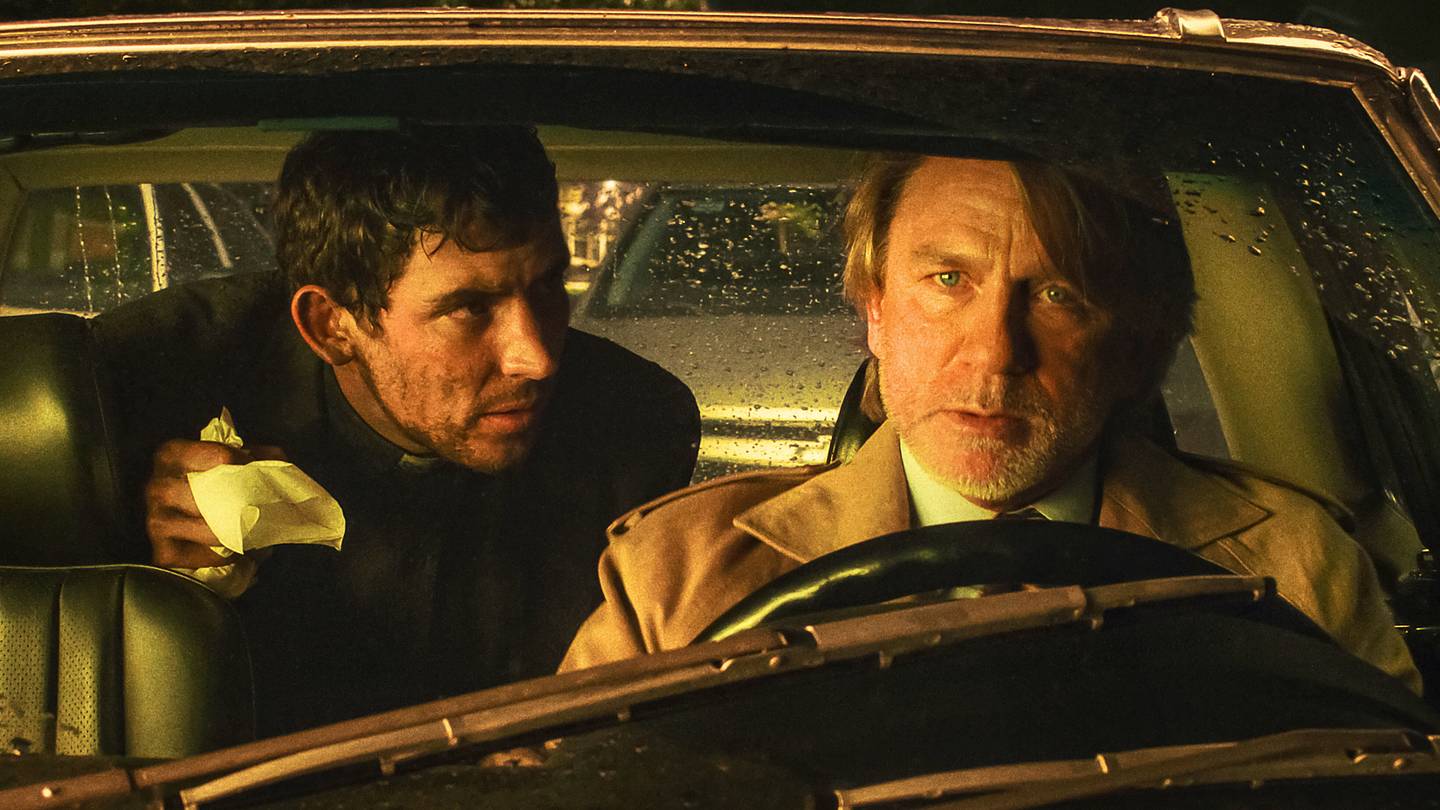
The third Benoit Blanc mystery sends Daniel Craig’s elegant detective into a darker, more Gothic case centered on faith, death, and an “impossible crime.” The setting is a small church in upstate New York, the atmosphere is heavy with spiritual tension, and the mystery has that delicious old-school quality: someone appears to have done the undoable. In other words, this is the kind of case that makes a detective sigh, straighten his suit, and silently thank the Golden Age of crime fiction for doing the homework first.
Inside the film, five classic mystery books form a kind of unofficial reading list. They are not random props. They are clues to Johnson’s creative DNA: Edgar Allan Poe’s The Murders in the Rue Morgue, Dorothy L. Sayers’s Whose Body?, Agatha Christie’s The Murder of Roger Ackroyd, John Dickson Carr’s The Hollow Man, and Christie’s The Murder at the Vicarage. Together, these works explain why Wake Up Dead Man feels both fresh and antique, like a brand-new cathedral built from old puzzle boxes.
For readers searching for the classic mystery books that inspired Wake Up Dead Man, this guide breaks down each title, why it matters, and how it echoes through Johnson’s modern whodunit. No trench coat required, though it certainly would not hurt.
Why Classic Mystery Books Matter to the Knives Out Universe
The Knives Out films are not simple nostalgia machines. They do not merely copy Agatha Christie and call it dinner. Instead, Johnson uses classic mystery structure the way a jazz musician uses standards: he knows the melody, respects it, then starts riffing.
Knives Out revived the family-estate murder mystery with modern class anxiety. Glass Onion turned the rich-island puzzle into a satire of tech billionaires and performative genius. Wake Up Dead Man goes somewhere more solemn: a church, a Good Friday service, and a murder that seems to violate not only logic but perhaps nature itself. That makes the film especially close to the locked-room mystery, the impossible-crime story, and the village whodunit.
The five books below represent different branches of detective fiction. Poe gives us the brilliant analyst. Sayers gives us wit and meta-mystery. Christie gives us narrative misdirection and village suspicion. Carr gives us the locked-room machine at full steam. Together, they create the invisible architecture behind Benoit Blanc’s latest case.
1. The Murders in the Rue Morgue by Edgar Allan Poe
The grandparent of detective fiction
Published in 1841, Edgar Allan Poe’s The Murders in the Rue Morgue is widely treated as one of the first modern detective stories. Before Sherlock Holmes, before Hercule Poirot, before Miss Marple, there was C. Auguste Dupin, a Parisian thinker who solves crime through observation, logic, and a level of calm that would be very annoying if he were not usually correct.
The story centers on a brutal double murder inside a room that appears inaccessible. Witnesses hear strange voices. The police are baffled. The crime scene seems to laugh in the face of ordinary explanation. Dupin, however, does what great fictional detectives always do: he notices what everyone else sees but fails to understand.
That setup matters deeply to Wake Up Dead Man. The film’s central murder is framed as an impossible crime, the kind of event that seems to invite supernatural speculation before rational explanation. Poe’s story also supplies a Gothic mood: sealed spaces, horror, confusion, and the sense that reason must walk into darkness with a candle.
Benoit Blanc may be more flamboyant than Dupin, and he certainly has better tailoring, but both detectives belong to the same family tree. They solve not by brute force but by disciplined imagination. The lesson from Poe is simple: the impossible usually becomes possible when someone asks the right question.
2. Whose Body? by Dorothy L. Sayers
A witty detective enters the bathtub
Dorothy L. Sayers’s Whose Body?, published in 1923, introduced Lord Peter Wimsey, one of detective fiction’s most charming aristocratic sleuths. Lord Peter is clever, theatrical, literary, and just self-aware enough to know that detective work can be a little absurd. He is the sort of man who can investigate a corpse and still sound like he is choosing cufflinks.
The novel begins with a body discovered in a bathtub, wearing nothing but a pair of pince-nez. It is a wonderfully strange image: domestic, funny, grotesque, and suspicious all at once. Sayers takes the detective formula seriously, but she also enjoys poking it with a silver-topped cane. That sense of play is important to the Knives Out universe.
Rian Johnson’s mysteries love genre awareness. Characters know the tropes. The camera knows the tropes. The audience definitely knows the tropes, and Johnson knows that we know. Whose Body? operates in a similar spirit. It arrived when detective fiction was already becoming a recognizable game, which allowed Sayers to tease the rules while still delivering a proper puzzle.
In relation to Wake Up Dead Man, Sayers’s influence appears in tone and structure. The film can be serious about sin, faith, grief, and guilt while still letting Blanc be Blanc. A mystery does not need to wear a funeral expression in every scene. Sometimes the best way to sharpen suspense is to let wit dance near the crime scene, carefully avoiding the chalk outline.
3. The Murder of Roger Ackroyd by Agatha Christie
The twist that made readers distrust the furniture
Agatha Christie’s The Murder of Roger Ackroyd, published in 1926, is one of the most famous detective novels ever written. It features Hercule Poirot, village gossip, blackmail, inheritance, and one of the most discussed twists in crime fiction. To avoid spoiling the novel for new readers: let us simply say that Christie performs a magic trick with narrative trust, and generations of mystery fans have been checking the magician’s sleeves ever since.
The book’s genius lies not only in the surprise but in the fairness. Christie hides the truth in plain sight, using the reader’s assumptions as camouflage. That is also central to Johnson’s work. The Knives Out films are full of people who believe they understand the story they are in. They are usually wrong, and their wrongness is half the fun.
The Murder of Roger Ackroyd also matters because it demonstrates how a mystery can break rules without breaking the reader’s trust. The best twists do not feel random. They feel inevitable in hindsight. After the reveal, the reader should not say, “That came from nowhere.” The reader should say, “Oh no. It was sitting right there, wearing a tiny hat.”
In Wake Up Dead Man, the influence of Roger Ackroyd is less about copying a plot point and more about reminding us to distrust the shape of the story. Who gets to explain events? Who benefits from our sympathy? Which character seems too obvious, and which one is so close to the center that we forget to inspect them? Christie teaches modern mystery writers that the narrator, the witness, the helper, and the innocent bystander are all fair game.
4. The Hollow Man by John Dickson Carr
The locked-room masterpiece behind the impossible crime
If one book stands above the others as a direct inspiration for Wake Up Dead Man, it is John Dickson Carr’s The Hollow Man, also published in the United States as The Three Coffins. Carr was an American master of the locked-room mystery, and this 1935 novel is often celebrated as one of the greatest impossible-crime stories ever written.
The locked-room mystery is a special beast. A victim is killed in a sealed room. No killer could enter. No killer could exit. The laws of physics appear to have taken a coffee break. The reader’s job is to panic politely until the detective restores order.
The Hollow Man is especially famous for its “locked-room lecture,” in which Dr. Gideon Fell lays out different methods by which apparently impossible murders might be committed. It is one of the genre’s great meta-moments: a detective story pausing to explain detective-story machinery while still being a detective story. That is a risky move. Done badly, it becomes a lecture. Done well, it becomes a fireworks display with footnotes.
Wake Up Dead Man borrows this intellectual excitement. The film’s murder is not merely “Who hated the victim?” but “How could this event have happened at all?” That shift from whodunit to howdunit gives the story a different rhythm. Motive matters, but mechanics matter too. A locked-room mystery makes the detective part investigator, part engineer, part stage magician, and part extremely patient math teacher.
Carr’s Gothic atmosphere also fits the film’s mood. The Hollow Man plays with fear, illusion, and the possibility of the uncanny. Wake Up Dead Man similarly brushes against religious awe and apparent miracle. In both cases, the detective’s mission is not to mock mystery but to separate wonder from fraud, faith from manipulation, and truth from theatrical fog.
5. The Murder at the Vicarage by Agatha Christie
Village gossip, clergy, and a body where a body should not be
Agatha Christie returns to the list with The Murder at the Vicarage, first published in 1930. This novel introduced Miss Marple in full-length form and placed murder directly inside a church-adjacent domestic world. The victim, Colonel Protheroe, is widely disliked, which in Christie terms means nearly everyone has a motive and at least three people are pretending not to enjoy the investigation.
The connection to Wake Up Dead Man is easy to see. Both stories use religious community as a pressure cooker. A vicarage or church is supposed to suggest peace, morality, confession, and sanctuary. Murder in such a place feels like a stain on the furniture of the soul. That contrast gives the mystery emotional power.
The Murder at the Vicarage also helped define the village mystery, where everyone knows everyone and therefore everyone is hiding something. Miss Marple’s genius comes from her understanding of human nature. She does not need a laboratory. She has neighbors. Frankly, that may be more dangerous.
Wake Up Dead Man updates this tradition by turning the congregation into a suspect pool. The church is not just a backdrop; it is a community shaped by loyalty, resentment, belief, fear, and power. Like Christie, Johnson understands that small communities produce big secrets because there is nowhere for guilt to stretch its legs.
How These Five Books Shape Wake Up Dead Man
A mystery built from five classic ingredients
Put these five books together and a clear recipe appears. Start with Poe’s impossible crime and analytical detective. Add Sayers’s wit and genre self-awareness. Fold in Christie’s misdirection and village psychology. Pour in Carr’s locked-room mechanics. Finish with Christie’s church setting and social suspicion. Bake until someone screams during a service.
This is why Wake Up Dead Man feels different from the previous Knives Out films. It has the familiar pleasures of an ensemble mystery: eccentric suspects, sharp dialogue, and Blanc’s theatrical intelligence. But it also leans harder into the Gothic and spiritual side of classic crime fiction. The question is not only who committed murder, but what kind of story people tell themselves when logic becomes uncomfortable.
The best classic mystery books are not merely puzzles. They are moral machines. They ask who lies, who judges, who confesses, who profits, and who gets mistaken for innocent because they speak softly. That makes them perfect fuel for a film about faith and deception. In a church mystery, every secret sounds louder.
Why Modern Readers Should Pick Up These Books
Readers who enjoy Wake Up Dead Man will find these classics surprisingly lively. Yes, some language, pacing, and social attitudes belong to their eras. No, the books do not always move with streaming-era speed. But the core pleasures remain bright: the thrill of suspicion, the elegance of a clue, and the tiny personal humiliation of being fooled by an author who has been dead for decades.
Start with The Murder at the Vicarage if you want cozy village suspicion. Choose The Hollow Man if you want the pure locked-room challenge. Read The Murder of Roger Ackroyd if you want to understand why Christie still rules the mystery kingdom from a throne made of red herrings. Pick Whose Body? for wit and early Golden Age style. Begin with Poe if you want to see where the detective tradition first sharpened its knife.
These books also prove that mystery fiction is not one flavor. It can be Gothic, funny, elegant, philosophical, cozy, cruel, theatrical, or all of the above before tea. That variety is exactly what keeps the Knives Out series alive. Each film becomes a different novel on the shelf, with Benoit Blanc as the recurring bookmark.
Reader Experience: Watching the Movie After Reading the Classics
There is a special pleasure in watching Wake Up Dead Man after spending time with these classic mystery books. The movie becomes less like a stand-alone puzzle and more like a conversation across generations. You start noticing the old machinery humming beneath the modern polish. A sealed crime scene no longer feels like a simple plot device; it feels like a salute to Poe and Carr. A suspicious church community no longer feels like just a dramatic setting; it feels like Christie’s St. Mary Mead wandered into a darker century and forgot to bring biscuits.
Reading the classics first also changes how you look at Benoit Blanc. Without that background, Blanc is a funny, brilliant detective with a magnificent accent and the energy of a man who could interrogate a salad fork. With the background, he becomes part of a long detective lineage. Dupin gives him logic. Poirot gives him theatrical precision. Miss Marple gives him human insight. Gideon Fell gives him the impossible-crime toolkit. Lord Peter Wimsey gives him permission to be charming while standing near a corpse.
The experience also makes the movie’s humor richer. Johnson is not simply dropping book titles to look clever. He is inviting viewers into the joke. Mystery fans know that “impossible” rarely means impossible. It means someone has arranged the facts so carefully that common sense walks into a wall. When the film points toward The Hollow Man, it is almost winking at the audience: yes, we know what kind of game this is, and yes, you are still probably going to lose.
There is also emotional value in reading these older books around the film. Many classic mysteries are obsessed with restoring order. A body disrupts the world; the detective explains the disruption; society exhales. Wake Up Dead Man complicates that comfort because its religious setting raises deeper questions. What if the community itself is damaged? What if order is not the same as justice? What if confession solves one mystery but exposes another? These are not new questions, but Johnson gives them a modern ache.
For book clubs, this topic is practically gift-wrapped. One fun approach is to pair each book with a specific viewing question. After Poe, ask how the film handles the impossible crime. After Sayers, look for humor and self-awareness. After Roger Ackroyd, pay attention to narrative trust. After Carr, focus on mechanics and misdirection. After Vicarage, discuss how religious spaces shape suspicion. Suddenly, the movie night becomes a miniature mystery seminar, only with popcorn and fewer academic footnotes. A clear win for civilization.
Personally, the most enjoyable part of tracing these influences is realizing how generous the mystery genre can be. Great whodunits do not expire. They wait. A story written in 1841 can still whisper into a Netflix hit. A village mystery from 1930 can still explain why people in small communities lie so creatively. A locked-room lecture from 1935 can still make modern viewers lean forward and mutter, “Wait, how did that happen?” That continuity is comforting. Murder is bad, obviously, but literary influence is doing splendidly.
By the end, Wake Up Dead Man works as both entertainment and invitation. It says: enjoy the movie, then go read the ancestors. The five classic mystery books that inspired it are not homework in the boring sense. They are the hidden passage behind the bookshelf. Open it, step inside, and you will find that Benoit Blanc has been walking these corridors all along.
Conclusion
Wake Up Dead Man: A Knives Out Mystery is modern in style, cast, and cultural energy, but its roots run deep into classic detective fiction. The film draws power from Poe’s analytical origins, Sayers’s playful sophistication, Christie’s unmatched misdirection, Carr’s impossible-crime engineering, and the church-centered suspicion of The Murder at the Vicarage.
That is why the movie feels so satisfying to mystery lovers. It is not simply a new Benoit Blanc case. It is a guided tour through the genre’s greatest tricks, rebuilt for a contemporary audience. These five classic mystery books remind us that the best whodunits are more than clever endings. They are games of perception, morality, performance, and trust.
So, if Wake Up Dead Man left you hungry for more locked doors, suspicious vicars, brilliant detectives, and twists sharp enough to slice an alibi in half, your next move is obvious: read the books. Just keep an eye on the quiet characters. Classic mysteries have taught us that they are often the dangerous ones.