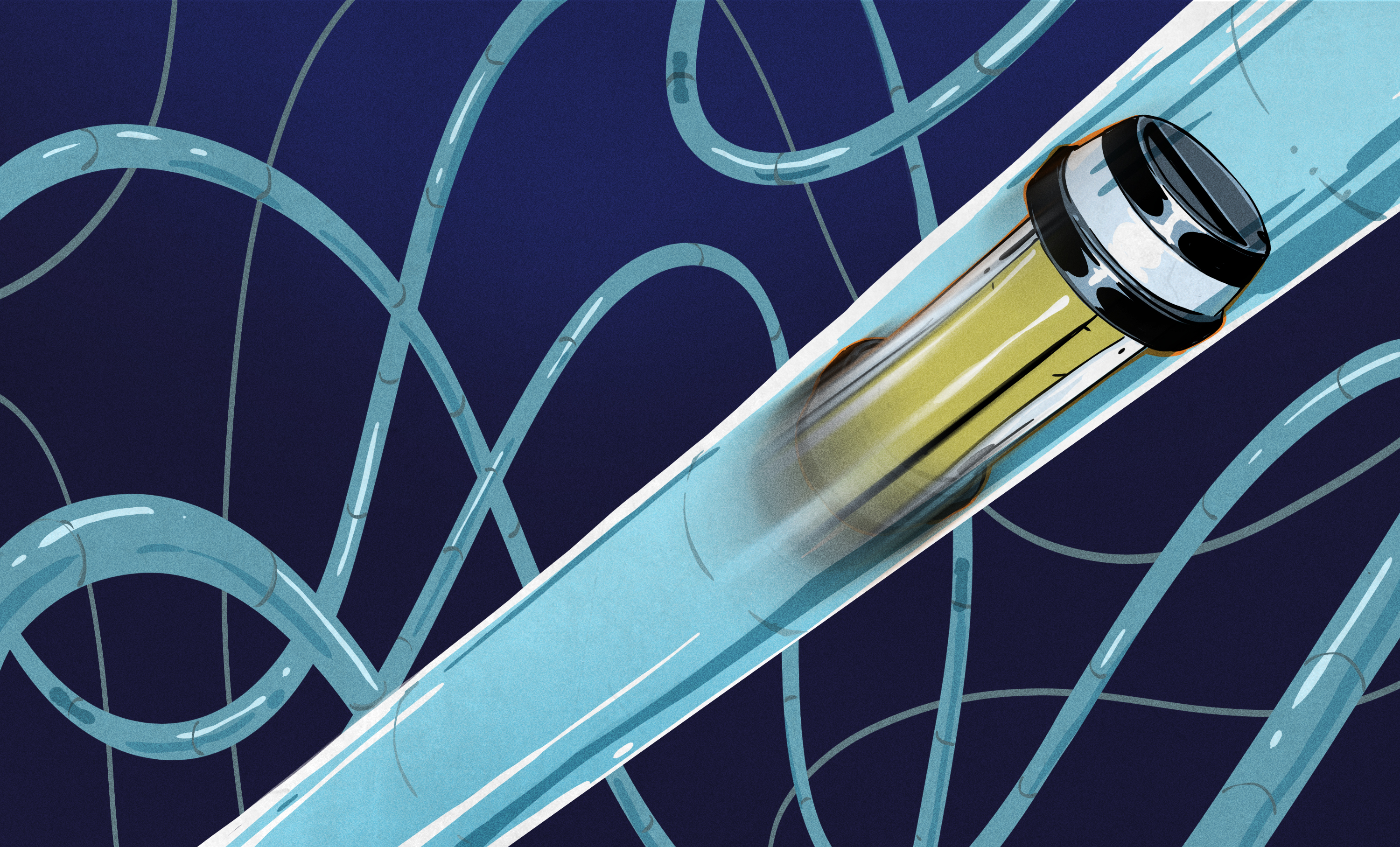
There are some technologies that scream for attention. Smartphones glow. Electric cars hum with self-importance. Artificial intelligence arrives with headlines, keynote music, and enough buzzwords to power a small nation. And then there are pneumatic tubes: the gloriously unglamorous, whoosh-powered workhorses hiding in hospitals, banks, labs, and old public buildings like they have nothing to prove.
That is exactly what makes them fascinating. Pneumatic tubes are one of the rare inventions that feel both antique and futuristic at the same time. They look like props from a steampunk movie, but they still solve a very modern problem: how to move small, urgent items from one place to another faster than a person can walk them. In other words, they are the original “send” button, except louder and much more dramatic.
If you have ever watched a bank teller pop your deposit into a capsule and fire it through a tube, or if you have heard a sudden thunk from behind the scenes in a hospital, you have already met this technology. It has been in plain sight for decades. Most people simply stopped noticing it.
What Are Pneumatic Tubes, Exactly?
A pneumatic tube system is a network of sealed tubes that moves canisters using air pressure, vacuum, or a combination of both. A carrier gets loaded at one station, air does its thing, and the canister arrives at another station somewhere else in the building or campus. That is the basic idea. The result feels like mail, medicine, paperwork, or lab samples are being shot through the walls by an invisible butler.
The charm of the system is in its simplicity. No traffic jams in hallways. No elevator delays. No staff member sprinting down three floors while balancing a biohazard bag and a coffee. Just a controlled burst of air and a container moving inside a dedicated route.
Of course, modern pneumatic tube systems are smarter than the old-school versions people remember from drive-thru banks. Today’s systems can route carriers automatically, track where they have been, assign priorities, limit access, and manage station traffic like a miniature logistics network. Beneath the retro vibe, this is serious operational technology.
The Original Internet, but With More Thumping
How the tube became a big deal
Pneumatic tube systems became popular long before email, text messages, or even reliable urban traffic. In the late nineteenth and early twentieth centuries, they offered something cities desperately wanted: speed. Messages, documents, and mail could travel underground or through buildings without waiting on horses, wagons, street congestion, or human legs.
In the United States, the postal service embraced the concept in a big way. What began as a practical experiment turned into a surprisingly ambitious mail network. Cities such as Philadelphia and New York used pneumatic mail to move letters between key postal hubs. New York’s system became especially famous, sending carriers through underground lines and even across the Brooklyn Bridge. For an earlier age, this was not a gimmick. It was infrastructure.
And it was fast. Pneumatic tubes turned the movement of letters into something close to industrial choreography. Operators could dispatch carriers in rapid succession, keeping mail in motion below crowded streets while the city above dealt with weather, carts, crowds, and chaos. If today’s cloud computing promises reduced friction, pneumatic tubes offered the mechanical version of the same dream: less waiting, more flow.
Why people loved it
The appeal was obvious. Pneumatic tube systems shrank time inside cities and buildings. They made distance feel smaller. They also gave institutions a powerful image boost. Nothing says “we are modern and efficient” quite like launching a sealed capsule through the wall and having it appear somewhere else moments later.
That image mattered in department stores, public institutions, and financial settings. Tubes signaled order, speed, and a touch of theatrical genius. They were practical, yes, but they were also a performance. Even now, the technology still has that effect. A pneumatic tube never just arrives. It makes an entrance.
Why Pneumatic Tubes Never Really Disappeared
Many people associate pneumatic tubes with history books, old post offices, or retro bank drive-thrus. That is understandable, but incomplete. The truth is that the technology survived because it remained useful in places where speed, traceability, and controlled transport still matter more than fashion.
Hospitals are where tubes became indispensable
If pneumatic tubes have a modern stronghold, it is healthcare. In hospitals, every minute can matter. Medications need to move. Blood samples need to reach the lab. Paperwork, blood products, and approved supplies need to travel between departments without waiting for elevators or couriers. For that kind of internal logistics, pneumatic tube systems are hard to beat.
This is also where the technology matured. Hospital systems are not just dumb pipes with attitude. They are often carefully managed transport networks with routing rules, security settings, and item restrictions. Some materials are approved for tube transport. Others are not. That distinction matters because speed is helpful only when sample integrity and safety stay intact.
That is why hospitals validate what can be sent. Some routine chemistry, hematology, and coagulation samples can travel safely through modern systems when protocols are followed. But certain specimens require hand delivery, special packaging, or outright exclusion from tube transport. In healthcare, pneumatic tubes are not a toy from the future. They are a regulated workflow tool.
Banks kept the public version alive
If hospitals made pneumatic tubes essential, banks made them iconic. The drive-thru banking tube became one of the most recognizable pieces of quiet American infrastructure. You pulled up, spoke to a teller through an intercom, loaded your documents into a capsule, and watched your transaction disappear into a pipe like suburban magic.
The system worked because the distances were short, the cargo was light, and the need for secure back-and-forth movement was constant. Even as ATMs and mobile apps reduced the importance of drive-thru tubes, the image stuck. For generations, pneumatic tubes were the physical symbol of quick banking service.
Long before that, similar systems were used in department stores to move cash and receipts away from the sales floor toward centralized cash handling points. In other words, pneumatic tubes were quietly doing retail operations before “operations” became a favorite word in every business presentation.
Libraries, labs, and back-office systems kept using them
Another reason pneumatic tubes never vanished is that institutions often care more about reliability than trendiness. Libraries used them for call slips and internal requests. Research and medical facilities used them for controlled movement of materials. Large buildings used them to avoid wasting staff time on repeated trips across floors.
This is a recurring lesson in technology: once a system becomes deeply useful, it does not need to look fashionable to survive. It only needs to keep working better than the alternatives for a specific job.
How Pneumatic Tubes Work Without Feeling Like Magic
At the sending station, a worker loads a carrier into a tube or chamber. The system then uses pressure or vacuum to move that carrier through the network. In more advanced setups, switches and diverters route the canister toward the correct destination, much like a tiny logistics railway hidden behind walls and ceilings.
Modern systems can prioritize urgent deliveries, monitor station availability, and record when a carrier was sent, where it went, and who received it. That kind of traceability matters in hospitals and secure facilities, where “it got there eventually” is not an acceptable standard.
Some systems even include password-protected receipt, automated rerouting of empty carriers, and express lanes between high-volume points. Once you look past the pleasingly dramatic whoosh, pneumatic tubes start to resemble a physical data network for objects.
The Real Advantages of Pneumatic Tube Systems
They save time
The first advantage is obvious: speed. A person can carry one thing at a time and gets slowed down by doors, hallways, foot traffic, and human limitations like “needing lunch.” A pneumatic tube system moves items quickly without stealing staff attention from more important tasks.
They reduce unnecessary movement
In a hospital, that matters enormously. Nurses, pharmacists, lab staff, and support workers do not need more walking for the sake of walking. They need systems that return their time to patient care. Pneumatic tubes help buildings function with less friction.
They improve security and control
Sealed carriers, tracked routes, limited access, and documented handoffs give institutions more control than informal hand-carry workflows. That is useful for medications, paperwork, and other sensitive items where accountability matters.
They thrive indoors
Unlike trucks, carts, or foot messengers, pneumatic tube systems do not care about rain, snow, crowded corridors, or elevator delays. Once installed, they create a protected transport path that stays available regardless of what is happening outside the tubes.
The Drawbacks Nobody Mentions in the Cool Retro Photos
Pneumatic tubes are not perfect. They require maintenance, careful system design, and rules about what should and should not be sent. The tubes can jam. Carriers can be packed badly. Sensitive samples can be affected by vibration or improper handling. Old systems can become expensive to maintain. And yes, the noise is part of the package. Nobody has ever mistaken a working pneumatic station for a silent meditation fountain.
They also work best for small, contained items. They are not replacing forklifts, delivery vans, or robots across every use case. Pneumatic tubes win when the cargo is compact, urgent, frequent, and repetitive. Outside that lane, they are less impressive.
That is probably why they have endured so well. They know their role. Pneumatic tubes are not trying to do everything. They are just absurdly good at a few very specific jobs.
Why This Old Technology Still Feels Weirdly Modern
There is something wonderfully humbling about pneumatic tubes. In an era obsessed with digital disruption, they remind us that not every smart system needs a touchscreen and a marketing slogan. Sometimes the best technology is the one that solves a physical problem directly, visibly, and fast.
Pneumatic tubes are also a reminder that “obsolete” is often an exaggeration. A tool may disappear from public attention and still remain essential behind the scenes. That is the real story here. Pneumatic tubes did not fail. They specialized.
They faded from cultural spotlight because newer technologies took over communication. But moving information is not the same as moving objects. A lab sample still has to travel. A dose still has to reach a floor. A blood product still needs a controlled path. Until buildings learn teleportation, tubes remain surprisingly competitive.
Experiences in Plain Sight: What Pneumatic Tubes Feel Like in Real Life
Part of the reason pneumatic tubes remain memorable is that they are not just functional. They create a distinct experience. Even people who know nothing about the engineering tend to remember the sensory side of them. There is the brief pause while the canister settles into place, the command entered into a keypad, the soft mechanical readiness, and then the launch: a sudden rush of air followed by a disappearing capsule and the feeling that the building itself just inhaled.
In hospitals, that experience often blends into the soundtrack of daily work. Staff hear chirps, thuds, and whooshes so often that the sounds become part of the background rhythm. For patients and visitors, though, the system can feel almost theatrical. Something important gets packed into a carrier, the door closes, and seconds later it is gone into a hidden network above ceilings and behind walls. It is one of the few pieces of infrastructure that still feels a little magical even after you understand it.
There is also an emotional side to the experience. In a healthcare setting, pneumatic tubes can symbolize urgency and care at the same time. A medication arrives faster. A sample reaches the lab sooner. A delay gets trimmed from a process that already feels stressful for patients and staff. Nobody stands around applauding the tube system, but its presence quietly reduces friction during moments when friction is the last thing anyone needs.
In banks, the experience is different but equally memorable. The drive-thru tube made routine transactions feel mechanical in the best possible way. You placed your cash or paperwork into a capsule, snapped it shut, and watched it zip away toward an unseen teller. Then you waited for the return trip, which always carried a weird little thrill, as if your receipt were arriving from a tiny high-speed tunnel universe. It turned ordinary banking into a miniature event.
Older department stores once created a similar feeling. Cash flew away from counters toward central collection points, and customers got an unexpected show with their purchase. The transaction was not just processed. It was launched. In an age before digital spectacle filled every spare second, that kind of visible mechanism felt futuristic.
Libraries and institutional buildings offered yet another version of the experience. There, the tube system felt less flashy and more like a hidden nervous system. A request slip disappeared. Somewhere else, a staff member responded. Knowledge moved through architecture. That is a wonderfully strange idea when you stop and think about it: a building literally carrying its own internal messages.
What makes these experiences so lasting is that pneumatic tubes give movement a body. Digital systems move information invisibly. Pneumatic tubes move real objects in a way people can hear, anticipate, and imagine. You know something is in transit because the building tells you. It sighs, whooshes, thumps, and occasionally startles you half to death.
That physicality may be exactly why pneumatic tubes still fascinate people. They are efficient, but they are not sterile. They are practical, but not boring. They turn logistics into a sensory event. And in a world where so much technology hides behind glass screens, that makes pneumatic tubes feel refreshingly honest. They do not pretend to be magic. They let you hear the machinery working.
Conclusion
Pneumatic tubes are easy to overlook because they do not behave like flashy modern tech. They do not ask for updates, brag about ecosystems, or try to become your personality. They simply move important things quickly through dedicated paths with a level of efficiency that many newer systems still struggle to match.
That is why they matter. Pneumatic tubes are not relics. They are proof that good technology survives when it keeps solving real problems. From mail networks and library call slips to modern hospitals and drive-thru banking, they have remained useful because they understand a timeless truth: speed is valuable, but dependable speed is gold.
So the next time you hear a mysterious whoosh behind a wall, take a moment to appreciate it. Somewhere nearby, one of the oldest pieces of “future technology” is still doing its job.