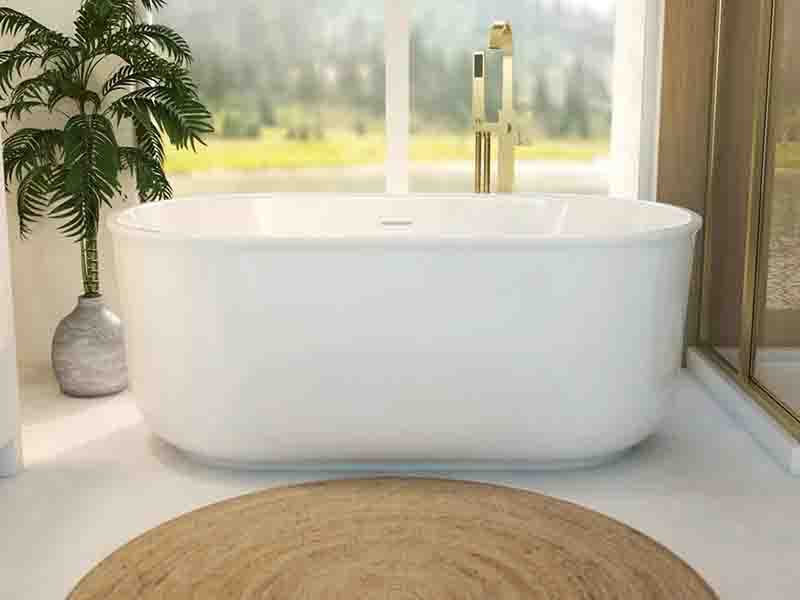
A great bathtub does not merely sit in a bathroom; it changes the mood of the whole room. The Taft Acrylic Double Ended Freestanding Tub is the kind of fixture that walks in wearing a crisp white robe, lights a candle, and politely asks the bathroom vanity to stop stealing attention. With its smooth oval silhouette, high-gloss acrylic surface, and double-ended soaking design, this tub is built for homeowners who want a bathroom centerpiece that feels modern, comfortable, and practical without acting like a high-maintenance celebrity.
Freestanding tubs have become a favorite in American bathroom remodels because they create instant visual drama. Unlike an alcove bathtub tucked between three walls, a freestanding soaking tub is meant to be seen from multiple angles. The Taft tub leans into that advantage with a clean, contemporary shape that works in minimalist bathrooms, transitional primary suites, and even vintage-inspired spaces where a simple oval form can balance ornate tile, warm brass fixtures, or dramatic wallpaper.
But looks are only part of the story. A bathtub must also feel good, clean easily, fit the room, and work with the plumbing plan. The Taft Acrylic Double Ended Freestanding Tub checks several important boxes: acrylic construction, a non-porous surface, adjustable levelers, a deep soaking profile, and no faucet drillings, which gives homeowners more flexibility when choosing a freestanding or wall-mounted tub filler.
What Is the Taft Acrylic Double Ended Freestanding Tub?
The Taft is a modern acrylic freestanding bathtub sold under the Randolph Morris name and commonly associated with Vintage Tub & Bath listings. It is designed as a double-ended soaking tub, meaning both ends are gently sloped so the bather can recline comfortably from either side. That small design decision makes a bigger difference than it sounds. In a single-ended tub, one side usually has the drain and overflow hardware near the backrest area. In a double-ended tub, the bathing experience feels more balanced, and the drain is typically positioned closer to the center.
The Taft is available in popular lengths such as 59 inches and 67 inches. The 59-inch version is better suited to smaller bathrooms or layouts where every inch is negotiating for survival. The 67-inch version offers more stretch-out room and feels more appropriate in larger primary bathrooms. Both versions maintain an oval shape, a white acrylic finish, and a soaking depth of about 16 inches, which is deep enough for a relaxing soak without turning the bathroom into a municipal swimming facility.
Key Features at a Glance
High-Gloss Acrylic Construction
Acrylic is one of the most popular materials for modern freestanding tubs because it is lighter than cast iron, smoother than basic fiberglass, and easier to maintain than many porous or specialty materials. The Taft’s high-gloss acrylic finish gives it a polished look that pairs well with chrome, polished nickel, matte black, brushed gold, and oil-rubbed bronze fixtures.
Double-Ended Comfort
The double-ended shape is ideal for homeowners who care about lounging comfort. Since both ends are shaped for reclining, you are not forced into one “correct” direction. This is especially useful in a shared bathroom where two people may have different preferences for faucet placement, view, lighting, or the all-important “which side is closest to the towel” strategy.
Freestanding Installation
Because the tub is freestanding, it has a finished exterior and can serve as the focal point of the room. It does not need to be built into a deck or framed into an alcove. That said, “freestanding” does not mean “drop it anywhere and hope plumbing magically appears.” You still need proper floor support, drain alignment, faucet planning, and access for future maintenance.
Adjustable Levelers
The Taft includes adjustable levelers, which help stabilize the bathtub on floors that are not perfectly even. This feature matters because even a beautiful tub becomes annoying if it rocks slightly every time someone steps in. Nobody wants their spa night to feel like boarding a small boat in choppy water.
No Faucet Drillings
The Taft model is commonly offered with no faucet drillings. This means the tub itself does not come with pre-drilled holes for deck-mounted hardware. Instead, it works best with a freestanding tub filler or a wall-mounted faucet, depending on the bathroom layout. For many remodelers, this is a design advantage because the faucet can be chosen as a statement piece rather than treated like an afterthought.
Why Acrylic Makes Sense for a Freestanding Tub
Acrylic hits a sweet spot for many bathroom projects. It is generally more affordable and lighter than cast iron or stone resin, yet it still looks clean and upscale when manufactured well. For a freestanding tub like the Taft, weight matters because the tub may need to be carried through hallways, around corners, up stairs, or into a second-floor bathroom where your contractor is already silently judging your Pinterest board.
The non-porous acrylic surface also helps with cleaning. Soap residue, bath oils, and minerals are less likely to settle deeply into the material compared with more porous surfaces. In everyday terms, that means a quick wipe-down with mild soap and a soft cloth can go a long way. Harsh abrasives, scouring pads, and aggressive cleaners should be avoided because they can dull or scratch the surface. Acrylic may be durable, but it does not enjoy being scrubbed like a cast-iron skillet.
Heat retention is another reason acrylic tubs remain popular. Acrylic tends to feel warmer to the touch than metal, and many acrylic tubs hold bathwater heat reasonably well for casual soaking. Some Taft listings also mention optional spray foam insulation, which can add warmth to the tub wall and help extend bathing comfort. If you are the type of person who says, “I’ll just take a quick bath,” then emerges 45 minutes later looking philosophically renewed, insulation is worth considering.
Design Appeal: Clean, Oval, and Surprisingly Flexible
The Taft Acrylic Double Ended Freestanding Tub has a quiet design confidence. It is not covered in claw feet, fluted drama, or sculptural angles. Instead, it relies on a smooth oval basin and glossy white finish. That simplicity makes it flexible.
In a modern bathroom, the Taft can sit against large-format porcelain tile, a floating vanity, and matte black fixtures for a sharp spa-style look. In a transitional bathroom, it can soften marble-look tile, shaker cabinetry, and brushed nickel hardware. In a vintage-inspired bathroom, it can act as a clean counterpoint to patterned floor tile, beadboard, or warm brass lighting.
Because the tub has no faucet drillings, the surrounding hardware becomes part of the visual composition. A floor-mounted tub filler creates a luxury hotel effect. A wall-mounted faucet saves floor space and can look especially clean when the tub is positioned near a feature wall. Either way, measure carefully. The faucet spout must reach over the rim properly, and the water stream should land inside the tub without splashing like it is auditioning for a water park.
Choosing Between the 59-Inch and 67-Inch Taft Tub
Size is one of the biggest decisions when buying a freestanding bathtub. The 59-inch Taft is often the safer choice for compact or medium bathrooms. It provides the same double-ended concept and 16-inch soaking depth but takes up less floor space. This can be helpful when the room also needs a shower, toilet clearance, vanity drawers, towel storage, and enough walking space for a human being who has not yet learned to phase through walls.
The 67-inch version gives bathers more legroom and creates a stronger focal point. It is a better fit for larger primary suites where the tub can breathe visually. A 67-inch oval tub can look elegant beneath a window, centered on a tiled wet-room wall, or placed at an angle in a spacious layout. However, bigger is not automatically better. A tub that overwhelms the floor plan can make the room feel cramped, even if the product itself is beautiful.
Before choosing, measure the bathroom carefully. Consider the tub length, width, height, faucet location, drain rough-in, door swing, nearby cabinetry, and cleaning clearance. A common design guideline is to leave a few inches around the tub where possible so the area can be cleaned and serviced. If the tub is placed too tightly against walls or fixtures, the bathroom may look good in photos but become irritating in real life.
Installation Considerations Before You Buy
Freestanding tub installation is not the place to improvise. Before ordering the Taft tub, review the drain location, water supply placement, floor structure, and water heater capacity. A deep soaking tub can require a meaningful amount of hot water, so it is wise to confirm that your water heater can fill the tub comfortably without turning the last ten minutes into a lukewarm character-building exercise.
Floor support is also important. Acrylic tubs are lighter than cast iron, but the total load changes when the tub is filled with water and a person. This is especially relevant for second-floor bathrooms. A qualified contractor or plumber can confirm whether the floor framing is suitable and whether any reinforcement is needed.
Plumbing access should not be ignored. The drain connection must be installed correctly, sealed properly, and accessible enough for maintenance. If the tub is placed on a finished tile floor, installers must avoid dragging it across the surface. The adjustable levelers should be set carefully so the tub sits stable and drains as intended.
Cleaning and Maintenance Tips
The Taft’s acrylic surface is designed to be easy to clean, but “easy” does not mean “indestructible.” Use a soft cloth or non-abrasive sponge with mild dish soap, warm water, or an acrylic-safe bathroom cleaner. Rinse thoroughly after cleaning so residue does not dry into streaks. For routine maintenance, wipe down the tub after use, especially if bath oils, colored bath bombs, or mineral-heavy water are involved.
Avoid abrasive powders, steel wool, stiff brushes, ammonia-heavy products, and harsh solvents unless the manufacturer specifically approves them. These can damage the glossy surface. If a stubborn mark appears, test a gentle method in a less visible area first. The goal is to clean the tub, not interrogate it.
Also pay attention to the area around the base. Since freestanding tubs sit on the finished floor, dust, hair, and water spots can collect nearby. A quick weekly wipe around the base keeps the installation looking intentional rather than neglected.
Who Is the Taft Acrylic Double Ended Freestanding Tub Best For?
The Taft tub is best for homeowners who want a modern freestanding soaking tub with a clean oval shape, acrylic practicality, and flexible faucet options. It is a strong candidate for primary bathroom remodels, guest bathrooms with enough space, spa-style renovations, and design projects where the tub needs to be attractive but not overly ornate.
It may not be ideal for someone who wants built-in storage ledges, integrated jets, a deck-mounted faucet, or a very traditional clawfoot look. It also requires careful planning, especially for faucet placement and drain alignment. But for many remodelers, the Taft’s simplicity is the whole point. It brings the visual impact of a freestanding tub without demanding that the rest of the room dress like a palace.
Styling Ideas for a Spa-Like Bathroom
To make the Taft tub look its best, think in layers. Start with the floor and wall surfaces. Large-format tile creates a clean, calm backdrop. Marble-look porcelain adds elegance without the maintenance of real marble. Warm wood vanities soften the white acrylic finish, while black or brass fixtures create contrast.
Lighting also matters. A pendant above or near the tub can create a beautiful focal point, but it must be installed according to electrical code and placed safely away from wet zones. Wall sconces, dimmable recessed lighting, or LED cove lighting can create the same relaxing effect with fewer “is this chandelier too close to my bubble bath?” concerns.
Finish the space with practical accessories: a bath stool, a small tray, folded towels, a robe hook, and a plant that can tolerate humidity. Keep the styling simple. The Taft already has the main-character role. Too many accessories can make the space feel crowded, and nobody needs fourteen candles competing for emotional dominance.
Real-World Experience Notes: Living With a Taft-Style Freestanding Tub
In real bathroom life, a tub like the Taft Acrylic Double Ended Freestanding Tub is most appreciated on the days when the house finally gets quiet. The first thing people usually notice is the shape. An oval freestanding tub looks softer than a rectangular built-in bathtub, and that softness changes the atmosphere of the room. It makes the bathroom feel less like a utility space and more like a small retreat. Even when the tub is not in use, it gives the room a “finished” quality.
The double-ended design also proves its value over time. Being able to recline from either side feels more natural than expected. If the tub is placed near a window, one direction might offer the better view during the day, while the other side might feel cozier at night. If the faucet is floor-mounted near the center, the symmetry feels especially polished. It is a detail guests may not immediately name, but they will sense that the tub looks balanced.
Cleaning is usually straightforward, especially compared with textured tile showers or older tubs with worn enamel. A smooth acrylic surface is forgiving when maintained regularly. The best habit is to rinse the tub after baths and wipe it with a soft cloth before soap film has time to stage a tiny rebellion. Bath bombs should be used thoughtfully because heavily pigmented ones can leave residue. That does not mean fun is banned; it just means the tub appreciates responsible sparkle management.
The biggest lesson from living with a freestanding tub is that the surrounding space matters as much as the tub itself. If there is no nearby towel hook, no surface for soap or a book, or no convenient place to set a robe, the experience feels less luxurious. A small bath stool or wall niche can make a major difference. Good design is not just about the tub looking beautiful in a listing photo; it is about reaching for a towel without performing wet-floor gymnastics.
Another practical consideration is water temperature. A deeper soaking tub is wonderful, but it asks more from the water heater. In households where several people shower in the evening, the bath may need to be timed wisely. Optional insulation can help, but the bathroom environment also matters. A cold room cools bathwater faster, while heated floors or good ambient warmth make long soaks more comfortable.
Installation quality becomes obvious after daily use. A level, stable tub feels solid and relaxing. A poorly leveled tub feels slightly wrong every time you step in. That is why professional installation is worth considering, even for confident DIY homeowners. Plumbing, leveling, sealing, and final placement all affect the finished experience.
Overall, the Taft-style acrylic freestanding tub works best when it is treated as both a design feature and a daily-use fixture. It should be measured carefully, installed properly, cleaned gently, and styled with restraint. When all of that comes together, the result is a bathroom that feels calm, modern, and genuinely enjoyable. In other words, it is not just a tub. It is the bathroom’s polite way of saying, “Cancel your plans. You live at the spa now.”
Final Verdict
The Taft Acrylic Double Ended Freestanding Tub is a strong choice for homeowners who want a modern soaking tub with a clean silhouette, comfortable double-ended design, and low-maintenance acrylic construction. Its glossy white finish, oval shape, adjustable levelers, and flexible faucet compatibility make it easy to style in a wide range of bathroom designs.
Like any freestanding bathtub, it requires planning. Measure carefully, confirm plumbing compatibility, check floor support, and think through faucet placement before ordering. But when installed thoughtfully, the Taft can turn an ordinary bathroom into a polished retreat with the kind of calm, spa-like energy that makes even a Tuesday night feel slightly more luxurious.
Note: This article was written from synthesized product information and practical bathroom design guidance; source links and citation markers were omitted for a clean publishing-ready HTML draft.