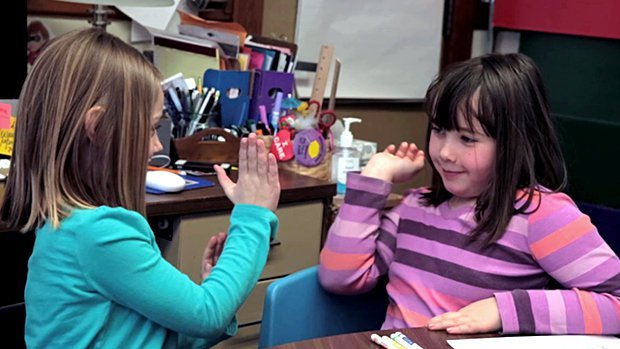
Choosing an elementary school is not quite like choosing a new toaster. You cannot simply compare three buttons, read two reviews, and pick the model with the least alarming warranty. A school shapes how children learn, build friendships, solve problems, and begin to see themselves as members of a larger community.
Symonds Elementary School is a public kindergarten-through-fifth-grade school located at 79 Park Avenue in Keene, New Hampshire. Part of the Keene School District and New Hampshire School Administrative Unit 29, the school combines traditional elementary academics with social-emotional learning, creative enrichment, outdoor education, and community-building practices.
This guide explores the school’s structure, academic programs, student-support services, educational philosophy, and everyday learning experience. It also explains what families may want to investigate before deciding whether Symonds Elementary School is the right fit for their child.
Symonds Elementary School at a Glance
Federal school directory data for the 2024–2025 academic year lists Symonds Elementary School as an open, non-charter public school serving grades K–5. The school had 299 students, 27 full-time-equivalent classroom teachers, and a student–teacher ratio of approximately 11 to 1.
The official school website describes three classroom sections at each grade level. In practice, class sizes and staffing assignments can change from year to year, so families should treat published figures as a useful snapshot rather than numbers carved into a granite New Hampshire mountain.
- School type: District public elementary school
- Grade levels: Kindergarten through fifth grade
- District: Keene School District
- Administrative unit: SAU 29
- Address: 79 Park Avenue, Keene, New Hampshire
- Educational emphasis: Academics, social-emotional learning, enrichment, student responsibility, and community
These basic facts are important, but numbers alone do not explain a school’s personality. A ratio can tell parents how many teachers are assigned to students. It cannot tell them whether children are encouraged to speak confidently, repair mistakes, create art, investigate nature, or lead a group without declaring themselves emperor of the playground.
A School Culture Built Around Growth and Belonging
The stated mission of Symonds Elementary School centers on creating a positive, caring environment in which every student has an opportunity to develop individual potential. The school describes parents, students, and staff as partners in building cooperation and community.
Its educational goals include developing critical-thinking skills, encouraging students to take responsibility for learning, fostering respect, and helping children become comfortable taking reasonable academic risks. That final point matters. Children who are afraid to be wrong often avoid difficult work, while children who see mistakes as part of learning are more likely to ask questions, revise ideas, and try again.
Respect for Individuality
The school’s philosophy recognizes creativity, cultural diversity, and individual differences. In an elementary setting, that approach can appear in many small but meaningful ways: varied reading selections, flexible methods for demonstrating understanding, classroom conversations that include multiple perspectives, and support for students who learn at different speeds.
A strong community culture does not mean every child behaves identically or learns through the same method. Ideally, it means students understand shared expectations while still having room to develop their own strengths, interests, and wonderfully specific opinions about dinosaurs.
The Responsive Classroom Approach
One of the most distinctive features associated with Symonds Elementary School is its use of the Responsive Classroom approach. This educational model connects academic learning with social and emotional development rather than treating behavior, relationships, and instruction as separate departments that never speak to one another.
Responsive Classroom practices may include morning meetings, collaborative rule creation, interactive modeling, positive teacher language, academic choice, logical consequences, guided discovery, and structured problem-solving.
Morning Meetings
A morning meeting typically gives students time to greet one another, share information, participate in an activity, and prepare for the academic day. It is not merely a cheerful circle designed to delay math. The routine can help students practice listening, speaking, cooperation, emotional awareness, and respectful participation.
Teachers can also use morning meetings to reinforce academic concepts. A greeting might involve vocabulary, a group activity may review multiplication, and a morning message can introduce the day’s science question.
Logical Consequences Instead of Automatic Punishment
The Responsive Classroom philosophy emphasizes consequences that are connected to a student’s behavior and preserve dignity. The goal is not to pretend that poor choices do not matter. The goal is to help students understand what happened, repair harm when possible, regain self-control, and return to productive learning.
For example, a student who misuses classroom materials may temporarily lose access to them and later demonstrate responsible use. A student who makes a mess may help clean it. This teaches accountability more directly than a punishment unrelated to the original behavior.
Academic Choice
Teacher-guided academic choice allows students to make meaningful decisions about how they learn or demonstrate knowledge. One student might create a diagram, another may write an explanation, and another may present a short model. The learning objective remains consistent, but students have some ownership over the path.
This approach can increase engagement while helping children recognize which strategies work best for them. It also prepares students for the shocking future discovery that adults must occasionally organize their own work without a teacher standing nearby holding a checklist.
Academic Learning from Kindergarten Through Fifth Grade
Symonds Elementary School’s published grade-level descriptions show a progression from foundational literacy, numeracy, and independence toward more complex research, writing, organization, leadership, and problem-solving.
Early Elementary Foundations
In first grade, language arts includes reading, writing, spelling, speaking, and listening. Literature is integrated across subjects, while mathematics includes addition, subtraction, measurement, patterns, graphing, money, time, place value, and problem-solving. Hands-on manipulatives help make abstract concepts visible and manageable.
Science and social studies introduce students to topics such as weather, energy, and living organisms. At this stage, the school also emphasizes curiosity, independent work habits, positive self-esteem, and social development.
Building Knowledge in the Middle Grades
By third grade, students explore local Keene history as well as cultures and traditions from around the world. Science learning incorporates observation, classification, data organization, technology, and hands-on investigation.
Fourth-grade programming places greater emphasis on independence, accountability, cooperative learning, and critical thinking. Published curriculum information identifies work in multiplication, division, fractions, reading fluency, informational writing, opinion writing, public presentation, New Hampshire history, geography, government, energy, land and water, and the human body.
Fourth-grade highlights have included book clubs and educational visits connected to state history, government, and science. Such experiences can help children connect classroom content with physical places and real-world institutions.
Preparing Fifth Graders for the Next Step
Fifth grade is designed to prepare students for the greater independence expected in middle school. Instruction focuses not only on academic content but also on organization, study habits, leadership, time management, critical thinking, and long-term projects.
Reading instruction includes literature circles, guided reading, independent reading, vocabulary development, fiction, nonfiction, and reading for information. Writing expands into organized multi-paragraph narrative, informational, and persuasive pieces.
Published fifth-grade mathematics topics include place value, decimal operations, whole-number operations, fractions, volume, area, geometry, and coordinate-plane problem-solving. Science units have addressed ecosystems, animals, weather, and matter, including hands-on work such as building classroom terrariums or aquariums.
Social studies introduces major geographic concepts, regions of the United States, environmental interaction, and documents connected to the founding of American government.
Arts, Music, Media, and Enrichment
Elementary education becomes much thinner when every subject is reduced to reading passages and filling bubbles. Symonds Elementary School’s published program includes art, music, physical education, library and media instruction, technology, instrumental music, special assemblies, student activities, and grade-level enrichment projects.
Arts Integration and Bookmaking
Symonds received national attention through an Edutopia feature about schoolwide bookmaking. In the project, students combined academic content with art and design to create books connected to subjects such as science, literature, and social studies.
Bookmaking asks students to organize information, select important details, plan a visual structure, revise written language, and produce a finished object for an audience. That combination can make learning more memorable than completing a worksheet that begins its retirement in a backpack and ends beneath a forgotten granola-bar wrapper.
The Edutopia feature is a historical example rather than a guarantee that every current student completes the exact same project. Still, it illustrates the school’s broader interest in creative, cross-curricular learning.
The Media Center
The Symonds School Media Center describes its mission as providing an accessible, welcoming environment where students can develop a love of reading, learn to use information effectively, and build lifelong learning habits.
Modern library instruction involves more than locating a book by shelf number. Students must learn how to ask useful questions, search for information, recognize reliable sources, understand digital responsibility, and distinguish evidence from a confident-looking sentence someone posted online at 2:13 a.m.
Outdoor Education and Experiential Learning
The school lists a Naturalist in Residence program connected with the Harris Center for Conservation Education. The Harris Center has a long history of working with schools in the Monadnock Region to bring ecology, wildlife, outdoor observation, and place-based science into children’s education.
Nature-based learning can turn abstract lessons into direct experience. Students may observe seasonal changes, investigate habitats, record animal evidence, study plant structures, or use local landscapes as living science laboratories. These activities also give children practice with patience, curiosity, data collection, and careful observation.
Outdoor education is not simply indoor school transported outside with more mosquitoes. At its best, it encourages students to notice patterns, formulate questions, revise assumptions, and understand how human communities connect with local ecosystems.
Leadership Through High 5 Adventure Learning
Symonds fifth graders participate in leadership-focused experiences connected with High 5 Adventure Learning Center. The school’s published fifth-grade information describes monthly sessions and challenge-course experiences centered on communication, shared leadership, relationship building, collaborative problem-solving, and emotional awareness.
High 5 reports that its partnership with Keene schools began as an elementary pilot in 2012 and later expanded throughout the district. The program’s experiential structure asks students to practice leadership rather than merely memorize definitions of it.
A student may need to explain an idea clearly, listen to a teammate, change a plan, manage frustration, or recognize when someone else should lead. These moments can reveal that leadership is not the same as speaking the loudest. Sometimes leadership means asking the useful question, encouraging a hesitant classmate, or admitting that the first plan was spectacularly unsuccessful.
Student Support and School Counseling
Symonds Elementary School publishes information about a comprehensive counseling program designed to support students’ social, emotional, and academic well-being. Services may include classroom guidance, individual or small-group counseling when appropriate, consultation with families and staff, and coordination with outside community resources.
The school also identifies intervention staff, special education services, reading support, and mathematics and reading assistance. The staff directory includes classroom teachers, paraprofessionals, a counselor, a behavior interventionist, specialists, administrative employees, custodial staff, and food-service personnel.
For families, the presence of support services is only the first question. Parents of children with individualized education programs, health needs, advanced-learning needs, language support needs, or specific behavioral concerns should discuss current staffing, eligibility procedures, service schedules, and communication practices directly with the school.
Family and Community Involvement
The school’s educational philosophy treats families as partners. Its published Responsive Classroom practices emphasize two-way communication, family participation, volunteering, community activities, and shared understanding of teaching approaches.
Healthy family involvement does not require parents to appear at school every afternoon armed with twelve cupcakes and unlimited free time. It can include reading school communications, attending conferences, asking specific questions, supporting routines at home, sharing relevant information about a child, and communicating respectfully when concerns arise.
Families should explore the current parent organization, volunteer opportunities, attendance expectations, transportation procedures, meal services, after-school options, communication platforms, and school calendar. These practical details often affect daily satisfaction as much as the most beautifully written educational mission statement.
What Families Should Consider Before Enrolling
No school is ideal for every child, and online profiles cannot replace direct investigation. Families considering Symonds Elementary School should review current New Hampshire school report cards, speak with administrators, and ask questions tailored to their child’s needs.
Useful Questions for a School Visit
- How are reading and math progress measured during the year?
- What intervention is available when a student falls behind?
- How are advanced learners challenged?
- How often do students receive art, music, physical education, and library instruction?
- How does the school communicate behavioral or academic concerns?
- What does family participation look like in practice?
- How are bullying, exclusion, and peer conflict addressed?
- What transportation and attendance-zone rules currently apply?
- How has enrollment affected class sizes for the upcoming year?
Third-party ratings can provide context, but they should not be treated as final judgments. Test scores, demographic data, and online reviews capture only parts of a school. A thoughtful decision combines current data with classroom observations, program details, family priorities, and the individual child’s learning style.
Experiencing a Day at Symonds Elementary School
The following is a composite description based on the school’s published practices and programs. It is intended to illustrate the possible student experience rather than present a quotation or personal account from one specific child.
Beginning the Day with Connection
A student arriving at Symonds Elementary School may begin the morning by organizing materials, greeting classmates, and joining a morning meeting. Instead of launching immediately into silent paperwork, the class gathers as a community. Students may greet one another by name, share a short observation, solve a quick puzzle, or discuss an expectation for the day.
For a naturally outgoing child, this can be an opportunity to speak and connect. For a quieter student, predictable routines may make participation less intimidating. The teacher can model listening, respectful disagreement, and encouraging language without turning the activity into a formal lecture on how to be a decent human being.
Learning Through Discussion and Choice
During the academic block, students might move between whole-class instruction, small-group work, independent reading, partner discussion, and hands-on problem-solving. A first grader could use manipulatives to understand place value, while an older student might compare strategies for solving a fraction problem.
Academic choice may allow students to select a book, choose a writing topic within defined guidelines, or decide how to present what they have learned. These choices remain structured by the teacher. Students are not invited to replace the science lesson with forty minutes of drawing laser-powered sharks unless laser-powered sharks happen to demonstrate the required science standard.
Creating Something Worth Sharing
In an art-integrated project, a student may write, illustrate, revise, and assemble a book connected to classroom content. The project demands more than decoration. The child must decide how ideas fit together, which information deserves emphasis, and how words and images can communicate to a reader.
Finished work may be shared with classmates, displayed in the school, or connected to a broader grade-level activity. Producing something for an audience can make revision feel purposeful. Correcting a sentence matters more when another person will actually read it.
Moving Beyond the Classroom
Outdoor or experiential learning may take students into a natural setting where they observe organisms, investigate environmental patterns, or record evidence. A child who struggles to remain engaged during a long verbal explanation may suddenly become intensely focused when asked to identify tracks, compare leaves, or monitor a small habitat.
Older students may also participate in leadership challenges requiring cooperation. One student proposes a plan, another notices a problem, and a third helps the group recover when the plan fails. The learning comes from both the challenge and the reflection afterward: What worked? Who was heard? What would the group change?
Receiving Support Without Losing Belonging
A student needing extra academic or emotional support may work with a specialist, counselor, interventionist, or small group. Ideally, support is presented as a normal part of learning rather than evidence that a child does not belong in the classroom community.
At the end of the day, students leave with more than completed assignments. They may have practiced reading, writing, mathematics, scientific observation, collaboration, emotional regulation, creative expression, and responsibility. Some days will naturally be smoother than others. Elementary school still contains lost mittens, spilled water bottles, friendship drama, and the occasional pencil that apparently vanished into another dimension. The larger goal is to create routines and relationships that help children navigate those moments while continuing to learn.
Conclusion: Is Symonds Elementary School a Good Fit?
Symonds Elementary School presents itself as a community-oriented Keene public school where academic instruction is closely connected with social-emotional growth. Its use of Responsive Classroom practices, grade-level academics, arts integration, media instruction, outdoor education, counseling, intervention services, and fifth-grade leadership programming suggests a broad view of elementary education.
The school’s most notable characteristic may not be one isolated program. It is the attempt to create a consistent culture in which students are expected to think, contribute, cooperate, repair mistakes, and take increasing responsibility for their learning.
Families should still examine current report-card data, classroom assignments, transportation rules, staffing, and support availability. Educational programs evolve, and a school description cannot predict every child’s experience. A visit, conversation with administrators, and review of current district information will provide the clearest picture.
For families seeking an elementary school that blends core academics with community-building, creativity, social-emotional development, and hands-on experiences, Symonds Elementary School is a noteworthy option to explore in Keene, New Hampshire.