There is a cruel little myth that follows students around like a pop quiz they never studied for: sit still, stay quiet, and learning will magically happen. But real life keeps ruining that theory. Kids wiggle. Teens pace. College students suddenly become philosophers while walking to get iced coffee. The truth is less surprising than the myth: human brains were never designed to do their best work while the body is treated like decorative furniture.
More educators, parents, coaches, and health professionals are recognizing a simple idea with big consequences: when students move more, they often think better, feel better, and learn better. Physical activity is not the enemy of academic success. In many cases, it is the backstage crew making the whole show run on time.
That does not mean every child needs to become a varsity athlete, a marathon runner, or a person who owns suspiciously expensive water bottles. It means movement matters. A brisk walk before school, recess that actually involves running instead of just wandering, a PE class that gets the heart rate up, five-minute classroom movement breaks, after-school sports, dance, biking, yoga, active play, and even short bursts of physical activity can all support the same goal: a mind that is more awake, more regulated, and more ready to learn.
Why movement helps the brain do its job
Think of the brain as a high-performance engine. It needs oxygen, blood flow, fuel, recovery, and maintenance. Physical activity helps with several of those at once. When students move, the body increases circulation, supports cardiovascular fitness, and helps the brain stay supplied with what it needs to focus and function. That sounds very scientific because it is. It also sounds like something your grandmother may have said in simpler language: “Go outside and come back with a better attitude.” Grandma was onto something.
Movement also helps students regulate stress. A child who has been sitting for hours may not be lazy or distracted; they may simply be overloaded. Physical activity can work like a reset button. It breaks up long periods of sitting, lowers tension, and helps many students return to schoolwork with sharper attention. That is one reason short activity breaks during the day can be so powerful. They do not steal learning time. They often rescue it.
Attention improves when the body is not stuck in park
Teachers know the difference between a room full of students after lunch with no movement and a room full of students after a short, structured activity break. In the first version, half the class looks sleepy and the other half looks ready to negotiate with chaos. In the second, students are often more alert and easier to redirect.
That is not just classroom folklore. Physical activity has been associated with improvements in attention, concentration, and executive function, which includes skills like organizing, planning, shifting between tasks, and controlling impulses. These skills are the invisible scaffolding behind academic success. A student may know the material, but without executive function, that knowledge can remain trapped in a mental traffic jam.
For younger children, movement supports self-control through play, games, and active routines. For older students, exercise can improve readiness to learn, especially when school days are packed with screens, deadlines, and long periods of sitting. In other words, sometimes the best way to help the brain lock in is to let the body unlock first.
Active students often feel better, not just perform better
Academic achievement matters, but students are not robots built to produce test scores and then recharge in a closet. They are whole people. Mood, confidence, stress, sleep, friendships, and emotional regulation all affect learning. Movement supports those pieces too.
Regular physical activity can help reduce symptoms of stress and low mood while supporting self-esteem and emotional resilience. Students who move often report feeling calmer, more confident, and less mentally clogged. That matters because a student who feels overwhelmed is not working at full learning capacity. Anxiety can narrow attention. Stress can interfere with memory. Low energy can make even easy tasks feel enormous. Movement helps loosen that knot.
This does not mean exercise is a magic cure for every emotional struggle. It is not a replacement for counseling, medical care, or school mental health support when those are needed. But it can be a meaningful part of the bigger picture. A walk with a friend, a basketball practice after school, a dance class, or a few minutes of stretching between assignments can help students regulate emotions in a world that often asks their brains to sprint while their bodies stay still.
Social growth counts too
Physical activity is not only about muscles and lungs. It often creates opportunities for teamwork, problem-solving, leadership, and belonging. Recess games teach negotiation. Team sports teach communication. Playground movement teaches kids how to join a group, take turns, recover from losing, and celebrate without acting like they personally invented victory.
These social-emotional benefits matter in school settings because students learn better when they feel connected, competent, and engaged. A child who has one good experience during PE or recess may carry that confidence into the classroom. A teen who feels capable during practice may be more willing to speak up in class. Movement can become a bridge to participation.
Sleep: the hidden middleman between movement and learning
One of the most overlooked reasons active bodies support active minds is sleep. Students who move during the day often sleep better at night, and better sleep improves memory, behavior, mood, and school performance. That is a huge deal because learning is not finished when class ends. The brain continues processing and organizing information during sleep.
When students are sleep-deprived, the results show up everywhere. They may seem cranky, scattered, impulsive, forgetful, or weirdly emotional over a worksheet that would not usually cause drama. Adults sometimes interpret those behaviors as attitude problems. Sometimes they are really exhaustion problems wearing a fake mustache.
Healthy daily movement can help reinforce natural sleep rhythms, especially when paired with time outdoors and limits on all-day sedentary habits. For school-age children and teens, good sleep is not optional icing on top of the cake. It is part of the cake. And physical activity helps bake it.
What this looks like at school
The good news is that schools do not need to transform into obstacle courses to support student movement. Small, practical changes can make a real difference.
1. Recess that is protected, not treated like a bonus
Recess gives students unstructured time to move, play, reset, and socialize. It is not wasted time. It is productive recovery. When schools reduce or remove recess, they may also reduce a natural opportunity for students to return to class refreshed.
2. Physical education that builds skills and confidence
PE should not be punishment disguised as exercise. It should help students discover ways to move that feel fun, safe, and sustainable. Great PE teaches physical literacy, not just dodgeball trauma.
3. Classroom movement breaks
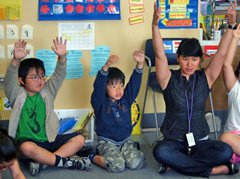
Not every solution requires a gym. A few minutes of stretching, marching in place, dance-based review games, stand-and-discuss activities, or active transitions can help students refocus without derailing instruction.
4. Active transportation and before-school movement
Walking or biking to school when possible, or even a short movement routine before first period, can help students arrive more alert. The brain generally appreciates not being launched from bed straight into algebra without a warm-up.
5. After-school programs that welcome different kinds of movers
Not every student loves competitive sports. Some prefer dance, martial arts, hiking, yoga, recreational games, or fitness clubs. The wider the menu, the more students can find an activity that fits their personality and comfort level.
What parents can do at home
Families do not need a perfect routine or a Pinterest-worthy wellness plan. They just need to normalize movement as part of daily life.
- Encourage active play instead of treating movement only as organized exercise.
- Build short walks into the day, especially after school or after dinner.
- Limit marathon screen sessions by adding movement breaks.
- Help kids try different activities until they find one they genuinely enjoy.
- Protect sleep routines, because tired brains are not exactly valedictorian material.
- Model movement. Children notice when adults treat exercise like punishment versus something that supports energy and mood.
The goal is not perfection. The goal is consistency. A child does not need every day to look like a sports commercial. They just need regular chances to move enough that their body and brain remember they are on the same team.
Not every student experiences movement the same way
It is important to say this clearly: students are different. Age, ability, disability, chronic illness, mental health needs, family schedules, transportation, neighborhood safety, and school resources all shape access to physical activity. A good conversation about active bodies and active minds must include flexibility and inclusion.
For some students, the ideal activity is soccer practice. For others, it is adaptive PE, a quiet walk, swimming, chair-based movement, yoga, or five-minute classroom breaks that make the school day manageable. The point is not one perfect form of exercise. The point is helping every student participate in movement that is safe, realistic, and meaningful.
That is also why schools and communities matter so much. When movement opportunities depend entirely on family income or free time, many students get left out. When schools protect recess, support PE, create active classrooms, and offer inclusive programs, they help close that gap.
The bigger lesson students carry for life
Perhaps the most valuable thing students learn from staying active is not just that movement helps them pass a test. It is that their bodies are not separate from their minds. Energy, memory, focus, confidence, and emotional balance are connected. When students understand that connection early, they gain a tool they can use for the rest of their lives.
A child who learns, “I focus better after I move,” becomes a teen who knows to take a walk before studying. That teen may become an adult who handles stress with exercise rather than assuming burnout is just part of being successful. That is not a small lesson. That is life management in sneakers.
So yes, students learn math, science, reading, and history in school. But they also learn something more basic and more powerful: a moving body can wake up a tired mind. And once they figure that out, learning stops feeling like a battle between the chair and the child.
Experiences from students, teachers, and families
Anyone who spends time around students can usually spot the pattern before reading a single research summary. A fourth-grade teacher introduces a two-minute movement game between lessons, and suddenly the class that looked half-melted becomes noticeably more attentive. A middle school student who dreads long study sessions finds that reviewing notes after a bike ride feels easier than forcing it at a desk for two straight hours. A high school athlete notices that practice does more than strengthen muscles; it clears mental fog after a stressful day. These experiences are not identical, but they point in the same direction.
Many parents describe homework going more smoothly when kids get outside first. Instead of coming home and crashing into a couch like tiny office workers after a brutal commute, children who move after school often settle into evening routines with better moods. They may still complain about homework, because they are children and that tradition appears immortal, but they are often less restless and more able to stick with a task.
Teachers also talk about how movement changes classroom atmosphere. It is not only about attention span. It is about emotional tone. Students return from recess happier. They come back from PE less twitchy. Even older students, who sometimes pretend they are too cool for anything wholesome, respond well to chances to stand, stretch, walk, or participate in active learning. The room feels lighter. Participation rises. Small frustrations do not escalate as quickly.
Students themselves often explain it in the most practical terms. They say they can “think better,” “feel less stuck,” or “calm down faster” after moving. Some say running helps them organize their thoughts. Others say dancing wakes them up before class. Some like competitive sports, while others prefer solitary movement because it gives them mental quiet. The common thread is not the activity itself. It is the feeling that the brain starts cooperating once the body gets involved.
There are also important experiences from students who do not fit the stereotype of the “sporty kid.” Some discover that yoga helps them manage anxiety before tests. Some find that walking with music makes memorization easier. Some students with attention challenges report that structured movement breaks help them reset when sitting still becomes frustrating. These stories matter because they remind us that physical activity is not reserved for one personality type. It can support the shy student, the overbooked student, the anxious student, the energetic student, and the student who insists they hate exercise until they find the one activity that does not feel like exercise at all.
In the end, the lived experience around this topic is refreshingly human. Students do not need a lecture on neuroscience to know when movement helps them feel sharper, calmer, or more capable. They feel it in the classroom, at practice, on the playground, during homework, and at bedtime. Over time, those moments add up to a lesson that sticks: when the body is active, the mind has a better chance to be active too.