Putting up an artificial Christmaating with a prickly green octopus.
After the ornaments are wrapped, the lights are untangled, and the last candy cane has mysteriously disappeared, the tree still needs a safe place to spend the next 10 or 11 months. Its original cardboard box may seem like the obvious choice, but that box often becomes bent, split, damp, or approximately three sizes too small after the branches have been fully fluffed.
A purpose-built Christmas tree storage bag offers a cleaner and more manageable solution. The best models protect artificial branches from dust, dirt, moisture, insects, and accidental crushing while making the tree easier to carry or roll into storage. Inspired by Bob Vila’s Christmas tree bag picks and supported by independent testing and manufacturer guidance, this guide compares practical options for standard trees, oversized trees, tight closets, garages, basements, and homes with stairs.
Why a Christmas Tree Storage Bag Is Worth Buying
An artificial tree can remain attractive for many holiday seasons, but only when it is handled and stored properly. Exposed branches collect dust, pale needles may discolor, flocked finishes can shed, and preinstalled lighting wires may become pinched or stretched. A damaged storage box also gives pests, humidity, and debris an open invitation.
A good artificial Christmas tree storage bag provides several advantages:
- It protects branches and needles from dirt and abrasion.
- It keeps all tree sections together.
- It is easier to open and close than a worn cardboard carton.
- Reinforced handles make a bulky tree safer to move.
- Wheeled models reduce lifting across garages and smooth floors.
- Many bags fold flat when they are not in use.
Specialized storage is particularly useful for pre-lit, flocked, and heavily hinged trees. These models can be expensive, and forcing them into an undersized container may bend branch tips or place pressure on electrical connections. Balsam Hill and National Tree Company both recommend protecting artificial trees in suitable bags or their original containers and keeping them in cool, dry storage areas. est Christmas Tree Storage Bags From Bob Vila’s Picks
Bob Vila’s roundup covers several storage styles rather than pretending one giant red bag is perfect for every household. That is important because a lightweight 6-foot pencil tree and a dense 12-foot pre-lit tree have very different storage needs.
Best Straightforward Option: Zober Large Christmas Tree Storage Bag
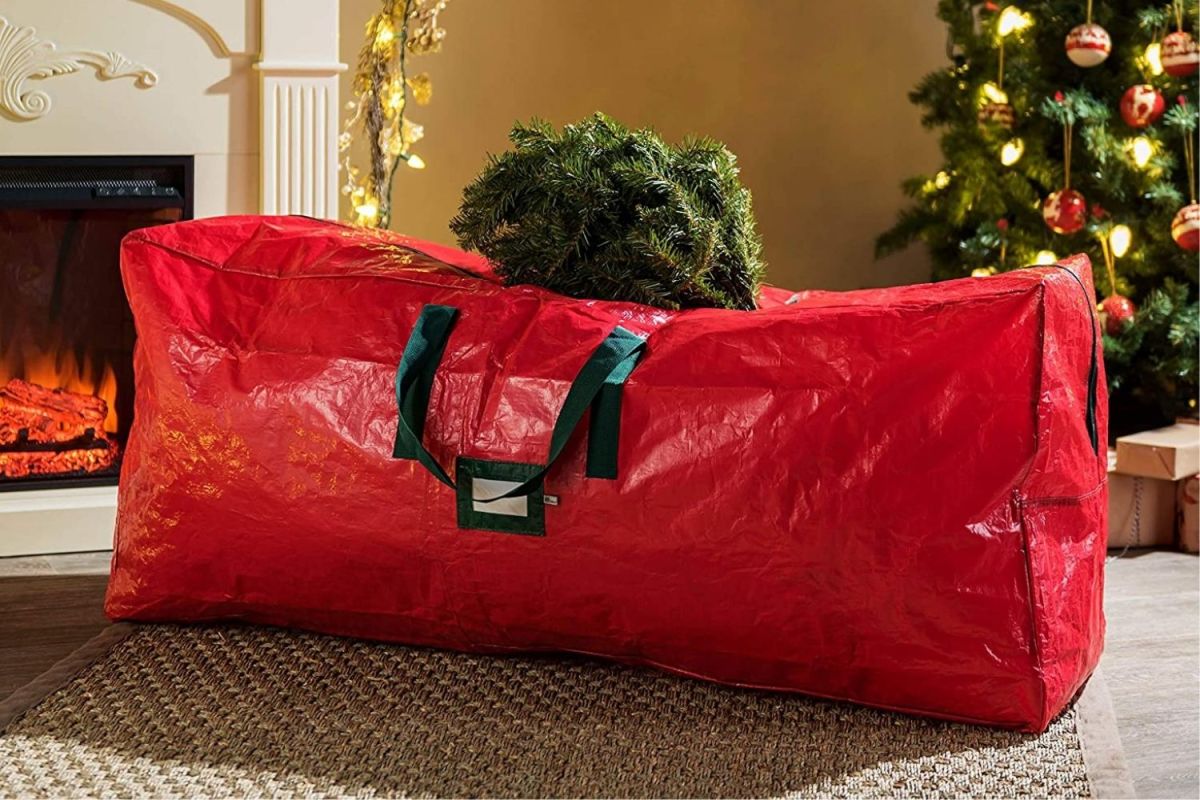
The Zober Large Christmas Tree Storage Bag is a practical choice for shoppers who want a roomy zippered container without complicated frames, stands, or assembly instructions. It includes multiple reinforced handles and a label slot, making it easier to identify among stacks of holiday decorations.
Its flexible construction is both a strength and a limitation. The bag folds compactly when empty and can accommodate bulky tree sections, but it does not maintain a rigid rectangular shape. Once loaded, the weight may shift toward one end. That can make the bag awkward for one person to carry, especially on stairs.
This option makes the most sense for a standard disassembled tree stored on a shelf, elevated garage platform, or attic floor. Independent testing by Better Homes & Gardens also found the Zober easy to load and affordable, although its relatively thin material raised questions about long-term durability and some water entered through the zipper during testing. est Budget-Friendly Option: Handy Laundry Christmas Tree Storage Bag
The Handy Laundry Christmas Tree Storage Bag offers generous capacity at a typically accessible price. Bob Vila highlights its heavy-duty tarp-style construction, reinforced handles, structured piping, and ability to hold disassembled artificial trees up to approximately 9 feet, depending on tree fullness and section size.
It is a sensible upgrade from a deteriorating cardboard box, particularly when the bag will be carried only a short distance. However, shoppers should distinguish between promotional descriptions and demanding storage conditions. In Better Homes & Gardens testing, the bag was affordable and easy to grip but did not perform especially well against dust and water. It also became uncomfortable for one person to carry when loaded.
Use it in a dry indoor closet, finished basement, or protected garage rather than directly on a potentially wet concrete floor. For the price, it provides useful basic coverage, but it is not a submarine for your Christmas tree. est Premium Design: Santa’s Bags XXL Rolling Duffle Bag
Santa’s Bags XXL Rolling Duffle Bag is designed for people who own a large, heavy tree and have no interest in carrying it like an oversized holiday burrito. The wide, three-sided opening simplifies loading, while an expandable compartment provides extra room for bulky sections or lightweight accessories.
Its most valuable feature is mobility. Multiple handles allow two people to guide the bag, and rolling casters help move the load across smooth floors. A structured rolling model is especially useful when the storage route runs from a living room through a hallway and into a garage.
Measure doorways, shelf depths, and turning space before choosing an XXL bag. A huge storage container can solve the tree problem while creating an entirely new “why does this not fit through the closet door?” problem. Bob Vila identifies this Santa’s Bags model as a premium pick, while testing from other home publications has also favored the brand’s wheeled storage designs for portability. est for Water Resistance: Sagler 1 Christmas Tree Bag
The Sagler 1 Christmas Tree Bag is aimed at shoppers who need additional protection from dust, insects, and occasional moisture. Its canvas-style material, four reinforced handles, wide zipper, and accessory pocket create a useful combination for trees up to about 8 feet when disassembled.
The exterior pocket can hold tree skirts, extension cords, timers, replacement bulbs, or assembly instructions. Avoid packing fragile ornaments in the pocket because the bag will be lifted, dragged, squeezed, and generally treated with far less tenderness than a box marked “Grandma’s glass ornaments.”
Although the material is promoted as waterproof, no soft zippered bag should be left where standing water, roof leaks, or flooding are realistic possibilities. Zippers and seams are common weak points. Elevating the bag on shelving or a pallet remains the safer strategy. est Upright Bag: Tiny Tim Totes Upright Christmas Tree Storage Bag
An upright Christmas tree storage bag can eliminate much of the annual disassembly process. The Tiny Tim Totes model slips around an assembled tree, closes along the side, and uses compression straps to pull the branches inward. The tree can remain attached to its stand, saving setup time the following season.
This design works best in a walk-in closet, spare room, climate-controlled storage area, or garage corner with sufficient ceiling height. It uses less horizontal floor space than a long duffel, but the covered tree may still be difficult to move once packed.
Better Homes & Gardens testers stored a 6-foot tree in only a few minutes and appreciated the simple process. However, the tested upright bag lacked wheels and convenient carrying handles, making stairs a poor match. The publication also described the canvas as PVC-lined rather than fully waterproof. Upright storage is therefore a convenience champion, not an excuse to park the tree beside a leaking water heater. est for Extra-Large Trees: TreeKeeper Giant Rolling Tree Storage Bag
Owners of 10-, 12-, or 15-foot artificial trees need more than a thin sack with optimistic stitching. Bob Vila’s extra-large selection, the TreeKeeper Giant Rolling Tree Storage Bag, uses a self-standing structure, oversized wheels, internal compression straps, multiple handles, and space for large tree sections.
This is a specialized product for substantial trees, commercial displays, tall entryways, churches, event spaces, and homes where the Christmas tree has its own ZIP code. Its structure helps prevent the sagging and shifting common in flexible bags. Some versions also provide compartments for delicate accessories.
The trade-offs are cost and storage footprint. Before buying, measure the packed tree sections rather than relying only on the tree’s assembled height. Two trees of the same height can differ dramatically in fullness, hinge design, stand size, and number of sections. est Wheeled Value: Primode Rolling Tree Storage Bag
The Primode Rolling Tree Storage Bag combines wheels, compression straps, several handles, and an accessory pocket in a flexible format. Its three-wheel arrangement helps support the loaded end of the bag, while the internal straps reduce shifting during transport.
This type of bag is ideal for a tree traveling across a flat main floor or garage. Wheels are less helpful on thick carpet, gravel, narrow attic ladders, and stairs. In those situations, handle placement and weight balance matter more than the mere presence of rollers.
The Primode is a strong middle-ground option for shoppers who want easier transport without moving into the price and size category of a giant framed system. ow to Choose the Best Christmas Tree Bag
Measure the Tree After Disassembly
Do not select a bag based only on the height printed on the tree’s box. A wide, densely branched 7.5-foot tree may require more volume than a slim 9-foot pencil tree. Disassemble the tree, gently fold the hinged branches inward, and measure the longest section. Then estimate the combined width and depth of the stacked pieces.
Leave a little extra room so the zipper can close without being forced. Excessive compression can deform molded branch tips, damage flocking, and place stress on pre-lit wiring.
Match the Bag to the Storage Route
Picture the entire trip before buying. Will the tree pass through a narrow hallway? Does it need to climb attic stairs? Can one person lift it? Is the garage floor smooth enough for wheels?
- For stairs: Choose a compact bag with reinforced top and side handles.
- For garages: A rolling duffel can reduce lifting.
- For closets: Consider an upright or narrow structured model.
- For very heavy trees: Use wheels, internal straps, and multiple lifting points.
- For oversized trees: Consider two smaller bags instead of one dangerously heavy bag.
Testing by The Spruce and Better Homes & Gardens shows that wheel design, handle comfort, zipper access, and weight distribution can affect usability as much as nominal capacity. nderstand Water-Resistant Versus Waterproof
These terms are often used loosely in product descriptions. Water-resistant material may repel a spill or brief exposure, but water can still enter through seams and zippers. Even a bag made from waterproof fabric should not be stored in standing water.
In basements and garages, keep the tree off the floor. Use a shelf, platform, or sturdy plastic pallet, and leave space around the bag for air circulation. A cool, dry, pest-resistant location is more important than a heroic marketing adjective.
Check the Handles and Zippers
A storage bag is only as useful as the parts that survive lifting it. Look for handles that wrap beneath the bag or attach with broad reinforced stitching. Small handles sewn only to the outer fabric may tear when the tree shifts.
A wide U-shaped or three-sided zipper makes loading easier than a narrow opening. Dual zipper pulls are useful, but never force them around an overpacked corner. Remove a section, reposition the branches, and try again. The zipper is not a holiday-themed hydraulic press.
Decide Between Horizontal and Upright Storage
Horizontal bags are generally easier to fit on shelves and carry through doorways. They usually require the tree to be separated into sections, but they offer flexibility in garages, attics, and under-stair storage areas.
Upright bags preserve more of the tree’s assembled shape and can reduce next year’s setup time. They require adequate ceiling height and a stable floor, and they may be difficult to relocate after the tree is enclosed.
How to Store an Artificial Christmas Tree Correctly
1. Remove Every Decoration
Take off ornaments, ribbon, garland, hooks, clips, extension cords, and removable lights. Check deep inside the branches for forgotten items. A metal ornament hook left behind can scratch branches or catch the storage fabric.
2. Clean and Inspect the Tree
Use a dry microfiber cloth, soft duster, or low-suction vacuum attachment to remove dust. Follow the manufacturer’s instructions for flocked or specialty trees. Inspect pre-lit wiring for cuts, loose sockets, or damaged plugs before packing.
3. Disassemble From the Top Down
Unplug each section and separate it carefully. Avoid pulling on lighting wires. Fold hinged branches upward toward the trunk without sharply bending molded tips. Lowe’s recommends compressing branches inward and securing sections with hook-and-loop straps or stretch wrap when appropriate. . Load the Bag Strategically
Place the largest and heaviest section at the bottom. Alternate the direction of narrower sections to distribute weight. Use internal compression straps when provided, but tighten them only enough to prevent movement.
5. Label the Bag
Record the tree size, room, style, and number of sections. Add a note about where the stand, remote, foot pedal, or replacement bulbs are stored. Next December, this tiny act of organization will make you feel suspiciously competent.
6. Choose a Safe Storage Location
Store the bag away from direct sunlight, extreme heat, pests, chemicals, and moisture. Do not stack heavy bins on top of flexible tree bags. If the storage area is not climate-controlled, inspect it periodically for leaks and pest activity.
Practical Storage Experiences and Lessons Learned
Real-world Christmas tree storage tends to reveal problems that are not obvious while shopping online. The first lesson is that the tree’s advertised height is only the beginning. A full 7.5-foot tree can occupy an astonishing amount of space after its branches have been shaped for several seasons. A bag labeled for a 9-foot tree may technically close, yet leave so little room that two people must kneel on it like they are packing an overstuffed vacation suitcase.
The better experience comes from buying slightly more capacity than the minimum. Extra space makes it easier to arrange tree sections instead of crushing them. It also leaves room for soft, lightweight items such as a tree skirt or fabric garland. Heavy ornament boxes, metal stands, and sharp tree toppers should remain separate because they can damage branches and puncture the bag.
Another common lesson involves carrying. A tree that seems manageable in three individual sections becomes surprisingly heavy once everything is zipped into one flexible bag. When the contents slide toward the lowest end, the person holding the opposite handle suddenly receives a practical demonstration of gravity. Internal compression straps, a structured base, and handles positioned on several sides make a noticeable difference.
Wheels are excellent when the route is flat. A rolling bag can move smoothly through a living room, hallway, and garage without requiring repeated lifts. The experience changes when the bag meets stairs. Small fixed wheels add weight but provide little assistance, and a long bag may bump every step. For attic storage, a shorter balanced bagor two smaller bagsis often safer than one enormous rolling model.
Upright storage creates a different kind of convenience. Leaving the tree mostly assembled can transform next year’s decorating day. Instead of rebuilding the trunk and reshaping every branch from the beginning, the cover comes off and the tree needs only moderate fluffing. The drawback becomes apparent when the covered tree must be moved. Without a rolling stand, an upright tree can be bulky, top-heavy, and difficult to steer through doors.
Storage location matters just as much as bag quality. A moisture-resistant bag placed directly on a basement floor is still vulnerable when a pipe leaks. Elevating the bag by several inches provides inexpensive protection. In hot attics, extreme temperature changes may also affect plastic components, flocking, and wiring over time. A dry interior closet or protected garage shelf is generally preferable when space permits.
Flocked trees deserve especially gentle treatment. Aggressive compression saves space but can remove the snowy coating and leave a small indoor blizzard when the bag is reopened. Looser packing, smooth interior fabric, and minimal friction help preserve the finish. Pre-lit trees also benefit from careful folding because wires should never be used as handles or pinched between heavy metal trunk sections.
The final experience-based lesson is to pack for next Christmas, not merely to finish this Christmas. Store the assembly instructions in a sealed pocket. Photograph unusual plug connections before disassembly. Label the bag clearly. Keep the stand and remote nearby. These steps require only a few minutes in January but can prevent an hour of confused searching in December.
A Christmas tree storage bag will not make post-holiday cleanup exciting. Nothing short of elves and complimentary pie could accomplish that. It can, however, make the job cleaner, safer, and much less frustrating while helping an artificial tree retain its shape and appearance for future celebrations.
Conclusion
The best Christmas tree storage bag is the one that fits both your tree and your home. Zober and Handy Laundry offer simple, affordable storage. Sagler 1 adds a useful accessory pocket and moisture-resistant construction. Santa’s Bags and Primode provide wheeled convenience, while Tiny Tim Totes makes upright storage possible. For exceptionally tall and heavy trees, TreeKeeper offers the structure and mobility needed for a much larger load.
Measure the disassembled sections, consider the route to storage, inspect handle construction, and choose a cool, dry location. A little planning now protects your investment and prevents next season from beginning with a torn cardboard box, a cloud of dust, and language that does not belong in a Christmas carol.
Editorial note: Product features and storage recommendations were synthesized from Bob Vila’s published picks, independent home-product testing, major U.S. retailers, artificial-tree manufacturers, professional organizing guidance, and specialty storage brands. Product designs and availability may change, so verify current dimensions and specifications before purchasing.