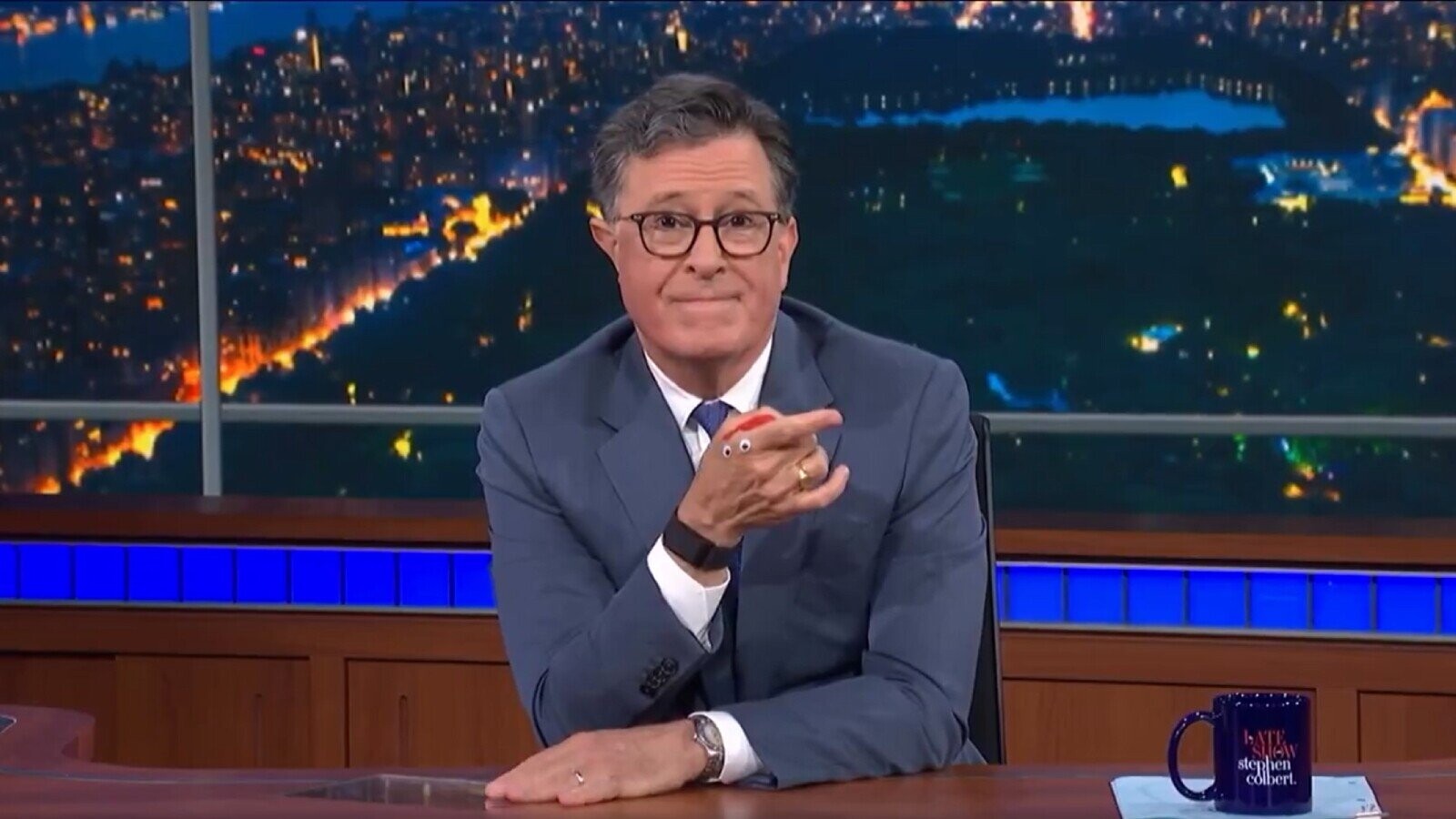
Stephen Colbert has spent years turning awkward headlines into carefully sharpened comedy knives. So when CBS confirmed that The Late Show with Stephen Colbert would end in May 2026, many viewers expected him to immediately unleash a full monologue flamethrower at Paramount, CBS executives, and President Donald Trump. Instead, Colbert did something more surprising: he kept his first response gracious, focused on his staff, thanked the audience, and treated the cancellation as a bittersweet farewell rather than a televised courtroom drama with jokes.
That restraint mattered because the timing of the announcement made the story bigger than a normal TV cancellation. CBS said the decision was “purely a financial decision” in a challenging late-night environment. But the announcement arrived shortly after Colbert criticized Paramount, CBS’s parent company, for settling President Trump’s lawsuit over a 60 Minutes interview involving Kamala Harris. Colbert had called the settlement a “big fat bribe,” a line that immediately became the comedy-world equivalent of a smoke alarm in a paper factory.
The result was a media storm involving late-night television, corporate mergers, political pressure, free speech concerns, and the uncertain future of broadcast comedy. Yet in the moment when he first told his audience the show was ending, Colbert chose gratitude over grievance. It was not the absence of criticism forever. It was the timing of a professional who knew exactly how much weight the silence carried.
The Announcement That Stunned Late-Night TV
CBS announced that The Late Show with Stephen Colbert would conclude in May 2026 and that the network would retire the larger Late Show franchise rather than replace Colbert with another host. That detail was important. This was not simply a host swap, a rebrand, or a shiny new desk with a younger comedian and suspiciously perfect teeth. The institution itself was being sunset.
Colbert told the studio audience that he had learned about the cancellation the night before. When the crowd reacted with boos, he acknowledged their feelings but did not turn the moment into a direct attack. He emphasized that he was not being replaced and that the show was “just going away.” He also expressed deep gratitude to the roughly 200 people who worked on the program, a reminder that late-night television is not one famous face behind a desk but an army of writers, producers, researchers, stagehands, musicians, editors, bookers, assistants, and technicians.
That is why his response felt classy. He understood that a cancellation announcement is not only about ratings, politics, or corporate strategy. It is also about people losing a workplace, a routine, and a creative home. A lesser host might have used the moment to settle every score in the building. Colbert, at least in that first response, gave his team the spotlight.
Why the Timing Raised Eyebrows
The cancellation did not land in a vacuum. Days earlier, Colbert had returned from vacation and criticized Paramount’s $16 million settlement with President Trump over Trump’s lawsuit related to CBS’s editing of a 60 Minutes interview. Paramount said the settlement money would go to Trump’s future presidential library and that the agreement included no apology or admission of wrongdoing.
For critics, the timing looked suspicious because Paramount was also pursuing a merger with Skydance Media, a deal requiring regulatory approval. Colbert connected those dots on air with the kind of blunt comic phrasing that makes lawyers reach for sparkling water. His “big fat bribe” line was not subtle, but late-night comedy has never been a monastery for subtlety. It was a sharp joke aimed at the intersection of media ownership, politics, and power.
CBS pushed back against that interpretation by saying the cancellation was not related to the show’s performance, content, or other matters at Paramount. The official explanation centered on the economics of late-night television, a business that has been squeezed by declining linear TV audiences, shifting ad dollars, streaming competition, and social media clips that travel farther than full episodes.
Both things can be true in public perception: late-night television can be financially difficult, and the timing can still look terrible. That uncomfortable overlap is what made the story explode.
Colbert’s Gracious First Move Was Strategic
Colbert’s initial restraint was not weakness. It was timing. In comedy, as in boxing and Thanksgiving dinner, swinging immediately is not always the smartest move. By first thanking CBS, his colleagues, and the audience, he framed himself as the adult in the room. He did not ignore the controversy; he simply refused to let it swallow the people who had built the show with him for nearly a decade.
That approach also protected the emotional core of the announcement. Viewers who had watched Colbert since he took over from David Letterman in 2015 were not only interested in corporate drama. They were processing the end of a familiar nightly ritual. For many fans, The Late Show had been a place to digest elections, scandals, pandemic anxiety, cultural absurdity, and the daily weather system of American politics. Colbert’s calm tone gave the audience permission to feel sad before everyone started throwing rhetorical chairs.
It also gave him credibility for what came next. When Colbert later responded more directly to Trump’s celebration of the cancellation and joked that “the gloves are off,” the sharper material landed differently because his first instinct had been gratitude, not rage. In other words, he did not begin by burning the bridge. He first thanked the carpenters.
The Trump Factor in Colbert’s Late-Night Identity
Any serious analysis of Colbert’s Late Show era has to mention President Trump. Colbert’s version of late-night comedy became more political during Trump’s first presidency and remained closely tied to the national conversation around Trump’s legal battles, rallies, media attacks, and governing style. His monologues often functioned as a nightly digest for viewers who wanted jokes with their civic stress.
That style helped Colbert stand out. While other hosts leaned more heavily into celebrity games, viral stunts, or broad pop culture comedy, Colbert built a strong identity around political satire, moral clarity, and theatrical exasperation. His audience did not tune in only to see which actor could eat the hottest wing while promoting a superhero sequel. They tuned in to hear someone process the day’s chaos with punchlines, raised eyebrows, and the facial expression of a man watching democracy misplace its car keys.
Trump, for his part, frequently criticized late-night hosts and celebrated Colbert’s cancellation. That public reaction added more fuel to the debate over whether the end of The Late Show was purely an economic decision or part of a broader cultural and political pressure campaign against critical media voices.
Paramount, CBS, and the Business Problem Behind the Comedy
Late-night television has been under pressure for years. The old model depended on a predictable habit: viewers watched local news, stayed on the same channel, and drifted into a late-night show before bed. That pattern has been disrupted by streaming platforms, YouTube, TikTok, podcasts, newsletters, and the radical modern invention of people going to sleep with a phone on their face.
Even successful late-night shows are expensive. They require large staffs, union labor, studio space, guest booking operations, music licensing, production crews, and marketing. A monologue clip may travel widely online, but viral attention does not always translate into traditional ad revenue. A joke can get millions of views and still not pay for the lighting rig.
That is the financial backdrop CBS pointed to when it announced the end of The Late Show. From a business perspective, network late-night shows are no longer automatic profit machines. But from a cultural perspective, canceling the top-known CBS late-night franchise after a politically explosive week created a credibility problem. Companies can make financial decisions, but audiences still judge the timing, context, and smell test. And this one had enough smell test to require opening several windows.
Why Viewers Saw More Than a Cancellation
For many viewers, the story became a symbol of a larger anxiety: whether major media companies can remain independent when they need regulatory approval, merger clearance, or political goodwill. The Paramount settlement with Trump already had press freedom advocates worried. The Colbert cancellation then became a second chapter in the same public narrative, even though CBS insisted the two were unrelated.
This is why the cancellation sparked comments from lawmakers, writers, comedians, and entertainment figures. Some framed the decision as a warning sign for free expression. Others argued that the late-night business model had simply become too expensive for a changing media market. The debate was not only about Colbert. It was about whether corporate media can protect sharp political comedy when the corporate parent has larger financial interests on the table.
Colbert’s initial response was powerful because he did not try to resolve all of that in one speech. He let the uncertainty sit there. Sometimes the most effective statement is not a long accusation but a gracious pause that makes everyone else lean forward.
The Legacy of The Late Show with Stephen Colbert
Colbert inherited one of the most famous desks in American television. David Letterman had turned The Late Show into a CBS institution after its 1993 launch. Colbert arrived in 2015 with a tricky assignment: stop playing the fictional conservative character that had made him famous on The Colbert Report and introduce audiences to himself.
The transition was not instant. Early episodes sometimes felt like a brilliant performer trying to figure out which version of “Stephen Colbert” belonged on network television. But the 2016 election changed the show’s identity. Colbert leaned into political commentary, and the audience followed. His monologues became appointment viewing for people who wanted comedy with a spine.
Over the years, the show mixed sharp politics with sincerity. Colbert could mock presidents, interview movie stars, geek out over The Lord of the Rings, discuss grief with unusual tenderness, and then pivot to a joke about cable news graphics as if changing emotional altitude were no big deal. That range became one of his signatures.
A Gracious Response in an Ungracious Media Climate
The modern entertainment news cycle rewards instant outrage. Everyone is expected to react quickly, loudly, and preferably in a way that can be clipped into a 12-second video with captions. Colbert’s first cancellation response resisted that pressure. He did not pretend to be thrilled. He did not hide the sadness. But he also did not reduce the moment to a feud.
That is why the word “gracious” fits. Gracious does not mean passive. It means disciplined. It means recognizing that the people around you deserve dignity even when the decision above them hurts. It means understanding that a late-night show is not only a platform for jokes but a community of workers and viewers.
Colbert would later sharpen his tone, especially after Trump publicly celebrated the cancellation. But his first response showed why he has lasted so long in American comedy. He knows when to go for the laugh, when to hold the room, and when to let silence do the heckling.
What This Means for Late-Night Television
The end of The Late Show with Stephen Colbert represents more than one cancellation. It signals a turning point for traditional late-night TV. The format still matters culturally, but the economics are changing fast. Younger audiences often meet late-night hosts through clips, not full broadcasts. Political comedy competes with podcasts, independent YouTube commentators, newsletters, livestreams, and social media creators who can react instantly without waiting for a network time slot.
That does not mean late-night comedy is dead. It means the old delivery system is wobbling. The desk, band, celebrity couch, and monologue may survive, but likely in leaner, more digital, more flexible forms. Colbert’s cancellation may become one of those moments people look back on as the end of an era: not the death of political comedy, but the end of assuming it must live at 11:35 p.m. on broadcast television.
Related Experiences: What Colbert’s Response Teaches About Public Pressure
There is a useful lesson in Colbert’s cancellation response for anyone who has ever had to speak publicly during a messy situation. Whether you are a media figure, a company leader, a teacher, a creator, or simply the unlucky person chosen to explain why the group project collapsed, the first response matters. It sets the emotional temperature.
Colbert’s choice to focus on gratitude first is a strong example of crisis communication. He did not deny disappointment. He did not act as if losing a major show was no big deal. But he centered the people affected by the decision. That made the response feel human rather than defensive. In workplaces, this matters. When a project ends, leaders often rush to explain numbers, strategy, and market conditions. Those explanations may be necessary, but people first want to know that their work mattered.
There is also an audience lesson here. Viewers often want their favorite public figures to say the harshest possible thing immediately. That can be satisfying for about five minutes. But restraint can create more long-term impact. By waiting before fully criticizing Paramount or Trump, Colbert gave the story room to breathe. He allowed others to react, he preserved the dignity of his staff, and he made later jokes feel earned rather than impulsive.
For writers and creators, the episode shows the value of tone control. A funny response is not always the loudest response. Sometimes humor works best when it arrives after sincerity. Colbert understood that the cancellation announcement was not just another monologue topic; it was a personal and professional turning point. If he had opened with pure anger, the headline might have been about one insult. Instead, the headline became about grace under pressure.
For media companies, the experience offers a different lesson: explanations must match the moment. CBS may have had real financial reasons for ending the show, but audiences judge corporate decisions through context. When a cancellation follows a political controversy, a simple statement about finances may not be enough to persuade the public. Trust is not built only through official wording. It is built through timing, transparency, and consistency.
Finally, Colbert’s response reminds us that endings are part of public life. Shows end. Formats change. Networks pivot. Audiences move. But the way a person handles an ending can shape the legacy more than the ending itself. Colbert’s first move was not to pretend everything was fine. It was to thank the people who made the show possible. In a noisy media environment, that kind of composure can be louder than a punchline.
Conclusion
Stephen Colbert’s gracious response to The Late Show cancellation stood out because it arrived at the center of a highly charged media and political controversy. With Paramount’s Trump settlement, the Skydance merger, CBS’s financial explanation, and President Trump’s public reaction all swirling around the story, Colbert could have easily turned his first announcement into a scorched-earth monologue. Instead, he chose gratitude, professionalism, and emotional clarity.
That does not erase the hard questions surrounding the cancellation. It does not settle the debate over late-night economics, corporate pressure, or political influence. But it does reveal something about Colbert’s strength as a performer: he knows that comedy is not only about attack. Sometimes the most memorable response is the one that starts with respect, waits for the right beat, and then lets the audience understand exactly what is being left unsaid.