Removing old paint is one of those renovation jobs that looks almost therapeutic in a thirty-second video. The paint bubbles, the scraper glides forward, and a century of questionable decorating decisions disappears in one satisfying ribbon.
Reality usually involves stubborn corners, sore wrists, sticky chemicals, scorched wood, and at least one moment when you quietly reconsider homeownership. The Spengar IR Paint Stripper promises a less miserable alternative by using infrared heat to soften multiple layers of paint without relying on liquid stripping chemicals.
But does it genuinely make restoration work easier, or is it simply an expensive rectangular heater wearing a tool belt? This Spengar IR Paint Stripper review examines its performance, design, limitations, safety considerations, ideal applications, and overall value for American DIYers and professional restorers.
What Is the Spengar IR Paint Stripper?
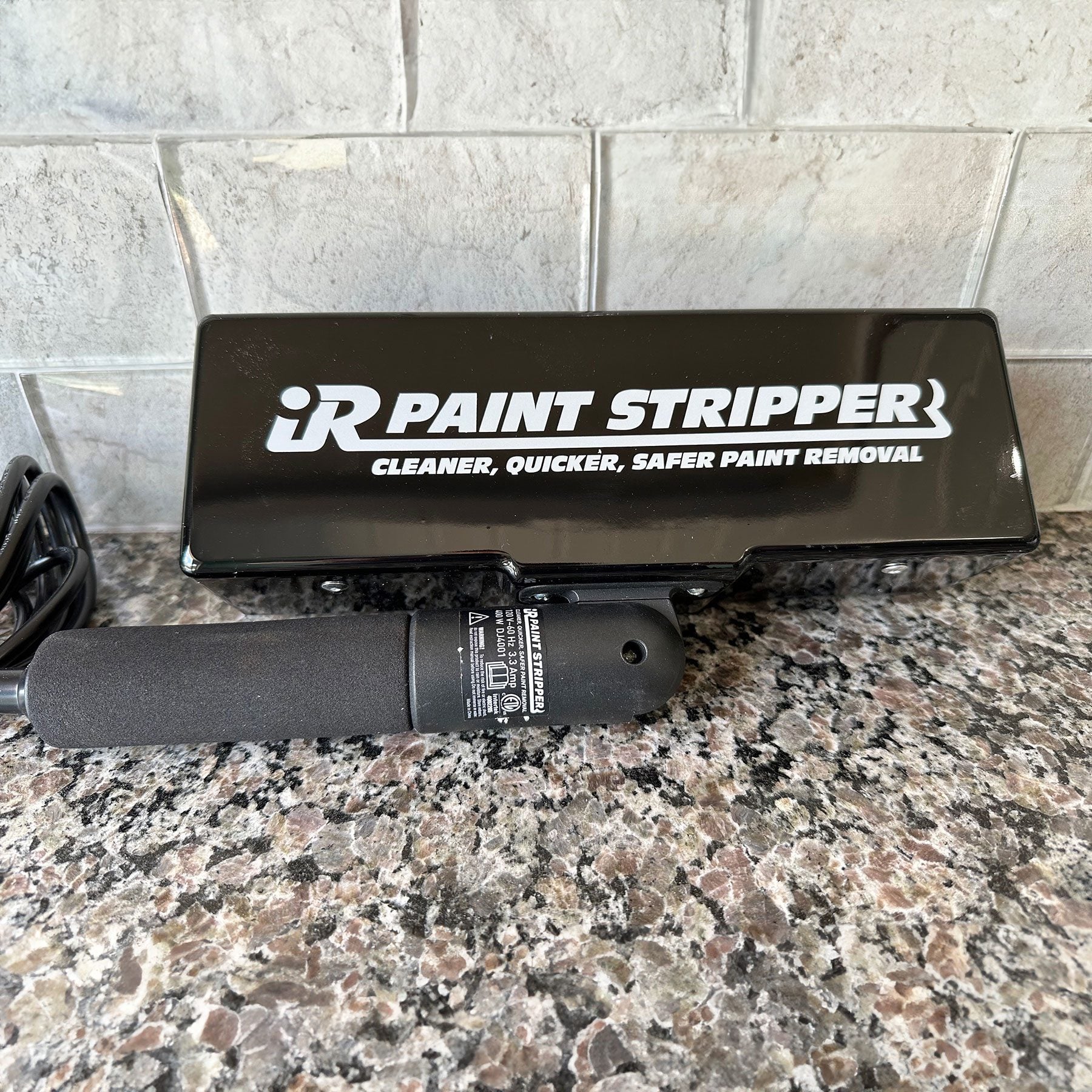
The Spengar IR Paint Stripper is a handheld electric paint-removal tool built around a ceramic infrared heating plate. Instead of blowing extremely hot air onto the surface like a conventional heat gun, it directs radiant heat into the coating and underlying substrate.
As the coating warms, its bond with the surface weakens. The softened paint can then be lifted with a scraper, often taking several layers with it. That is the theory, anyway. Old paint has a personality, and occasionally that personality is “I have lived on this door since Eisenhower and I am not leaving quietly.”
The tool is primarily intended for wooden surfaces such as:
- Interior and exterior doors
- Window sashes and frames
- Baseboards and wide trim
- Wood siding
- Cabinet doors
- Tables, chests, and flat furniture panels
- Historic millwork
- Painted or varnished restoration projects
The current design uses a ceramic heating element rather than exposed infrared bulbs. Ceramic plates are generally more resistant to accidental bumps than glass heating bulbs, although the unit should still be treated as a precision heat tool rather than tossed into a toolbox beneath a framing hammer.
How Infrared Paint Removal Works
Infrared energy is part of the electromagnetic spectrum. It is invisible to human eyes, but we experience it as heat. In a paint-removal tool, that radiant heat is directed toward the painted surface rather than carried by a stream of hot air.
A conventional heat gun begins by heating the outermost paint layer. The heat must gradually travel through the remaining layers before the lowest coating releases. An infrared paint stripper can warm the coating system and the material beneath it more evenly, helping weaken the bond closer to the wood.
This difference matters on old doors or trim covered with numerous coats. Rather than peeling one layer at a time like a sad onion, several layers may lift together when the scraper reaches the softened interface beneath them.
Infrared tools also operate differently from chemical removers. There is no gel to brush on, no plastic sheeting to position, and no long waiting period while the product performs mysterious chemistry under a translucent blanket. Once the coating is warm, scraping can begin immediately.
Spengar IR Paint Stripper Features
Ceramic Infrared Heating Plate
The ceramic heating plate is the centerpiece of the Spengar. It covers a relatively long, narrow area, allowing the user to heat a useful strip of paint during each cycle. This format suits rails, stiles, trim boards, window components, and other elongated wooden surfaces.
Unlike a glowing heating bulb, the ceramic surface may not provide an obvious visual signal that it has reached working temperature. Giving the unit time to warm fully before starting improves consistency.
Collapsible Handle
The handle folds down for transportation and storage. This sounds like a small feature until a workshop shelf begins resembling a yard sale organized by raccoons. A folding handle makes the otherwise bulky tool easier to store.
Broad Heating Area
The long heating face processes considerably more surface area than the focused nozzle of a heat gun. On a flat door panel, that is a major advantage. On carved molding, spindles, recessed corners, and ornate furniture, it is less helpful because the plate cannot closely follow every contour.
Corded Operation
The Spengar is a corded tool, providing continuous operation without battery changes. The tradeoff is predictable: users must manage an extension cord while holding a hot tool and a sharp scraper. Good cord placement is not glamorous, but neither is tripping backward into a bucket of paint chips.
Different Voltage Versions
Spengar has marketed versions for different electrical systems, including a 110-volt model intended for the United States and Canada and a 230-volt version for the United Kingdom and Europe. Buyers should verify voltage, plug type, warranty coverage, and seller information before ordering.
Performance: Does the Spengar IR Paint Stripper Work?
Yes, the Spengar works, particularly when it is used on the surfaces for which its shape is best suited. Published professional testing and customer reports indicate that it can soften multiple coats of paint on wooden doors, trim, windows, and furniture within a short heating cycle.
However, performance varies with several factors:
- The number and type of existing coatings
- Whether the finish is latex, oil paint, varnish, shellac, or a combination
- Surface temperature and outdoor conditions
- The distance between the ceramic plate and the coating
- How long the heat is applied
- The condition and sharpness of the scraper
- The profile and hardness of the underlying wood
On cooperative surfaces, paint may release in wide curls or dry flakes. On less cooperative finishes, the first pass may remove most of the build-up while leaving small patches, primer, or residue that require a second heating cycle or light follow-up preparation.
Expecting perfectly bare, finish-ready wood after one pass is unrealistic. Paint removal is still labor. The Spengar simply persuades the labor to behave itself.
Warm-Up Time and Heating Consistency
The tool is not instantly ready when plugged in. The ceramic element needs a short warm-up period before delivering its best performance. Starting too soon can lead to weak results, longer heating cycles, and the mistaken conclusion that the tool is underpowered.
Heating consistency is the most important criticism appearing in customer feedback. Some owners report strong, even results, while others say portions of the heating surface feel more effective than others. Uneven output can make the center of a painted section release before the edges.
Technique can compensate for minor inconsistencies. Slightly overlapping each heated section and observing how the paint reacts usually produces better results than rigidly following identical timing across the entire project.
Still, buyers should understand that the Spengar occupies a more affordable segment of the infrared paint-removal market. Its performance and build refinement may not equal a premium infrared system costing several times more.
Using the Spengar IR Paint Stripper
Step 1: Test the Existing Paint
Before disturbing paint in an older American home, determine whether lead may be present. Homes built before 1978 deserve particular caution. A consumer lead test can provide preliminary information, but professional testing is more reliable when significant renovation is planned.
Step 2: Prepare the Work Area
Remove nearby combustible debris, curtains, paper, sawdust, loose insulation, and anything else that might object dramatically to sustained heat. Protect floors with appropriate containment material and provide ventilation.
Keep children, pets, and innocent bystanders away from the work zone. Nothing improves a renovation project quite like not having the family dog distribute paint chips throughout the house.
Step 3: Choose the Correct Scraper
A sharp scraper is essential. Infrared heat softens the paint, but the scraper performs the removal. Flat surfaces benefit from a straight scraper, while molding and curved profiles require contour scrapers or shave hooks that match the shape.
A dull blade forces the user to push harder, increasing the likelihood of gouging the wood. Sharpen or replace blades regularly.
Step 4: Let the Tool Warm Up
Allow the ceramic plate to reach its operating temperature. Because the element may not glow, use the manufacturer’s guidance rather than waiting for a dramatic visual transformation.
Step 5: Heat a Small Section
Position the tool over a manageable area and apply heat for a brief interval. Exact timing varies by coating. Begin conservatively and increase the exposure only when needed.
The goal is to soften the finish, not toast the lumber. If the coating smokes heavily, burns, or produces a strong odor, stop and reassess the timing, surface, and ventilation.
Step 6: Scrape Immediately
Remove the tool and scrape while the coating remains soft. Work in the direction of the wood grain whenever possible. Place the hot tool only on a heat-resistant stand or protected surface.
Step 7: Repeat With Overlapping Sections
Move across the project systematically, overlapping sections slightly. A two-person workflow can be extremely efficient: one person heats while the other scrapes. It also provides someone to listen when you begin arguing with the seventh layer of avocado-green paint.
Advantages of the Spengar IR Paint Stripper
It Avoids Liquid Stripping Chemicals
The Spengar does not require a chemical remover, neutralizer, or wet cleanup process. That makes the work area less sticky and eliminates the need to handle a container filled with dissolved paint sludge.
It Can Remove Multiple Layers
Infrared heating is particularly attractive for historic woodwork with numerous accumulated coatings. When the lowest layers soften properly, several upper layers may release in one pass.
It Is Effective on Flat Wood
Doors, wide casing, window rails, shelves, and furniture panels play directly to the tool’s strengths. The long heating face can cover these areas faster than a narrow heat-gun nozzle.
Cleanup Is Relatively Manageable
Removed paint often forms curls, chips, or dry flakes rather than wet chemical paste. The debris still requires careful containment, especially when lead is possible, but collection is generally less unpleasant.
There Is Less Blown Debris
Because the tool does not blast hot air across the surface, it is less likely to send loose paint fragments flying around the room. The paint chips remain where gravity and your drop cloth can negotiate custody of them.
It Offers More Control Than a High-Temperature Heat Gun
A heat gun can concentrate intense heat in a small area and may scorch wood, damage adjacent materials, or overheat hidden spaces when used carelessly. Infrared heat is broader and more controlled, although it is not risk-free.
Disadvantages and Limitations
The Head Is Bulky
The shape is ideal for flat surfaces and awkward around tight corners, detailed carvings, narrow muntins, spindles, and deep molding profiles. Most restoration projects will still require smaller scrapers, hand tools, or an alternative removal method for detailed areas.
Results Depend Heavily on Technique
New users often remove the heater too soon, hold it at an ineffective distance, or wait so long that the coating smokes. There is a learning curve, even though the tool itself has few controls.
It Is Slower Than Promotional Videos Suggest
The paint may soften quickly, but an entire door or room of trim involves hundreds of heating and scraping cycles. The tool makes stripping more efficient; it does not open a magical portal through which old paint voluntarily exits the building.
Heating May Not Feel Perfectly Even
Mixed customer feedback about heat distribution should be considered before purchasing. Slight overlap and careful positioning help, but a badly inconsistent unit may warrant a return or warranty request.
The Handle and Housing May Feel Basic
Some users consider the construction appropriate for the price, while others find portions of the handle or housing less refined than expected. The ceramic plate is the functional priority, but buyers hoping for luxury power-tool engineering may be disappointed.
It Is More Expensive Than a Heat Gun
A basic heat gun can cost a fraction of the Spengar. The infrared tool becomes easier to justify when stripping multiple doors, a large quantity of historic trim, windows, or furniture. For one small shelf, the economics become considerably less romantic.
Spengar IR Paint Stripper vs. a Heat Gun
| Feature | Spengar IR Paint Stripper | Conventional Heat Gun |
|---|---|---|
| Heating method | Radiant infrared heat | Forced hot air |
| Best surface | Flat doors, windows, trim, and panels | Small areas, details, and varied materials |
| Coverage | Long, broad heating area | Small, focused nozzle area |
| Multiple paint layers | Often removes several together | May require repeated passes |
| Learning curve | Moderate | Moderate |
| Purchase cost | Higher | Lower |
| Detail work | Limited by broad head | Better with focused attachments |
| Risk of scorching | Lower when used correctly | Higher at aggressive settings |
A heat gun remains useful for small jobs and intricate areas, particularly when it has accurate temperature controls. The Spengar is the more compelling choice for repeated restoration work on broad wooden surfaces covered with multiple coatings.
Spengar vs. Chemical Paint Strippers
Chemical products can reach carvings, corners, and complex profiles that a flat infrared heater cannot. They are also useful on surfaces that should not be heated. However, they create wet waste, require chemical-resistant protection, may need hours of dwell time, and can demand additional washing or neutralization.
Some historical paint removers contained methylene chloride, a chemical associated with severe health hazards in poorly ventilated spaces. Although consumer regulations and product formulas have changed, users should still read every stripper’s safety data and instructions rather than trusting phrases such as “low odor” or “eco-friendly” as complete safety evaluations.
The Spengar removes the liquid chemical from the process, but it does not remove every hazard. Heated paint can still produce odors or smoke, old coatings can contain lead, and scraped debris must be contained responsibly.
Is the Spengar Safe for Lead Paint Removal?
Infrared paint removal is commonly considered a lower-temperature alternative to aggressive heat guns and open-flame methods. That can reduce the likelihood of overheating lead-containing coatings. It does not make lead paint harmless.
Scraping creates contaminated chips and residue. Dust may be produced during cleanup or final sanding. The work area still requires containment, appropriate personal protective equipment, careful disposal, and HEPA-filtered cleanup practices.
The manufacturer makes broad safety claims about lead paint and fumes, but homeowners should follow official lead-safe renovation guidance rather than relying on marketing language alone. For significant lead hazards, homes occupied by young children or pregnant people, or projects involving extensive disturbance, hiring an EPA-certified renovator or qualified lead-abatement professional is the prudent choice.
Never combine a heated tool with flammable chemical stripper residue. Check cavities and gaps for combustible debris before heating old woodwork, limit the exposure time, keep a suitable fire extinguisher nearby, and never leave the energized tool unattended.
Who Should Buy the Spengar IR Paint Stripper?
The Spengar makes the most sense for:
- Owners restoring older wooden homes
- DIYers stripping several doors or windows
- Furniture restorers working on broad panels
- Professionals who want an affordable entry into infrared stripping
- Users trying to reduce dependence on wet chemical removers
- People who value controlled heat over the speed and intensity of a heat gun
It may not be the right purchase for:
- Someone completing only one tiny project
- Work dominated by narrow carvings or intricate profiles
- Users expecting completely bare wood after one effortless pass
- Projects involving heat-sensitive plastic, laminate, or unknown composite materials
- Anyone unwilling to follow lead-safe containment and cleanup practices
Is the Spengar IR Paint Stripper Worth the Money?
U.S. pricing has commonly placed the Spengar at roughly $180, although prices and availability fluctuate. That is much more than a basic heat gun but substantially less than several premium infrared paint-removal systems.
Value depends primarily on project volume. Imagine spending $180 to strip one small stool. The stool would need to be emotionally significant, historically important, or secretly filled with cash.
Now imagine restoring twelve windows, four solid-wood doors, baseboards, and a staircase. Avoiding repeated purchases of chemical stripper and reducing hours of messy work can make the Spengar much easier to justify.
The mixed customer rating should not be ignored. Buyers report both dramatic improvements over heat guns and frustrations involving uneven heating, build quality, and slower-than-expected progress. Purchasing through a seller with a clear return policy is sensible.
Final Verdict
The Spengar IR Paint Stripper is a capable specialty tool, not a universal paint-removal miracle. Its ceramic heating plate can soften several layers of paint quickly, and its long working area is well matched to windows, doors, trim, and flat furniture components.
Its biggest strengths are controlled heating, reduced chemical mess, good coverage, and a price below many premium infrared systems. Its weaknesses are an awkward shape for detailed work, a warm-up period, possible heating inconsistencies, and performance that depends heavily on scraper quality and user technique.
For a serious old-house renovation or furniture-restoration workload, the Spengar can be a worthwhile investment. For a single small project, borrowing or renting a toolor simply using a carefully controlled heat gunmay offer better value.
Real-World Spengar IR Paint Stripper Experiences and Lessons
The most useful lesson from reported Spengar experiences is that the first few minutes do not necessarily represent the tool’s true performance. New users commonly begin scraping before the ceramic plate is fully warm. The result is paint that feels slightly rubbery but refuses to release cleanly. After a proper warm-up and a few experimental sections, the process usually becomes more predictable.
Flat door trim is a good example. A user may initially hold the heater over the paint for several seconds, remove it, and attack the surface with a dull hardware-store scraper. The paint tears into small pieces, and the user begins composing an angry return request in their head. Repeating the test with a fully heated plate and a freshly sharpened scraper can produce a completely different result, with several layers lifting together.
Window restoration presents another common experience. Infrared heat can soften paint on the sash and may also help loosen old glazing compounds. The broad head allows rapid progress along rails and stiles, but corners and narrow muntins still require patience. A contour scraper often matters as much as the heater. Trying to force a wide flat blade into a delicate profile is an efficient way to convert historic craftsmanship into accidental modern art.
Users also discover that every coating stack behaves differently. A door may contain modern latex over oil paint, a layer of primer, and varnish beneath everything. The upper coatings might peel away in a thick sheet while the lowest layer remains attached. That is not necessarily a failure. Removing 80 to 90 percent of the build-up with heat can still save substantial time, even when small remnants require another pass or careful finishing work.
Outdoor temperature can influence the rhythm of the job. Cold siding or a door stored in an unheated garage may require longer heating cycles than a room-temperature interior panel. Wind can cool the workpiece and make progress feel inconsistent. Bringing removable components into a well-ventilated workshop often improves both comfort and results.
Another practical lesson concerns workflow. Heating one section, putting the tool down, finding the scraper, scraping, and then relocating the extension cord wastes time. Preparing a heat-resistant resting place, arranging several scrapers within reach, and collecting debris as the work progresses creates a smoother routine. For a large project, one person heating and another scraping can move surprisingly quickly.
Users who dislike chemical stripping often appreciate the character of the waste. Instead of dealing with sticky paste that clings to gloves, tools, shoes, and apparently the fabric of space-time, they collect relatively dry paint curls and chips. These still require cautious handling, especially when lead is possible, but cleanup is usually more straightforward.
Fatigue is another reality. The tool is handheld, and repeated vertical work on a door frame or wall can tire the wrist and shoulder. Alternating tasks helps. Heat and scrape for a period, then sharpen blades, vacuum the contained area with appropriate equipment, or work on a horizontal component.
The best experiences tend to come from users who treat the Spengar as part of a paint-removal system rather than the entire system. They combine it with sharp scrapers, profile blades, containment materials, ventilation, safe cleanup procedures, and occasional spot treatment. The most disappointed users often expect the heater alone to deliver perfectly finished wood.
In practical terms, the Spengar does not make paint stripping fun. It makes it less awful, which may be the highest compliment any paint-removal tool can realistically earn.
Editorial note: This review synthesizes manufacturer specifications, professional restoration guidance, independent editorial evaluations, government safety recommendations, and verified customer feedback. It does not claim that the author personally performed a controlled laboratory test. Infrared heat can reduce some disadvantages associated with high-temperature or chemical removal methods, but all painted surfaces should still be approached with appropriate ventilation, fire precautions, and lead-safe work practices.