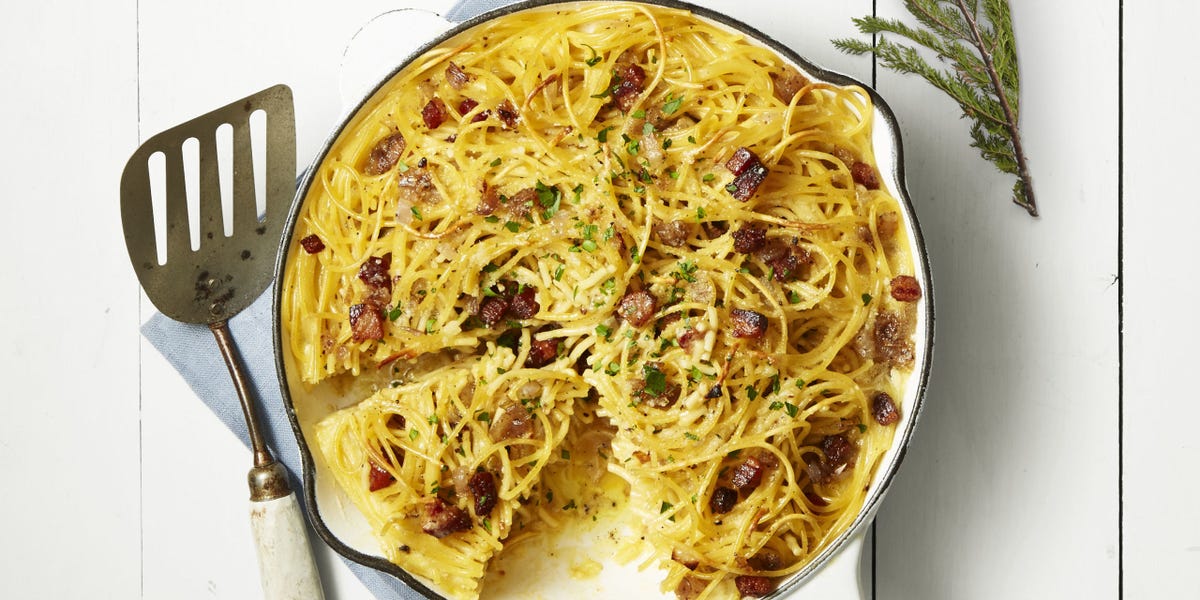
If classic spaghetti carbonara and a golden baked pasta pie had a delicious little dinner baby, it would be this Spaghetti Carbonara Skillet Pie. It has the creamy, peppery, cheesy soul of carbonara, the crisp edges of a skillet-baked pasta dish, and the dramatic slicing power of pie. In other words, it is comfort food wearing a tuxedo jacket over sweatpants.
This recipe is not pretending to be a strict Roman carbonara. Traditional carbonara is usually made with pasta, eggs or egg yolks, Pecorino Romano, guanciale, and black pepperno cream, no peas, and absolutely no culinary chaos. But a skillet pie needs structure, so we lean into the egg-and-cheese base and bake it until the center sets while the edges become irresistibly crisp. The result is rich without being soupy, sturdy without being dry, and fancy enough for brunch while still being easy enough for a Tuesday night when your motivation is hanging by one spaghetti strand.
What Is Spaghetti Carbonara Skillet Pie?
Spaghetti Carbonara Skillet Pie is a baked pasta dish made by tossing cooked spaghetti with crispy bacon or pancetta, eggs, Parmesan, Pecorino Romano, black pepper, and a little reserved pasta water. The mixture is pressed into an oven-safe skillet and baked until golden on top, creamy in the middle, and crisp around the edges.
Think of it as part carbonara, part spaghetti frittata, and part pasta casserole. It slices like pie, eats like carbonara, and disappears from the table like everyone suddenly forgot about portion control.
Why You’ll Love This Carbonara Skillet Pie
This dish is a weeknight hero because it uses pantry staples and transforms them into something that feels restaurant-worthy. It is also a smart way to use leftover spaghetti, although freshly cooked pasta works beautifully. The skillet gives the bottom and sides a gorgeous crust, while the egg-and-cheese mixture keeps the interior tender and savory.
It is also flexible. Bacon is easy to find in American kitchens, pancetta gives a more Italian-style flavor, and guanciale brings the deepest traditional carbonara character. Parmesan melts smoothly, Pecorino adds salty sharpness, and black pepper delivers that signature carbonara bite.
Recipe Overview
- Prep time: 20 minutes
- Cook time: 25 to 30 minutes
- Total time: About 50 minutes
- Servings: 6 generous slices
- Best pan: 10-inch oven-safe cast-iron or stainless-steel skillet
Ingredients
- 12 ounces spaghetti
- 6 ounces thick-cut bacon, pancetta, or guanciale, diced
- 4 large eggs
- 1 large egg yolk
- 1 cup finely grated Parmesan cheese
- 1/2 cup finely grated Pecorino Romano cheese
- 1 teaspoon freshly cracked black pepper, plus more for serving
- 1/2 teaspoon kosher salt, plus more for pasta water
- 1/2 cup reserved pasta water
- 1 tablespoon olive oil or bacon drippings, for the skillet
- Optional: 1/2 cup frozen peas, thawed
- Optional: 2 tablespoons chopped parsley for garnish
How to Make Spaghetti Carbonara Skillet Pie
Step 1: Cook the spaghetti just shy of al dente
Bring a large pot of salted water to a boil. Add the spaghetti and cook it 1 to 2 minutes less than the package directions. The pasta will finish cooking in the oven, so do not let it get too soft now. Mushy pasta is where good intentions go to retire.
Before draining, scoop out at least 1 cup of pasta water. You will only need about 1/2 cup, but extra starchy water is kitchen insurance.
Step 2: Crisp the bacon, pancetta, or guanciale
While the pasta cooks, place the diced bacon, pancetta, or guanciale in a 10-inch oven-safe skillet over medium heat. Cook until the pieces are browned and crisp and the fat has rendered. This usually takes 6 to 8 minutes. Transfer the crisp meat to a plate, leaving about 1 tablespoon of fat in the skillet.
If your skillet looks dry, add a small splash of olive oil. If it looks like a bacon swimming pool, spoon out the extra fat. Flavor is wonderful; grease slicks are less charming.
Step 3: Whisk the carbonara-style egg mixture
In a large mixing bowl, whisk together the eggs, egg yolk, Parmesan, Pecorino Romano, black pepper, and kosher salt. Slowly whisk in 1/4 cup of warm reserved pasta water to loosen the mixture. This helps the cheese melt smoothly and makes the filling creamy rather than stiff.
The key is to use warm, not boiling, pasta water. If the water is too hot, the eggs may scramble before the skillet pie even reaches the oven. Nobody invited breakfast curds to this dinner.
Step 4: Combine pasta, cheese mixture, and crispy meat
Add the drained spaghetti to the bowl with the egg-and-cheese mixture. Toss quickly and thoroughly so every strand is coated. Add the crisp bacon or pancetta and the optional peas, if using. If the mixture seems tight, add another splash of pasta water.
The pasta should look glossy and well coated, not watery. You want the spaghetti to cling together when baked, but not turn into a dry pasta brick.
Step 5: Build the skillet pie
Heat the skillet with the reserved fat over medium heat. Add the spaghetti mixture and gently press it into an even layer. Let it cook on the stovetop for 2 to 3 minutes to begin setting the bottom crust.
This short stovetop step is what gives the pie its crisp underside. It is the difference between “nice baked pasta” and “why is everyone fighting over the corner piece when this dish is round?”
Step 6: Bake until golden and set
Transfer the skillet to a 375°F oven and bake for 20 to 25 minutes, or until the top is lightly golden and the center is set. For food safety, egg-based baked dishes should reach 160°F in the center. Let the pie rest for 8 to 10 minutes before slicing.
Resting is important. If you slice it immediately, the pie may slump like it just received disappointing news. Give it a few minutes and it will cut into neat, confident wedges.
Tips for the Best Spaghetti Carbonara Skillet Pie
Use finely grated cheese
Finely grated Parmesan and Pecorino melt more evenly than large shreds. Pre-grated cheese can work in a pinch, but freshly grated cheese gives a smoother texture and better flavor.
Do not overcook the pasta
Because the spaghetti bakes after boiling, undercooking it slightly keeps the final pie from becoming soft. Al dente pasta gives the dish structure and a pleasant bite.
Season carefully
Bacon, pancetta, guanciale, Parmesan, and Pecorino are all salty. Taste your meat and cheese before adding too much salt. The best carbonara skillet pie tastes savory and balanced, not like it is trying to preserve itself for winter.
Let the skillet do the work
A cast-iron skillet is excellent because it holds heat well and creates crisp edges. Stainless steel also works. Avoid a nonstick skillet unless it is clearly oven-safe at 375°F.
Recipe Variations
For a more traditional flavor, use guanciale and Pecorino Romano. For a more accessible American weeknight version, use thick-cut bacon and Parmesan. If you enjoy a little color and sweetness, peas are a popular add-in, even if carbonara purists may clutch their wooden spoons.
You can also add sautéed mushrooms, baby spinach, roasted garlic, or a pinch of red pepper flakes. Just keep extra add-ins moderate. Too many vegetables can release water and make the pie softer in the center.
What to Serve With Spaghetti Carbonara Skillet Pie
This dish is rich, so bright and simple sides work best. Serve it with a lemony arugula salad, roasted broccolini, garlic green beans, or sliced tomatoes with a splash of balsamic vinegar. For brunch, pair it with fruit salad and strong coffee. For dinner, add a crisp green salad and pretend you planned the whole meal days ago.
How to Store and Reheat Leftovers
Cool leftover skillet pie completely, then store slices in an airtight container in the refrigerator for up to 3 days. Reheat slices in a 350°F oven for 10 to 12 minutes, or warm them in a covered skillet over medium-low heat. The microwave works too, but the edges will be softer.
For best texture, reheat the pie uncovered for the last few minutes so the top can regain some crispness. Leftover slices also make a surprisingly excellent breakfast. Add a fried egg on top if you are feeling bold, hungry, or emotionally supported by cheese.
Common Mistakes to Avoid
The biggest mistake is using too much liquid. This is not a creamy pasta sauce served loose in a bowl; it is a skillet pie. The filling should be moist, but it needs enough egg and cheese to set.
Another common problem is skipping the resting time. Fresh from the oven, the pie is still settling. Resting helps the eggs finish firming and makes slicing easier. Finally, avoid using cold pasta straight from the fridge without loosening it first. If using leftovers, toss them with a splash of warm water before mixing with the eggs and cheese.
Experience Notes: What Making Spaghetti Carbonara Skillet Pie Teaches You
The first time you make Spaghetti Carbonara Skillet Pie, you may wonder whether spaghetti really wants to become pie. It does. Spaghetti is surprisingly cooperative when eggs and cheese are involved. The strands tangle together, the edges crisp up, and suddenly the same ingredients that usually twirl around a fork are standing tall in neat slices like they have been to finishing school.
One of the best parts of this recipe is the sound. When the pasta mixture hits the hot skillet, it gives a quiet sizzle that tells you dinner is moving in the right direction. That stovetop start builds the crust, and the smell of bacon fat, cheese, and black pepper fills the kitchen almost immediately. It is the kind of aroma that makes people wander in and ask, “What are you making?” even though they were not planning to help.
This recipe also teaches patience. Carbonara-style dishes can be a little dramatic because eggs are involved. Too much heat too fast, and they scramble. Too little heat, and the pie never sets. But the skillet pie format is forgiving because the oven provides gentle, steady heat. As long as you whisk the cheese mixture well, use warm pasta water carefully, and let the baked pie rest before slicing, the results are reliably delicious.
It is also a great dish for real life. You can make it when you have leftover pasta, when you need a brunch centerpiece, or when you want dinner to feel cozy without making a sink full of dishes. It travels better than regular carbonara, which makes it useful for potlucks and casual gatherings. Regular carbonara is best eaten immediately; carbonara skillet pie is more relaxed. It can sit for a few minutes, slice cleanly, and still taste wonderful.
After a few tries, you will probably start customizing it. Maybe you will add more black pepper because you like a sharper bite. Maybe you will use half Parmesan and half Pecorino because that balance tastes just right. Maybe you will sneak in peas because they look pretty and make you feel like the dish contains a vegetable. That is the beauty of this recipe: it respects the spirit of carbonara while giving home cooks room to play.
The biggest lesson is simple: humble ingredients can become something memorable when technique is on your side. Spaghetti, eggs, cheese, and bacon are not rare or expensive. But when they are combined thoughtfully, pressed into a skillet, and baked until golden, they become the kind of meal people remember. And if someone asks for the recipe, try not to look too smug. Or do. You made spaghetti into pie.
Conclusion
Spaghetti Carbonara Skillet Pie is creamy, crisp, savory, and wonderfully sliceable. It brings together the best parts of carbonara and baked pasta in one easy skillet recipe. With al dente spaghetti, crispy bacon or pancetta, eggs, Parmesan, Pecorino Romano, and plenty of black pepper, this dish is simple enough for a weeknight but impressive enough for brunch, potlucks, and cozy weekend dinners.
Make it once and you will understand the appeal: golden edges, tender center, rich carbonara flavor, and clean slices that look far more polished than the effort required. It is the pasta equivalent of getting compliments for an outfit that secretly has an elastic waistband.