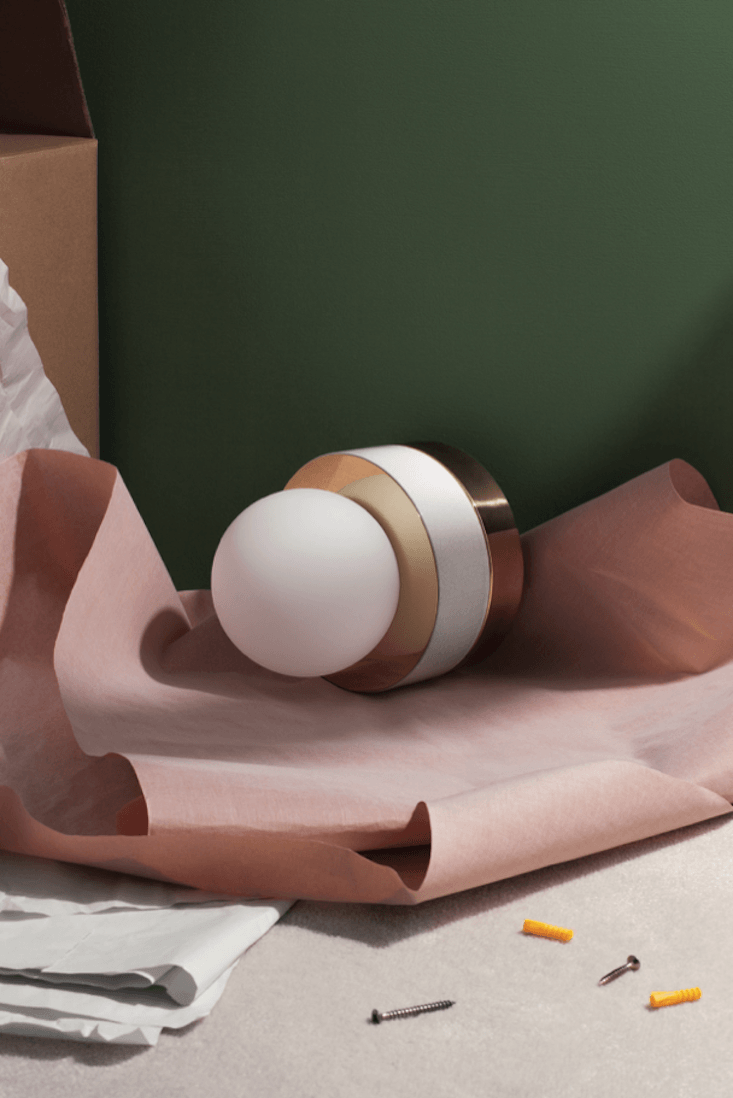
The Small Black Wall Light by The Socialite Family + HAOS is proof that a lighting fixture does not need to be enormous, glittery, or visible from space to make a room memorable. With its black ceramic body, brass details, and softly glowing opal globe, this compact French wall light combines sculpture, atmosphere, and function in one unusually confident package.
It is the kind of object that looks composed even when switched off. Turn it on, and the matte glass sphere produces a warm pool of light rather than the interrogation-room glare delivered by an unfortunate bare bulb. The result is intimate, slightly retro, and sophisticated without becoming stiff or overly formal.
This guide examines the lamp’s design, materials, lighting performance, installation considerations, styling possibilities, and everyday experience. It also explains why the fixture works especially well in smaller rooms, narrow passages, bedside arrangements, and interiors that need one strong decorative detail rather than twelve competing ones.
What Is the Small Black Wall Light by The Socialite Family + HAOS?
The Small Black Wall Light emerged from a collaboration between The Socialite Family, a Paris-based interiors and furniture brand, and HAOS, a French design studio known for reducing familiar objects to simple, expressive forms. The partnership brought together a shared interest in honest materials, restrained geometry, vintage references, and contemporary craftsmanship.
The original black edition combines three primary materials: black ceramic, brass, and matte opal glass. Rather than hiding those materials behind decorative flourishes, the design lets each one perform a clear visual role. The ceramic creates weight and depth, the brass adds a warm metallic accent, and the opal globe softens the light.
Original Product Specifications
| Fixture type | Indoor wall light or wall sconce |
|---|---|
| Approximate dimensions | 18 centimeters in diameter and 21 centimeters deep |
| Main materials | Black ceramic, brass, and matte opal glass |
| Light source | E14 LED bulb |
| Original bulb specification | 1.5 watts, warm white, 2700K |
| Light output | Approximately 100 lumens |
| Dimming | Not designed as a dimmable fixture |
| Original electrical specification | 220V |
| Manufacturing | Made in France |
These specifications immediately reveal the lamp’s intended role. At approximately 100 lumens, it is an accent light, mood light, or gentle secondary source. It is not meant to illuminate an entire kitchen, replace a serious desk lamp, or guide aircraft toward a runway.
Why the Design Feels So Distinctive
A Study in Simple Geometry
The design is built from rounded forms rather than complicated ornament. The circular ceramic base appears substantial, while the opal globe projects forward like a small luminous pearl. Brass connects and separates the two forms, adding just enough contrast to keep the composition from feeling flat.
This geometric simplicity makes the Small Black Wall Light easy to understand at a glance. There is no visible mechanical drama and no forest of decorative arms. Its appeal comes from proportion, finish, and the relationship between solid material and glowing glass.
Black Ceramic Adds Visual Weight
Black fixtures often create a crisp outline against light walls, but the ceramic construction gives this one more character than a standard painted-metal sconce. Ceramic can appear softer and more tactile, even in a dark finish. Minor variations in the surface may also reinforce the impression that the piece was crafted rather than stamped out by an army of indifferent robots.
On a white, cream, pale gray, or muted plaster wall, the black body becomes a graphic focal point. Against dark green, burgundy, navy, or charcoal, it blends more quietly into the background, allowing the glass globe and brass detail to become the stars.
Brass Prevents the Palette from Feeling Cold
Black and white alone can look severe. The brass component changes the emotional temperature of the design by introducing a warmer, more traditional material. It also helps the fixture work with antique furniture, aged mirrors, marble, velvet, natural wood, and vintage accessories.
The brass does not need to match every metal finish in the room. In fact, a thoughtful mix of brass, blackened steel, chrome, or bronze can make an interior feel collected over time. Perfectly matched finishes sometimes resemble a showroom display that has never met a human being.
Matte Opal Glass Produces a Softer Glow
The opal globe conceals the bulb and diffuses its brightness. Instead of looking directly at a sharp point of light, the eye sees an evenly glowing surface. This makes the fixture especially appealing in bedrooms, reading corners, intimate dining areas, and hallways used at night.
The original 2700K color temperature falls within the warm-white range commonly chosen for comfortable residential spaces. It complements wood, warm neutrals, brass, terracotta, leather, and richly colored textiles particularly well.
What Kind of Light Does It Provide?
Understanding the difference between accent, ambient, and task lighting is essential before choosing any decorative wall sconce. The Small Black Wall Light is strongest as accent lighting and gentle ambient lighting.
Accent Lighting
Accent lighting adds depth and draws attention to a specific wall, artwork, architectural feature, or arrangement of furniture. The HAOS wall light is well suited to this job because the fixture itself remains visually interesting during daylight hours. At night, its opal globe becomes a softly illuminated object.
Ambient Lighting
Ambient light creates the general emotional atmosphere of a room. A pair of these sconces can contribute to a warm evening setting when combined with a pendant, floor lamp, table lamp, or discreet ceiling light. Layering several modest sources usually creates a more comfortable room than relying on one extremely bright fixture overhead.
Limited Task Lighting
With an output of about 100 lumens, the original configuration is not ideal as the only reading light or vanity light. It may provide enough illumination for moving through a hallway, finding a glass of water, or creating a calm bedside glow, but detailed reading generally benefits from a brighter and more directed source.
That limitation is not a design failure. It is simply part of the fixture’s personality. A candle is not a stadium floodlight, and nobody should be emotionally devastated by this discovery.
Where to Use the Small Black HAOS Wall Light
Beside the Bed
A wall-mounted fixture leaves the nightstand free for books, glasses, a phone, and the mysterious collection of objects that appears beside every bed after approximately three days. The compact projection of this lamp also makes it useful in bedrooms where large swing-arm sconces would feel intrusive.
Install one on each side of the headboard for symmetry, or use a single fixture in an intentionally asymmetrical room. When using only one, balance it visually with artwork, a tall plant, a narrow shelf, or a pendant on the opposite side.
In a Narrow Hallway
Hallways often receive whatever lighting was left over after the “important” rooms were designed. A small sculptural sconce can correct that injustice. Because the HAOS fixture occupies wall space rather than floor or table space, it can bring warmth to a passage without interfering with movement.
A single lamp works at the end of a short corridor, while repeated fixtures can establish rhythm along a longer wall. Before planning a series, confirm that the projection will not create an obstacle in a particularly narrow route.
Above a Console or Small Cabinet
Mounted above a slim console, the black wall light can anchor a simple arrangement of ceramics, books, and framed art. It also provides a gentle evening glow near an entry without consuming the tabletop area.
For a balanced composition, position the fixture in relation to the complete arrangement rather than automatically centering it on the wall. The furniture, artwork, mirror, and lamp should read as one group.
In the Living Room
The fixture can frame a sofa, fireplace, bookcase, or artwork. A pair gives a traditional sense of order, while a single sconce adds a more contemporary accent. Its retro-modern character works particularly well with low-profile sofas, vintage lounge chairs, walnut cabinets, travertine tables, and textured rugs.
Because the light output is modest, combine it with other sources. A floor lamp can support reading, a pendant can provide broad illumination, and the HAOS sconce can handle atmospherethe glamorous job with fewer spreadsheets.
In a Dining Area
A small black ceramic wall light can create intimacy near a dining table, bar cabinet, or built-in bench. Warm opal light is flattering to wood, food, glassware, and faces. It also introduces a decorative glow without competing with a central pendant.
In a Powder Room
The sculptural form can look striking beside a mirror, especially in a compact powder room where every visible object has an outsized design impact. However, the original product is specified for indoor use and should not automatically be assumed suitable for damp or wet locations.
Before using it near a sink, shower, or bathtub, verify the fixture’s location rating, applicable building codes, and the required electrical protection. Beautiful lighting is delightful. Beautiful lighting that was installed in the wrong environment is considerably less delightful.
Decorating Styles That Suit the Fixture
Modern French Interiors
The collaboration naturally fits interiors that combine elegant European references with relaxed contemporary furniture. Pair it with plaster walls, parquet flooring, curved seating, aged brass, and one slightly eccentric vintage object.
Midcentury-Inspired Rooms
The globe shade and restrained geometry complement midcentury furniture without turning the room into a historical reenactment. Walnut, teak, bouclé, smoked glass, and abstract artwork all make convincing companions.
Minimalist Spaces
Minimalism depends on the quality of individual objects because there are fewer places for mediocre choices to hide. The Small Black Wall Light can serve as a strong focal point while preserving a clean visual field.
Eclectic and Vintage Homes
The ceramic and brass construction allows the lamp to sit comfortably beside antiques, flea-market finds, patterned textiles, and contemporary artwork. Its form is simple enough to avoid fighting with decorative surroundings, yet distinctive enough not to disappear.
Warm Industrial Interiors
Black accents often appear in industrial spaces, but the opal glass and brass prevent this fixture from looking hard or utilitarian. Use it to soften exposed brick, concrete, black window frames, or steel shelving.
Installation and Electrical Considerations
The original product information lists a 220V electrical system and an E14 bulb base. That matters for American buyers because ordinary residential electrical service and common bulb fittings may differ. A vintage, imported, or European-market fixture should never be treated as automatically compatible with a U.S. installation.
Before purchasing or installing the wall light, confirm the following:
- The fixture’s voltage and frequency are compatible with the property.
- The chosen LED bulb matches the socket, voltage, wattage limit, and enclosed-fixture requirements.
- The mounting hardware is appropriate for the wall construction.
- The electrical box can safely support the fixture.
- The installation follows local electrical codes.
- The product carries any certification required for the intended location.
A qualified electrician should handle hardwired installation, voltage conversion, unfamiliar wiring, or any situation involving an older electrical system. The National Electrical Code is the primary benchmark for safe electrical installation in the United States, although local rules and adopted editions can vary.
Hardwired Versus Corded Installation
The original description referenced the possibility of wall connection or a black textile cord with a switch. A hardwired installation creates a cleaner built-in appearance. A corded approach can offer more flexibility where compatible, properly configured equipment is available.
Do not conceal an ordinary flexible power cord inside a wall, under flooring, or in another location not permitted by its rating. Never staple or pinch a cord to make it behave. Electrical cords are not rebellious teenagers; force rarely improves the situation.
Choosing the Mounting Height
There is no universal mounting height that works in every room. The right position depends on ceiling height, furniture dimensions, viewing angles, circulation, and the fixture’s purpose.
Beside a bed, test the position while sitting upright so the globe is not directly in your line of sight. Above a console, evaluate the lamp together with the furniture and any artwork. In a hallway, keep the fixture high enough and far enough from traffic to prevent accidental contact.
Before drilling, make a full-size paper template and tape it to the wall. Live with the pretend lamp for a day. It costs almost nothing and can prevent a very expensive conversation involving patching compound.
How to Style the Black Ceramic, Brass, and Opal Glass
Use Contrast on Light Walls
Against white or pale walls, the black ceramic creates a sharp silhouette. Repeat black elsewhere in small amounts, such as a picture frame, chair leg, vase, or cabinet handle. Two or three echoes are usually enough to make the choice feel intentional.
Create a Tonal Look on Dark Walls
On charcoal, deep blue, olive, or chocolate walls, the black base becomes quieter. The glowing globe appears almost detached from the wall, and the brass detail catches more attention. This approach feels intimate and dramatic without requiring a chandelier the size of a small automobile.
Pair It with Natural Materials
Wood, linen, wool, leather, stone, and handmade ceramics reinforce the fixture’s tactile quality. The combination works especially well in rooms where simple shapes are balanced by varied textures.
Let the Brass Age Naturally
Depending on its finish, brass may develop subtle variations over time. Some owners enjoy this evolving patina, while others prefer a more uniform appearance. Follow the manufacturer’s care recommendations before applying any polish, chemical cleaner, or enthusiastic homemade potion discovered online.
Cleaning and Long-Term Care
Routine care should be gentle. Turn the fixture off, allow it to cool, and use a soft, dry cloth to remove dust from the ceramic, brass, and glass. Support the globe carefully rather than twisting or pulling it unnecessarily.
Avoid abrasive pads and harsh cleaners, which may scratch the glass, alter the ceramic finish, or damage the brass surface. If deeper cleaning is required, consult the current manufacturer instructions for the specific edition.
Inspect the lamp periodically for a loose globe, movement at the wall plate, cord damage, discoloration, flickering, or unusual heat. Stop using it and consult a professional when an electrical problem is suspected.
Is the Small Black Wall Light Worth Considering?
This fixture makes the most sense for a buyer who values craftsmanship, distinctive materials, and atmospheric lighting. It is less suitable for someone seeking maximum brightness, integrated smart controls, adjustable direction, or bargain-priced utility.
Its strengths include:
- A compact but memorable sculptural form
- A sophisticated combination of ceramic, brass, and opal glass
- Warm, diffused illumination
- Compatibility with modern, vintage, and eclectic interiors
- Space-saving wall-mounted installation
- French design and manufacturing heritage
Potential limitations include the modest light output, nondimmable original configuration, indoor-only designation, European electrical specification, and uncertain availability of the original black edition. Buyers should verify current specifications rather than relying solely on archived product information.
Living with the Small Black Wall Light: A 500-Word Experience Guide
The experience of living with a small decorative wall light begins before the light is switched on. During the day, the HAOS design behaves like a piece of wall-mounted sculpture. The black ceramic base gives the room a visual punctuation mark, while the white opal globe keeps the object from becoming too dark or severe. Brass appears only as an accent, but it changes the entire mood of the fixture. Without it, the design might feel strictly monochrome. With it, the lamp develops warmth and a subtle connection to vintage interiors.
In a bedroom, the most noticeable practical benefit is reclaimed surface space. A small nightstand suddenly has room for an actual book instead of being entirely occupied by a lamp base. The wall light also makes the sleeping area feel planned rather than improvised. Even an inexpensive bedside table can look more intentional when a sculptural sconce is mounted above it.
The original 100-lumen output creates a soft evening glow. It is enough to establish atmosphere and help someone move around without switching on a powerful ceiling light. That matters late at night, when the difference between “gentle illumination” and “full supermarket produce aisle” feels surprisingly important.
For sustained reading, however, the light may be too subtle on its own. A reader who enjoys tiny print, detailed illustrations, or several chapters at a time will probably appreciate an additional task light. This is where layered lighting becomes more than a fashionable design phrase. The HAOS sconce handles mood, while a directed floor lamp, brighter bedside fixture, or ceiling source handles demanding visual work.
In a living room, the lamp’s effect changes depending on wall color. On a pale wall, the black ceramic immediately attracts attention. The fixture creates contrast even when it is off, making a quiet room feel more architectural. On a dark wall, the base recedes and the illuminated globe appears to float. The latter treatment can be particularly effective near a velvet sofa, dark wood cabinet, or moody artwork.
A pair of fixtures introduces symmetry and formality. This works beautifully around a fireplace, mirror, sofa, or headboard. A single lamp feels more relaxed and contemporary, particularly when placed slightly off-center near artwork or a console. The choice is not merely mathematical. Pairs create rhythm and stability; single fixtures create tension and surprise.
The opal glass also affects the way the light is experienced physically. Because the bulb is concealed, the eye is less likely to encounter harsh glare. The fixture becomes a glowing shape rather than a visible lamp inside a decorative shell. This difference is especially noticeable at eye level, where an exposed bulb can quickly become uncomfortable.
The lamp’s compact dimensions are another everyday advantage. It can add personality to a narrow hallway or small bedroom without visually swallowing the wall. Still, placement deserves careful testing. Mounted too low, the projecting globe may feel vulnerable. Mounted too high, it can lose its relationship with the furniture below. A paper template is genuinely useful for judging scale, particularly when planning two fixtures that must align.
Maintenance is relatively undramatic, which is exactly what maintenance should be. Dust is more visible on black ceramic and opal glass than optimistic product photography might suggest, but a soft dry cloth generally restores the clean contrast between the surfaces. The globe should be handled carefully, and the brass should be cleaned only according to the recommended finish care.
The most important experience-related issue for an American owner is electrical compatibility. The documented original fixture used a 220V system and an E14 bulb. That specification should be reviewed by a qualified professional before installation in a U.S. home. Once compatibility, mounting, and code requirements have been addressed correctly, the lamp can function as intended: not as the brightest object in the house, but as one of the most memorable.
Ultimately, living with the Small Black Wall Light is less about raw illumination and more about atmosphere. It makes a wall feel considered. It adds softness without using fabric, warmth without becoming rustic, and personality without shouting. The design earns attention quietly, which may be its most luxurious quality.
Conclusion
The Small Black Wall Light by The Socialite Family + HAOS succeeds because it knows exactly what it wants to be. It is a compact decorative sconce, a warm source of accent light, and a sculptural meeting of black ceramic, brass, and opal glass.
Its modest dimensions make it useful in bedrooms, hallways, entryways, dining corners, and smaller living spaces. Its material palette works across modern French, midcentury, minimalist, industrial, and eclectic interiors. Most importantly, it creates visual interest both on and off, which is a valuable quality in any fixture that spends most of its life attached to a wall.
The original light output is atmospheric rather than powerful, and its European electrical specifications require careful verification for installation in the United States. Those practical considerations should not be ignored. When properly installed and supported by a layered lighting plan, however, the HAOS wall light offers something harder to measure than lumens: character.