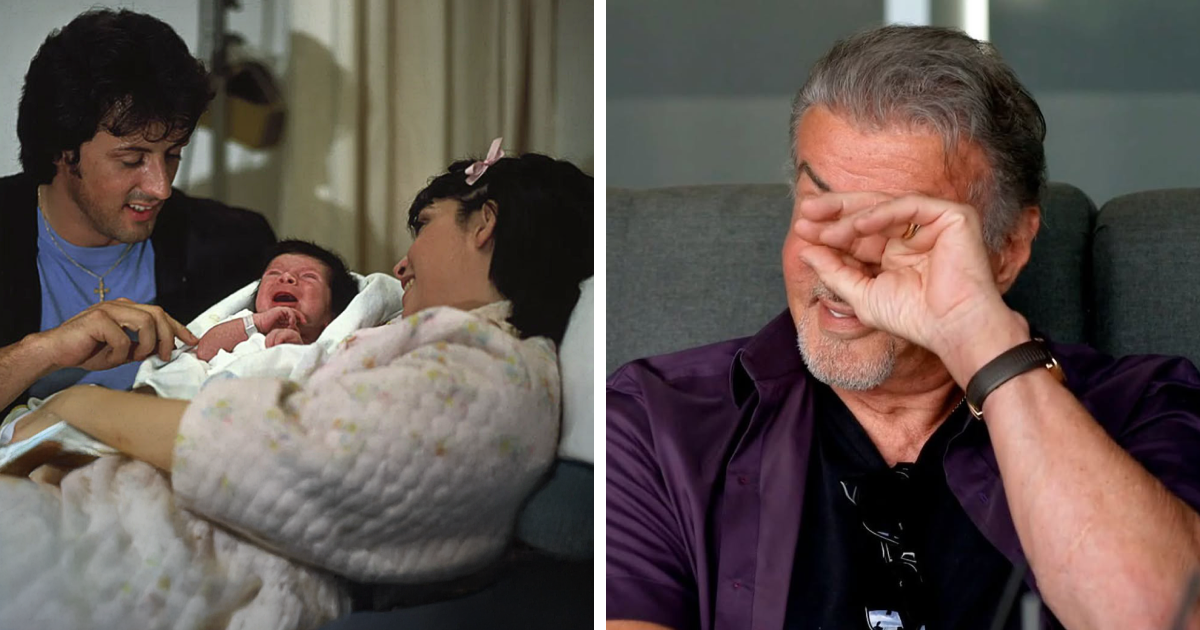
Hollywood usually loves three things: a spotlight, a sequel, and a dramatic entrance. Seargeoh Stallone’s story, however, is built on almost the exact opposite formula. He was born into one of America’s most recognizable entertainment families, connected forever to the larger-than-life legacy of Sylvester Stallone, yet his life has unfolded far from red carpets, magazine covers, and the usual celebrity circus. In an industry where even the family dog can end up with a publicist, Seargeoh became known not for chasing fame, but for quietly living outside it.
That is exactly what makes his story so compelling. People are naturally curious about celebrity children, especially when one of their parents helped define an entire era of action movies. But with Seargeoh, the public record is surprisingly small. That absence is not a flaw in the story. It is the story. His life has long been shaped by privacy, protection, and the choices his family made after he was diagnosed with autism as a child. The result is a deeply human narrative that says as much about family, caregiving, and public boundaries as it does about fame.
So while this is a story connected to a famous last name, it is not really a story about celebrity at all. It is about what happens when a family steps back from the cameras and decides that real life matters more than public curiosity. And honestly, in modern pop culture, that might be the boldest move of all.
Who Is Seargeoh Stallone?
Born into a famous family, but never built for public life
Seargeoh Stallone is the second son of Sylvester Stallone and Sasha Czack. He was born in 1979, at a time when his father’s career was already becoming the stuff of Hollywood legend. The Rocky franchise had transformed Sylvester Stallone into a household name, and the family could easily have slid into the familiar celebrity rhythm of interviews, premieres, and public appearances. But Seargeoh’s life took a very different path.
He grew up with an older brother, Sage Stallone, who later worked in film and appeared publicly with his father. By contrast, Seargeoh remained mostly out of view. That difference was not accidental. It reflected a family reality that became clearer when he was diagnosed with autism in early childhood. Once that happened, the priorities around him changed. The focus was no longer on visibility or image. It became care, stability, and creating the best environment possible for him.
That distinction matters because celebrity coverage often treats privacy like a mystery that needs solving. In Seargeoh’s case, privacy looks more like a boundary that deserves respect. He was not a vanishing act. He was a child and later an adult whose family appears to have made a consistent decision: protect his life rather than package it.
A tiny screen credit, then a long retreat from the spotlight
If Seargeoh ever had a brush with Hollywood in the traditional sense, it came very early. He is widely credited with an uncredited appearance in Rocky II, where he played Rocky Balboa Jr. as an infant. It is the sort of trivia fact that internet searches adore: a famous actor’s real-life son playing his on-screen son. Cute? Absolutely. A sign of a future acting career? Not even close.
That brief connection to cinema never became a launching pad. There was no second act, no child-star phase, no publicity tour designed to turn a famous surname into a marketable brand. In an entertainment culture that often treats family as extension merchandise, Seargeoh’s story quietly refused the sales pitch. He appeared, waved once from the cinematic stroller, and effectively exited the performance.
That tiny Rocky II footnote matters less because of the film credit and more because of the contrast it creates. His father became one of the most recognizable men in American movie history. His brother Sage pursued creative work in film. His half-sisters later grew up in a much more visible media landscape. Yet Seargeoh’s path remained private. If fame is usually inherited like furniture in Hollywood, his story shows that it can also be declined.
Why Seargeoh Stayed Away From Fame
An autism diagnosis changed the family’s priorities
Public reporting over the years has been remarkably consistent on one central point: Seargeoh was diagnosed with autism at a young age. That diagnosis changed the emotional and practical direction of family life. It also arrived during a time when public understanding of autism was far thinner than it is today. In the early 1980s, many families navigated confusing advice, limited resources, and a culture that often misunderstood developmental differences. In other words, the Stallones were dealing with something deeply personal in an era that was not exactly handing out excellent road maps.
That context helps explain why Seargeoh’s story should be handled with care. It is easy to flatten lives into celebrity trivia, but autism is not a plot device and caregiving is not tabloid decoration. For Sylvester Stallone and Sasha Czack, the diagnosis appears to have redirected energy away from publicity and toward support. They spoke publicly about it at times, but not in a way that turned Seargeoh into a public exhibit. The message was less “look at us” and more “this is real, and this matters.”
Today, autism is discussed much more openly, and public-health data show how common it is across American life. That broader awareness makes Seargeoh’s story feel less like celebrity oddity and more like something many families can recognize: plans shifting, expectations being rewritten, and love becoming more practical than glamorous. Fame does not cancel those realities. It just adds photographers to the parking lot.
Privacy was not secrecy; it was protection
One of the biggest mistakes made in celebrity storytelling is assuming that the lack of public content means there must be a hidden scandal, a feud, or some dramatic explanation with ominous music in the background. But sometimes a quiet life is simply a quiet life. That seems to be the most reasonable way to understand Seargeoh Stallone’s public absence.
There are not many interviews, recent photos, or public appearances connected to him, and that very scarcity has become part of the fascination. Yet the healthier reading is also the simpler one: not every member of a famous family wants, needs, or benefits from public visibility. In fact, many do better without it. For a person dealing with developmental challenges, being shielded from celebrity culture may have been less a loss and more a gift.
That is why Seargeoh’s story feels unusually grounded. It reminds us that privacy is not failure. It is not evidence that someone “didn’t make it.” Sometimes privacy is the win. Sometimes the most loving family strategy is to close the curtain and let real life happen offstage.
The Stallone Family’s Public Response
They responded with advocacy, not spectacle
One of the most important publicly documented facts in this story is that Sylvester Stallone and Sasha Czack established a research fund related to autism in 1985. That matters because it shows the family did not respond only with retreat. They also tried to contribute. Rather than using public attention simply for image management, they used some of it to support a broader cause.
That move deserves more attention than it usually gets. Celebrity advocacy can sometimes feel like a glossy photo shoot with charitable lighting. But the Stallones’ effort, as described in later reporting referencing that period, came out of something more personal and difficult. This was not abstract philanthropy. It was family life colliding with a condition they were learning to understand in real time.
In that sense, Seargeoh’s story has a broader social angle. It sits at the intersection of private hardship and public awareness. When well-known families speak honestly, fund research, or shift conversations around misunderstood conditions, they can help make life easier for families who do not have wealth, connections, or movie-premiere fundraisers. The attention may have started in Hollywood, but the impact can reach far beyond it.
Sylvester Stallone later acknowledged the cost of chasing work
Years later, Sylvester Stallone publicly reflected on family life with a level of regret that makes this story feel even more human. In interviews, he admitted that putting work ahead of family had been a tragic mistake. That admission lands hard because it cuts through the old action-star mythology. Suddenly the man behind Rocky and Rambo is not talking like a larger-than-life icon. He is talking like a father who knows success can come with emotional debt.
That perspective gives Seargeoh’s story another layer. It is not only about a private son staying away from fame. It is also about a very public father learning, perhaps imperfectly and painfully, what really matters. Hollywood usually frames sacrifice in heroic montages with dramatic music and sweat flying in slow motion. Real family sacrifice is quieter. It looks like missed time, changed priorities, and the slow recognition that applause does not tuck your kids into bed.
There is something oddly powerful in that contrast. Stallone built a career on fighting impossible odds on screen. But the lesson that seems to echo through this chapter of his life is not about punching harder. It is about showing up better.
Why Seargeoh Stallone’s Story Still Resonates
The appeal is not celebrity gossip; it is emotional honesty
People search for Seargeoh Stallone because the contrast is irresistible. Here is someone connected to blockbuster fame who chose, or was guided toward, a life with almost none of its visible perks. No aggressive self-branding. No “tell-all” reinvention. No endless parade of sponsored posts pretending to be spontaneous. In today’s culture, where even breakfast can become content, that kind of absence feels almost radical.
But the deeper reason his story resonates is emotional honesty. Publicly available facts suggest a family that faced a diagnosis, adjusted expectations, protected one of its own, and kept moving. That is not flashy. It is real. And real tends to outlast flashy, even if flashy gets better lighting.
His story also taps into a larger cultural conversation about how we define success. Is success maximum visibility? Is it attention, applause, and a verified social media account? Or can success also mean a peaceful life with fewer cameras, stronger boundaries, and a family that refuses to turn everything into public theater? Seargeoh’s life, at least from the limited public record, points strongly toward the second option.
A rare reminder that not every famous family story should become content
There is an ethical lesson here too. Modern media often acts like every gap in public knowledge is an invitation to speculate. But a respectful story about Seargeoh Stallone should do the opposite. It should resist the urge to invent, dramatize, or fill in blanks with gossip-flavored glue. The truth is simpler and better: some lives are private because the people around them decided that peace mattered more than publicity.
That restraint is especially important when talking about autism, caregiving, and family hardship. The internet sometimes loves a mystery more than a person. This story deserves the reverse. It deserves person first, curiosity second, and rumor somewhere in the trunk where it belongs.
If that feels less sensational than the average celebrity profile, good. Sensationalism is cheap. Respect is harder. And in this case, respect makes for the more meaningful story anyway.
Experiences Related To A Life Away From Fame And Cameras
What makes Seargeoh Stallone’s story feel relatable, even for people nowhere near Hollywood, is the experience beneath the headline. Plenty of families know what it means to discover that life is not going to follow the script they imagined. A child is born, the future seems wide open, and then slowly or suddenly, new realities appear. A diagnosis changes routines. Parents start asking different questions. Siblings feel emotions they do not always know how to name. Plans that once looked simple become complicated. The family learns a new language made up of appointments, patience, protection, and adaptation.
That emotional experience often happens far from public applause. In fact, the more serious the challenge, the less glamorous daily life tends to become. There are no inspirational violins playing while someone rearranges work schedules, researches specialists, or learns how to respond to behaviors other people do not understand. There is just repetition, effort, worry, and love. A lot of love. The kind that is not cinematic because it is too busy being useful.
There is also the experience of watching the outside world misunderstand what a private life means. When someone connected to fame disappears from public view, people tend to ask dramatic questions. Are they estranged? Are they hiding? What happened? But many families choose privacy for very ordinary and very wise reasons. Public attention can be exhausting. It can also be intrusive, especially when a person may be vulnerable, sensitive to change, or simply uninterested in being watched. Sometimes the healthiest family decision is not to explain more, but to expose less.
Another experience tied to stories like this is the quiet burden siblings can carry. Families dealing with one child’s significant needs often work very hard to care for everyone, but emotional balance is not always easy. Brothers and sisters may feel protective, lonely, confused, mature beyond their years, or all of those at once before lunch. That does not mean the family is broken. It means the family is human. Public stories about celebrity households often flatten them into symbols, yet the emotional mechanics inside them can be as complicated as any family in any neighborhood.
There is also something familiar in the experience of parents rethinking ambition. Many mothers and fathers eventually realize that the scoreboard they once cared about is not the one that matters most. Career, status, and recognition may still matter, but they start losing arguments to health, peace, and time. The question changes from “How far can I go?” to “Who needs me, and how do I show up?” That shift can be painful, but it can also be clarifying. It strips life down to the essentials.
In that way, a life away from fame and cameras is not automatically a sad story. Sometimes it is a chosen sanctuary. Sometimes it is where dignity lives. Sometimes it is where the real victories happen, the ones nobody photographs because they are too busy being lived. And maybe that is the most lasting lesson connected to Seargeoh Stallone’s story: not every meaningful life is public, and not every important chapter wants an audience.
Final Thoughts
Seargeoh Stallone’s story is compelling precisely because it resists the usual celebrity template. He was born close to enormous fame, yet his public identity has remained intentionally small. The known facts are limited, but they are enough to tell a meaningful story: a child diagnosed with autism, parents who shifted priorities, a family that tried to help through advocacy, and a life that stayed mostly off-camera while the world kept looking for a close-up.
In the end, that may be the most respectful way to understand him. Not as a missing celebrity subplot, and not as an internet mystery to be solved, but as a person whose life was shaped by choices that valued privacy over performance. In a culture addicted to exposure, that feels rare. In a family tied to one of Hollywood’s loudest brands of stardom, it feels even rarer.
So yes, Seargeoh Stallone’s story is about a famous name. But more than that, it is about the quiet courage of living outside the frame. And sometimes, the stories that stay farthest from the camera reveal the most about what truly matters.