Note: This article is written in standard American English and is based on publicly available defense reporting, open-source naval analysis, and official strategic documents. Source links are intentionally not inserted so the content can be published cleanly on the web.
Russia’s K-329 Belgorod is not the kind of submarine that quietly enters a room. For one thing, it is roughly 184 meters long, which means it is longer than many skyscrapers are tall. For another, it has been linked to one of the most unusual weapons in modern military planning: the Poseidon nuclear-powered underwater drone, often described as a “doomsday torpedo.” Submarines are supposed to be stealthy, but the conversation around Belgorod has been anything but quiet.
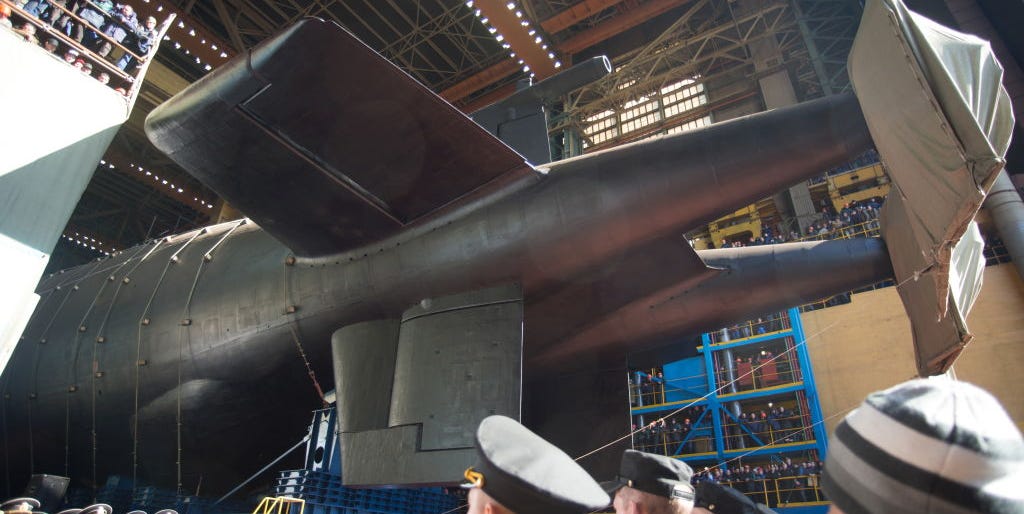
The title “Russia launches Belgorod, the world’s longest submarine” refers to a major moment in Russia’s naval modernization. The submarine was launched at the Sevmash shipyard in Severodvinsk in April 2019 and later delivered to the Russian Navy in July 2022. Since then, it has become a symbol of Moscow’s effort to develop exotic strategic weapons, expand undersea intelligence operations, and complicate NATO’s defense planning. In plain English: this is not just a big submarine. It is a floating question mark with a nuclear reactor.
What Is the Belgorod Submarine?
The Belgorod, officially known as K-329, began life as an Oscar II-class nuclear-powered cruise missile submarine. That original design was already large, but Russia later modified the hull for special missions. Instead of serving primarily as a conventional missile submarine, Belgorod was redesigned as a deep-sea platform capable of carrying unmanned underwater vehicles, special-purpose equipment, and potentially smaller submarines used for seabed operations.
That transformation is what makes Belgorod so interesting to naval analysts. It is not simply another nuclear submarine added to Russia’s fleet. It is a specialized mothership built for missions that may include intelligence gathering, underwater infrastructure monitoring, seabed work, and strategic nuclear deterrence. If a normal attack submarine is a silent hunter, Belgorod is more like a deep-sea toolboxassuming your toolbox is nuclear-powered and about the length of two football fields.
Why Is Belgorod Called the World’s Longest Submarine?
At about 184 meters, Belgorod is widely described as the longest submarine in the world. The famous Soviet Typhoon-class submarines were larger by displacement, but Belgorod edges them out in length. That distinction matters because length provides room for specialized payloads, mission modules, unmanned underwater systems, and other equipment that standard submarines cannot easily carry.
Its enormous size also signals its unusual role. Russia did not stretch and rework the submarine simply for bragging rights, although strategic bragging has always been part of great-power military theater. The extra length appears connected to its ability to carry large underwater drones and support deep-sea missions. In military design, size is usually a compromise. Bigger vessels can carry more, but they may also be harder to hide and more complex to operate. Belgorod accepts that trade-off because its mission is not ordinary patrol work.
Belgorod and the Poseidon Nuclear Torpedo
The biggest reason Belgorod receives global attention is its reported connection to Poseidon, a nuclear-powered, nuclear-capable underwater drone also known by earlier names such as Status-6 or Kanyon. Poseidon is not a typical torpedo. It is often described as a massive unmanned underwater vehicle designed to travel long distances beneath the sea and deliver a powerful warhead against coastal targets.
Russian officials have promoted Poseidon as a weapon that could bypass missile defenses. That claim is central to its strategic purpose. Traditional nuclear deterrence often focuses on ballistic missiles, bombers, and submarine-launched missiles. Poseidon adds a different path: a long-range underwater delivery system. Instead of flying over missile defense networks, it would move through the ocean. That concept makes it difficult to classify and difficult to counter, which is precisely why it worries defense planners.
Some public reports suggest Belgorod may be able to carry up to six Poseidon vehicles. The exact operational status of those weapons remains difficult to verify because Russia’s military programs are secretive, and official announcements often blend technical milestones with political messaging. Still, even the possibility of a submarine carrying nuclear-powered underwater drones is enough to change conversations in naval strategy circles.
Why Poseidon Is So Controversial
Poseidon is controversial for several reasons. First, it is nuclear-powered, meaning it is designed for extreme range and endurance. Second, it may be nuclear-armed, giving it strategic destructive potential. Third, it is built to operate underwater, where tracking is more difficult than monitoring missiles in flight. Finally, its intended mission appears to target coastal infrastructure, ports, naval bases, and potentially cities.
Russian media and officials have used dramatic language around Poseidon, sometimes suggesting it could create radioactive ocean surges. Many experts caution that such claims may be exaggerated, technically uncertain, or designed for psychological effect. Nuclear weapons are already horrifying enough without giving them a Hollywood special-effects department. Still, the broader concern is real: Poseidon represents a new kind of nuclear delivery system that falls outside many familiar arms-control categories.
A Submarine Built for More Than One Mission
Although Poseidon gets most of the headlines, Belgorod is also believed to be connected to Russia’s deep-sea intelligence and special-mission programs. Its design may allow it to carry smaller submarines, deploy seabed equipment, or support operations around undersea cables and sensors. That matters because the modern world runs on undersea infrastructure. Financial transactions, internet traffic, military communications, and energy systems all depend on cables and pipelines crossing the ocean floor.
In a crisis, the ability to inspect, manipulate, or threaten undersea infrastructure could become strategically valuable. Western officials have increasingly warned about the vulnerability of submarine cables and offshore energy networks. Belgorod fits into that concern because it appears designed not just to launch weapons, but to operate in the mysterious and highly sensitive world of the seabed.
Russia’s Strategic Message
The launch and delivery of Belgorod sent a message beyond the shipyard. Russia wanted the world to notice that it was still investing in advanced undersea systems despite economic pressure, sanctions, and the long-term costs of military modernization. The submarine also supports Moscow’s broader narrative that it can counter U.S. and NATO advantages with unconventional systems.
For Russia, weapons like Poseidon are partly about deterrence and partly about signaling. They say: even if missile defenses improve, even if NATO strengthens its naval forces, Russia still has ways to threaten critical targets. Whether every technical claim is fully proven is almost beside the point. In deterrence, perception matters. A weapon does not need to be fired to shape behavior; it only needs to be believed possible.
How Belgorod Affects NATO and U.S. Naval Planning
For the United States and NATO, Belgorod adds another layer to an already difficult undersea challenge. Anti-submarine warfare is hard on a good day. Oceans are vast, submarines are quiet, and modern nuclear boats can operate far from home for extended periods. A special-mission submarine carrying unusual payloads makes the problem even more complicated.
NATO planners must consider not only traditional submarine threats, such as cruise missiles or torpedoes, but also seabed operations and unmanned underwater vehicles. That means more attention to maritime patrol aircraft, underwater sensors, attack submarines, surface ships, and intelligence networks. In other words, Belgorod may spend much of its life hidden, but it forces other navies to spend very visible money.
Belgorod in the Arctic and Pacific Context
The Arctic is especially important to Russia’s submarine strategy. Northern shipyards, deep-water routes, ice cover, and access to the Atlantic make the region central to Russian naval planning. Severodvinsk, where Belgorod was launched, is already a major hub for nuclear submarine construction. From there, Russian submarines can access key operating areas in the Barents Sea and beyond.
Some reports have suggested that Belgorod or related Poseidon-capable platforms could eventually be associated with Russia’s Pacific Fleet as well. That would make sense strategically. A long-range underwater weapon system is most useful when it can threaten targets across multiple ocean theaters. Whether operating from the Arctic, the North Atlantic, or the Pacific, the submarine’s value lies in uncertainty. Nobody enjoys uncertainty quite like a submarine commanderor a defense analyst trying to sleep at night.
Is Belgorod Truly Operational?
Belgorod was delivered to the Russian Navy in 2022, but delivery does not automatically mean every mission system is fully operational. New submarines require testing, crew training, weapons integration, maintenance cycles, and operational evaluation. That is even more true for a one-of-a-kind platform carrying systems as complex as Poseidon.
Open-source analysts often distinguish between a submarine being “in service” and being fully combat-ready for every advertised mission. Russia may use Belgorod for testing, training, and strategic signaling before it becomes a routine operational asset. This matters because some headlines make it sound as if the submarine instantly changed the global balance the moment it touched water. Reality is usually slower, more technical, and less cinematic.
The Technology Challenge Behind the Hype
Building the world’s longest submarine is impressive. Building a reliable nuclear-powered underwater drone is arguably even more difficult. Poseidon would need propulsion, guidance, communications, navigation, safety systems, launch mechanisms, and command protocols that work in extreme underwater conditions. The deeper and farther it travels, the harder those challenges become.
There are also command-and-control questions. Strategic weapons require secure control, especially when they are unmanned and potentially nuclear-armed. How would such a system be authorized? How would it navigate? How would it avoid accidents? How would it communicate without giving away its position? These are not small details. They are the kind of details that keep engineers employed and admirals cautious.
What Makes Belgorod Different From Standard Nuclear Submarines?
Most nuclear submarines fall into familiar categories. Ballistic missile submarines carry nuclear missiles. Attack submarines hunt ships and submarines. Guided-missile submarines launch cruise missiles. Belgorod does not fit neatly into any single category. It is a modified special-purpose submarine designed for a mix of strategic, intelligence, and undersea missions.
That makes it harder to evaluate. A normal submarine can be assessed by its missile tubes, torpedo load, sonar, speed, and stealth. Belgorod must be judged by less visible capabilities: what it can carry, where it can operate, what drones it can deploy, and how it supports Russia’s broader undersea strategy. It is less like a sword and more like a Swiss Army knifeexcept the Swiss Army knife is nuclear-powered and nobody is entirely sure which blade Moscow plans to open first.
Strategic Deterrence or Psychological Warfare?
The answer is probably both. Belgorod strengthens Russia’s deterrence posture by offering a platform for unconventional nuclear delivery. At the same time, the public discussion of Poseidon clearly serves psychological purposes. The phrase “doomsday torpedo” is not subtle. It is designed to attract headlines, alarm adversaries, and remind domestic audiences that Russia remains a major military power.
Strategic weapons often serve two audiences. One is foreign: rival governments, military planners, and alliances. The other is domestic: citizens, elites, and institutions that need reassurance that national power is strong. Belgorod works in both directions. Abroad, it complicates planning. At home, it projects technological ambition and military prestige.
Arms Control Problems
One of the biggest concerns surrounding Belgorod and Poseidon is arms control. Traditional nuclear arms agreements were built around missiles, launchers, bombers, and warheads. A nuclear-powered underwater drone does not fit comfortably into those older frameworks. That creates a loophole problem. If a weapon is strategic in effect but unusual in form, how should it be counted?
The United States has identified Russia’s novel nuclear-capable systems as destabilizing because they add complexity to deterrence and risk reduction. The more categories of nuclear delivery systems exist, the harder it becomes to verify limits, predict behavior, or negotiate future agreements. Arms control works best when both sides can define what they are counting. Poseidon makes the counting table messier.
Could Belgorod Change Naval Warfare?
Belgorod may not change naval warfare by itself, but it points toward a larger trend: the rise of unmanned underwater systems and seabed competition. Future naval power will not only be measured by aircraft carriers, destroyers, and submarines. It will also depend on drones, sensors, autonomous systems, undersea networks, and the ability to protect or threaten infrastructure beneath the ocean.
In that sense, Belgorod is a glimpse of where undersea competition is heading. It combines traditional nuclear submarine endurance with new payload concepts. Whether Poseidon becomes a fully mature weapon or remains partly a strategic scarecrow, the direction is clear. The oceans are becoming more crowded, more automated, and more strategically important.
Common Misunderstandings About Belgorod
It Is Not Just a Bigger Attack Submarine
Many people assume a larger submarine simply means more torpedoes or missiles. In Belgorod’s case, size supports special missions, underwater drones, and deep-sea equipment. Its value lies in versatility, not just firepower.
Its Most Dramatic Claims Are Hard to Verify
Some descriptions of Poseidon sound like they escaped from a disaster movie wearing a naval officer’s hat. Analysts take the weapon seriously, but they also treat extreme claims with caution. Nuclear weapons are devastating, but not every sensational statement should be accepted at face value.
It Does Not Make Other Nuclear Forces Obsolete
Poseidon may add a new deterrent option, but it does not replace ballistic missile submarines, land-based missiles, or strategic bombers. Instead, it complicates the nuclear landscape by adding another route of attack and another layer of uncertainty.
Why the World Is Watching Belgorod
The world is watching Belgorod because it sits at the intersection of several major security trends: nuclear modernization, undersea warfare, Arctic competition, unmanned systems, and the vulnerability of seabed infrastructure. Any one of those topics would be enough to keep defense experts busy. Belgorod bundles them together like a very expensive geopolitical gift basket.
For policymakers, the submarine raises serious questions. How should NATO track special-mission submarines? How should countries protect undersea cables? How should arms control adapt to nuclear-powered underwater drones? How should military planners respond without escalating unnecessarily? These are difficult questions, and Belgorod makes them harder to ignore.
Experiences and Lessons From the Belgorod Story
The story of Russia launching Belgorod, the world’s longest submarine, offers several practical lessons about how modern military power is understood. The first lesson is that weapons are not just machines. They are messages. A submarine can carry steel, reactors, sensors, and torpedoes, but it also carries political meaning. When Russia launched Belgorod, it was not simply adding another vessel to its fleet. It was telling the world that it wanted to remain a central player in nuclear deterrence and undersea competition.
The second lesson is that military headlines often compress complicated realities into dramatic phrases. “World’s longest submarine” is catchy, accurate in a narrow sense, and useful for readers. But the real story is not only length. The real story is mission. Belgorod matters because of what it may carry, where it may operate, and how it fits into Russia’s strategy. A giant submarine without a strategic role would be an engineering curiosity. Belgorod is more than that because it connects to Poseidon, seabed operations, and Russia’s search for asymmetric leverage.
The third lesson is that uncertainty itself can be a weapon. Much about Belgorod remains unclear. Analysts do not know every detail of its acoustic signature, mission equipment, Poseidon integration, or deployment patterns. That uncertainty forces adversaries to plan for multiple possibilities. In military strategy, forcing your opponent to spend time, money, and attention can be valuable even if a weapon is never used. Sometimes the shadow cast by a platform is almost as important as the platform itself.
The fourth lesson is that technology and psychology are deeply connected. Poseidon attracts attention because it sounds terrifying: a nuclear-powered underwater drone that could travel across oceans. Whether every claimed capability is fully mature is less important than the fact that the concept changes how people think about nuclear risk. It stretches the imagination, and in deterrence, imagination matters. Governments plan not only for what an adversary has proven, but for what an adversary might plausibly do.
The fifth lesson is that undersea infrastructure has become a central security issue. The average internet user rarely thinks about submarine cables. Most people imagine “the cloud” as something floating politely above their heads, not as data moving through fiber-optic lines on the ocean floor. Yet those cables are essential to modern life. A platform like Belgorod reminds governments that the seabed is not empty space. It is a strategic environment filled with cables, pipelines, sensors, and military interests.
The sixth lesson is that old platforms can gain new relevance through redesign. Belgorod began as an Oscar II-class submarine project, but it was transformed into something different. That shows how military systems can evolve over decades. A hull laid down in the 1990s can become a platform for 21st-century underwater drones. In defense planning, yesterday’s unfinished project can become tomorrow’s strategic surprise. Apparently, even submarines get second careers.
The final lesson is that calm analysis matters. It is easy to turn Belgorod into a monster story, complete with radioactive waves and apocalyptic nicknames. But the better approach is to separate verified facts from claims, and claims from speculation. The submarine is real. Its length is real. Its delivery to the Russian Navy is real. Its association with Poseidon is widely reported. The exact readiness, reliability, and wartime practicality of the full system remain harder to confirm. Understanding that difference helps readers avoid both panic and complacency.
Conclusion
Russia’s launch of Belgorod, the world’s longest submarine, is more than a naval milestone. It is a signal of how undersea warfare is changing. The submarine combines enormous size, nuclear endurance, special-mission design, and a connection to the Poseidon underwater nuclear system. That combination makes it one of the most closely watched submarines in the world.
For Russia, Belgorod represents technological ambition and strategic messaging. For NATO and the United States, it represents a challenge that touches nuclear deterrence, submarine tracking, Arctic security, and seabed infrastructure. For everyone else, it is a reminder that the oceans are not quiet empty spaces. They are becoming the next major arena of military competition.
The submarine’s true impact will depend on how often it deploys, how reliable its systems become, and whether Poseidon matures into a fully operational strategic weapon. But even now, Belgorod has already achieved one thing: it has forced the world to pay attention to what is happening beneath the waves.