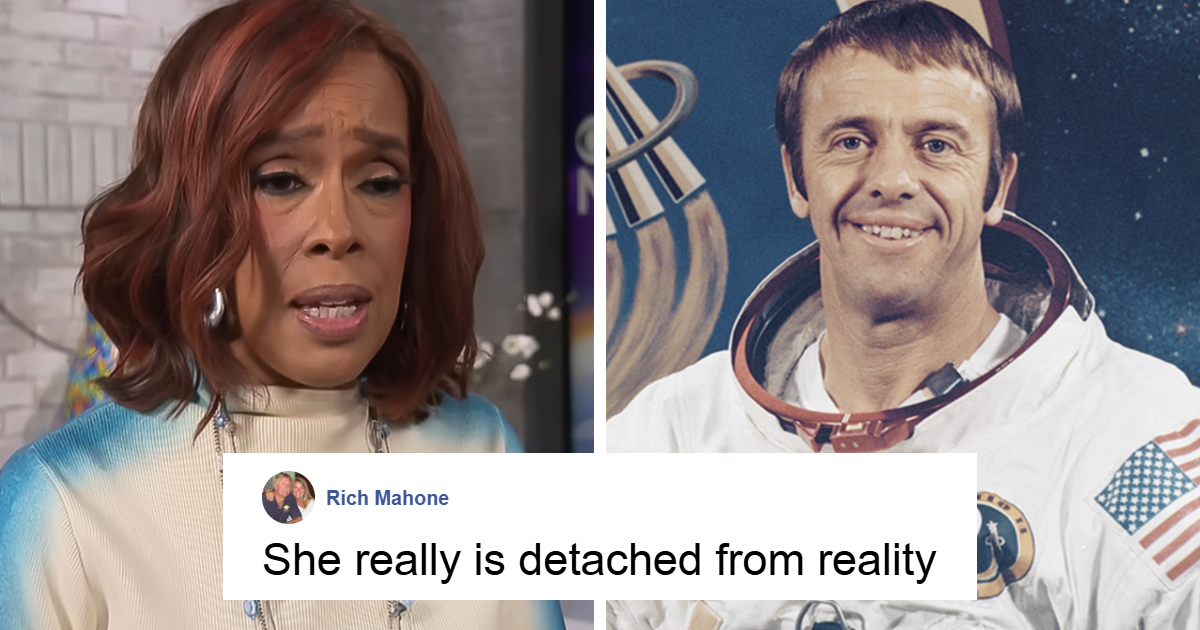
Gayle King went to space for about the length of a long coffee order, came back safely, kissed the ground, and then found herself in a very Earth-based problem: the internet had thoughts. Lots of them. After her April 2025 Blue Origin NS-31 flight, the veteran CBS journalist defended the mission against critics who dismissed it as a celebrity joyride. But when she compared the trajectory of her suborbital trip to Alan Shepard’s historic 1961 mission, the conversation blasted off in a completely different direction.
Critics called the comparison “tone deaf,” “ridiculous,” and unfair to Shepard’s place in American space history. Supporters argued King was not claiming to be Shepard 2.0; she was pushing back against language that made the all-female crew sound unserious. As with many modern celebrity controversies, the truth is not floating peacefully in zero gravity. It is tumbling somewhere between symbolism, space tourism, gender politics, billionaire branding, and the public’s very limited patience for famous people explaining why expensive things are meaningful.
This article breaks down what happened, why Gayle King’s Alan Shepard comparison hit such a nerve, and what the backlash says about private space travel, media storytelling, and the tricky business of sounding inspirational without sounding detached from Earth.
What Happened With Gayle King And Blue Origin?
On April 14, 2025, Blue Origin completed its NS-31 mission, the company’s 11th human spaceflight under the New Shepard program. The crew included Gayle King, Katy Perry, Lauren Sánchez, Aisha Bowe, Amanda Nguyễn, and Kerianne Flynn. Blue Origin described the six women as an astronaut crew and promoted the trip as a milestone for representation, storytelling, and access to space.
The mission drew headlines before the capsule ever left the ground. It was billed as an all-female spaceflight, a rarity in the history of human space exploration. It also arrived wrapped in celebrity sparkle: Katy Perry, Oprah Winfrey watching from the ground, the Kardashians in attendance, and Lauren Sánchez, then connected to Blue Origin founder Jeff Bezos, helping bring the crew together. If space needed a red carpet, this launch brought its own step-and-repeat.
The flight itself was short, automated, and suborbital. The capsule rose above the edge of space, gave passengers several minutes of weightlessness, and returned to West Texas safely in roughly 10 minutes and 21 seconds. For the crew, it was emotional. King described the experience as peaceful, powerful, and personally meaningful, especially because she has long been open about her fear of flying.
Why Did People Criticize The Flight?
The criticism came from several directions at once. Some people questioned whether an 11-minute celebrity spaceflight deserved the same level of cultural celebration as scientific or government-led space missions. Others focused on the optics: wealthy and famous people soaring above the planet while many ordinary people were worried about groceries, housing, climate change, healthcare, and, frankly, whether their flight to Chicago would board on time.
Several public figures also criticized the mission as excessive, performative, or poorly timed. The all-female framing was meant to be empowering, but for skeptics, the messaging felt like expensive branding dressed in inspirational language. The result was a public relations paradox: the mission was marketed as bigger than celebrity, but celebrity was precisely why most people were paying attention.
There was also the question of purpose. Aisha Bowe and Amanda Nguyễn had scientific and research backgrounds, and Blue Origin emphasized that research and symbolic representation were part of the mission. But to many viewers, the dominant images were not laboratory work or astronaut training. They were designer flight suits, famous passengers, emotional livestream moments, and Katy Perry singing in space. The internet, never known for nuance before lunch, filed that under “space tourism with a soundtrack.”
The Alan Shepard Comment That Sparked The Backlash
After returning, King pushed back on critics who called the trip a “ride.” She argued that the word minimized what the crew experienced and suggested a double standard in how people talk about men versus women going to space. She then referenced Alan Shepard, saying that the Blue Origin crew had followed a similar trajectory to Shepard’s early suborbital mission and that his flight was not dismissed as a mere ride.
That comparison became the spark. Alan Shepard was not just any name from the space-history yearbook. He was a U.S. Navy test pilot, one of the original Mercury Seven astronauts, and the first American to travel into space. His May 5, 1961, Freedom 7 mission took place during the Cold War space race, only weeks after Yuri Gagarin became the first human in space. Shepard later commanded Apollo 14 and walked on the Moon. In other words, this was not a casual “same vibe” comparison. This was touching the museum glass with sticky fingers.
Why The Comparison Felt “Tone Deaf” To Critics
Technically, King had a narrow point: both flights were suborbital. Shepard’s Mercury-Redstone 3 mission did not orbit Earth either. It was a short up-and-down flight, and in that sense, the shape of the journey has a historical echo. But public backlash was not really about geometry. It was about context.
Shepard’s flight happened when human spaceflight was still terrifyingly new. The United States was trying to prove it could put a person in space and bring him home alive. The Mercury program had scientific and engineering objectives tied to the future of crewed space exploration. Shepard trained as a test pilot and astronaut in an era when the risks were poorly understood and the technology was far less mature.
By comparison, Blue Origin’s NS-31 was part of a modern commercial spaceflight program. The capsule was automated, the passengers were not piloting it, and the mission took place after decades of human spaceflight experience. That does not mean the passengers felt no fear or that the flight had no risk. Rockets are not elevators with better branding. But the historical weight was different, and critics believed King’s comment blurred that distinction.
Was Gayle King Calling Herself Alan Shepard?
Probably not in the literal sense. King did not say she had Shepard’s training, résumé, combat-tested nerves, or moonwalking credentials. Her main argument was about language: why call one short suborbital mission a “flight” or “journey” and another a “ride”? From her perspective, the word “ride” made the crew sound like they had boarded a theme-park attraction called Space Mountain: Billionaire Edition.
Still, public communication is not only about what someone intends. It is also about what people hear. In this case, many heard a celebrity journalist comparing an automated space-tourism experience with a foundational moment in American space history. Once that interpretation caught fire, the nuance was vaporized faster than a water droplet near a rocket plume.
The Astronaut Label Added Fuel To The Fire
The controversy also revived a bigger debate: who gets to be called an astronaut? Blue Origin uses the term for New Shepard passengers who reach space. But U.S. officials and aviation observers have pointed to Federal Aviation Administration criteria for commercial astronaut wings, which historically required not only reaching a certain altitude but also performing activities that contributed to public safety or human spaceflight safety.
That distinction matters because “astronaut” is more than a cute souvenir label. For many people, it carries the weight of training, mission responsibility, operational skill, and personal risk on behalf of science or national exploration. Commercial space travel complicates that tradition. A person may genuinely travel to space, experience weightlessness, see Earth from above, and still not fit the public’s older idea of an astronaut.
In fairness, language evolves. Once, only government-backed pilots and scientists went to space. Now, researchers, civilians, artists, activists, entrepreneurs, and celebrities can cross that boundary too. The vocabulary has not caught up. “Space tourist” sounds dismissive. “Astronaut” sounds inflated. “Suborbital participant” sounds like something invented by a committee that hates joy. No wonder everyone is arguing.
Why The Backlash Was Also About Money And Optics
The Alan Shepard comment did not happen in a vacuum. It landed in a public mood already skeptical of billionaire space ventures. Blue Origin, SpaceX, and Virgin Galactic have all helped make private spaceflight more visible, but they have also raised questions about wealth, access, environmental impact, and whether the future of space exploration is being shaped by public science or private spectacle.
For many critics, the problem was not that women went to space. In fact, the presence of women with science, activism, and media backgrounds could have been a powerful story. The problem was the packaging. When a mission is promoted through celebrity images and inspirational slogans, audiences naturally ask whether the inspiration is for everyone or mainly for those who can afford a ticket, a platform, and a camera crew.
That is why King’s defense struck some people as disconnected. Telling critics to better understand the mission may be reasonable when misinformation is spreading. But when people are reacting to economic inequality, celebrity excess, and environmental concerns, a response that sounds like “you just don’t get it” can make the gap feel even wider.
Gender, Double Standards, And The “Ride” Debate
King’s strongest point may be the one that got buried under the Shepard comparison: language can reveal bias. When men pursue dangerous, expensive, ambitious things, they are often called explorers, pioneers, or visionaries. When women do the same, they are more likely to be mocked as vain, silly, or attention-seeking. That double standard is real across media, business, sports, politics, and science.
The all-female crew was criticized in ways that sometimes blended fair questions with familiar stereotypes. Comments about outfits, emotions, singing, celebrity friendships, and “girlboss” branding often overshadowed the fact that Bowe and Nguyễn had serious scientific and advocacy credentials. The mission’s critics were not all sexist. But some of the commentary absolutely came with a side order of sexism, extra crispy.
At the same time, pointing out sexism does not automatically answer every criticism. A mission can be both unfairly mocked because women participated and fairly questioned because it was a celebrity-heavy commercial flight backed by extreme wealth. Two things can be true at once, which is inconvenient for the internet but excellent for reality.
Alan Shepard’s Legacy Is Hard To Borrow
Alan Shepard’s Freedom 7 mission occupies a special place in American history. The flight lasted just over 15 minutes, reached 116.5 statute miles in altitude, and helped prove that the United States could send a human into space and recover him safely. It was short, yes, but it was not small.
Shepard’s career did not end with Freedom 7. He later commanded Apollo 14, became the fifth person to walk on the Moon, and famously hit golf balls on the lunar surface. His legacy includes military service, astronaut training, test-flight danger, national pressure, and the engineering uncertainty of an era when every mission expanded the known boundaries of what humans could do.
That is why comparing a modern celebrity suborbital flight to Shepard’s mission was always going to be risky. Even if the comparison was meant narrowly, the name “Alan Shepard” carries a historical gravity that is much stronger than the few minutes of weightlessness experienced aboard New Shepard.
What Gayle King Got Right
King was right that dismissing every short spaceflight as a “ride” can oversimplify what passengers experience. Even commercial suborbital flights involve training, risk, intense physical sensations, and emotional transformation. For someone with a fear of flying, stepping into a rocket capsule is not the same as hopping into a mall carousel and waving at Aunt Linda.
She was also right that representation matters. Girls seeing women in space-related roles can be inspired, especially when the crew includes people with STEM backgrounds and advocacy missions. Public imagination is part of science culture. Many future engineers, pilots, researchers, and astronauts first become curious because they see someone who makes the impossible look reachable.
And King’s personal courage should not be dismissed entirely. She did something that terrified her. That matters on a human level, even if it does not make the mission equivalent to Mercury, Gemini, Apollo, shuttle flights, or long-duration stays aboard the International Space Station.
What Gayle King Got Wrong
Where King stumbled was in choosing a comparison that invited a historical fight she did not need. She could have said, “Please call it a flight because it was a real spaceflight.” She could have emphasized preparation, fear, research, and symbolism. Instead, invoking Shepard made it sound as if critics were disrespecting her crew in the same way they would have disrespected early NASA astronauts. That was a hard sell.
The better argument would have separated the personal from the historical. King’s flight was meaningful to her. It may have inspired some viewers. It may have contributed to the ongoing normalization of civilian space travel. But it was not a Mercury-era test mission, and it did not carry the same national, scientific, or operational stakes as Shepard’s journey.
In public relations, especially after a backlash, the safest route is usually humility plus clarity. “This was not Alan Shepard, and I deeply respect that history. But for us, it was still a real flight and a real moment.” That kind of framing might not have silenced every critic, but it would have removed the easiest target.
The Bigger Lesson For Celebrity Space Travel
The Gayle King backlash shows that private space companies face a storytelling problem. They want commercial flights to feel historic, meaningful, and democratizing. But when the passenger list is packed with celebrities and wealthy insiders, the “space for everyone” message can feel like a velvet-rope party held 60 miles above Earth.
To win public trust, commercial spaceflight needs more than emotional livestreams. It needs transparency about cost, environmental impact, safety, research value, and long-term public benefit. It also needs careful language. Calling passengers “astronauts” may be technically defensible in some contexts, but it can sound like overreach when the public sees the mission as tourism.
There is a fascinating future where artists, teachers, scientists, students, journalists, and civilians experience space and bring those stories back to Earth. But the more commercial spaceflight leans on celebrity glamour, the more it risks turning awe into eye-rolls.
Experience Notes: What This Backlash Teaches About Communication, Humility, And Public Perception
The Gayle King controversy is a useful case study for anyone who communicates in public, whether they are a celebrity, CEO, journalist, teacher, creator, or the person in the office who accidentally hits “reply all.” The lesson is simple: when people are already skeptical, every word lands heavier. King may have intended to defend her crew from a dismissive label, but the Alan Shepard reference gave critics a much bigger target. Instead of debating whether “ride” was fair, the public debated whether she had inflated her role in space history.
One relatable experience here is the feeling of doing something personally difficult and wanting others to understand its significance. Maybe you ran your first marathon, gave a speech despite stage fright, changed careers, or boarded a plane after years of anxiety. To you, the moment feels enormous because you know the private fear behind it. But if you compare your marathon to an Olympic medalist’s race, people may miss your courage and focus on the exaggeration. The same dynamic applied to King. Her personal victory was real, but the comparison made it sound bigger than the public was willing to accept.
Another lesson is that audiences are very sensitive to privilege. When someone with fame, money, access, and media power says an expensive opportunity is “for everyone” or “for the benefit of Earth,” people immediately look for proof. Inspiration is not enough by itself. Viewers want to know who benefits, who pays, what is learned, and whether the symbolism connects to ordinary life. Without that bridge, even a beautiful message can sound like it was written on a gold-plated clipboard.
The controversy also shows how easily gender conversations become tangled. Some criticism of the NS-31 crew was clearly shaped by sexist assumptions about women, emotion, glamour, and seriousness. At the same time, not every objection was sexist. People can support women in space and still question celebrity space tourism. Good analysis requires holding both ideas at once. That is harder than picking a team, but it is much more honest.
Finally, this story is a reminder that humility is not weakness. In fact, humility often protects powerful experiences from backlash. A more grounded response might have celebrated the mission while openly honoring the difference between space tourists, researchers, commercial passengers, and career astronauts. Public audiences are often generous when they sense gratitude. They are far less generous when they sense self-importance. In the end, King’s flight may have reached space, but the public conversation proved that reputation always has to survive reentry.
Conclusion
Gayle King’s Blue Origin flight was real, emotional, and culturally visible. It was also brief, commercial, celebrity-driven, and easy to criticize. Her comparison to Alan Shepard became controversial because it touched a sacred chapter of American space history while the public was already questioning the mission’s purpose and optics.
The fairest reading is this: King was defending the seriousness of her experience, not claiming to be Alan Shepard. But the criticism was predictable because Shepard’s legacy represents far more than a similar suborbital path. He symbolizes a dangerous, government-led, test-pilot era of exploration that helped build the foundation for everything that came afterincluding commercial flights like NS-31.
The backlash is not just about one comment. It is about how we define astronauts, how we judge private space travel, how celebrity culture packages inspiration, and how carefully public figures must speak when their experiences are extraordinary but their audiences are struggling with very ordinary problems. Space may be vast, but public patience is not.