Note: This article is an original, publication-ready rewrite based on real home design, outdoor living, xeriscaping, DIY hardscaping, and fire pit safety guidance. No source links or citation placeholders are included in the article body.
Some backyard makeovers whisper. Others roll up in a pickup truck with twelve tons of rock, a fire pit, a few clearance pavers, and a heroic amount of weekend ambition. “Reader Redesign: All Fired Up” belongs firmly in the second category.
At its heart, this project is the kind of real-life home transformation that makes DIY lovers lean closer to the screen and say, “Wait… they did that themselves?” The original idea was refreshingly practical: take a backyard that was mostly dirt, grass, weeds, and underused space, then turn it into a warm, welcoming outdoor hangout centered around a fire pit. No celebrity design budget. No “before” photo magically replaced by a resort-style rendering. Just stone, pavers, plants, a circular fire feature, and enough determination to make a wheelbarrow file for emotional damages.
The result is a backyard redesign that feels smart, personal, and usable. It combines the best parts of a DIY fire pit project, xeriscape landscaping, built-in stone seating, and outdoor entertaining design. More importantly, it proves that a backyard does not need to be huge, perfect, or professionally manicured to become the favorite “room” of the house. Sometimes it just needs a focal point, a plan, and a reason for people to gather after sunset.
What Makes “All Fired Up” Such a Great Reader Redesign?
The magic of this backyard makeover is not just the fire pit. Fire pits are wonderful, of course, because humans have apparently been emotionally attached to controlled flames since the beginning of time. But what makes this redesign stand out is the way every element works together.
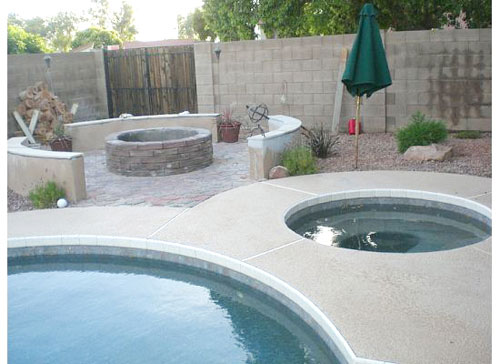
The fire pit becomes the anchor. The curved stone benches echo the round shape of the nearby pool and spa. The pavers create a defined patio area instead of leaving guests to hover awkwardly on patchy lawn. The rocks and low-maintenance plants replace thirsty grass with a more drought-friendly landscape. The entire yard shifts from “we should do something with this someday” to “come over Friday night and bring marshmallows.”
A Strong Focal Point
Every successful outdoor living space needs a reason to exist. In this redesign, the fire pit does that job beautifully. It creates a visual center, a social center, and a seasonal reason to use the backyard more often. Instead of furniture floating randomly in the yard, everything has direction. Chairs face the flame. Benches curve around it. Conversation naturally follows the circle.
Curves That Connect the Space
One of the smartest design choices is the use of circular and curved shapes. Outdoor spaces can easily feel chopped into pieces: pool here, patio there, grill in the corner, random chair looking lonely by the fence. By repeating the rounded shape of the spa and pool in the fire pit and bench layout, the redesign feels intentional. That is a quiet designer trick: repeat a shape, color, or material, and the whole space suddenly looks like it had a plan all along.
Budget-Conscious Materials
This project also shows the power of patience and bargain hunting. Clearance dry-stacking stones, discounted pavers, and sale plants can stretch a modest backyard budget without making the finished space feel cheap. The key is consistency. When affordable materials are repeated in a thoughtful way, they look deliberate rather than leftover.
From Weeds to Warmth: The Design Lessons Behind the Makeover
A great backyard fire pit area is more than a ring of stones and a hopeful bag of firewood. It needs layout, safety, comfort, circulation, and a little visual charm. Otherwise, you end up with what professionals politely call “a missed opportunity” and what your cousin calls “that smoky hole by the shed.”
1. Define the Outdoor Room
The best outdoor living spaces behave like indoor rooms. They have a floor, boundaries, seating, lighting, and a focal point. In this reader redesign, pavers and stone create the “floor.” The built-in benches create the boundary. The fire pit becomes the focal point. Plants soften the edges. Together, these elements make the yard feel like a real destination, not just leftover square footage.
Homeowners planning a similar project should start by asking one simple question: “What do we want to do here?” If the answer is casual family nights, a smaller fire pit with cozy seating may be enough. If the goal is hosting neighbors, birthday parties, or weekend cookouts, the design needs more circulation space, more flexible seating, and nearby surfaces for drinks and snacks.
2. Use Hardscaping to Reduce Maintenance
Replacing high-maintenance lawn areas with pavers, gravel, stone, and drought-tolerant planting can make a backyard easier to care for. That does not mean turning the yard into a rock quarry with patio furniture. The trick is balance. Hardscape provides structure and durability, while plants bring softness, shade, color, and life.
In water-conscious regions, xeriscaping can be especially useful. A xeriscape design focuses on reducing irrigation needs through smart plant selection, grouped watering zones, mulch, gravel, and efficient layouts. It can include native plants, ornamental grasses, succulents, shrubs, and trees that suit the local climate. When done well, xeriscaping looks intentional and lush in its own way, not bare or unfinished.
3. Choose Materials That Can Handle Heat
Fire pit areas need non-combustible, stable materials. Stone, brick, concrete pavers, gravel, sand, fire-rated block, and metal inserts are common choices. Wood decking, dry mulch, artificial turf, and loose leaves are poor neighbors for open flame. They may look innocent until a spark decides to audition for a disaster movie.
For DIY fire pits, a steel fire ring or insert can help contain heat, ash, and embers. It can also protect surrounding blocks from repeated high-temperature exposure. If the fire pit is permanent, local building codes, neighborhood rules, and manufacturer instructions should be checked before construction begins.
Fire Pit Safety: The Part That Keeps the Fun Fun
A backyard fire feature should feel cozy, not chaotic. Before building or using a fire pit, homeowners should think about clearance, fuel, wind, supervision, and emergency preparation. Safety is not the glamorous part of outdoor design, but it is the part that lets everyone relax.
Keep the Fire Pit Away From Things That Can Burn
A common safety recommendation is to place outdoor fire pits at least 10 feet away from the house, fences, trees, sheds, furniture, and anything combustible. More clearance is better when space allows. Homeowners should also check for overhead hazards such as low branches, string lights, awnings, pergolas, and power lines.
Place It on a Stable, Fire-Resistant Surface
A fire pit should sit on level ground and a non-flammable base. Gravel, concrete, brick, pavers, stone, or sand are safer options than grass or wood. Portable fire pits may still need a heat shield or pit pad, depending on the product and the surface below.
Watch the Weather
Wind can turn a peaceful fire into a spark delivery service. Before lighting a fire, check the forecast and avoid windy conditions. No-burn alerts, drought restrictions, wildfire warnings, and local ordinances should always be followed. This is especially important in dry climates or neighborhoods with dense landscaping.
Use the Right Fuel
Seasoned hardwood is usually a better choice for wood-burning fire pits because it burns cleaner and produces fewer sparks than many softwoods. Homeowners should never burn trash, pressure-treated wood, painted lumber, plastic, cardboard, or construction scraps. Those materials can release toxic fumes, throw sparks, or create unpredictable flames.
Keep Water or an Extinguisher Nearby
A hose, bucket of water, fire extinguisher, fire blanket, or shovel should be within reach whenever the fire pit is in use. The fire should never be left unattended, even when it looks like nothing but embers. Those sleepy little embers are famous for having second careers.
Why Built-In Stone Benches Work So Well
The curved stone benches in this redesign are more than pretty. They solve several design problems at once. First, they provide permanent seating, which makes the fire pit area feel finished. Second, they define the outdoor room without closing it off. Third, they echo the circular fire pit and pool shapes, creating a pleasing rhythm across the yard.
Built-in benches are especially useful around fire pits because they keep the seating layout consistent. Loose chairs are flexible, but they also wander. One chair moves closer, another slides back, and before long the circle looks like a committee meeting that lost confidence. A stone bench creates order while still allowing extra chairs to be added for larger gatherings.
For comfort, built-in benches benefit from outdoor cushions, pillows, or a few movable lounge chairs nearby. Stone is beautiful and durable, but after a long evening, your lower back may start negotiating terms. A mix of fixed and flexible seating gives the space structure without sacrificing comfort.
The Beauty of a Low-Maintenance Backyard
One of the most practical parts of this project is the move away from a traditional green lawn. Grass can be wonderful, but it is not always the best choice for every climate, budget, or lifestyle. In hot or dry regions, lawns may require frequent watering, mowing, fertilizing, and weed control. A rock-and-plant landscape can reduce upkeep while still looking polished.
Low-maintenance does not mean no maintenance. Gravel needs occasional raking. Pavers may need weed control between joints. Plants still need watering while they establish. But compared with a struggling lawn that looks personally offended by summer, a thoughtful xeriscape can be a relief.
For a similar look, homeowners can combine gravel, flagstone, boulders, native shrubs, ornamental grasses, succulents, and drought-tolerant perennials. The design should include layers: low ground covers, medium-height plants, and a few taller elements for privacy or shade. Lighting can help the space feel inviting after dark, especially along pathways and seating edges.
How to Plan a Similar Fire Pit Redesign
If this project has you mentally measuring your backyard with suspicious enthusiasm, start with a plan before buying materials. A fire pit redesign can be budget-friendly, but mistakes get heavy quickly. Literally. Stone is not known for its forgiving personality.
Step One: Study the Yard
Notice sun exposure, wind direction, drainage, slope, views from inside the house, and existing features. A fire pit should be convenient enough to use often but not so close to the house that smoke drifts inside. It should also feel connected to the rest of the yard, whether that means aligning it with a patio, pool, garden path, or outdoor kitchen.
Step Two: Sketch the Layout
A simple sketch can prevent expensive guesswork. Mark the house, doors, windows, fences, trees, pool, utilities, and existing hardscape. Then test a few shapes. Circular fire pits encourage conversation. Rectangular fire tables feel modern and work well with sofas. A sunken fire pit can feel dramatic but requires careful drainage and safe steps.
Step Three: Price Materials Honestly
DIY budgets should include pavers, stone, gravel, sand, edging, adhesive, fire-rated materials, tools, delivery fees, plants, lighting, seating, and possible professional help. Clearance materials can save money, but only if there is enough quantity to finish the project. Nothing says “DIY character” quite like running out of matching stone halfway through a circle.
Step Four: Know When to Hire Help
Many homeowners can handle planting, gravel, pavers, and simple seating areas. But masonry, gas lines, electrical work, drainage corrections, retaining walls, and large built-in features may require professionals. In the original reader redesign, the homeowner completed much of the work DIY, while a local mason handled the benches and barbecue. That hybrid approach is often smart: do what you can, hire what must be done safely and correctly.
Style Ideas Inspired by “All Fired Up”
The charm of this backyard makeover is its grounded, welcoming look. Still, the same basic idea can be adapted to many design styles.
Rustic Retreat
Use natural stone, pea gravel, Adirondack chairs, wood storage, lanterns, and native grasses. This style works especially well in wooded yards, mountain homes, or casual family spaces.
Modern Minimalist
Choose a sleek metal or concrete fire bowl, large-format pavers, low-profile seating, black planters, and simple architectural plants. Keep the palette restrained and let the flame provide the drama.
Poolside Lounge
Echo the shapes and materials already used around the pool. Curved benches, pale stone, outdoor cushions, and low plantings can help the fire pit feel connected to the pool area rather than added as an afterthought.
Southwestern Xeriscape
Combine gravel, boulders, agave, yucca, desert spoon, ornamental grasses, and warm-toned pavers. Add a stucco or stone bench for texture and a fire bowl for evening warmth.
Family-Friendly Hangout
Keep the layout open, seating stable, and pathways clear. Add side tables, storage for roasting sticks, washable cushions, and lighting that helps everyone see where they are walking. Comfort and safety should beat fragile styling every time.
Common Mistakes to Avoid
Even a simple fire pit area can go wrong if the planning is rushed. The most common mistake is placing the fire pit too close to the house, trees, or fence. Another is making the patio too small. People need room to move around chairs, carry food, supervise kids, and dodge the one guest who treats marshmallow roasting like a competitive sport.
Another mistake is choosing materials based only on looks. Outdoor surfaces need to handle heat, water, foot traffic, and seasonal changes. Smooth stone can become slippery. Dark metal can get extremely hot. Cheap furniture may fade or wobble. Mulch near a fire pit can be risky. A beautiful backyard should still behave like it lives outdoors.
Finally, homeowners sometimes forget the view from inside the house. A fire pit area should look inviting from the kitchen window, back door, or living room. When the space looks good from indoors, it becomes part of daily life even when no one is outside using it.
Experience Notes: What Living With an “All Fired Up” Backyard Really Feels Like
A fire pit redesign changes a backyard in ways that are hard to understand until the first cool evening arrives. During the day, the space may look like a neat arrangement of stone, pavers, plants, and seating. But at night, when the flames are moving and the air smells faintly of woodsmoke, the yard becomes something else. It becomes the place people drift toward.
The first experience most homeowners notice is that the backyard finally has a purpose. Before a redesign, people often step outside, look around, and go back in. Afterward, they linger. Someone brings a drink. Someone else grabs a blanket. Kids ask if there are marshmallows. Adults pretend they are too mature for s’mores, then eat three. The fire pit gives everyone permission to slow down.
The second experience is pride. DIY outdoor projects are physically demanding, especially when stone, gravel, pavers, and soil are involved. There is always a moment when the yard looks worse than when the project began. Tools are everywhere. The ground is torn up. The materials pile looks suspiciously larger than it did at the store. But when the final paver settles into place and the first fire is lit, all that effort becomes visible. You are not just looking at a patio. You are looking at proof that your weekend self is braver than your weekday self expected.
The third experience is learning. A fire pit area teaches practical lessons quickly. You learn where smoke travels. You learn which chair everyone wants. You learn that side tables are not optional if snacks are involved. You learn that built-in benches look fantastic, but cushions make them friendlier. You learn that outdoor lighting should guide feet, not interrogate guests like a parking lot lamp.
You also learn that low-maintenance landscaping is not the same as forget-it-forever landscaping. Gravel may need smoothing after heavy rain. Plants need time to establish. Leaves will find the fire pit area because leaves have excellent navigation skills and no respect for hardscaping. Still, compared with a patchy lawn or unused dirt corner, the upkeep feels worthwhile because the space gives back.
Most importantly, an “All Fired Up” backyard creates rituals. Friday night fires. Birthday gatherings. Quiet coffee near the embers on a chilly morning. A place to talk after dinner without the television trying to join the conversation. It turns an outdoor area into a memory machine, which sounds sentimental until you realize that is exactly what good home design is supposed to do. It should not only look better. It should help people live better.
Conclusion
“Reader Redesign: All Fired Up” is more than a backyard before-and-after. It is a reminder that strong outdoor design starts with purpose. A fire pit creates the focal point. Curved stone benches add structure. Pavers define the room. Xeriscaping lowers maintenance and water demand. Thoughtful safety choices keep the space practical. Together, these elements turn an ordinary yard into a warm, useful, personality-filled outdoor living area.
The best part is that the idea is flexible. You can create a rustic stone circle, a modern fire table, a poolside lounge, or a drought-tolerant retreat. You can DIY part of it, hire out the heavy masonry, or build gradually as budget allows. What matters most is designing a space that invites people outside and makes them want to stay. Because when a backyard gets the fire pit right, the house suddenly feels bigger, friendlier, and a lot more fun.