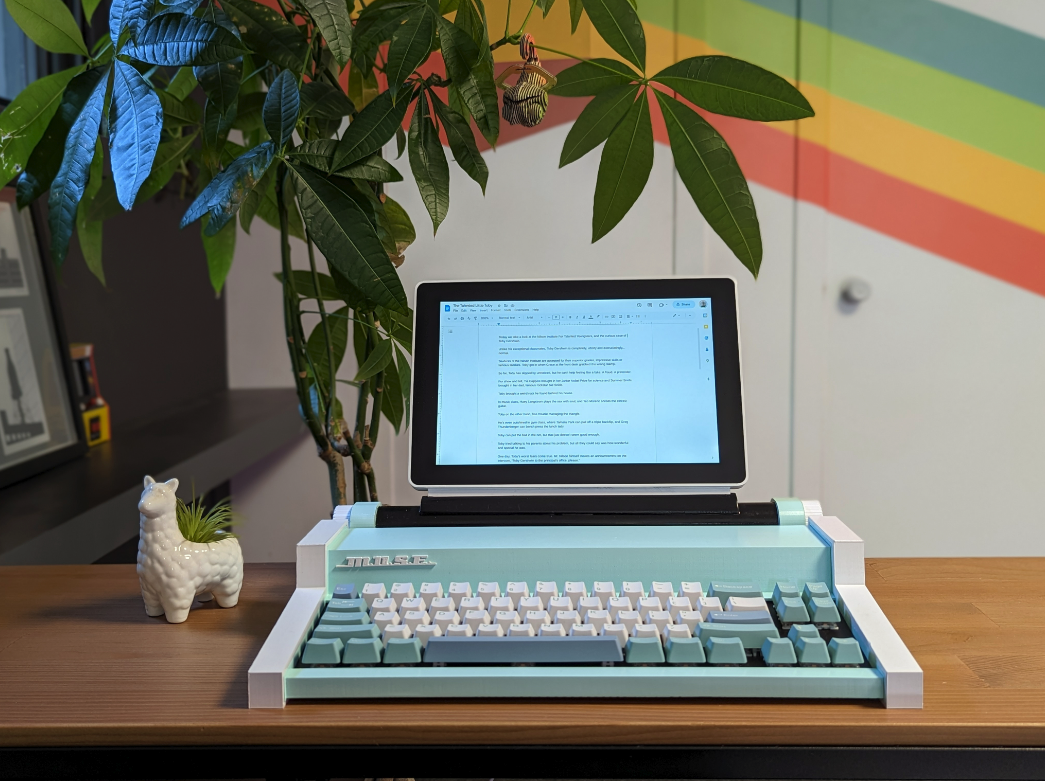
Some gadgets are practical. Some are beautiful. And once in a while, a machine shows up wearing both hats like it invented fashion. That is the charm of MUSE, a Raspberry Pi-powered writing computer that looks like a retro typewriter but behaves like a smart, modern drafting tool. It is the kind of project that makes writers think, “Yes, this is exactly what I need,” and then immediately makes makers think, “Yes, but I could add three more ports and a custom keymap.”
The idea behind MUSE is simple in the best possible way: take the spirit of an old-school typewriter, remove the ink ribbons and correction fluid panic, add modern computing, and keep the distractions on a strict no-entry list. In a world where a laptop can turn a ten-minute writing session into forty minutes of tabs, notifications, and accidental online shopping, a dedicated writing machine feels less like a quirky hobby project and more like a survival strategy.
That is what makes Raspi-Powered Typewriter Is A Real MUSE such a compelling story. It is not just another Raspberry Pi build. It is a reminder that technology does not always need to do more. Sometimes the smartest machine is the one that politely refuses to do everything.
What MUSE Actually Is
MUSE stands for Most Unusual Sentence Extractor, which is already a better name than most corporate products get after six marketing meetings and a sandwich platter. The build centers on a Raspberry Pi and wraps it in a custom body that channels the look of typewriters from the 1960s and 1970s. The result is a writing computer with an integrated mechanical keyboard, a 10-inch touchscreen, and a 3D-printed case that feels more like a creative tool than a generic computer.
That matters because the machine was designed for writing first, not as a laptop pretending to be focused. It exists for drafting, thinking, and staying in the lane. The project was born from a familiar problem: writing on modern computers is hard not because typing is hard, but because everything else on the screen is constantly waving its arms and screaming for attention. Email wants a reply. Social media wants a peek. News wants one “quick” check that somehow ends with three opinion columns and a recipe for lemon bars.
MUSE takes a different route. It keeps the digital benefits that matter, such as editability and cloud-saving, while preserving the intentional feel of a single-purpose writing machine. In that sense, it lands in a sweet spot between a classic manual typewriter and a modern laptop. It is neither nostalgic cosplay nor sterile productivity theater. It is a practical tool with style.
Why the Raspberry Pi Makes So Much Sense Here
A Raspberry Pi typewriter sounds like a novelty until you think about what the Pi is good at. It is small, flexible, affordable, and supported by one of the most enthusiastic maker communities on the planet. That makes it ideal for projects where the builder wants real computing power without dragging along the baggage of a full-size PC.
For a distraction-free writing device, the Pi is especially well suited. It can boot a lightweight environment, handle text input easily, support storage and syncing, and play nicely with custom hardware choices. You are not reinventing the entire computer. You are choosing the parts that matter for writing and leaving the rest on the bench.
That freedom is exactly why DIY writing machines keep appearing in the maker world. Some use E Ink displays for a paper-like feel. Others lean on LCD or touchscreen panels for faster refresh and easier interaction. Some prioritize battery life and portability. Others, like MUSE, put more emphasis on desktop comfort, aesthetics, and the joy of sitting down at a machine that feels like it was built for words.
The Hardware Choices Are Smarter Than They Look
A mechanical keyboard is not a luxury here
On a gaming rig, a mechanical keyboard can be a flex. On a writing machine, it is part of the mission. Writers live on their keyboards. The texture, travel, resistance, and rhythm of the keys directly affect how long the machine stays enjoyable. MUSE uses a mechanical keyboard not just because it sounds cool, but because the keyboard is the whole point. A writer can tolerate a plain case or modest software, but a bad typing experience will end the romance fast.
That is one reason why modern digital typewriters keep returning to tactile keys. Whether you look at commercial devices or DIY builds, the keyboard is treated as the emotional center of the machine. It is the handshake, the steering wheel, and the drum kit all at once.
The touchscreen was a practical compromise
One of the more interesting choices in the MUSE build is the use of a touchscreen instead of E Ink. At first glance, E Ink may seem like the obvious fit for a writing machine. It looks paper-like, uses little power, and practically whispers the word “focus.” But in real projects, idealism eventually meets the very real wall of parts availability, refresh behavior, usability, and integration headaches.
Choosing a touchscreen was not a betrayal of the distraction-free concept. It was a practical design decision. A screen that responds quickly and behaves predictably can be more important than a paper-like appearance, especially when the goal is to build a tool you actually want to use every day. This is the difference between a concept piece and a real machine: a real machine has to survive contact with reality.
The case is not decoration; it is part of the experience
The retro-inspired 3D-printed body does a lot more than make the machine photogenic. It changes the relationship between the user and the device. A laptop says, “I can do taxes, video calls, spreadsheets, and doomscrolling.” MUSE says, “Sit down. We are writing now.” That emotional cue is a feature, not a side effect.
Design influences behavior more than people like to admit. A beautiful, purposeful object invites use. Writers know this already. That is why they buy notebooks they are afraid to ruin, fountain pens that make grocery lists look poetic, and desk lamps with enough atmosphere to qualify as supporting characters. MUSE understands that creativity is not powered by specs alone. It is powered by mood, ritual, and the sense that a tool belongs to the work.
Why Writers Keep Falling for Single-Purpose Machines
MUSE is part of a broader wave of interest in distraction-free writing devices. Commercial products like digital typewriters, minimalist writing tablets, and keyboard-first drafting machines keep proving that there is demand for focused tools. The pitch is always similar: fewer distractions, better flow, a more intentional writing experience, and a cleaner line between drafting and editing.
That appeal is not hard to understand. Modern computers are excellent at multitasking, which is another way of saying they are excellent at helping you not finish your paragraph. Writers often work best when the number of possible actions drops dramatically. If the device mainly lets you type, save, and maybe sync, you spend less energy deciding what to do and more energy doing it.
Single-purpose writing machines also revive something that old word processors and manual typewriters used to offer naturally: commitment. You sit down and write because writing is what the machine is for. There is no side quest. There is no little “while I’m here” detour. There is just the sentence in front of you and the next one waiting to be built.
Where MUSE Beats Fancy Commercial Alternatives
Plenty of polished writing gadgets already exist, but they often come with two catches: price and compromise. Some are expensive enough to make your wallet write a strongly worded letter. Others are elegant but locked into someone else’s idea of what writers need. DIY projects like MUSE flip that equation.
With a custom Raspberry Pi writing computer, the builder can choose the screen, the keyboard feel, the physical layout, the software approach, the syncing method, and the overall vibe. Want chunkier keys? Fine. Want a bigger display? Go for it. Want the machine to feel like it belongs on a 1973 journalist’s desk but still save to the cloud? That oddly specific dream is now achievable.
MUSE also proves that DIY does not have to look unfinished. The stereotype says homemade devices are all exposed screws and “please ignore the cable situation.” This build rejects that stereotype with enthusiasm. It looks cohesive, intentional, and friendly. It has personality. Many consumer gadgets would love to have half as much.
What Makes This Project More Than a Cute Build
The real achievement of MUSE is not that it works. Plenty of Raspberry Pi projects work. The achievement is that it understands why people want a device like this in the first place. The project is built around the writing experience, not just the hardware checklist.
That is a subtle but important difference. A lesser project would focus on specs and stop there. MUSE focuses on behavior. It asks how a machine can help a person return to writing. It recognizes that friction is not always bad, that a little intentional limitation can be helpful, and that the best creative tools often remove options instead of adding them.
There is also a larger message here for makers. The most exciting builds are not always the ones with the most sensors, the most RGB, or the most dramatic benchmark numbers. Sometimes the winning idea is simply to make a familiar activity feel better. A machine that helps someone write more consistently may be a bigger success than a machine that can run twelve dashboards and a weather station but mostly ends up impressing the cat.
What the Next Version Could Explore
MUSE already feels complete, but the concept has plenty of room to grow. A future version could lean even harder into portability, battery optimization, or modularity. An E Ink variant might make sense if the refresh and usability tradeoffs are worth it. A hybrid version could offer a low-power reading mode and a faster drafting mode. The software could add optional writing stats, local backup routines, or export formats that play nicely with common editing workflows.
But even without those upgrades, the project already makes its point. It does not need to become a mass-market product to be meaningful. Its existence is enough to show that writers do not have to accept the default shape of computing. A laptop is not the only path. A phone is definitely not the answer unless your thumbs are unionized. There is still room for weird, deliberate, joyful machines.
The Experience of Using a Machine Like MUSE
Imagine walking into your workspace early in the morning before the rest of the day starts making demands. The coffee is hot, the room is quiet, and instead of opening a laptop that immediately begins negotiating for your attention, you sit down in front of a device whose whole personality is “let’s write.” That is the emotional promise of a machine like MUSE, and it is not a small thing.
The first sensation would probably be relief. There is no desktop clutter asking to be tidied, no stack of notifications pretending to be urgent, and no browser tabs arranged like a digital junk drawer. You place your hands on the mechanical keyboard and feel the difference immediately. The keys do not just register input; they announce it. They give your thoughts a little percussion section. Suddenly drafting feels physical again, like the words are being built instead of merely tapped into existence.
Then there is the screen. On a typical computer, a display often feels like an invitation to wander. On a focused writing machine, the screen becomes a window with blinds already pulled down. You are there for text. Not for charts, not for thumbnails, not for a weather check that somehow becomes forty-five minutes of “research.” The touchscreen in MUSE likely adds a practical ease to navigation and setup, but it still serves the writing instead of stealing the scene.
What really changes, though, is your pace. A dedicated digital typewriter encourages a steadier rhythm than a laptop does. You are less likely to stop every other sentence to reorganize, reformat, or interrogate whether the chapter title needs more gravitas. You move forward. You draft first and judge later. That separation is powerful because so much bad writing time comes from trying to draft, edit, compare, and polish simultaneously. It is like trying to cook dinner, wash dishes, and host a quiz show in the same pan.
There is also a ritualistic pleasure to the whole thing. A retro writing computer invites you to take the act of writing seriously without making it solemn. It feels creative, a little eccentric, and wonderfully human. The 3D-printed shell and vintage styling are not just visual flair; they help the machine feel like a companion rather than a utility. That matters more than many people expect. Writers are creatures of habit, superstition, and suspiciously specific beverages. Give them a device with character, and they often show up more consistently.
A machine like MUSE would also likely be excellent for first drafts, journaling, essays, fiction sprints, and any work that benefits from momentum. It is probably less ideal for heavy revision, source juggling, or layout-sensitive tasks, and that is perfectly fine. Not every tool has to be a Swiss Army knife. Sometimes a sharp, dedicated blade is exactly what the job requires.
Most of all, using something like MUSE would feel like permission to stop performing productivity and start practicing it. That is the quiet genius of the project. It does not promise that a writer will suddenly become disciplined, brilliant, and mysteriously immune to procrastination. It simply creates better conditions for good work to happen. And honestly, that is more useful than a thousand apps with motivational quotes and progress circles.
Conclusion
Raspi-Powered Typewriter Is A Real MUSE works because it understands both the maker mindset and the writer mindset. It takes the flexibility of Raspberry Pi hardware, combines it with a satisfying keyboard and a strong retro design, and turns the whole thing into a focused writing environment that feels intentional from top to bottom.
More importantly, it argues for a healthier relationship with technology. Not every device needs to become a portal to endless input. Some tools should be allowed to stay gloriously narrow. A writing machine should help you write. MUSE does that with style, charm, and a wink to the past. It is practical enough to be useful, distinctive enough to be memorable, and thoughtful enough to remind us that sometimes creativity needs fewer features and more purpose.
In a world packed with devices that want to be everything, MUSE wins by wanting to be one thing very well. And for writers, that may be the most inspiring feature of all.