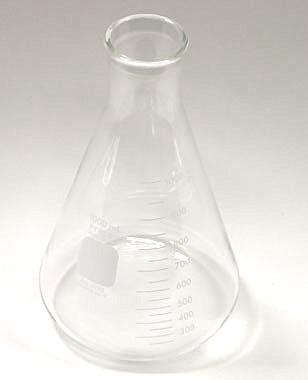
The Pyrex Student Grade Erlenmeyer Flask is one of those quiet laboratory heroes that rarely gets applause but somehow ends up in almost every experiment photo, classroom demo, chemistry kit, and science fair project. It does not beep, glow, spin, or connect to Wi-Fi. It simply stands there with its sloped shoulders, narrow neck, flat bottom, and calm scientific confidence, saying, “Go ahead, mix that solution. I’ve seen worse.”
For students, teachers, home science learners, and beginner lab users, an Erlenmeyer flask is often the first piece of “real” laboratory glassware that feels serious. A beaker is friendly. A test tube is dramatic. But an Erlenmeyer flask? That is where chemistry starts looking like chemistry. The Pyrex student grade version brings together durability, practical design, recognizable quality, and affordability in a way that makes it especially useful for education-focused labs.
This guide takes a close look at what a Pyrex Student Grade Erlenmeyer Flask is, how it is used, what makes it different from ordinary glass containers, how to choose the right size, and why this simple conical flask remains a classroom staple. Spoiler: the shape is not just for looking smart on a lab bench.
What Is a Pyrex Student Grade Erlenmeyer Flask?
A Pyrex Student Grade Erlenmeyer Flask is a laboratory flask designed for general science education, basic chemistry work, mixing, swirling, heating, cooling, and temporary solution handling. It usually has a flat base, a conical body, a narrow mouth, printed graduations, and a marking area for labeling contents. The “student grade” label generally means it is made for educational use, where reliability matters but the glassware does not always need the extreme precision or specialized features required in advanced analytical or industrial labs.
The Erlenmeyer flask itself was created as a practical solution to a messy problem: liquids like to splash when stirred or swirled. The conical shape narrows toward the top, which helps contain movement better than a straight-sided vessel. That makes it ideal for swirling mixtures by hand, dissolving solids, preparing solutions, performing titrations, and heating liquids more safely than in containers with wide open tops.
Pyrex laboratory flasks are commonly associated with borosilicate glass, a material valued for its low thermal expansion, chemical resistance, clarity, and ability to tolerate normal laboratory temperature changes. That does not mean the flask is indestructible. It is glass, not a superhero. But compared with ordinary soda-lime glass, borosilicate laboratory glassware is much better suited to controlled lab work.
Why Students and Teachers Like This Flask
The best school lab tools are not necessarily the flashiest. They are the ones that survive repeated use, clean up well, and do not confuse beginners. The Pyrex Student Grade Erlenmeyer Flask checks those boxes nicely.
It Is Easy to Handle
The narrow neck gives students a more secure place to grip, especially when swirling liquids. The broad base helps the flask sit steadily on a bench, hot plate, wire gauze, or lab mat. This matters in a classroom where twenty students may be measuring, pouring, and occasionally discovering that “careful” is not just a suggestion.
It Reduces Splashing
The sloped sides of an Erlenmeyer flask allow users to swirl liquid with less risk of spilling than a beaker. This is especially useful when dissolving powders, mixing indicators, preparing salt solutions, or carrying out simple acid-base demonstrations under supervision.
It Has Approximate Graduations
Many Pyrex Erlenmeyer flasks include white enamel graduations printed on the side. These markings are helpful for estimating liquid volume, but they should not be treated like precision measurement tools. For accurate volume measurement, students should use a graduated cylinder, burette, volumetric pipette, or volumetric flask. Think of the markings on an Erlenmeyer flask as a helpful road sign, not a GPS with satellite-level accuracy.
It Works Across Many Lessons
A single student grade Erlenmeyer flask can appear in lessons about solution preparation, reaction rates, pH indicators, fermentation, crystal growth, density, solubility, and heat transfer. That versatility makes it a smart purchase for classrooms, homeschool labs, and beginner science kits.
Key Features of a Pyrex Student Grade Erlenmeyer Flask
Although exact specifications vary by capacity and seller, Pyrex narrow-mouth Erlenmeyer flasks commonly include several familiar design features.
Borosilicate Glass Construction
Borosilicate glass is widely used in laboratory glassware because it handles heat changes better than ordinary glass and resists many common laboratory chemicals. This is especially useful in student labs, where flasks may be used for gentle heating, cooling, washing, and repeated demonstrations.
However, borosilicate does not mean “immune to bad decisions.” Sudden extreme temperature changes, direct abuse, strong mechanical impact, improper heating, or unsuitable chemicals can still damage the flask. Students should always follow instructor directions and use proper lab safety equipment.
Narrow Mouth Design
The narrow mouth reduces evaporation and splashing compared with wide-mouth vessels. It also allows the flask to accept rubber stoppers in many cases, depending on the flask size. This makes it useful for simple gas collection demonstrations, storage during short activities, and controlled mixing setups.
That said, a narrow mouth also means cleaning may require a flask brush. If the experiment involves sticky starch paste, colorful indicators, or mystery residue from “that one group in the back,” cleaning right away is much easier than pretending the problem will become more fun tomorrow.
White Enamel Graduations
White enamel markings stand out clearly against many liquids and help users estimate volume at a glance. These graduations are usually approximate, which is perfectly fine for general mixing and classroom observations.
For example, if a student needs roughly 100 mL of water to dissolve a sample, the flask markings may be enough. If the experiment requires exactly 100.00 mL for quantitative analysis, this is not the right measuring tool. Precision has its own glassware family, and they are very serious people.
Large Marking Area
Many Pyrex Erlenmeyer flasks include a frosted or enamel marking spot. This allows students to label the flask with a pencil or lab marker. In a busy classroom, labeling matters. “Clear liquid in flask” is not a scientific identity. It is a future confusion machine.
Heavy-Duty Rim or Tooled Top
A reinforced rim helps improve durability around the mouth of the flask, which is an area that can chip if handled roughly. A good rim also makes pouring more predictable and helps when inserting compatible stoppers under proper supervision.
Common Sizes and How to Choose One
Pyrex Erlenmeyer flasks are available in multiple capacities, and each size has its own personality. Choosing the right one depends on the type of work being done.
25 mL to 50 mL Flasks
Small Erlenmeyer flasks are excellent for microscale activities, indicator tests, small-volume reactions, and demonstrations where chemicals should be conserved. They are also useful in elementary or middle school settings because they are easier to handle and require smaller amounts of materials.
125 mL to 250 mL Flasks
This is the sweet spot for many school labs. A 125 mL or 250 mL Pyrex Student Grade Erlenmeyer Flask works well for basic solution preparation, titration practice, yeast fermentation observations, and general chemistry experiments. If a classroom could only stock one or two sizes, this range would often be the practical starting point.
500 mL Flasks
A 500 mL flask is useful for larger demonstrations, mixing bigger solution batches, heating water, or preparing materials for groups. It offers more headspace, which helps reduce splashing when swirling. It is also large enough to look impressive without taking over the entire lab bench like a glass volcano.
1000 mL Flasks
A 1000 mL Pyrex Erlenmeyer flask is best for larger-volume preparations, teacher demonstrations, culture work in certain settings, and general lab storage during activities. It is less convenient for small student stations but very useful when preparing shared solutions.
Pyrex Student Grade vs. Professional Lab Grade
The phrase “student grade” can sound like a downgrade, but that is not always the best way to think about it. Student grade labware is designed around classroom use, budget control, and repeat handling by beginners. Professional lab grade glassware may offer tighter tolerances, specialized certification, advanced closures, or designs suited to research and regulated environments.
For many school labs, student grade is exactly what is needed. A ninth-grade chemistry class learning solution concentration does not usually need the same flask used for high-stakes analytical chemistry. It needs dependable glassware that supports learning, cleans well, and does not require a small grant to replace if someone’s elbow declares independence.
The key is matching the flask to the job. Use a student grade Erlenmeyer flask for general mixing, heating, swirling, and classroom demonstrations. Use volumetric glassware when precise measurement is required. Use vacuum-rated glassware for vacuum work. Use specialty flasks for culturing, filtering, distilling, or pressure-related activities.
Best Uses for a Pyrex Student Grade Erlenmeyer Flask
The Pyrex Student Grade Erlenmeyer Flask is popular because it is useful in so many beginner and intermediate science activities.
Mixing Solutions
The conical shape makes swirling easy. Students can add solute and solvent, then gently swirl until dissolved. This works well for saltwater, sugar solutions, indicator mixtures, and many safe classroom solutions.
Heating Liquids
Borosilicate Erlenmeyer flasks can often be used for heating under appropriate lab conditions. Heating should be gradual, supervised, and done with suitable equipment such as a hot plate, wire gauze, or other instructor-approved setup. Students should never heat a sealed flask, because pressure buildup can be dangerous.
Titration Practice
Erlenmeyer flasks are commonly used in titrations because they allow the receiving solution to be swirled while titrant is added from a burette. The narrow neck helps reduce splashing, and the broad base provides stability.
Fermentation Demonstrations
Teachers often use Erlenmeyer flasks for yeast and sugar demonstrations. The flask can hold the mixture while a balloon or stopper setup captures gas under safe classroom conditions. It is a simple way to make invisible gas production suddenly very visible.
Crystal Growth and Observation
A flask can hold saturated solutions for crystal-growing activities. Its clear glass makes it easy to observe changes, although wide-mouth containers may be easier when crystals need to be removed.
How to Use the Flask Safely
Laboratory glassware safety is not optional, especially in student settings. Even high-quality glass can break if dropped, scratched, heated unevenly, or used incorrectly.
Inspect Before Use
Before using a Pyrex Student Grade Erlenmeyer Flask, inspect it for chips, cracks, deep scratches, or cloudy stress marks. Damage weakens glass and increases the chance of breakage during heating or handling.
Wear Eye Protection
Safety goggles should be worn during experiments involving glassware, chemicals, heat, or reactions. This is not because goggles are fashionable, although they do have a certain “future scientist” charm. It is because splashes and broken glass can cause serious injuries.
Avoid Sudden Temperature Shock
Do not move a hot flask directly onto a cold surface or add very cold liquid to hot glass unless the procedure specifically allows it and proper precautions are in place. Thermal shock can crack glass suddenly.
Do Not Use for Food or Drinks
Laboratory glassware should never be used for beverages, snacks, kitchen experiments, or “it’s just water” situations. Once glassware belongs to the lab, it stays in the lab. The flask may look like it could hold iced coffee, but science says please do not.
Do Not Heat a Closed Flask
Never heat a sealed Erlenmeyer flask. Expanding gases and vapors need a way to escape. A sealed heated flask can build pressure and break unexpectedly.
Cleaning and Storage Tips
Good cleaning habits extend the life of student lab glassware and keep experiments more reliable. Rinse the flask soon after use, especially after solutions dry or crystallize. Use warm water, appropriate lab detergent, and a flask brush when needed. Avoid abrasive scrubbing pads that may scratch the glass.
After washing, rinse thoroughly with clean water and allow the flask to dry upside down on a drying rack. Store it where it will not roll, knock against other glassware, or sit under heavy objects. If flasks are stacked or crowded, the rims can chip over time.
For classrooms, it helps to organize flasks by size and inspect them at the end of each unit. A chipped flask should be removed from service. It is better to retire questionable glassware early than discover the problem during a demonstration involving hot liquid and twenty-five curious faces.
Buying Tips for Schools, Homeschool Labs, and Beginners
When shopping for a Pyrex Student Grade Erlenmeyer Flask, consider more than just the capacity. Look at the material, markings, mouth style, rim durability, and whether the size matches the intended experiments.
Check the Capacity
For most student activities, 125 mL and 250 mL flasks are very practical. Smaller flasks are great for microscale work, while 500 mL and 1000 mL flasks are better for demonstrations and larger preparations.
Choose Narrow Mouth or Wide Mouth Carefully
Narrow-mouth flasks are excellent for swirling and reducing splashes. Wide-mouth flasks are easier to clean and better for adding larger solids. For general chemistry education, narrow mouth is often the classic choice.
Understand the Markings
If the experiment requires approximate measurements, flask graduations are convenient. If the experiment requires precision, buy proper measuring equipment as well. An Erlenmeyer flask is a great mixer, not a precision accountant.
Buy Extras for Classroom Use
In a school setting, breakage happens. It is not always dramatic; sometimes a tiny chip appears after a semester of enthusiastic learning. Having extra flasks prevents one broken item from delaying a lab activity.
Why the Pyrex Name Still Matters
Pyrex has long been associated with durable glassware, and in the lab world the name still carries weight. For educators, buying a recognizable brand can make ordering easier and reduce uncertainty. A Pyrex Student Grade Erlenmeyer Flask is not just a generic glass cone; it is a familiar piece of laboratory equipment designed for repeated scientific use.
That brand recognition is especially helpful for schools and parents who are building a basic lab setup. Beginners may not know every technical detail about borosilicate glass, ASTM standards, or flask geometry, but they can understand that reputable lab glassware is safer and more reliable than random decorative glass containers. In science, “close enough” is sometimes charming. In glassware selection, it can be expensive.
Real-World Experience: What It Is Like to Use a Pyrex Student Grade Erlenmeyer Flask
The first thing most students notice about a Pyrex Student Grade Erlenmeyer Flask is that it feels more stable than it looks. The slanted sides give it a slightly delicate appearance, but the flat base keeps it steady on the bench. During a typical classroom lab, that stability becomes important quickly. Students are reaching for droppers, stirring rods, thermometers, worksheets, and occasionally their own pencil that somehow migrated under the lab stool. A flask that sits firmly is a small blessing.
In solution-mixing activities, the flask is wonderfully intuitive. Add water, add the solute, swirl gently, and watch the mixture become uniform. Compared with a beaker, the flask gives students more confidence when swirling because the liquid does not climb toward the rim as aggressively. This is especially useful for younger learners who are still developing careful lab technique. They can see the liquid move, learn how controlled motion helps dissolve materials, and avoid turning the bench into a tiny indoor pond.
In titration practice, the Erlenmeyer flask earns its classic reputation. Holding the flask under a burette while swirling the receiving solution is one of those lab skills that feels awkward for about thirty seconds and then suddenly makes sense. The narrow neck helps keep the solution contained, while the clear glass makes color changes easy to observe. When an indicator shifts from colorless to faint pink, or from pink back to clear, the flask becomes the stage for that satisfying “Aha!” moment.
For teachers, the student grade flask is valuable because it supports repetition. A good science lesson often requires students to try, observe, adjust, and try again. Pyrex student glassware can handle routine washing, repeated use, and ordinary classroom movement when treated properly. It is not magic, and it will not survive being dropped onto tile, but it is designed for the rhythm of education: setup, experiment, cleanup, repeat.
One practical experience worth mentioning is labeling. The marking spot seems like a small feature until multiple groups are working with similar clear liquids. A simple label such as “Group 3 vinegar solution” can prevent confusion and save time. Without labels, every flask becomes part of a guessing game that no responsible teacher wants to play.
Cleaning experience also depends heavily on timing. Rinse the flask right after use, and cleanup is usually easy. Let a solution dry overnight, and suddenly the inside of the flask may look like a mineral-themed art project. A flask brush is helpful, especially for narrow-mouth models. Students should learn that cleaning is part of the experiment, not the boring scene after the credits.
Another real-world advantage is visibility. The clear glass lets students observe bubbles, dissolving particles, color gradients, precipitates, and temperature-related changes. In beginner science, seeing the process matters. A flask does not just hold the experiment; it helps reveal it.
The main limitation is measurement accuracy. Students often assume that printed graduations mean exact volume. This creates a useful teaching moment. The instructor can explain that the flask is excellent for mixing and approximate volume checks, while graduated cylinders and volumetric glassware are better for precision. In that sense, the Pyrex Student Grade Erlenmeyer Flask teaches not only chemistry, but also tool selection.
Overall, using this flask feels practical, reliable, and appropriately scientific. It is sturdy enough for learning, clear enough for observation, and versatile enough to appear in many types of labs. It may not be the most glamorous item in the science cabinet, but once students start using it, they quickly understand why the Erlenmeyer flask has remained a laboratory classic for generations.
Conclusion
The Pyrex Student Grade Erlenmeyer Flask is a smart choice for classrooms, homeschool labs, beginner chemistry sets, and general science education. Its borosilicate glass construction, conical shape, narrow mouth, approximate graduations, and practical labeling area make it useful for mixing, heating, swirling, observing, and learning core laboratory techniques.
It is not a precision measuring instrument, and it should always be used with proper safety habits. But for everyday educational experiments, it offers the right balance of durability, usability, and scientific credibility. In other words, it is the dependable lab partner who does not talk much, does not need charging, and rarely causes drama unless someone ignores the safety rules.

