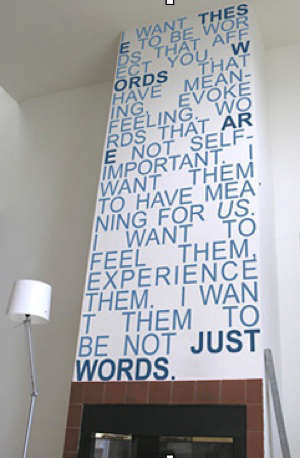
Every writer has met the sentence that refuses to move. It sits on the page like a couch stuck in a narrow stairwell: technically present, emotionally exhausting, and surrounded by people saying, “Maybe turn it sideways?” In prose, one reason sentences feel heavy is the overuse of adhesive wordsalso known as glue words, filler words, or the tiny connectors that hold a sentence together without carrying much meaning.
Prose adhesive words are not villains. Words like “of,” “in,” “that,” “to,” “was,” “is,” “for,” “with,” and “just” are essential parts of English. Without them, writing would sound like a pirate telegram: “Writer cut words. Reader confused. Send coffee.” The problem begins when these words multiply until they bury the working wordsthe nouns, verbs, and details that actually deliver the message.
This guide explains what prose adhesive words are, why they make writing feel sticky, how to spot them, and how to edit them without turning your style into a dry instruction manual. Clear prose is not about writing fewer words at all costs. It is about making every word earn its snack.
What Are Prose Adhesive Words?
Prose adhesive words are low-impact words that connect ideas but often add little meaning by themselves. They include prepositions, articles, auxiliary verbs, vague pronouns, weak intensifiers, and filler phrases. Editors often call them “glue words” because they glue the important parts of a sentence together.
For example, look at this sentence:
Sticky: “There was a feeling of uncertainty in the room that made everyone at the meeting seem to be a little nervous.”
The sentence is understandable, but it drags. It uses “there was,” “of,” “in,” “that,” “made,” “seem,” “to be,” and “a little” before reaching the point.
Cleaner: “Uncertainty filled the room, and everyone at the meeting looked nervous.”
The revised version keeps the meaning but gives stronger jobs to stronger words: “uncertainty filled” and “looked nervous.” The sentence no longer needs a forklift.
Why Adhesive Words Matter in Prose
Good prose depends on momentum. Whether you are writing fiction, essays, blog posts, emails, marketing copy, or academic work, readers want a smooth path through your ideas. Adhesive words can create friction when they appear in large clusters. They slow pacing, weaken verbs, hide subjects, and make the reader work harder than necessary.
That does not mean every short connecting word should be deleted. In fact, removing all adhesive words would make prose stiff and unnatural. The goal is balance. Think of adhesive words like seasoning. A pinch helps the dish. A cupful makes the soup taste like regret.
Common Types of Adhesive Words
1. Empty Openers
Sentences that begin with “there is,” “there are,” “it is,” or “it was” often delay the real subject.
Wordy: “There are several reasons why the chapter feels slow.”
Better: “Several reasons make the chapter feel slow.”
Best: “Several problems slow the chapter.”
2. Weak Verb Chains
Verb chains such as “seems to be,” “is able to,” “began to,” “started to,” and “was going to” can soften action.
Wordy: “She was able to make a decision after the meeting.”
Better: “She decided after the meeting.”
3. Preposition Piles
Too many prepositional phrases can make a sentence wobble.
Wordy: “The report on the results of the survey from the team in Chicago was useful.”
Better: “The Chicago team’s survey report was useful.”
4. Filler Intensifiers
Words like “very,” “really,” “basically,” “actually,” “quite,” “somewhat,” and “kind of” can help voice in dialogue, but they often weaken exposition.
Wordy: “The ending was really very surprising.”
Better: “The ending shocked readers.”
5. Filter Words
In fiction and personal essays, filter words distance readers from experience. Common examples include “saw,” “heard,” “felt,” “noticed,” “realized,” and “thought.” These words are not wrong, but they can place a pane of glass between the reader and the scene.
Filtered: “I heard the rain tapping against the window.”
Direct: “Rain tapped against the window.”
Adhesive Words vs. Transition Words
Writers sometimes confuse adhesive words with transition words. Transitions such as “however,” “therefore,” “meanwhile,” “for example,” and “as a result” guide the reader through logic. Adhesive words usually connect grammar inside a sentence. Both can be overused, but transitions often serve a clear structural purpose.
The question is not “Can I delete this word?” The better question is “What work does this word do?” If a word clarifies sequence, contrast, emphasis, or rhythm, keep it. If it only fills space while pretending to look busy, show it the exit.
How Sticky Sentences Damage Readability
A sticky sentence contains a high percentage of adhesive words compared with meaningful words. It may be grammatically correct yet exhausting to read. Sticky sentences often appear when writers think faster than they revise. First drafts are allowed to be messy. That is their job. A first draft is the grocery bag; revision is where you stop carrying soup cans in your hoodie pocket.
Here is a typical sticky sentence:
Sticky: “In order to make the process of editing your prose easier, it is important to be aware of the words that are not doing much work in your sentences.”
Cleaner: “To edit prose more easily, notice words that do little work.”
The revision is shorter, clearer, and stronger. It replaces “in order to” with “to,” cuts “the process of,” removes “it is important,” and changes a heavy phrase into a direct instruction.
How to Identify Prose Adhesive Words
Read the Sentence Aloud
Your mouth is a surprisingly good editor. If a sentence makes you run out of breath, stumble, or wonder why you sound like a legal document wearing a trench coat, check for adhesive words. Reading aloud exposes clutter your eyes may forgive.
Highlight the Working Words
Working words carry meaning. They are usually concrete nouns, active verbs, precise adjectives, and necessary details. In the sentence “The old truck coughed smoke into the alley,” the working words are “old truck,” “coughed,” “smoke,” and “alley.” The sentence has small connector words, but they support the image instead of burying it.
Search for Habit Words
Every writer has favorite filler words. Some writers overuse “just.” Others cling to “actually,” “really,” “that,” “seems,” or “in order to.” Use your word processor’s search function to find repeated adhesive words. This is not glamorous editing, but neither is flossing, and yet civilization depends on both.
Watch for Noun Traps
Writers often turn strong verbs into heavy nouns. This creates extra adhesive words.
Wordy: “The manager made a recommendation for the improvement of the workflow.”
Better: “The manager recommended improving the workflow.”
The phrase “made a recommendation for the improvement of” uses a parade of glue. The verb “recommended” does the job faster.
Practical Editing Techniques
Replace Phrases With Single Words
Many adhesive-heavy phrases have simple alternatives:
- “in order to” → “to”
- “due to the fact that” → “because”
- “at this point in time” → “now”
- “in the event that” → “if”
- “for the purpose of” → “for” or “to”
- “a large number of” → “many”
Move the Subject Forward
Clear prose usually lets readers meet the subject early.
Wordy: “In the middle of the argument, there was a sudden change in Maria’s tone.”
Better: “Maria’s tone changed suddenly in the middle of the argument.”
Choose Active Verbs
Active verbs reduce the need for extra support words. Compare “was in possession of” with “owned,” or “gave an explanation of” with “explained.” Strong verbs pull their own weight. Weak verbs ask prepositions to carry the luggage.
Cut Without Starving the Sentence
Editing is not a crash diet for prose. Cutting too much can remove warmth, rhythm, and personality. Sometimes a phrase like “just a little” belongs in dialogue because it reveals character. Sometimes “there was” creates suspense. Sometimes repetition gives a sentence music. The point is not to obey a machine. The point is to make intentional choices.
Examples of Adhesive Word Revision
Example 1: Blog Writing
Before: “There are a lot of different ways that you can improve the quality of your blog posts by making changes to the words that you use.”
After: “You can improve blog posts by choosing stronger words.”
Example 2: Business Writing
Before: “It is necessary for our team to have a discussion about the possibility of changing the current schedule.”
After: “Our team needs to discuss changing the current schedule.”
Example 3: Fiction
Before: “He felt that there was something strange about the way the house seemed to be standing in the fog.”
After: “The house stood strangely in the fog.”
Example 4: Academic Writing
Before: “The purpose of this study is to provide an analysis of the relationship between sleep and memory.”
After: “This study analyzes the relationship between sleep and memory.”
When Adhesive Words Improve Style
Not all adhesive words deserve deletion. In natural American English, small words create rhythm, tone, and clarity. “I went to the store” is better than “I visited store,” unless your narrator is a confused robot pretending to be from Ohio.
Adhesive words can also slow a sentence on purpose. In literary prose, a long chain of soft words may create hesitation, uncertainty, or emotional distance. In dialogue, filler words can reveal nervousness, age, education, or personality. A teenager saying, “I just kind of thought maybe you knew” sounds different from a judge saying, “I assumed you knew.” Both sentences work in the right context.
The best writers do not delete adhesive words blindly. They listen for effect. They ask whether the sentence needs speed, softness, tension, humor, formality, or intimacy. Then they edit accordingly.
SEO and Web Writing: Why Adhesive Words Matter Online
On the web, readers scan before they commit. They look for clear headings, direct sentences, useful examples, and fast answers. Search engines also favor content that helps readers understand a topic without wading through fog. That does not mean writing should sound robotic. It means your prose should respect the reader’s time.
For SEO writing, reducing adhesive words can improve readability, featured-snippet potential, and user engagement. A sentence like “There are many reasons why adhesive words can have an impact on the readability of prose” is less effective than “Adhesive words can reduce prose readability.” The second version gives readers the answer quickly.
Still, keyword stuffing is not the solution. Repeating “prose adhesive words” like a malfunctioning parrot will not help anyone. Use the main keyword naturally in the title, introduction, headings, and a few relevant places. Then support it with related terms such as glue words, sticky sentences, filler words, concise writing, prose style, readability, and editing techniques.
A Simple Checklist for Editing Adhesive Words
- Find sentences longer than 25–30 words and check whether they feel heavy.
- Look for “there is,” “there are,” “it is,” and “it was.”
- Replace wordy phrases with shorter alternatives.
- Turn weak noun phrases into active verbs.
- Delete filler words that do not change meaning.
- Keep adhesive words that support rhythm, tone, or clarity.
- Read the revised paragraph aloud before calling it finished.
Common Mistakes to Avoid
Deleting Every Small Word
Small words are not automatically bad. English needs them. The goal is not to make prose shorter in a mechanical way but to make it clearer and more alive.
Replacing Simple Words With Fancy Ones
Some writers cut glue words, then add decorative vocabulary that makes the sentence worse. “Use” is often better than “utilize.” “Help” is usually better than “facilitate assistance.” Fancy words are like hot sauce: wonderful in the right amount, alarming by the gallon.
Ignoring Voice
A perfectly concise sentence can still be dull. Voice matters. Humor, rhythm, surprise, and personality keep readers engaged. Cut clutter, not character.
Experience Notes: What Editing Adhesive Words Teaches Writers
After working with drafts across blog posts, essays, fiction scenes, product pages, and business emails, one pattern becomes clear: writers rarely overuse adhesive words because they lack skill. They overuse them because drafting is a search process. The mind reaches for soft connecting words while it figures out what it wants to say. That is normal. The first draft often contains scaffolding. Revision removes the scaffolding once the building stands.
One of the most useful experiences is editing a paragraph in two passes. In the first pass, do not try to sound elegant. Simply underline the words that carry meaning. In a sentence like “There was a sudden realization in my mind that the plan was not going to work,” the true message is “I realized the plan would fail.” That discovery feels almost rude at first. The original sentence wore a suit. The revision shows up in jeans and gets the job done.
Another lesson is that adhesive words often hide fear. Writers add “somewhat,” “kind of,” “a little,” and “seems to” when they are unsure. These words can be honest, especially in reflective prose, but they can also weaken authority. “This argument seems to be somewhat flawed” whispers from behind a curtain. “This argument is flawed” steps into the room and turns on the lights.
In fiction, the experience is more delicate. Removing every filter word can make prose immediate, but it can also flatten a narrator’s personality. “I noticed the door was open” may be weaker than “The door stood open,” but in a mystery scene, “I noticed” might matter because the character is actively observing. Editing adhesive words teaches judgment. Rules are useful training wheels, but eventually the writer must ride the bicycle without crashing into a mailbox.
For web content, cutting adhesive words usually improves the reading experience quickly. Readers arrive with questions, not patience medals. A dense introduction full of “in today’s fast-paced world” and “it is important to understand” can lose them before the article begins. A cleaner opening gives them confidence. It says, “Good news, friend. This page respects your coffee break.”
The best practical habit is to build a personal adhesive-word list. Track the words you overuse. Search for them during revision. Do not delete automatically; inspect. Sometimes “that” is necessary. Sometimes “just” creates the exact casual tone you want. Sometimes “was” is the cleanest verb available. But when five weak words surround one strong idea, rescue the idea.
Editing prose adhesive words is not about becoming a minimalist monk who communicates only in stone tablets and meaningful nods. It is about clearing the path between thought and reader. When the clutter leaves, the sentence breathes. The idea sharpens. The voice sounds more confident. And best of all, the reader no longer needs hiking boots to cross your paragraph.
Conclusion
Prose adhesive words are the small connectors that hold sentences together, but when they overstay their welcome, they make writing sticky, slow, and vague. Learning to identify glue words, filler phrases, weak verb chains, and empty openers helps writers create cleaner, more readable prose. The secret is not ruthless deletion. The secret is intention. Keep the words that clarify meaning, shape rhythm, and reveal voice. Cut the words that only loiter.
Strong prose does not need to shout, sparkle, or wear a velvet cape. It needs to move. When you reduce unnecessary adhesive words, your sentences become lighter, sharper, and easier to read. Your ideas reach the reader faster. Your style sounds more confident. And your paragraphs stop behaving like they were assembled with industrial glue.