Note: This article is written from currently reported public entertainment information and is designed for web publishing in standard American English.
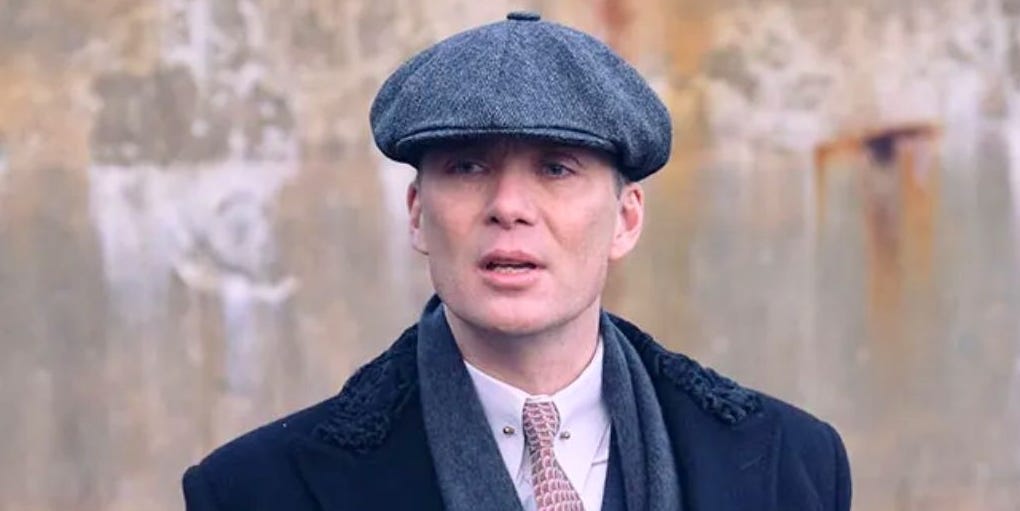
If you heard a low, dramatic rumble in the distance, do not panic. That was simply millions of Peaky Blinders fans reaching for their flat caps at the same time. Cillian Murphy has officially returned to the world of Tommy Shelby, and the big movie news is exactly the kind of announcement that makes fans whisper, “By order of the Peaky Blinders,” even while doing extremely normal things like checking email or reheating pasta.
The long-awaited Peaky Blinders movie, Peaky Blinders: The Immortal Man, brings Murphy back as Thomas Shelby, the haunted gangster-politician-war veteran whose cheekbones have done more dramatic acting than some entire streaming catalogs. The film continues the story of the Shelby family after the hit series ended its six-season run, shifting the action into a new historical moment, a new family conflict, and a bigger cinematic format.
For fans, this is not just another streaming release. It is the return of one of television’s most stylish crime sagas, now expanded into a movie built around legacy, violence, fatherhood, war, and the uncomfortable fact that Tommy Shelby can apparently never enjoy a peaceful retirement. Honestly, the man could move to a cottage, take up birdwatching, and within 15 minutes someone would hand him a gun, a secret, and a moral crisis.
What Is the Big Cillian Murphy Movie News?
The major news is that Cillian Murphy is back as Tommy Shelby in Peaky Blinders: The Immortal Man, the official movie continuation of the beloved BBC and Netflix crime drama. The film is written by series creator Steven Knight and directed by Tom Harper, who previously worked on the early episodes of the show. That matters because the movie is not a random spin-off wearing a nice coat and pretending to be family. It is built by key creative figures who helped define the original series.
Murphy also serves as a producer, which gives the project extra weight. After his Oscar-winning rise through films like Oppenheimer, his return to Tommy Shelby feels less like a nostalgia play and more like a deliberate closingor expansionof one of his signature roles. The result is a feature-length story that brings Tommy back into the dangerous orbit of Birmingham, family loyalty, and wartime chaos.
The film carries the title The Immortal Man, a phrase that sounds like something Tommy Shelby would write in a notebook during a thunderstorm while refusing to explain his feelings. It also points to the mythic quality the character has gained over the years. Tommy has survived war, grief, betrayal, politics, addiction, assassination attempts, and enough brooding silence to power a small factory.
Why Peaky Blinders: The Immortal Man Matters
The original Peaky Blinders series became a global phenomenon because it mixed gangster drama with historical tension, family tragedy, sharp fashion, and a soundtrack that made every slow-motion walk feel like a religious experience. Set largely in post-World War I Birmingham, the show followed the Shelby family’s rise from street-level criminal power to political influence, with Tommy Shelby at the center of nearly every deal, betrayal, and explosion.
By the time Season 6 ended, Tommy had reached a strange crossroads. He was alive, but spiritually exhausted. He had power, but at a devastating cost. He had survived, but survival had become its own punishment. The movie gives fans a chance to see what happens when a man who has tried to escape his legend is pulled back into it.
That is the central appeal. The Immortal Man is not just asking, “What happened next?” It asks a more dramatic question: What does a man like Tommy Shelby become when the world changes, but his ghosts refuse to move out?
The Story Moves Into World War II
One of the biggest changes in the movie is its historical setting. Peaky Blinders: The Immortal Man moves the story into 1940, during World War II. This gives the film a different kind of pressure. The original series began in the shadow of World War I, where trauma shaped Tommy and his brothers. Now, another global conflict threatens to consume the next generation.
This setting is a smart move for the franchise. Peaky Blinders has always worked best when personal ambition crashes into history. Tommy’s private demons are never just private. They connect to class, empire, fascism, labor, politics, and the machinery of war. In the movie, the stakes become national as well as personal, with Birmingham once again serving as more than a backdrop. It is a city under pressure, scarred by industry, crime, and conflict.
The World War II era also gives Tommy a new moral battlefield. He has always been a man capable of terrible things, but the presence of fascist threats complicates the story in a way that fits the franchise. Tommy Shelby is no saint. He is not even saint-adjacent. But when the enemy is worse, the show has always enjoyed placing him in the uncomfortable position of being the devil you root for.
The Cast: Familiar Faces and Dangerous New Blood
Cillian Murphy’s return is the headline, but the movie also brings together an impressive cast of returning favorites and new additions. Barry Keoghan joins the story as Duke Shelby, Tommy’s son, giving the film a charged father-son dynamic. Keoghan is exactly the kind of actor who can make silence feel suspicious, sadness feel dangerous, and a stare feel like it just stole your wallet.
Rebecca Ferguson, Tim Roth, Jay Lycurgo, Sophie Rundle, Stephen Graham, Ned Dennehy, Packy Lee, and Ian Peck are also connected to the film’s cast lineup, mixing familiar Shelby-world figures with new characters who expand the story. Sophie Rundle’s Ada remains especially important because Ada has often been the person most willing to tell Tommy the truth, whether he wants to hear it or not. Usually, he does not. Usually, she says it anyway. Good for her.
The addition of major film actors gives The Immortal Man a broader cinematic profile. This is not simply a reunion special stretched to feature length. It is positioned as a movie event, with a cast designed to appeal to longtime fans and viewers who may know Murphy from his recent film work.
Tommy Shelby and Duke: A Father-Son Conflict With Teeth
The father-son storyline appears to be one of the emotional engines of Peaky Blinders: The Immortal Man. Duke Shelby was introduced late in the series, and the movie uses him to explore legacy in a very Shelby way. In some families, legacy means inheriting a watch or a recipe. In the Shelby family, it means inheriting enemies, trauma, bad decisions, and possibly a warehouse full of dynamite.
Duke represents the next generation of Peaky Blinders, but that does not mean he is simply Tommy 2.0. The drama comes from the tension between imitation and rebellion. Does Duke want to become his father, defeat his father, replace his father, or be loved by his father? With this family, the answer may be “yes,” followed by a cigarette and a violent misunderstanding.
For Tommy, Duke forces a confrontation with the consequences of his life. Tommy has always justified his choices as necessary. He did what he had to do. He protected the family. He built an empire. He outplayed worse men. But when the next generation begins copying the same violent logic, the excuse starts to look thinner. The movie’s emotional power comes from that mirror.
Why Cillian Murphy’s Return Feels Bigger After Oppenheimer
Cillian Murphy’s return to Peaky Blinders lands differently now because his career has reached a new level of global recognition. After his acclaimed performance in Oppenheimer, Murphy is not simply returning as a fan-favorite TV actor. He is returning as one of the most respected leading men in film.
That gives The Immortal Man extra cultural heat. For years, Tommy Shelby was the role that made many viewers appreciate Murphy’s intensity, restraint, and ability to communicate emotional collapse with one tiny movement of the eyes. Now, the movie benefits from a wider audience that may have discovered or rediscovered him through his film work.
Still, Tommy Shelby remains uniquely suited to Murphy’s strengths. The character is controlled, damaged, strategic, and terrifyingly calm. Murphy does not need to overplay him. He can sit in a room, lower his voice, and make everyone else look like they accidentally walked into the wrong destiny.
What Makes the Movie Different From the Series?
A movie has different demands than a television season. The original Peaky Blinders had time to build slow-burn alliances, side plots, betrayals, and psychological spirals. A feature film has to compress that energy into a tighter structure. That can be a challenge, but it also creates opportunities.
The movie format allows for larger visual scale, more concentrated action, and a sense of finality that television sometimes avoids. Every confrontation can feel heavier because there is less room to wander. Every choice carries the weight of a possible ending. For a character like Tommy Shelby, who has spent years delaying emotional payment, a movie can feel like the bill finally arriving at the table.
At the same time, The Immortal Man must balance fan service with narrative purpose. Longtime viewers want familiar faces, callbacks, and the old Peaky atmosphere: smoky rooms, sharp suits, loaded conversations, and dramatic walking. But the film also needs to justify its existence by moving the story forward. The best continuation is not the one that simply says, “Remember this?” It is the one that says, “Now look what it cost.”
The Style Is Still a Major Character
No discussion of Peaky Blinders is complete without mentioning style. The franchise has always understood that clothes, music, lighting, and movement are part of the storytelling. The suits are not just suits. The caps are not just caps. The haircuts are not just haircuts, though plenty of barbers have had to deal with brave customers saying, “Give me the Tommy Shelby,” before learning that bone structure is not included.
The movie continues that tradition by leaning into the visual identity that made the series iconic. The world of Peaky Blinders is smoky, metallic, muddy, elegant, and brutal. It looks like a fashion editorial got into a fistfight with a history textbook. That combination is central to the franchise’s appeal.
The music also matters. From Nick Cave’s “Red Right Hand” becoming practically inseparable from the show’s identity to the use of modern tracks over period imagery, Peaky Blinders has always sounded as bold as it looks. A movie continuation gives the soundtrack room to feel even more cinematic, carrying the mood of doom, swagger, grief, and danger.
Fan Reaction: Excitement, Nerves, and Flat-Cap Energy
The fan reaction to Cillian Murphy’s return has been exactly what you would expect: excitement with a side order of protective anxiety. Fans love Tommy Shelby, but they also know this universe is not gentle with beloved characters. A happy ending in Peaky Blinders usually means someone survived long enough to stare into the distance while emotionally ruined.
Some viewers are thrilled that the story continues. Others wonder whether the series needed another chapter after its carefully staged ending. That debate is healthy. It shows how strongly people still care about the Shelby family. The worst outcome for any franchise is indifference, and Peaky Blinders has never had that problem.
The biggest question is whether The Immortal Man can satisfy both casual viewers and devoted fans. New viewers may come for Murphy, Keoghan, and the Netflix movie buzz. Longtime fans come carrying six seasons of emotional baggage, character memory, and very specific opinions about Arthur, Ada, Alfie, and the correct level of chaos in the Garrison Pub.
Why This Movie News Is Smart for Netflix
From a streaming strategy perspective, Peaky Blinders: The Immortal Man is a strong move. The original series remains highly recognizable, Cillian Murphy has major post-Oppenheimer momentum, and the crime-drama format travels well internationally. This is the kind of title that can attract longtime subscribers, lapsed fans, and curious movie watchers looking for something stylish and intense.
It also fits the current entertainment trend of turning successful series into event films. Instead of building an entire new season, Netflix and the creative team can deliver a concentrated story with high production value and a clear promotional hook: Tommy Shelby is back.
That hook is simple, but powerful. In an overcrowded streaming world, clarity matters. Viewers do not need a 12-part explanation. They need one sentence: Cillian Murphy returns as Tommy Shelby in a Peaky Blinders movie. That is enough to make fans click faster than Tommy can light a cigarette.
What New Viewers Should Know Before Watching
If you are new to Peaky Blinders, the movie may still be accessible, but the emotional impact is stronger if you understand the basics. Tommy Shelby is a World War I veteran who becomes the leader of a Birmingham crime family. Over six seasons, he expands the family’s power through betting, politics, business, intimidation, and alliances with people who are almost always dangerous and rarely punctual.
The Shelby family is bound by loyalty, but that loyalty is constantly tested by ambition, grief, addiction, betrayal, and violence. Tommy is brilliant and damaged. Ada is sharp and principled. Arthur is volatile and tragic. The late Polly Gray, played by Helen McCrory, was the emotional and strategic heart of the family. Her absence continues to shape the world of the story.
To get the richest experience, new viewers should watch the original series first. But if you jump into the movie, focus on the essentials: Tommy is a man trying to escape a life that keeps calling him back, and the Shelby name is both a crown and a curse.
of Fan Experience: Why This News Hits So Hard
Part of the reason this Cillian Murphy movie news feels so big is that Peaky Blinders has never been just a show people watched. It became a mood, a language, a wardrobe temptation, and for some fans, a mildly dangerous source of haircut confidence. Viewers did not simply tune in to see what Tommy Shelby would do next. They tuned in to feel the atmosphere: the smoke, the music, the long silences, the sense that every family meeting might end with either a business deal or a funeral.
For many fans, discovering Peaky Blinders was an experience. Maybe you started one episode out of curiosity and suddenly found yourself three seasons deep, saying things like “proper Birmingham gang politics” as if that were a normal weekend activity. The show had that rare binge-watch power where one episode naturally pulled you into the next. You wanted to know who Tommy would outsmart, who would betray the family, and how many times someone could dramatically enter a room before it became a sport.
The return of Cillian Murphy also brings back the emotional memory of watching Tommy Shelby evolve. He was never a simple hero. In fact, calling him a hero requires the kind of moral flexibility usually reserved for tax loopholes. But he was compelling because the show allowed viewers to see both his genius and his damage. He could be ruthless, tender, cruel, protective, visionary, and self-destructive, sometimes before breakfast.
That complexity is why fans feel protective of the character. They do not just want him back for more stylish violence. They want his return to mean something. They want the movie to honor what came before: Grace, Polly, Arthur’s pain, Ada’s endurance, the war trauma, the ambition, the guilt, and the terrible price of building an empire on blood and fear.
There is also something uniquely satisfying about seeing a television story get a cinematic continuation. Fans spent years with these characters in episodes, seasons, cliffhangers, and finales. A movie feels like a reunion, but one with higher stakes and better lighting. It is the entertainment equivalent of an old friend walking into the room wearing a tailored coat and carrying unresolved trauma.
And let’s be honest: the world missed Tommy Shelby’s particular brand of quiet menace. Some characters shout to dominate a scene. Tommy Shelby lowers his voice. Some characters explain their plans. Tommy looks at someone across a table and lets the audience assume three people are already doomed. That performance style is a huge part of why Murphy’s return matters.
For longtime fans, The Immortal Man is not only about finding out what happens next. It is about revisiting a world that felt dangerous, operatic, and strangely beautiful. It is about hearing the rhythm of the Shelby family again. It is about seeing whether legacy can be escaped, whether violence can end, and whether Tommy Shelby can finally put down the weight he has carried since the first episode.
Of course, because this is Peaky Blinders, peace is probably not arriving with a fruit basket. But that is exactly why fans are watching.
Final Thoughts: Tommy Shelby Wasn’t Finished After All
Cillian Murphy’s return in Peaky Blinders: The Immortal Man is major news because it brings one of modern television’s most iconic characters into a bigger, darker, more cinematic chapter. With Steven Knight writing, Tom Harper directing, and a cast that mixes returning favorites with heavyweight newcomers, the movie gives fans a reason to revisit Birmingham’s most dangerous family.
The film’s World War II setting, father-son conflict, and themes of legacy make it more than a simple comeback. It is a story about what happens when the past refuses to stay buried and when a man who has survived everything must face what survival has made of him.
For Peaky Blinders fans, the message is clear: Tommy Shelby is back, the stakes are bigger, and the flat caps are once again emotionally significant. By order of the streaming queue, this is one movie event fans will not want to ignore.