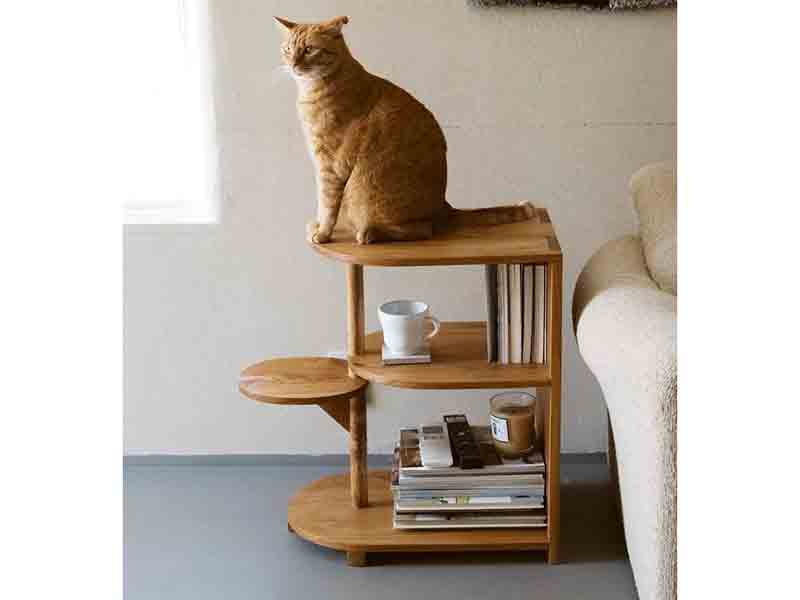
The Orneko Cozy Nook Side Table is what happens when a handsome teak end table quietly decides to become a miniature cat tower. Designed for people who want pet furniture without turning the living room into a feline amusement park, it combines three usable levels, a compact footprint, and a warm vintage-inspired appearance. Humans get a practical surface for a drink, book, lamp, or plant. Cats get a perch, pathway, and neighborhood-watch station.
A Side Table With a Secret Feline Job
Most pet furniture announces itself from across the room. It arrives wrapped in beige carpet, carries the visual confidence of a small office cubicle, and challenges every other item in the house to a decorating duel. The Orneko Cozy Nook Side Table takes a quieter route. At first glance, it looks like a sculptural wooden table with staggered surfaces and slender supports. Watch a cat inspect it, however, and the second purpose becomes obvious.
Orneko developed the piece around a practical question: What if a compact cat tower could also serve as useful human furniture? Its upper tabletop, middle platform, and lower level can become steps, resting spots, or part of a route toward a sofa, shelf, bed, or window perch. The same surfaces hold everyday objects, reducing the need for a separate end table and cat structure.
The name fits. A nook is a small, comfortable corner or retreat, and this table creates a shared zone where a cat can lounge nearby without occupying your laptop, pillow, or the exact page you are trying to read.
Orneko Cozy Nook Side Table Specifications
| Feature | Published Detail |
|---|---|
| Overall size | 24.2 inches wide x 14 inches deep x 23.6 inches high (61.5 x 35.5 x 60 cm) |
| Upper-to-middle clearance | About 8.7 inches (22 cm) |
| Middle-to-lower clearance | About 12 inches (30.5 cm) |
| Projecting step | About 10 x 8.7 inches (25.5 x 22 cm) |
| Weight | Approximately 16.5 pounds (7.5 kg) |
| Material | Solid teak with a water-based urethane finish |
| Production | Made in Indonesia using wood joinery without visible metal hardware |
| Published price | ¥59,400 at the time of research; price and availability may change |
Because it is made from natural solid wood, grain, color, knots, small gaps, and minor surface marks can vary. Shoppers seeking factory-perfect sameness should take note. Those who enjoy wood with an individual personality may see the variations as part of the appeal.
Why the Design Works for Cats
It Adds Vertical Territory Without a Huge Cat Tower
Indoor cats benefit from elevated observation points, safe resting places, play opportunities, and multiple ways to move through a room. Feline veterinary and animal-welfare guidance regularly emphasizes vertical space because climbing and perching help cats survey their surroundings while increasing the usable territory inside a home.
The Cozy Nook does not replace a tall climbing tree for an energetic cat, but it can create a useful mid-level station. Beside a sofa, low bookcase, or secure window perch, it becomes part of a larger route. That is especially valuable in apartments where every square foot already has three jobs and a fourth awaiting approval.
The Staggered Levels Create Smaller Movements
The projecting step and middle shelf divide one larger jump into shorter transitions. This can be useful for cats that approach furniture cautiously or have become less eager to leap. A published Orneko staff review describes placing the table beside a taller shelf so a 5-kilogram cat could use it as an intermediate staircase and then relax on the tabletop.
It is not a medical mobility device. A cat showing stiffness, weakness, balance trouble, limping, or a sudden reluctance to jump should be evaluated by a veterinarian. Still, thoughtful positioning and a non-slip landing area can make favorite destinations easier to reach.
It Keeps the Cat Near Household Activity
Many cats enjoy proximity without constant handling. A perch beside the sofa lets them supervise movie night, nap near their person, or silently audit snack distribution. Shared furniture may also feel more inviting than a pet bed pushed into a distant corner.
Why Humans May Like It Just as Much
A Narrow, Useful Footprint
At roughly 14 inches deep, this cat side table can fit beside a sofa, reading chair, bed, or narrow wall more easily than many bulky pet structures. Its 23.6-inch height is close to the arm height of many lounge chairs and sofas. Designers generally recommend an end table around the height of the nearby arm, with slightly lower usually being more convenient than awkwardly high.
Furniture-Like Materials and Shape
The teak, rounded transitions, open supports, and stepped silhouette give the piece a vintage-modern character. It can complement midcentury, Scandinavian, Japanese-inspired, eclectic, or warm minimalist interiors. The open construction limits visual heaviness, while the natural wood adds texture to rooms dominated by fabric and painted surfaces.
This matters because multifunctional furniture saves space only when people are happy to leave it in the room. A product that performs four tasks but resembles a shipping pallet with ambitions often ends up in storage. The Cozy Nook earns its footprint by looking intentional even when no cat is using it.
Multiple Levels for Everyday Essentials
The top can hold a lamp, mug, or current book. A lower level can store a remote, tray, or folded throw. The projecting step can display a sturdy plant when it is not part of a feline route. Keep at least one surface open, because cats and elaborate tabletop displays have a famously unstable diplomatic relationship.
Best Placement and Styling Ideas
Beside a Sofa or Reading Chair
This is the most natural arrangement. The top remains within reach for human essentials, while the lower levels let a cat climb, pause, or join the household without occupying the sofa arm. Measure first and make sure the projecting step does not intrude into a walkway.
As a Nightstand
The height can work beside many beds, especially lower platform styles. Secure medications, cords, water glasses, and small objects if your cat visits at night. Use a cord sleeve or cover for lamps and chargers rather than presenting electrical cable as an exciting midnight noodle.
Near a Secure Window or Low Shelf
Beside a properly screened, closed window, the table may become an observation perch. It can also bridge the floor and a low cabinet, creating an intermediate level on the way to a higher resting spot. Confirm that every destination is stable and free of breakable decorations.
How to Style It
Use a stable lamp, a small catchall tray, and one sturdy decorative object rather than crowding every surface. Repeat the teak tone elsewhere through a picture frame, woven basket, leather accent, or wood lamp base. Matching furniture is unnecessary; a shared undertone, repeated curve, or similar visual weight will create cohesion.
A washable, low-profile non-slip rug can add traction and define the nook. Avoid thick rug edges that make the feet sit unevenly. If the natural wood develops a slight wobble, the manufacturer recommends adjusting it with furniture felt rather than hoping your cat acquires sea legs.
Safety and Fit Checklist
- Map the footprint. Mark a 24.2-by-14-inch area with painter’s tape and include clearance for the projecting step.
- Check the route. Make sure the gaps between floor, table, sofa, shelf, or bed suit your cat’s mobility.
- Improve traction. Use stable flooring or a low-profile non-slip rug, particularly for senior cats.
- Remove fragile objects. A favorite vase should not be the final obstacle in a feline parkour course.
- Do not sit or stand on it. It is intended for normal cat use and tabletop objects, not people.
- Observe early use. Watch how your cat approaches, turns, lands, and descends before leaving the setup unattended.
Cleaning and Caring for the Teak
Dust the table with a dry soft cloth or soft-bristle brush. For a deeper clean, use a cloth lightly dampened with water and mild soap, then dry the surface immediately. Avoid soaking the wood and do not use furniture polish, as the manufacturer advises against it.
Wipe spills promptly, keep the table away from extreme moisture and strong heat sources, and periodically check for wobbling, damaged joints, cracks, or excessive chewing. Natural wood can respond to environmental changes, so small variations over time are not unusual.
Advantages, Limitations, and Buyer Fit
Key Advantages
- Combines a practical end table with compact feline vertical space.
- Uses solid teak rather than carpeted cat-tree construction.
- Fits many small living rooms, bedrooms, and reading corners.
- Can connect with existing furniture to create a layered cat route.
- Still looks useful when the cat ignores it for three weeks and claims it forever on day twenty-two.
Important Limitations
- The premium imported price exceeds that of a basic table or small cat tree.
- International shipping, taxes, delivery time, and returns may add cost for U.S. buyers.
- It has no padded bed, scratching surface, enclosed hideaway, or tall climbing post.
- The platforms may not suit every large cat or cat with significant mobility limitations.
The Orneko Cozy Nook Side Table is best for design-conscious cat owners who need an end table, have limited floor space, and dislike conventional pet furniture. It is less suitable for shoppers seeking maximum climbing height, a plush sleeping pod, an integrated scratcher, or a budget solution. A very active young cat may still require a taller structure, while a cat with advanced arthritis may need a purpose-built ramp with gentler angles.
A Realistic Ownership Experience: Living With the Cozy Nook
The first surprise is likely to be how little the Orneko Cozy Nook Side Table resembles pet furniture once it enters a room. Beside a neutral sofa, the teak reads as a warm accent, while the staggered shelves create a slightly architectural silhouette. It looks finished from several angles, so it does not have to hide against a wall. That flexibility helps in a small living room, where furniture often moves whenever guests arrive or somebody buys one more plant.
During the first day, a cautious cat may inspect the legs, sniff every edge, and then leave with the theatrical indifference of a restaurant critic. That is normal. Cats often need time to assess new objects, especially those carrying unfamiliar workshop and shipping scents. Leaving the table uncluttered and placing a familiar blanket, toy, or several treats on a lower level can make the introduction easier. Forcing the cat onto it usually accomplishes little beyond creating a new household grievance.
Once accepted, the middle platform may become the practical star. It is elevated enough to feel separate from the floor but low enough to serve as a pause on the way upward. When the table sits beside a sofa or cabinet, the levels create choices rather than one all-or-nothing jump. A younger cat may skip the steps because efficiency is apparently less exciting than dramatic entrances. An older cat may use each level more deliberately.
Human habits change too. The tabletop works well for a drink and book, but owners quickly learn to reserve an open zone for paws. A delicate lamp, open mug, and energetic cat should not be asked to negotiate shared airspace. A stable lamp, lidded cup, coaster, and small tray form a more realistic arrangement. The lower shelf may hold a folded throw until the cat decides the throw was clearly provided as a mattress.
Cleaning is straightforward when done regularly. A dry cloth removes dust and loose fur from the flat surfaces, while a soft brush reaches the supports and joints. The open structure does not trap hair like carpeted cat furniture, although fur will still collect beneath it with impressive commitment. A microfiber duster or lightweight vacuum attachment handles that area easily.
After several weeks, the main benefit may be the way the table integrates a cat’s routine into the room. Instead of reserving one attractive corner for humans and another visually apologetic corner for pet gear, both share the same object. The cat gains a route and resting station; the owner gains a useful surface and conversation piece. The setup feels less like accommodating equipment and more like designing the home for everyone who lives thereincluding the resident who contributes no rent and sheds on the upholstery.
The experience will vary by cat. Some will claim the upper platform immediately. Others may prefer a lower level, use the piece only as a bridge, or ignore it until the return window closes. That unpredictability is not a defect unique to Orneko; it is the standard operating system of cats. The smartest approach is to choose the table because its human function and appearance already justify the space, then treat feline approval as the most charming possible upgrade.
Final Verdict
The Orneko Cozy Nook Side Table is a thoughtful response to a common design problem: cats need elevated, comfortable territory, but many homes lack room for another large single-purpose object. Its solid-teak construction, compact depth, three usable levels, and vintage-inspired styling allow it to function as both a refined end table and a modest cat-climbing station.
It is not inexpensive, not a full cat tower, and not guaranteed to impress a feline whose current favorite bed is a grocery receipt. For the right household, however, it offers something uncommon in cat-friendly furniture: a design that respects feline behavior, limited floor space, and the appearance of the room at the same time.
SEO Tags
Note: Product price, stock, shipping eligibility, taxes, and specifications can change. Confirm current details with the retailer before purchasing, and consult a veterinarian if your cat shows pain, stiffness, balance problems, or a sudden change in jumping behavior.