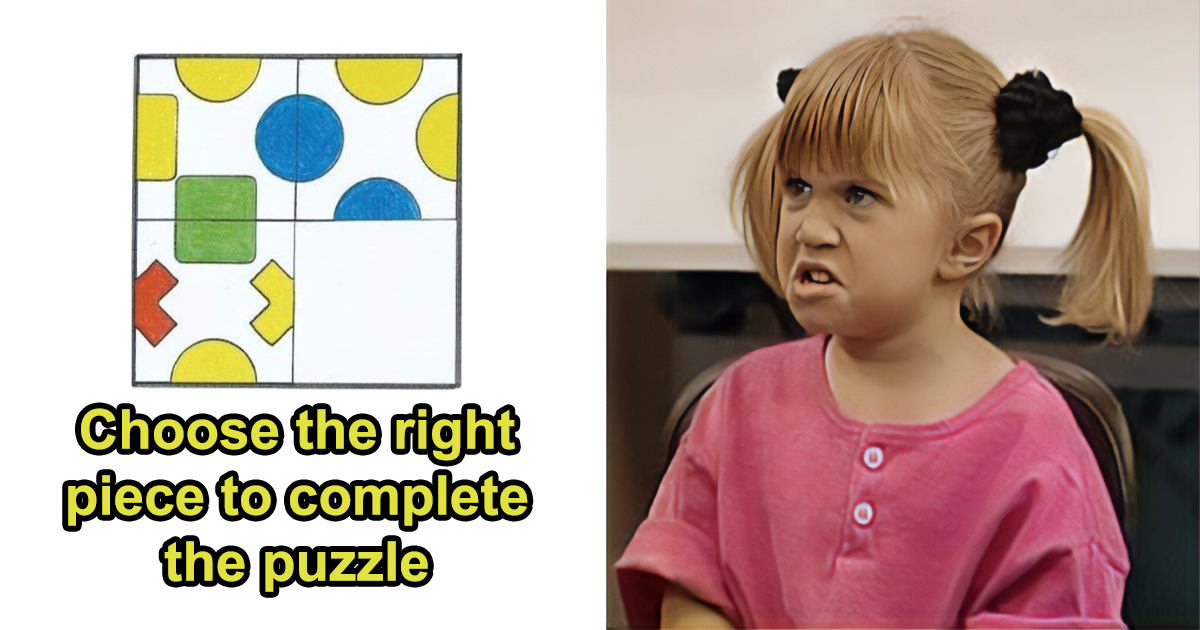
Internet headlines love to throw around the phrase “high IQ” like it is glitter at a birthday party. It is flashy, a little messy, and somehow ends up everywhere. But here is the fair version: solving logic puzzles well does not magically turn your browser into a clinical intelligence test. What it can reveal is something still pretty impressive: strong pattern recognition, solid deductive reasoning, sharp working memory, and the willingness to sit with confusion long enough to bully it into becoming clarity.
That is why logic puzzles feel so addictive. They create a tiny battlefield between chaos and order. At first, everything looks random. Then one clue clicks, another clue lines up, and suddenly the mess starts behaving itself. If you can solve at least 15 out of 20 puzzle types like the ones below, you probably have excellent problem-solving instincts. Not “I should immediately be crowned Supreme Ruler of Mensa” energy, but definitely “my brain likes hard things and is annoyingly good at them” energy.
This article breaks down 20 classic logic-puzzle styles, each with a short example, the answer, and the skill it tests. To make it more fun, try covering the answers as you go. Yes, this is the honor system. No, I cannot stop you from cheating. But your ego can.
Why Logic Puzzles Feel Like IQ Tests
The overlap is real. Many reasoning tests and IQ-style assessments draw on skills like logical inference, pattern recognition, analogical thinking, processing speed, and working memory. That is why brain teasers, number patterns, seating puzzles, and “which statement must be true?” questions feel so familiar. They force you to organize information, eliminate bad options, and make a conclusion without panicking halfway through.
Still, it is worth keeping both feet on the ground. Being great at logic puzzles does not mean you are great at everything. It means you are probably good at certain forms of structured reasoning. That is plenty cool on its own. We do not need to turn every Sudoku victory into a TED Talk about human genius.
20 Logic Puzzles That Reward Sharp Thinking
1) The Number Staircase
Puzzle: What comes next: 2, 6, 12, 20, 30, ?
Answer: 42.
Why: The differences are +4, +6, +8, +10, so the next jump is +12. This tests your ability to see a second-layer pattern rather than just staring at the numbers until they confess.
2) The Family Twist
Puzzle: A girl says, “That man is my mother’s son.” Who is the man?
Answer: Her brother, or possibly herself only if she were speaking inaccurately. In normal usage, it is her brother.
Why: Family-relation puzzles test verbal logic. They look simple, but one sloppy assumption and your brain face-plants into the carpet.
3) The Two Doors Problem
Puzzle: One door leads to freedom, one to disaster. One guard always lies, the other always tells the truth. You may ask one question to one guard. What do you ask?
Answer: “Which door would the other guard say leads to freedom?” Then choose the opposite door.
Why: This classic works because both guards point you to the wrong option. It tests nested reasoning, which is a fancy phrase for “thinking about what someone else would think about thinking.”
4) The Seating Line
Puzzle: Amy is left of Ben. Cara is right of Ben. Who is in the middle?
Answer: Ben.
Why: Easy? Sure. Unless you read too fast and invent an entirely new geography. These puzzles reward careful reading more than raw brilliance.
5) The Odd One Out
Puzzle: Which word does not belong: square, triangle, circle, carrot?
Answer: Carrot.
Why: Category puzzles measure how quickly you organize concepts. Three are geometric shapes. One is lunch.
6) The Clock Puzzle
Puzzle: If it is 3:15, where is the hour hand?
Answer: A quarter of the way between 3 and 4.
Why: People who answer “exactly on the 3” are usually not bad at logic; they are just moving too fast. Precision matters.
7) The Apples Puzzle
Puzzle: You have three boxes. One is labeled Apples, one Oranges, and one Apples & Oranges. Every label is wrong. You may take one fruit from one box. How do you relabel them correctly?
Answer: Take one fruit from the box labeled Apples & Oranges. Since that label is wrong, the box contains only one fruit type. If you pull an apple, that box is Apples. Then the box labeled Oranges cannot be Oranges and cannot be Apples, so it must be Apples & Oranges. The remaining box is Oranges.
Why: This tests elimination logic. One good clue can collapse a whole mess of uncertainty.
8) The Missing Letter Pattern
Puzzle: What letter comes next: J, F, M, A, M, J, J, A, S, O, N, ?
Answer: D.
Why: These are the first letters of the months. Pattern recognition is not always math. Sometimes it is calendar trivia wearing a fake mustache.
9) The Bag of Marbles
Puzzle: A bag contains red, blue, and green marbles. What is the minimum number you must draw, without looking, to guarantee two of the same color?
Answer: 4.
Why: Worst case, your first three are all different. The fourth must match one of them. This is classic pigeonhole reasoning, and yes, the name sounds like a puzzle invented by a very stressed bird.
10) The Truth Statement
Puzzle: One of these statements is true: “Exactly one statement here is true.” “Exactly two statements here are true.” “Exactly three statements here are true.” Which statement is true?
Answer: The first one.
Why: If the second were true, you would create a contradiction. If the third were true, same problem. Only the first can stand without logic filing a formal complaint.
11) The Code Swap
Puzzle: If CAT = 24 and DOG = 26, what is BEE?
Answer: 12.
Why: Using letter positions: C=3, A=1, T=20, total 24. D=4, O=15, G=7, total 26. So BEE is 2+5+5=12. This tests symbolic translation.
12) The Direction Trap
Puzzle: You walk north, turn right, walk, turn right again, and walk again. You are now facing south. How many right turns did you make?
Answer: Two.
Why: A surprising number of people overcomplicate direction puzzles. Your brain loves drama; the map usually does not.
13) The River Crossing Mini
Puzzle: A farmer has one fox, one chicken, and one bag of grain. He can take only one across at a time. He cannot leave the fox with the chicken or the chicken with the grain. What goes first?
Answer: The chicken.
Why: This famous setup rewards sequencing. Solving it is basically project management, except your coworkers are livestock and bad decisions get eaten.
14) The Word Ladder Hint
Puzzle: Change COLD to WARM by altering one letter at a time, creating a real word each step. Can it be done in four moves?
Answer: One path is COLD → CORD → CARD → WARD → WARM.
Why: Word ladders test flexibility. You are not just solving; you are navigating a possibility maze.
15) The Age Puzzle
Puzzle: Mia is twice Noah’s age. In six years, Mia will be 18. How old is Noah now?
Answer: 6.
Why: If Mia will be 18 in six years, she is 12 now. If she is twice Noah’s age, Noah is 6. Simple algebra, but dressed like a casual conversation.
16) The Shape Count
Puzzle: A square is divided by one vertical line and one horizontal line through the center. How many smaller squares are created?
Answer: 4.
Why: Visual reasoning matters in logic puzzles. Also, this is the point where some readers will insist the big square counts too, which is exactly why puzzle writers sleep peacefully.
17) The Necessary Conclusion
Puzzle: All glibs are tronts. Some tronts are flarns. Must some glibs be flarns?
Answer: No.
Why: “Some tronts are flarns” does not tell us that any glibs are among those tronts. Nonsense-word syllogisms are great because they remove real-world bias and leave your logic standing alone in the spotlight.
18) The Sequence of Shapes
Puzzle: Triangle, square, pentagon, hexagon, ?
Answer: Heptagon.
Why: Each shape adds one side. Many logic puzzles are just orderly growth patterns pretending to be mysterious.
19) The Switch Puzzle
Puzzle: Three switches downstairs control three bulbs upstairs. You may go upstairs only once. How do you identify which switch controls which bulb?
Answer: Turn on switch 1 for a few minutes, then turn it off. Turn on switch 2 and go upstairs. The lit bulb belongs to switch 2, the warm but unlit bulb belongs to switch 1, and the cold unlit bulb belongs to switch 3.
Why: Great logic problems reward using more than one variable. In this case, not just light, but heat.
20) The Final Elimination Puzzle
Puzzle: Three friends order dessert. Ava does not get cake. Ben does not get pie. Cara gets neither pie nor pudding. The desserts are cake, pie, and pudding. Who gets what?
Answer: Cara gets cake, Ben gets pudding, Ava gets pie.
Why: Elimination puzzles are where organized minds shine. A tiny grid on scrap paper can make you feel like a detective, which is cheaper than becoming one.
So, What Does Solving 15 Out of 20 Actually Mean?
If you worked through at least 15 of those smoothly, that suggests you are probably strong in several useful cognitive areas: deductive reasoning, attention to detail, pattern recognition, mental flexibility, and problem-solving under light pressure. Those are all skills that show up in school, work, coding, strategy games, testing situations, and everyday life. They also show up when assembling furniture from instructions clearly written by someone who has never met a human being.
But let us keep one eyebrow raised. Puzzle success is not the same thing as a full picture of intelligence. Real-world intelligence is broader than one puzzle format, one test session, or one heroic afternoon spent arguing with a sequence of shapes. A person can be brilliant in creative thinking, practical judgment, communication, design, music, or leadership and still get annoyed by number patterns. Frankly, getting annoyed by number patterns is sometimes the most rational response available.
How to Get Better at Logic Puzzles Without Melting Down
The fastest way to improve is not to “think harder.” That is what people say right before they stare at a problem until their soul leaves their body. Instead, practice these habits:
- Slow down the first read. Many wrong answers come from misunderstanding the setup, not lacking intelligence.
- Write things down. Elimination grids, arrows, and quick notes turn brain fog into structure.
- Look for constraints. A single “cannot,” “only,” or “exactly one” clue often unlocks everything.
- Try categories. Ask whether the puzzle is about sequence, analogy, deduction, position, or translation.
- Review wrong answers. The mistake usually reveals your blind spot faster than the right answer reveals your talent.
In other words, strong puzzle solving is often less about raw horsepower and more about method. Good solvers are rarely chaotic geniuses scribbling destiny into existence. Most are just annoyingly systematic.
Related Experiences: What Solving 20 Logic Puzzles Actually Feels Like
There is a very specific emotional arc that comes with doing a big batch of logic puzzles, and anyone who has ever challenged themselves to solve 15 out of 20 knows it well. It starts with confidence. Maybe too much confidence. You look at the first few puzzles and think, “Oh, I’ve got this.” Your brain feels crisp, your coffee is working, and your ego is already writing a victory speech. Then puzzle number six or seven shows up with some sneaky wording, and suddenly you are no longer a champion of reason. You are a confused mammal staring at a sentence like it personally betrayed you.
That shift is part of the appeal. Logic puzzles are humbling in the best possible way. They remind you that intelligence is not just speed. Sometimes the smartest move is to stop, reread, and notice the one clue you bulldozed past because you were in a hurry to feel clever. That experience matters. Over time, frequent puzzle solvers start to build a kind of mental patience. They become more comfortable holding multiple possibilities in mind, more willing to test a theory before marrying it, and less likely to assume the first answer that looks shiny is the correct one.
Another common experience is the “almost there” feeling. You know the answer is nearby. You can sense the pattern lurking just offstage. That moment can be frustrating, but it is also where growth happens. You begin trying alternate strategies. You draw a diagram. You reverse the sequence. You check what stays constant and what changes. Suddenly, a puzzle that felt impossible two minutes ago opens like a cheap umbrella. That flash of understanding is deeply satisfying because it rewards effort, not luck.
There is also a social side to logic puzzles that people do not talk about enough. Friends and families love sharing them because they create low-stakes competition. One person blurts out the wrong answer with supreme confidence, another overthinks the obvious, and somebody quiet in the corner solves it instantly and becomes the temporary wizard of the room. Puzzle culture is fun because it mixes curiosity, pride, humor, and just a little chaos.
For many people, the biggest long-term experience is not becoming “better at puzzles” so much as becoming better at approaching problems. You start seeing real-life issues in more structured ways. You break them into pieces. You identify constraints. You eliminate what cannot be true. You stop treating confusion as failure and start treating it as the beginning of analysis. That is a useful shift, whether you are debugging code, planning a project, writing an essay, or figuring out why three different family members gave you three different directions to the same restaurant.
So yes, getting 15 out of 20 logic puzzles right feels good. It feels validating. It feels like your brain just did a neat backflip and landed without pulling a hamstring. But the best part is not the score itself. The best part is realizing that logic is a trainable habit. The more often you practice careful thinking, the more natural it becomes. And that is a much more valuable prize than a temporary internet badge that says “genius,” especially when that badge was probably designed by someone who also thinks putting pineapple on pizza is a personality trait.
Conclusion
The idea that only people with a high IQ can solve 15 out of 20 logic puzzles makes for a juicy headline, but the better truth is more interesting. These puzzles reward a collection of mental skills that can absolutely be practiced: pattern recognition, deduction, analogy, sequencing, and attention to detail. Some people arrive with a natural advantage. Others build it through repetition. Either way, strong performance on logic puzzles is less about mystical genius and more about learning how to think with structure.
So cover the answers, test yourself honestly, and see how many you can solve. If you get 15 or more, congratulations: your reasoning skills are in excellent shape. If you do not, congratulations anyway: now you know exactly what to practice. That is how sharp thinkers are made in the first place.