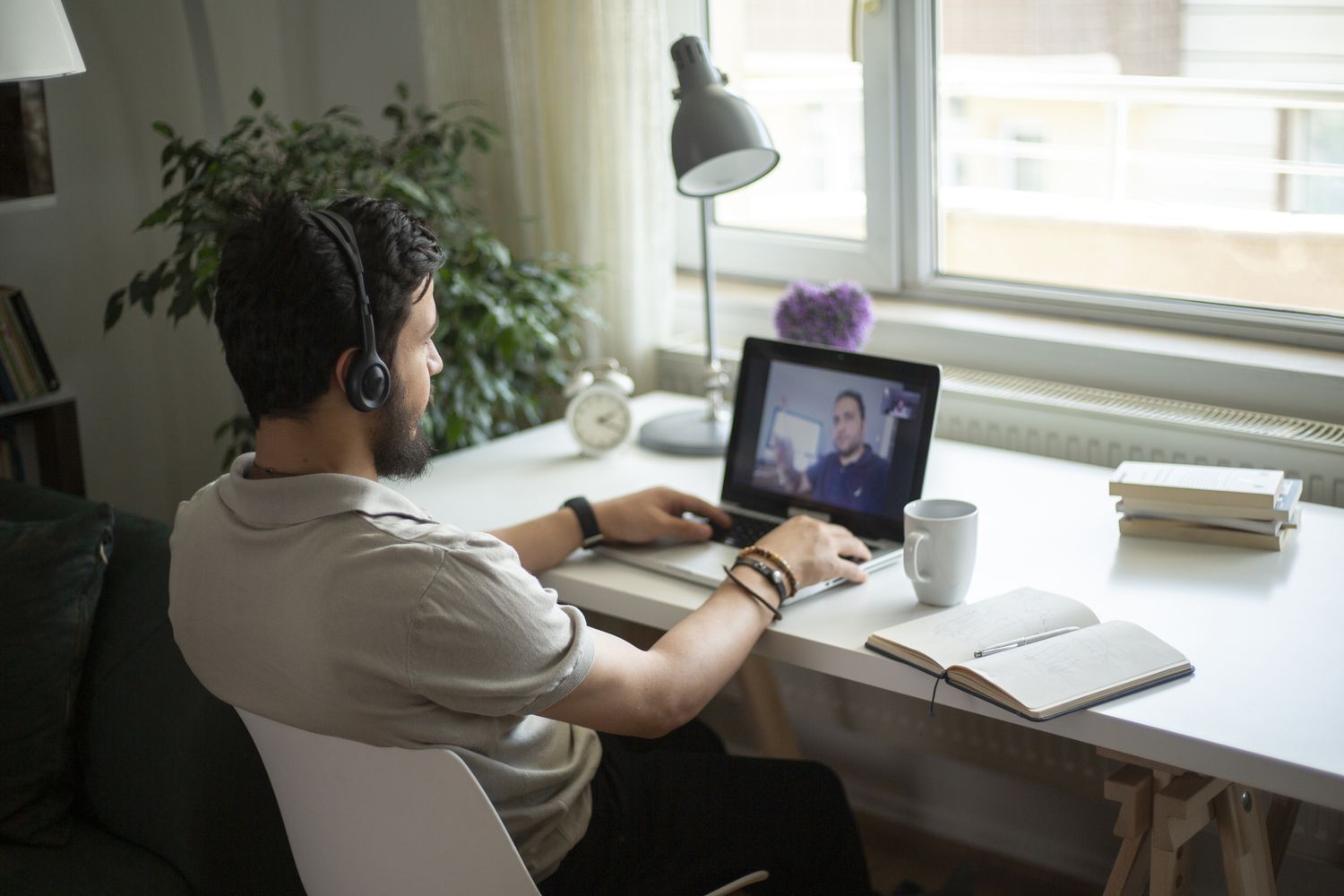
Online job interviews have gone from “weird pandemic workaround” to “totally normal part of the hiring process.” That means candidates now need more than a polished resume and a decent handshake. They need strong virtual interview skills too. In other words, your internet connection has become part of your professional brand, which is both modern and mildly rude.
If you want to stand out in an online job interview, preparation matters just as much as personality. The good news is that virtual interviews are highly coachable. You can improve your setup, tighten your answers, practice your body language, and walk into the call looking calm, capable, and not like someone who just discovered the mute button five seconds ago.
This guide breaks down how to prepare for online job interviews, how to practice effectively, what to do during the interview itself, and how to handle the increasingly common one-way video interview. Whether you are interviewing for an internship, remote role, entry-level position, or career change, these strategies can help you perform with more confidence and less chaos.
Why Online Job Interviews Require a Different Kind of Preparation
An online job interview is still a job interview, but it adds a second layer of evaluation. Employers are not only listening to your answers. They are also noticing how you handle technology, how clearly you communicate through a screen, whether your environment is professional, and how well you stay composed when something unexpected happens.
That is why online interview preparation should cover two areas at once: content and delivery. Content means your stories, examples, company research, and thoughtful questions. Delivery means your camera angle, eye contact, lighting, sound quality, posture, pacing, and overall screen presence. You are not auditioning to become a news anchor, but you do want to look like a person who can function in a digital workplace.
Many hiring managers also use online interviews to assess remote-work readiness. Can you communicate clearly? Can you stay organized? Can you present yourself professionally without someone physically guiding you into a conference room? Fair or not, those details matter.
How to Prepare for an Online Job Interview Before Interview Day
1. Research the company like you actually want the job
Yes, employers can tell when a candidate has done the bare minimum. Before your interview, review the company website, job description, recent announcements, and social presence. Learn what the company does, how the role supports its goals, and what problems the team may be trying to solve.
You should also prepare a short explanation for why this role interests you specifically. Avoid vague answers like “I’m looking for growth opportunities.” Every candidate says that. A stronger response might be: “I’m interested in this role because it combines client communication and data analysis, and that matches both my internship experience and the type of work I want to keep building.”
2. Study the job description like it is the exam review sheet
The job description is your cheat code for interview prep. Identify the most repeated skills, tools, and responsibilities, then match them with your own experience. If the role emphasizes collaboration, problem-solving, attention to detail, and deadline management, prepare examples that prove you can do those things.
A smart move is to highlight three to five qualifications from the posting and build short stories around them. This gives you a bank of examples you can adapt to many common interview questions.
3. Practice answers out loud, not just in your head
Thinking through your answers is helpful. Saying them out loud is what actually works. Online interview practice should include speaking in full sentences, hearing your own pacing, and noticing where you sound natural versus overly scripted. If your answer sounds like a robot wrote it during a coffee shortage, revise it.
Focus on common interview questions such as:
- Tell me about yourself.
- Why do you want to work here?
- What are your strengths and weaknesses?
- Describe a challenge you faced and how you handled it.
- Tell me about a time you worked on a team.
- Why are you leaving your current role?
Use the STAR method for behavioral questions: Situation, Task, Action, Result. It keeps answers structured and helps prevent the classic interview disaster of starting strong and then wandering into a story that somehow ends with your group project in tenth grade.
4. Run a full tech check
Never assume your technology will magically cooperate because it usually behaves like a drama queen the moment it senses pressure. Test your laptop, camera, microphone, speakers, headphones, charger, and internet connection. Install the interview platform in advance and sign in early if needed.
If possible, do a mock interview using the same platform the employer will use. Check whether your name displays professionally, your microphone sounds clear, and your camera frame shows your head and shoulders comfortably. Keep a backup plan ready, such as a phone hotspot, extra headphones, or the platform app on your phone in case your computer rebels.
5. Set up your interview space
Your interview environment should be quiet, tidy, and distraction-free. Choose a simple background. Good lighting matters more than people think, and natural light in front of you usually works best. Avoid sitting with a bright window behind you unless your goal is to look like a mysterious witness in a documentary.
Place your camera at eye level. This improves eye contact and creates a more confident, natural appearance. Sit at a desk or table rather than on a bed or couch. The message should be “prepared professional,” not “accidentally joined from a pillow fort.”
6. Dress for the role, not the living room
Online interviews may happen at home, but they are still professional meetings. Dress the way you would for an in-person interview with that organization. Solid colors often work well on camera, while very busy patterns can be distracting. And yes, dress fully, not just from the waist up. No one plans to stand mid-interview, but chaos enjoys surprise cameos.
How to Practice for an Online Interview Like a Serious Candidate
The best online interview practice is not random. It is targeted. Instead of rehearsing twenty generic answers, practice the moments that matter most.
Record yourself answering questions
This can feel painfully awkward at first, which is exactly why it works. Recording yourself helps you notice filler words, weak eye contact, nervous gestures, rushed pacing, and answers that sound too long. You do not need perfection. You need awareness.
Do a mock interview with another person
Ask a friend, mentor, classmate, or career coach to run a practice interview. Tell them to ask follow-up questions so you can practice staying flexible. Real interviews are rarely one-script performances. They are conversations, and good candidates adapt without sounding lost.
Practice concise storytelling
Strong candidates know how to tell useful stories without turning every answer into a mini-series. Aim for answers that are clear, specific, and relevant. Most responses should land in the one-to-two-minute range unless the interviewer invites more detail.
Practice your opening and closing
Your first two minutes matter. So do your last two. Rehearse your introduction, your “tell me about yourself” answer, and your final closing statement. A polished closing might sound like this: “Thank you for your time today. I enjoyed learning more about the role, especially the team’s focus on cross-functional collaboration. The position feels like a strong match for my background and the type of work I want to grow into.”
What to Do During the Online Job Interview
Log in early and settle in
Join five to ten minutes early. Use that time to breathe, check your framing, silence your phone, close extra tabs, and keep your resume and notes nearby. You can use notes, but do not read from them like you are narrating an audiobook nobody asked for.
Look at the camera, not constantly at yourself
One of the most important virtual interview tips is to look into the camera when speaking. That creates the impression of eye contact. It feels slightly unnatural at first, but it reads much better on screen. Glancing at the interviewer on screen is fine, but avoid spending the entire interview watching your own face like it owes you rent.
Use confident body language
Sit up straight, smile naturally, nod when appropriate, and keep your movements calm. Online interviews can flatten energy, so you may need to be a little more expressive than usual without becoming theatrical. Think warm and engaged, not game show host.
Answer clearly and pause when needed
Because of slight audio delays, online interviews can create accidental interruptions. It is okay to pause briefly before answering. If you need a moment to think, say so. A thoughtful pause sounds professional. Rambling because you panicked sounds less ideal.
Ask smart questions
At the end of the interview, ask questions that show preparation and judgment. Good options include:
- What does success look like in this role during the first six months?
- How does the team typically collaborate in a remote or hybrid setting?
- What qualities tend to make someone successful here?
- What are the next steps in the interview process?
Good questions make you sound engaged and strategic. Bad questions make it seem like you applied during lunch and forgot why.
How to Prepare for a One-Way Video Interview
One-way interviews, also called recorded or asynchronous interviews, are a different beast. Instead of speaking live with a recruiter, you record responses to prompts within a time limit. This format tests clarity, timing, and composure.
To prepare, read all instructions carefully. Know how much prep time you get, how long each answer can be, and whether re-recording is allowed. Then practice giving strong responses within the time limit. Many candidates do poorly not because their answers are weak, but because they run out of time before making the point.
In a one-way video interview, structure matters even more. Start with a direct answer, support it with a specific example, and end with a clear result or takeaway. Keep your energy up, because speaking to a blank screen can feel odd. It is basically public speaking, except your audience is a webcam and your own rising self-awareness.
Common Online Interview Mistakes to Avoid
- Waiting until the last minute to test the platform
- Using poor lighting or a distracting background
- Reading answers word-for-word from notes
- Giving overly long responses with no clear point
- Failing to research the company or role
- Forgetting to prepare questions for the interviewer
- Ignoring follow-up etiquette after the interview
The simplest way to avoid these mistakes is to treat a virtual interview with the same seriousness as an in-person one. Professionalism translates through a screen just fine. So does unpreparedness.
What to Do After the Interview
Send a thank-you email within twenty-four hours. Keep it short, specific, and professional. Mention one topic from the conversation, reaffirm your interest, and thank the interviewer for their time. This is not old-fashioned. It is still a solid move.
You should also jot down notes right after the interview while the details are fresh. What questions did they ask? Which answers felt strong? Where did you hesitate? That review process helps you improve with every interview instead of repeating the same mistakes in increasingly better lighting.
Experience-Based Lessons From Online Job Interviews
One of the most useful truths about online job interviews is that candidates often improve dramatically after just a few practice rounds. Many people begin with the assumption that virtual interviews are easier because they happen at home. Then interview day arrives, the camera turns on, and suddenly they are hyper-aware of their posture, voice, background, and blinking frequency. It is a humbling little experience. But it is also fixable.
A common candidate experience is realizing that knowing your experience is not the same as explaining it clearly. Someone may have strong qualifications, but in a virtual setting their answers come out too long, too vague, or too rushed. After recording a mock interview, they often notice patterns immediately: too many filler words, weak openings, and stories with no real ending. Once they tighten those answers, their confidence jumps because they are no longer improvising every sentence under pressure.
Another frequent lesson comes from the technical side. Candidates often underestimate how much the environment affects the impression they make. A dim room, bad audio, constant notifications, or a camera angle from below can make even a strong applicant look less prepared. On the other hand, a clean setup, steady eye contact, and clear sound can make a candidate seem more polished before they have even answered the first question. It is not about being fancy. It is about removing friction.
Many people also discover that online interviews reward calm energy. In person, personality can fill the room naturally. On video, that energy can flatten. Candidates who perform best often learn to slow down, smile more intentionally, and show active listening through simple nonverbal cues. They do not become exaggerated. They just become easier to read on screen.
One-way interviews create a different kind of experience. Candidates often describe them as awkward at first because there is no human feedback. No nods. No laughter. No reassuring “great question.” Just a countdown timer and your own face. But after practice, many find that structure is their best friend. When they use a strong format, stick to the point, and manage time well, their answers become sharper than in some live interviews.
Perhaps the biggest long-term lesson is that online interview success usually comes from repeatable habits, not luck. Candidates who research the role, prepare tailored stories, test their setup, practice out loud, and reflect afterward tend to improve quickly. They stop seeing interviews as scary personality tests and start treating them like a professional skill they can build. That shift changes everything. Confidence becomes less about hoping for a good day and more about knowing you prepared for one.
Conclusion
Online job interviews are now a standard part of hiring, and candidates who prepare strategically have a real advantage. The strongest approach combines classic interview prep with digital readiness: research the employer, practice answers out loud, build strong examples, test your technology, refine your setup, and show up with calm, focused energy.
You do not need to sound rehearsed, look perfect, or deliver Oscar-worthy monologues into your webcam. You just need to be clear, prepared, professional, and human. Practice enough that your confidence feels earned. Then log in, breathe, and let your preparation do the heavy lifting.