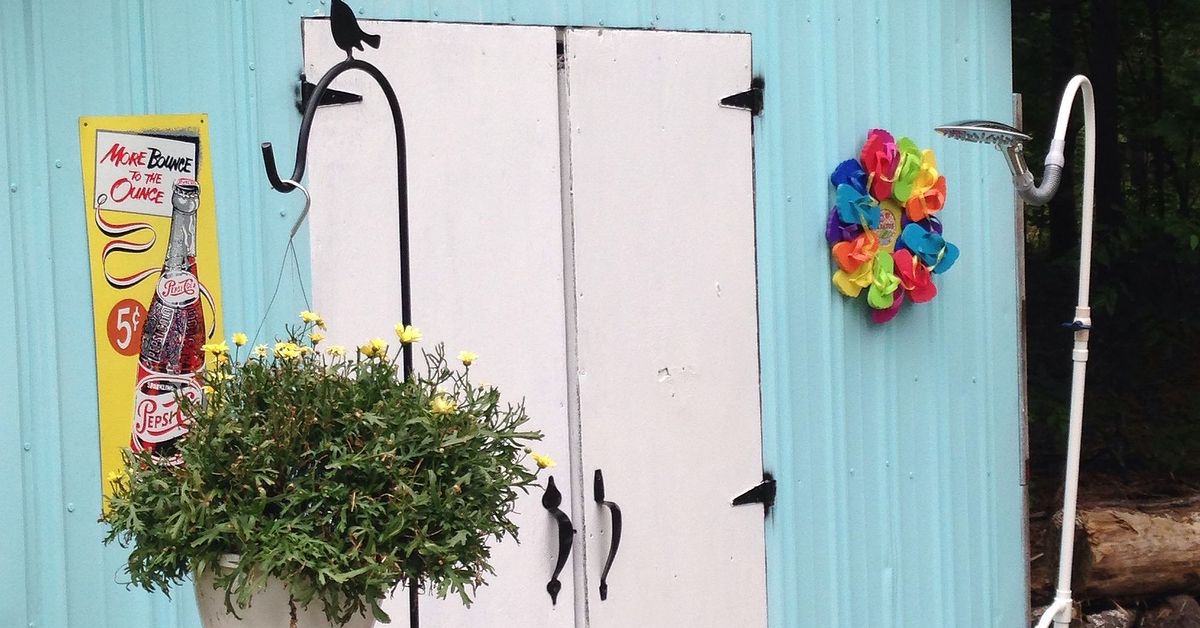
An old backyard shed usually has a predictable résumé: rusty rakes, half-empty paint cans, one lawn chair nobody remembers buying, and at least three spider families claiming squatter’s rights. But with thoughtful planning, that forgotten little structure can become the most popular destination in the yarda bright, breezy, surf-themed pool house that feels like a permanent summer vacation.
Converting a shed into a pool house is also a practical alternative to constructing an entirely new building. The existing walls, roof, foundation, and footprint may provide a valuable head start, while the compact size encourages smart design rather than expensive excess. A successful makeover can create shaded seating, changing space, towel storage, a beverage station, and a stylish place to relax between swims. Better Homes & Gardens specifically recommends shed conversion as a budget-conscious approach to adding a small pool house, while other design publications emphasize flexible spaces that combine storage, lounging, and entertaining functions.
The secret is not to cover every wall with plastic dolphins and call it coastal. A convincing surf-inspired retreat combines weathered textures, ocean colors, practical materials, and just enough personality to make guests wonder whether they should have brought a longboard.
Start With the Shed, Not the Surfboard
Before choosing paint colors or ordering a neon “Good Vibes Only” sign, inspect the structure carefully. An old shed may look charming from across the pool, but charm does not repair a sagging roof.
Check the Foundation and Framing
Begin at ground level. Look for sinking corners, cracked concrete, rotting floor joists, insect damage, and areas where rainwater collects against the building. Doors that no longer close properly may indicate movement in the foundation or warped framing rather than a stubborn personality.
Inside, examine wall studs, rafters, roof sheathing, and the underside of the floor. Dark staining, soft wood, peeling surfaces, or a persistent musty odor can point to past or current moisture problems. Water damage should be corrected before insulation, paneling, or decorative finishes hide the evidence.
Roof runoff should be directed away from the shed with working gutters, downspouts, grading, or drainage improvements. Building-science guidance consistently treats exterior water management as the first step in protecting renovated structures from deterioration.
Confirm Local Rules Before Remodeling
A storage shed and an occupied pool house may be treated differently under local zoning and building regulations. Adding electricity, plumbing, permanent heating, sleeping space, or a bathroom can trigger permits and inspections. Setback rules may also limit how close an accessory structure can sit to a property line or swimming pool.
Contact the local building department before construction begins. It is considerably less exciting than selecting striped cushions, but it is more exciting than opening a letter that contains the phrase “remove the unpermitted structure.”
Design the Pool House Around Real Life
A small building works best when every feature has a clear purpose. Decide how the pool house will be used before finalizing the floor plan. Will it function mainly as a changing room, a shaded lounge, a snack bar, or storage for pool equipment? A household with young children may prioritize hooks, benches, and easy-clean floors. Frequent entertainers may want a serving counter, refrigerator, and flexible seating.
Modern pool houses often serve several purposes, including changing, dining, working, hosting, and storing outdoor gear. Designers increasingly favor adaptable indoor-outdoor rooms rather than single-purpose buildings.
Create Three Simple Zones
Even a modest 8-by-10-foot shed can be organized into three functional areas:
- A dry zone for cushioned seating, electronics, books, and décor.
- A wet zone near the entrance for towels, swimsuits, sandals, and dripping guests.
- A service zone for drinks, snacks, sunscreen, pool supplies, and cleaning equipment.
Keeping wet traffic near the door reduces puddles throughout the room. A bench with baskets underneath can serve as seating, towel storage, and a landing spot for bags. A narrow counter can become a refreshment station during parties and a folding surface when towels emerge from the laundry in a small cotton avalanche.
Open the Building Toward the Pool
Wide doors can transform a dark shed into an inviting outdoor room. French doors, sliding doors, or a large hinged opening improve natural light, ventilation, and movement between the pool deck and interior. HGTV and other remodeling sources frequently use expanded openings, windows, and indoor-outdoor seating to make converted sheds feel larger than their actual square footage.
When full replacement doors exceed the budget, paint the existing door, add a window, and install simple shutters or exterior trim. A small awning above the entrance provides shade and gives the shed a more finished, cabana-like appearance.
Control Water Before It Controls the Makeover
A pool house lives a damp life. Wet towels arrive daily, doors remain open during humid weather, and swimmers bring enough water indoors to qualify as a minor weather system. Moisture-resistant construction is therefore more important than decorative accessories.
Improve Ventilation
Operable windows, wall vents, roof ventilation, and a properly sized exhaust fan help remove warm, humid air. In hot or humid climates, a compact air conditioner or dehumidifier may be useful when the building is closed. EPA guidance notes that inadequate ventilation and elevated humidity can contribute to condensation, mold, and poor indoor air quality.
Insulation should be installed as part of a coordinated system that considers air sealing, ventilation, climate, and drying potential. Simply stuffing insulation into every cavity can trap moisture if roof and wall assemblies are not designed correctly.
Choose Surfaces That Forgive Wet Feet
Good flooring choices include sealed concrete, porcelain tile, exterior-rated decking, and properly installed luxury vinyl products approved for the application. Add washable runners rather than thick rugs that absorb water and begin developing their own ecosystem.
For walls, consider exterior-grade plywood, beadboard, moisture-resistant panels, or properly finished wood siding. Use durable coatings designed for humid or high-traffic environments. Caulk vulnerable joints, leave appropriate ventilation gaps, and use corrosion-resistant fasteners where moisture exposure is likely.
Take Poolside Electricity Seriously
Electrical work near water is not a casual weekend experiment. Outdoor receptacles, lighting, appliances, pool equipment, bonding, and grounding must follow applicable electrical codes. Ground-fault circuit-interrupter protection is a critical safety measure around swimming pools and outdoor spaces, and the work should be completed or reviewed by a licensed electrician.
Use damp- or wet-location-rated fixtures where required, protect cords from traffic, and avoid placing a bargain extension-cord arrangement beside the pool. “It worked all last summer” is not an electrical safety standard.
Build a Surf Theme Without Creating a Souvenir Shop
The most attractive surf-themed pool houses borrow from the coast without reproducing every object ever sold near a boardwalk. Start with a restrained palette, then add character through a few authentic details.
Use a Sun-Washed Color Palette
White, warm sand, sea-glass green, faded aqua, muted navy, and coral accents create a relaxed coastal foundation. Softened, weathered shades generally feel more natural than highly saturated tropical colors. Sherwin-Williams’ coastal collections similarly emphasize breezy, sun-washed colors inspired by seaside landscapes.
Try white or pale blue walls with natural wood shelves and a darker blue door. Another option is a sandy neutral interior with turquoise cabinet fronts and coral-colored accessories. Limit the palette to three or four dominant colors so the room feels curated rather than attacked by a box of beach-themed crayons.
Make One Surfboard the Hero
A vintage or retired surfboard can become wall art, a horizontal shelf, a bar top, or an outdoor sign. One prominent board usually has more impact than six small decorative replicas.
Mount it securely into framing rather than relying on lightweight drywall anchors. If the board has sentimental value, keep it away from wet traffic and direct weather. A less valuable board can become a playful serving counter supported by sturdy brackets or cabinet bases.
Mix Natural and Weathered Materials
Rattan, rope, canvas, teak, bamboo, jute, and reclaimed-looking wood create the texture associated with beach cabins and surf culture. Choose outdoor-rated or easy-clean versions whenever possible. Genuine untreated rope and indoor wicker may look wonderful for several weeks before humidity turns them into a science project.
Pair natural textures with simple metal hardware and practical surfaces. Black hooks, galvanized bins, woven baskets, and wood pegs can provide storage without overwhelming the room.
Smart Storage for Towels, Boards, and Pool Gear
Storage determines whether the completed pool house remains photogenic or becomes a damp equipment bunker by the second weekend.
Use the Walls
Install rows of sturdy hooks at adult and child heights. Add open shelves for rolled towels, sunscreen, goggles, and reusable cups. Vertical storage is especially useful in small sheds because it keeps the floor clear and makes supplies easy to see. Shed-organization guidance commonly recommends hooks, shelves, peg systems, and multiuse benches for controlling bulky outdoor equipment.
Label baskets for clean towels, used towels, toys, and swimming accessories. A ventilated hamper prevents wet items from being abandoned in corners, where they will remain until they achieve archaeological significance.
Hide the Less Glamorous Equipment
Pool chemicals, tools, pumps, and cleaning supplies should have their own secure area, ideally separated from the lounge. Follow product labels regarding storage, ventilation, temperature, and access. Chemicals should never share a casual open shelf with snacks, towels, or children’s toys.
A tall cabinet, lockable closet, or exterior equipment enclosure keeps practical items accessible without allowing them to dominate the surf-house atmosphere.
Add the Comforts That Make People Stay
A pool house becomes memorable when it offers more than storage. A compact refrigerator, ceiling fan, comfortable seating, charging outlet, Bluetooth speaker, and shaded porch can turn a simple shed into the social center of the backyard.
Install a Simple Beverage Station
A small base cabinet with a durable counter can hold cups, napkins, and serving trays. Add a refrigerator below if safe electrical service is available. A sink is useful but substantially increases plumbing, drainage, winterization, and permitting requirements.
For a simpler setup, use a rolling beverage cart that can be brought into the house during severe weather. Stock it with water, fruit drinks, and reusable tumblers. Glass containers should generally remain away from the pool deck.
Choose Flexible Furniture
Use nesting tables, folding chairs, storage ottomans, and lightweight stools that can be moved as needed. Built-in benches maximize seating without consuming the center of the room. Outdoor cushions with removable covers handle sunscreen, spills, and damp swimsuits more gracefully than delicate indoor upholstery.
Keep pathways open between the entrance, storage, and service counter. No one should have to perform an obstacle-course maneuver while carrying four lemonades and wearing slippery sandals.
Finishing Touches That Complete the Transformation
Once the building is dry, safe, and functional, add personality in controlled doses. A framed map of a favorite coastline, vintage surf photography, striped textiles, a tide clock, or a hand-painted beach sign can establish the theme.
Outside, connect the pool house to the surrounding landscape with planters, pathway lighting, gravel, pavers, or a small deck. Similar exterior colors and materials can visually link the shed to the main house and pool area, making the conversion feel intentional rather than dropped into the yard by a confused delivery driver. Designers often recommend repeating architectural finishes and extending seating or landscaping beyond the walls to create a cohesive outdoor retreat.
Add hooks beneath the roof overhang for towels, a rinse station or outdoor shower where permitted, and a covered spot for sandals. Low-voltage pathway lights improve nighttime visibility, while string lights can create a casual atmosphere when installed with outdoor-rated equipment.
Experience Notes: What the Makeover Process Really Feels Like
The most surprising part of converting an old shed into a surf-themed pool house is how quickly the project changes from “a little paint and some pillows” into a lesson about water, storage, and human behavior. At first, the decorating ideas arrive faster than the practical ones. You picture a turquoise door, a vintage surfboard, striped cushions, and perhaps a tiny refrigerator filled with sparkling drinks. You do not picture yourself lying beneath the building with a flashlight, wondering whether the floor joist is supposed to feel like damp toast.
The inspection stage can be discouraging because every removed panel seems to reveal another task. A stained corner leads to a roof repair. The roof repair reveals blocked ventilation. The old electrical cable turns out to have been installed during an era when safety apparently meant “try not to touch it.” Yet fixing those hidden problems is what separates a temporary makeover from a room that can survive years of pool parties.
Painting brings the first dramatic reward. A dark shed can become almost unrecognizable after the walls are cleaned, primed, and coated in a pale coastal color. The room suddenly reflects light, the ceiling seems higher, and the building stops feeling like storage. Painting the door a stronger blue or green gives the exterior a focal point without requiring expensive architectural changes.
The next lesson usually involves restraint. Surf décor is dangerously entertaining to shop for. There are wooden sharks, rope mirrors, miniature lifeguard chairs, decorative paddles, ceramic fish, signs about bare feet, and enough anchors to secure a small navy. Bringing all of them home creates a theme park, not a relaxing pool house. Selecting one real surfboard, a few coastal photographs, and several textured baskets tends to look far more authentic.
Storage also becomes more important after the first gathering. Guests arrive with bags, phones, shoes, towels, goggles, and inflatable objects shaped like fruit. Without hooks and baskets, every horizontal surface disappears within minutes. A dedicated wet-towel bin and a row of hooks near the entrance may contribute more to the success of the room than the most expensive decorative feature.
During actual use, airflow is another revelation. Wide-open doors make the pool house feel larger and allow conversations to flow between swimmers and people resting inside. A ceiling or wall fan keeps humid air moving, while screened windows reduce the number of insects attending the party without an invitation.
The finished pool house gradually develops its own traditions. It becomes the place where children wrap themselves in oversized towels, adults retreat from the midday sun, and everyone searches for the sunscreen they were holding thirty seconds earlier. Morning coffee tastes unusually good on the small porch. Evening lighting makes the old shed glow beside the water, and the surfboard on the wall becomes a backdrop for family photographs.
Perhaps the best experience is watching visitors discover what the building used to be. They see a cheerful coastal retreat with organized towels, cold drinks, and comfortable seating. Then someone points to an old rake mark on a beam or a patched section of flooring and explains that the room once stored a broken lawn mower. The transformation feels larger because the original structure was so ordinary.
An old shed turned surf-themed pool house is not successful because it perfectly imitates a luxury beach resort. It succeeds because it gives an overlooked building a useful second life. The finished space offers shade, organization, character, and a reason to enjoy the backyard longer. It may not come with ocean waves, but it delivers the next best thing: a dry towel, a cold drink, and a seat close enough to supervise the cannonball competition.
Conclusion
Transforming an old shed into a surf-themed pool house combines smart reuse with relaxed coastal design. Start by repairing structural and moisture problems, checking local requirements, and hiring qualified professionals for electrical or plumbing work. Then organize the interior around wet storage, dry seating, and refreshments.
Use durable materials, efficient ventilation, vertical storage, flexible furniture, and a restrained seaside palette. A single surfboard, natural textures, and a few meaningful coastal details can create more impact than a room overflowing with novelty décor. The result is a practical backyard retreat that supports swimming, entertaining, and quiet afternoons without requiring the cost or footprint of a large new pool house.
Note: This article synthesizes remodeling, moisture-control, electrical-safety, shed-conversion, coastal-color, and pool-house design guidance from established U.S. home-improvement publications and public safety organizations.