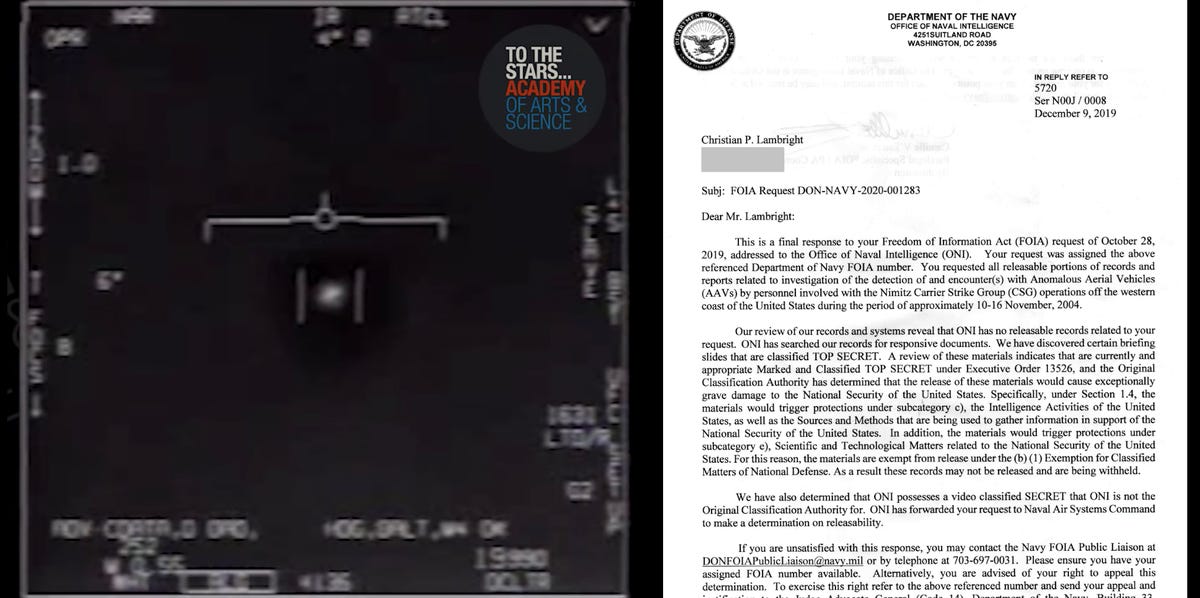
For decades, UFO news lived in a strange neighborhood between science, military secrecy, late-night radio, and that one uncle who swears he saw something over Nevada in 1987. Today, the topic has moved into a much brighter room. Government offices publish reports. NASA studies how better data could help. Congress asks questions. Pilots, radar operators, scientists, skeptics, and journalists all have a seat at the table. The flying saucer has not exactly become boring, but it has finally been handed a clipboard.
The phrase “News UFOs” now covers far more than mysterious lights in the sky. It includes official U.S. government documents, Pentagon investigations, declassified files, drone confusion, aviation safety concerns, satellite misidentification, and public debate over what should be disclosed. In modern reporting, UFO often overlaps with the term UAP, or unidentified anomalous phenomena. The updated language is less dramatic, but it is more useful. “UAP” does not assume aliens, saucers, or little green pilots with questionable parking skills. It simply means something was observed and not immediately identified.
That distinction matters. The best UFO news today is not about jumping to conclusions. It is about asking better questions: What was seen? Who saw it? Was there radar, video, infrared imagery, or only eyewitness testimony? Could it be a balloon, drone, bird, aircraft, satellite flare, sensor artifact, weather effect, or classified technology? And when something remains unresolved, does that mean it is extraordinary, or just under-documented? The answer is often less cinematic than Hollywood wants, but much more interesting than a lazy shrug.
Why UFO News Is Back in the Mainstream
UFOs never fully disappeared from American culture, but they became mainstream news again because credible institutions began treating the subject as a data problem instead of a punchline. The U.S. government has released annual UAP reports, created the All-domain Anomaly Resolution Office, and reviewed historical claims going back decades. NASA also convened an independent study team to examine how scientific methods, better sensors, and transparent data standards could improve future investigations.
The public shift is important. In the past, UFO stories were often framed as either wild belief or total nonsense. Modern UAP coverage is more careful. A pilot reporting an unidentified object is not automatically claiming alien contact. A military video showing an unexplained object is not proof of extraterrestrial technology. A case marked “unresolved” means investigators do not have enough information to identify it, not that a spacecraft missed its exit ramp near Earth.
This is why serious UFO news now lives at the intersection of national security, aviation safety, space technology, and public transparency. The sky has become crowded. Commercial drones, private rockets, satellite constellations, military exercises, weather balloons, and advanced sensors all create more opportunities for confusion. In other words, our modern sky is not empty. It is a busy freeway, and sometimes the dashcam footage is blurry.
UFO vs. UAP: What Is the Difference?
“UFO” stands for unidentified flying object. It is the classic term, and it remains popular because everyone understands it instantly. However, the U.S. government increasingly uses “UAP,” meaning unidentified anomalous phenomena. The newer term is broader because some reports may involve objects or events observed in air, space, maritime environments, or across domains.
In everyday language, people still search for “UFO news,” “latest UFO sightings,” and “UFO disclosure.” In official reporting, “UAP” is more common. For readers, the simplest way to understand the difference is this: UFO is the cultural term; UAP is the technical term. One belongs on a movie poster. The other belongs in a government report with several acronyms and at least one chart that looks like it was designed by a committee.
What Recent U.S. Reports Say About UFOs
Recent public reporting from U.S. agencies has been careful, measured, and noticeably allergic to sensational claims. The Department of Defense and intelligence community have acknowledged that some cases remain unresolved, but official reports have not confirmed extraterrestrial beings, alien technology, or secret reverse-engineering programs. That does not make the subject unimportant. It makes the evidence threshold higher.
One major annual UAP report covering May 2023 through June 2024 stated that hundreds of reports were received during the period. Many were resolved as ordinary objects or phenomena, including balloons, birds, drones, satellites, and aircraft. Other cases remained in active archive because the available data was too limited for a firm conclusion. That last category often fuels speculation, but it should also encourage humility. A mystery caused by missing data is still a mystery, not a cosmic press conference.
Officials have repeatedly emphasized a practical challenge: many reports lack timely, actionable sensor data. A witness might see something unusual, but without reliable location, altitude, speed, direction, sensor calibration, and environmental context, investigators are often left assembling a puzzle with half the pieces missing and one piece from a completely different puzzle.
Common Explanations Behind UFO Sightings
Balloons, Drones, and Aircraft
Many UFO reports eventually become identified flying objects, which is less exciting but very useful. Balloons can drift strangely. Drones can appear silent at a distance. Aircraft lights can look bizarre depending on angle, weather, and motion. Military platforms and commercial aircraft may also be unfamiliar to observers, especially when seen at night or through limited sensor imagery.
Satellites and Space Activity
Satellite constellations have changed the night sky. Lines of bright moving lights, sudden flashes, and unusual patterns can look mysterious to people who are not expecting them. SpaceX Starlink satellites, for example, have been linked to many public reports of strange lights. The sky did not suddenly become haunted; it became commercially active.
Birds, Glare, and Sensor Artifacts
Infrared and electro-optical sensors can distort shape, size, and motion. A bird may appear as a glowing orb. Compression can turn a recognizable object into a fuzzy blob. Glare can make something look larger or more unusual than it really is. This is one reason video alone is rarely enough. A strange clip may be intriguing, but without context, it can become a Rorschach test with wings.
Weather and Atmospheric Effects
Weather phenomena can also fool human observers and instruments. Reflections, temperature inversions, lightning-related events, clouds, ice crystals, and mirages can produce odd visual effects. The atmosphere is not just empty air; it is a moving optical laboratory with a mischievous streak.
Why Some UFO Cases Remain Unresolved
A case can remain unresolved for many reasons. The object may have been too far away. The video may be too short. The sensor may not have captured enough detail. The observer may not know the exact time or direction. Radar data may be unavailable. The event may have been reported weeks, months, or years after it happened. Investigators may also need classified context that cannot be easily discussed in public.
Unresolved does not mean impossible. It means unidentified based on the information available. This is a critical point for responsible UFO news coverage. A weak explanation is not proof of an extraordinary explanation. At the same time, dismissing all reports without investigation is also lazy. The better approach sits in the middle: take reports seriously, test ordinary explanations first, protect aviation safety, and publish as much information as national security allows.
The Role of Congress and Public Disclosure
Congressional interest has helped push UAP discussions into public view. Hearings have included testimony from military personnel, former officials, and witnesses who argue that the government should be more transparent. Some lawmakers have framed UAP disclosure as a public trust issue. Others focus on defense, airspace security, and whether unknown objects could represent foreign surveillance or drone activity.
This political attention has created a new kind of UFO news cycle. Instead of a single blurry photo dominating the conversation, readers now see debates about reporting systems, whistleblower protections, classified programs, agency coordination, and declassification procedures. It is less “take me to your leader” and more “please submit your interagency documentation by Friday.” Bureaucracy: humanity’s most reliable defense against cinematic pacing.
NASA’s Scientific Approach to UAP
NASA’s involvement does not mean the agency is hunting alien spacecraft. Its public position has centered on science, data, and methodology. The independent study team recommended better data collection, improved reporting standards, and a reduction in stigma so qualified observers can report unusual events without fear of professional embarrassment.
That stigma matters. Pilots and military personnel may hesitate to report what they see if they expect ridicule. Better reporting can separate ordinary cases from genuinely puzzling ones. The goal is not to make every strange light dramatic. The goal is to build a reliable system where reports can be evaluated with evidence instead of vibes. Vibes are excellent for playlists, less excellent for aerospace analysis.
How Journalists Should Cover UFO News
Good UFO journalism requires discipline. A headline should not turn “unidentified” into “alien.” A report should distinguish between verified evidence, witness testimony, official conclusions, and speculation. Readers deserve clarity about what is known, what is uncertain, and what is unsupported.
Responsible coverage should ask: Is the footage original? Who captured it? Has the location been verified? Are there multiple sensors? Are there aviation records, satellite data, or weather reports for the time? Has the government released a conclusion? Are experts divided? Is a claim based on documentation or on anonymous secondhand accounts?
This careful approach does not make UFO news dull. It makes it stronger. The subject is already fascinating. It does not need artificial seasoning. When a case is genuinely unexplained, that is interesting enough. When a case turns out to be a balloon, that is still useful because it improves future identification. Science advances by eliminating bad answers, even when those answers were wearing a very stylish aluminum hat.
Why People Are So Fascinated by UFOs
UFOs sit at the perfect crossroads of mystery, fear, hope, and imagination. They make people wonder whether humanity is alone, whether governments are fully honest, and whether our technology is more limited than we like to admit. A single strange light in the sky can trigger questions about life in the universe, military secrecy, human perception, and the reliability of modern media.
The fascination is not silly. Humans are curious by nature. We look up because the sky has always been a canvas for big questions. Ancient people saw omens. Sailors followed stars. Astronomers mapped planets. Modern observers record shaky phone videos and upload them before checking whether Venus is visible. Different tools, same species.
But curiosity works best when paired with patience. UFO news can inspire wonder without abandoning skepticism. It is possible to be open-minded without leaving the door so wide that every rumor walks in, grabs snacks, and starts a podcast.
Experiences Related to News UFOs: What It Feels Like to Follow the Mystery
Following UFO news is a surprisingly human experience. It is not only about documents, acronyms, and official statements. It is about the feeling of encountering something that does not immediately fit into your mental filing cabinet. Many people have had a moment like this: standing outside at night, noticing a moving light, and pausing longer than usual. Is it a plane? A satellite? A drone? A meteor? For a few seconds, the ordinary world gets a little wider.
That feeling is powerful because it combines uncertainty with possibility. Most sightings are eventually explained, but the emotional spark happens before the explanation arrives. The mind races ahead. Maybe it is new technology. Maybe it is a rare atmospheric event. Maybe it is something no one has properly documented yet. The mystery invites participation. You are no longer just looking at the sky; you are investigating it.
For readers, the modern UFO news experience often begins with a headline and a video clip. A glowing object moves across a screen. A commentator says it “defies physics.” Social media declares the case solved, unsolved, covered up, debunked, re-debunked, and re-mysterious by lunchtime. The experience can be thrilling, but also exhausting. The best habit is to slow down. Watch the clip, read the official context, look for expert analysis, and resist the urge to marry the first explanation that arrives wearing a dramatic cape.
People who follow UAP reports closely often develop a more nuanced view over time. They learn that “unidentified” is a temporary label, not a final identity. They become familiar with common causes: satellites, aircraft lights, balloons, camera artifacts, lens flares, and drones. They also learn that some cases deserve continued attention because they involve trained observers, multiple sensors, unusual flight characteristics, or safety concerns. Mature curiosity can hold both ideas at once: most cases are probably ordinary, and some cases are worth serious study.
There is also a social experience around UFO news. Families debate it at dinner. Friends send each other clips with messages like, “Okay, explain this.” Skeptics roll their eyes, believers raise eyebrows, and everyone becomes an amateur aerospace analyst for five minutes. This shared curiosity is part of the topic’s charm. UFOs create conversations across generations because they touch something universal: the suspicion that reality may be bigger, stranger, and less fully mapped than our daily routines suggest.
The healthiest experience is not blind belief or automatic dismissal. It is informed wonder. Look up, but also look closely. Enjoy the mystery, but respect the evidence. Laugh at the absurd moments, because UFO culture has plenty of them, but do not mock sincere witnesses who report something unusual. A pilot, a soldier, or a regular citizen can be mistaken without being dishonest. Human perception is imperfect; that is not a scandal, it is biology with a sense of humor.
In the end, the experience of following News UFOs is really the experience of learning how to think under uncertainty. It teaches patience, media literacy, scientific caution, and humility. The sky may not hand over easy answers, but it keeps asking excellent questions.
Conclusion: The Real Story Behind News UFOs
The modern UFO conversation is more serious, more transparent, and more evidence-focused than it used to be. Recent UAP news does not prove alien visitation, but it does show that unidentified sightings deserve careful investigation, especially when they involve pilots, military sensors, restricted airspace, or possible safety risks. The strongest lesson from official reports is simple: better data leads to better answers.
For readers, the smartest approach is balanced curiosity. Stay open to new information, but do not confuse uncertainty with proof. A blurry object is not automatically a spacecraft. A government report is not automatically a cover-up. A skeptical explanation is not automatically boring. In fact, the search for truth is the most interesting part. Whether future UFO news reveals advanced drones, sensor confusion, rare atmospheric effects, foreign technology, or something truly unexpected, the subject will remain worth watching.
Note: This article is based on publicly available U.S. government materials, NASA UAP discussions, Pentagon/AARO reporting, congressional coverage, and reputable American news reporting. Source links are intentionally omitted for clean web publication.