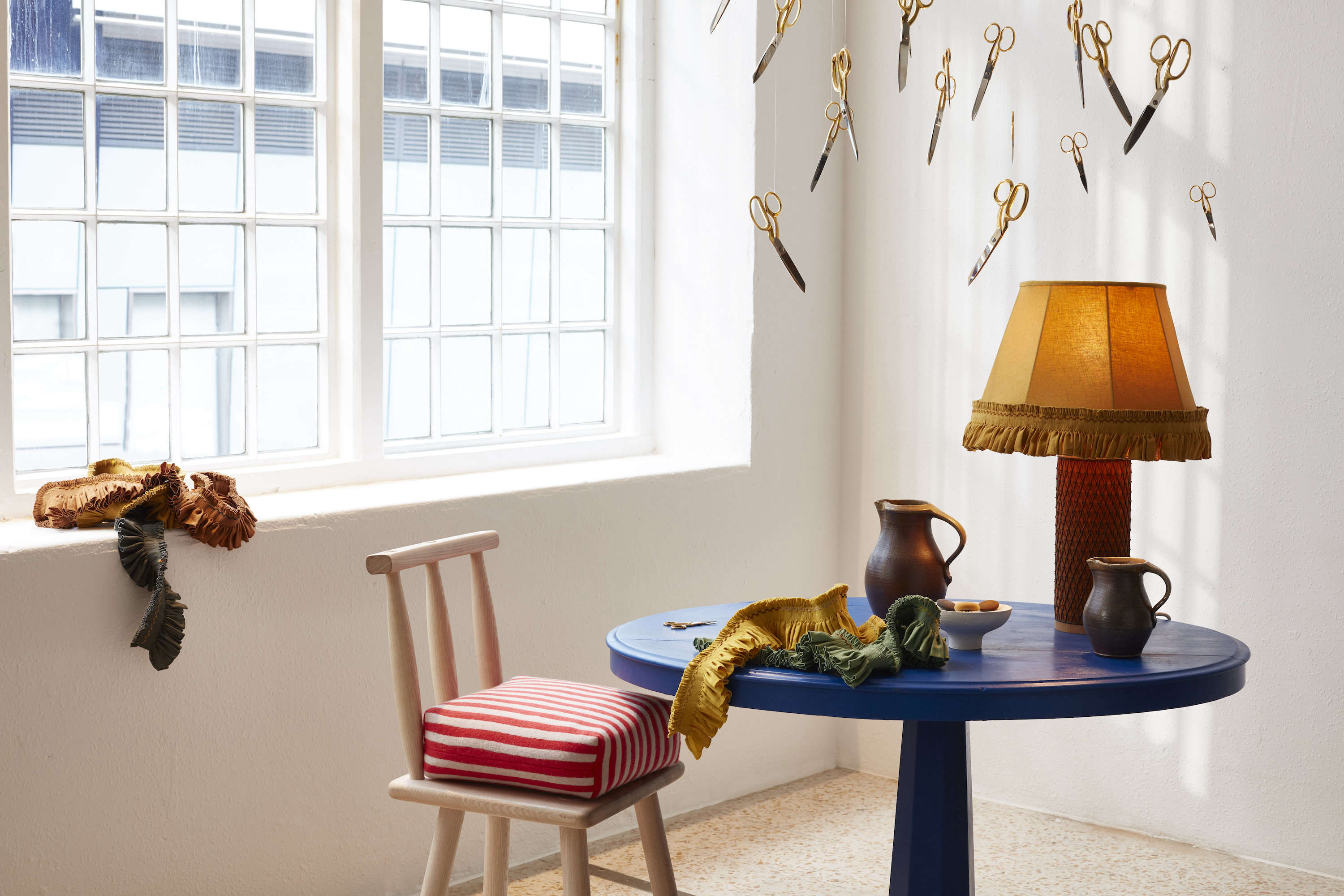
Luxury lighting does not always arrive dripping in crystal or looking as though it requires its own security detail. Sometimes it is braided from suede, modeled in clay, layered with oxides, and shaped by hands that are perfectly comfortable leaving a little evidence behind.
That is the appeal of the sculptural lighting presented by The New Craftsmen in London. These artisan lamps do more than brighten a room. They introduce texture, character, humor, and the unmistakable presence of human skill.
A notable spring lighting collection highlighted in 2018 brought together work by textile designer Aimee Betts, multidisciplinary artist Camilla Bliss, and ceramicist Adam Ross. Their lamps look dramatically different, yet they share a common philosophy: illumination should be a material experience. Light grazes braided leather, pools across ceramic faces, and settles into the ridges of coiled stoneware. The result feels luxurious without becoming stiff, predictable, or afraid of everyday life.
Why The New Craftsmen’s Lighting Still Feels Fresh
The New Craftsmen was established as a platform for contemporary objects rooted in the skills, regional traditions, and materials of makers across the British Isles. Its collections celebrate pieces that reveal how they were woven, thrown, carved, glazed, bound, or hammered rather than pretending they emerged untouched from a mysterious design cloud.
That philosophy is especially effective in lighting. A lamp changes twice: once when viewed as an object during the day and again when switched on at night. Texture becomes shadow, glaze becomes reflection, and an ordinary corner suddenly gains atmosphere.
Artisan lighting also survives changing trends because it does not need to match everything around it. A sculptural lamp can introduce useful tensionrough against smooth, ancient-looking clay beside contemporary furniture, or a serious sideboard supporting a ceramic guardian with the expression of a tiny mythological bouncer.
Three Makers, Three Distinct Approaches to Light
Aimee Betts and the Ricasso Barrel Table Lamp
Aimee Betts works at the intersection of textile art, furniture, and functional design. Her practice draws on traditional braiding, knotting, embroidery, and leatherwork, transforming these techniques into contemporary surfaces and structures.
The Ricasso Barrel Table Lamp is a compelling example. Its cylindrical base features an intricately hand-braided surface composed from cow suede, kangaroo suede, and waxed cotton cord. The dense textile work contrasts with the timber beneath it, creating a base that appears tailored, architectural, and highly tactile.
The luxury is found in repetition and precision rather than sparkle. Every strand must hold its place. When the lamp is illuminated, highlights catch the raised cords while the darker spaces between them deepen the pattern. The object reveals itself slowly, rewarding people who enjoy inspecting craftsmanship instead of simply recognizing a logo.
The Ricasso lamp works best when given visual breathing room. Place it on a broad bedside table, uncluttered console, or low cabinet where the braided surface can be viewed from several angles. A restrained linen or parchment-colored shade lets the base remain the main attraction. Pairing it with an aggressively patterned shade may be possible, but so is wearing six statement necklaces at once.
Camilla Bliss and the Figurative Guardian Lamps
Camilla Bliss treats lighting as sculpture with personality. Her Figurative Stem and Guardian lamps use elongated ceramic forms, raised details, faces, and rich glazes to create pieces that feel playful, ceremonial, and faintly watchful.
The tall Figurative Stem Lamp has an almost totemic presence. Its narrow proportions suit consoles, mantels, and occasional tables where a conventional rounded lamp might feel too predictable. Different finishes significantly change its character. White emphasizes form and shadow, black adds visual gravity, petrol blue introduces saturated color, and metallic glaze delivers a concentrated flash of glamour.
The broader Guardian Lamp feels more architectural. Faces and tactile protrusions emerge from its ceramic body, becoming more noticeable as light moves across the surface. In a neutral room, it functions as practical sculpture. In a colorful interior, it joins the conversation without disappearing into the background.
These lamps demonstrate that statement lighting does not have to rely on exaggerated size. A memorable silhouette, an expressive surface, and a hint of mystery can create just as much impact.
Adam Ross and the Ganymede Table Lamp
Adam Ross’s Ganymede Table Lamp takes a geological approach. Inspired by Ganymede, Jupiter’s largest moon, the ceramic form is built using a coiling process and enriched through layers of slips and oxides. These techniques produce a surface that feels mineral, weathered, and atmospheric rather than mechanically uniform.
The rounded stoneware body looks both ancient and extraterrestrial. It might be a vessel recovered from a coastal settlement or a moon sample enlarged for domestic use. That ambiguity gives the design staying power. It does not depend on a fashionable color or a recognizable historical style. Its appeal comes from mass, texture, and the quiet drama of an object that appears to have developed its own climate.
Ganymede is particularly effective in rooms containing oak, linen, leather, wool, limewashed walls, or natural stone. A warm neutral shade strengthens its earthy quality, while a dark shade makes the base appear moodier and more sculptural. Because it has substantial visual weight, it deserves a solid table rather than a delicate stand that looks as though it is reconsidering its career choices.
What “New Luxe” Really Means
Labor You Can See
Conventional luxury often hides its construction behind flawless polish. Contemporary craft luxury makes skill visible. You can follow the braided path around the Ricasso lamp, read the modeling in a Guardian face, and observe the accumulated layers across a Ganymede surface.
The maker’s decisions remain part of the finished object. That visible process gives each lamp an identity beyond its price or brand name.
Materials Used with Intelligence
These designs do not use unusual materials merely to attract attention. Material and technique support each other. Braiding creates a disciplined textile skin. Clay permits modeling, glazing, and subtle variation. Slips and oxides build surfaces that respond beautifully to grazing light.
The material is not decoration applied at the end. It is the design itself.
Variation Instead of Factory Perfection
Handmade lighting may contain slight changes in texture, glaze, proportion, or color. Such differences record the firing, fiber, batch, tool, and pressure of the hand. They are closer to an accent in a human voice than an error in production.
Emotional Longevity
A sculptural lamp often outlasts a decorating trend because it becomes a familiar presence: the light beside a favorite chair, the glowing object seen from the hallway, or the unusual ceramic guardian guests always ask about. People tend to keep objects that continue to interest them, making emotional attachment one of the most practical forms of sustainability.
How to Style Artisan Lighting Without Overdoing It
Create Layers of Light
A statement lamp should not be forced to illuminate an entire room by itself. Effective residential lighting combines ambient, task, accent, and decorative sources. Ceiling fixtures provide general brightness, reading lamps support focused activities, sconces highlight architecture, and sculptural table lamps supply atmosphere and identity.
Think of the artisan lamp as the charismatic member of an ensemble, not a solo performer trapped onstage for three hours.
Use Warm, Consistent Bulbs
Warm-white bulbs in the 2700K to 3000K range generally flatter ceramic, leather, wood, linen, and other natural materials. Consistency matters. Combining a warm bulb in one fixture with blue-white light nearby can make a room feel divided, as though half the furniture is relaxing while the other half is being questioned at an airport.
Color rendering is equally important. A Color Rendering Index of at least 80 is a common interior benchmark, while a CRI of 90 or higher is preferable when accurate color, artwork, textiles, and complex ceramic glazes are important.
Choose a Shade That Balances the Base
A shade should complement the lamp base rather than smother it. A broad, highly textured base often benefits from a calm, tailored shade. A slender stem lamp needs sufficient width above it to keep the total composition balanced.
Linen produces soft, warm diffusion. Parchment-style materials can feel crisp and architectural. Dark shades concentrate light upward and downward, increasing drama while reducing general illumination. The lamp may be art, but it still has a job.
Use Contrast Deliberately
A handmade ceramic lamp does not belong only in a rustic room. Rough stoneware can look exceptional on polished metal. Braided leather warms a minimalist apartment. Figurative ceramics add wit to formal spaces.
Contrast prevents craft from becoming a theme complete with matching baskets, matching mugs, and a sudden urge to churn butter.
Respect Scale
Statement table lamps frequently look better when slightly larger than expected. A generous fixture can anchor a console or visually balance a substantial sofa. Practical boundaries still apply, however. The shade should not extend so far beyond the table that passing shoulders repeatedly test its structural integrity.
For bedside use, the shade should conceal the bulb from the reader’s direct line of sight while still casting useful light across a book.
What to Consider Before Buying or Commissioning
Artisan lighting is frequently made to order, so buying it may resemble commissioning furniture more than grabbing a boxed lamp from a warehouse shelf. Confirm dimensions, finish options, lead times, shade availability, socket type, maximum bulb wattage, cord color, and care instructions.
International buyers should verify that the wiring, plug, socket, and voltage are appropriate for their country. A beautiful lamp should create atmosphere, not an emergency appointment with an electrician.
Ask for the total height with the shade attached. Product photographs can make a lamp look much smaller or larger than it actually is. A cardboard template placed on the intended table can help test the dimensions before ordering.
Maintenance varies by material. Braided surfaces generally require gentle dusting with a soft brush. Glazed ceramic can usually be cleaned with a dry or barely damp cloth, while unglazed stoneware should be treated cautiously because porous areas may stain. Avoid soaking, harsh chemicals, and energetic scrubbing.
Accessibility also matters. A cord switch hidden behind a heavy cabinet can turn a daily pleasure into a minor archaeological expedition. Dimmers, convenient switches, and compatible smart plugs may improve usability without distracting from the handcrafted object.
The Experience of Living with Sculptural Craft Lighting
The first change is often behavioral rather than visual. Once a room has a lamp that produces a warm, localized glow, people begin using the space differently. The overhead fixture remains off. A chair that once served mainly as decorative parking becomes a place to read. Evening conversations last longer because the room no longer resembles a meeting under office lights.
During the day, the lamp behaves like sculpture. A braided base rewards close inspection as the eye follows its crossings and knots. A figurative ceramic lamp appears to change expression as daylight moves. Coiled stoneware reveals ridges, flashes of oxide, and subtle tonal shifts that may have been invisible in a photograph.
This gradual discovery is part of the pleasure. Many factory-made objects communicate almost everything within seconds. Crafted objects can spend months introducing themselves.
At night, the hierarchy of the room changes. The shade becomes a glowing volume while the base moves in and out of shadow. Glossy glaze catches sharp highlights. Matte clay absorbs light and gains depth. Braided leather develops stronger contrast. Nearby materials also improve: wood appears warmer, linen curtains soften, and painted walls take on more complex tones.
There is a social experience as well. Guests tend to approach unusual lighting. They examine the braid, lean toward a ceramic face, or ask how the surface was produced. The lamp becomes a natural conversation starter without requiring a prepared speech from the owner. It quietly communicates that the room was assembled through curiosity rather than purchased as a matching set.
Living with handmade lighting also encourages tolerance for variation. One side may not perfectly mirror the other. Glaze may pool around an edge. A ridge may preserve the pressure of the maker’s hand. Over time, these irregularities stop looking like exceptions and become the object’s identity.
Practical experience remains important. A sculptural lamp needs a table with enough depth, a shade that hides the bulb, and a cord route that does not spoil the view. Finding the best arrangement may require experimentation. Move the lamp closer to the wall, then pull it forward. Try it beside artwork, then let it stand alone. Test the bulb after sunset rather than relying on how it looks at noon.
A warm 2700K bulb might make a ceramic glaze glow, while a cooler option can make the same surface appear clinical. A dimmer may reveal qualities that full brightness hides. The goal is not simply to produce more light, but to find the level at which the material feels most alive.
The most satisfying moment arrives when the lamp stops feeling like a formal “statement piece” and becomes part of daily life. It is switched on while dinner is prepared, left glowing during a rainy afternoon, or used as the last light before bed. The object remains special, but the experience becomes ordinary in the best possible way.
That is where craft earns its placenot behind glass, but through repeated use.
Conclusion: Lighting with a Human Signature
New luxe lighting from The New Craftsmen demonstrates that opulence can be tactile, witty, and deeply personal. Aimee Betts turns braiding into an architectural surface. Camilla Bliss gives ceramic lamps the presence of contemporary guardians. Adam Ross uses coiling, slips, and oxides to create objects that feel both earthly and cosmic.
Together, their work offers a valuable lesson for any interior: choose lighting for more than brightness. Consider how the piece was made, how its surface responds to illumination, how its scale changes a room, and whether it will remain interesting after the current trend cycle moves on.
The right handcrafted lamp does not merely decorate a table. It creates an atmosphere, records a process, and makes switching on the light feel like a small event.
Note: This article uses “The New Craftsmen,” the name associated with the original London lighting presentation. Product availability, finishes, prices, wiring options, and production times may change, so buyers should confirm current specifications with the maker or retailer.