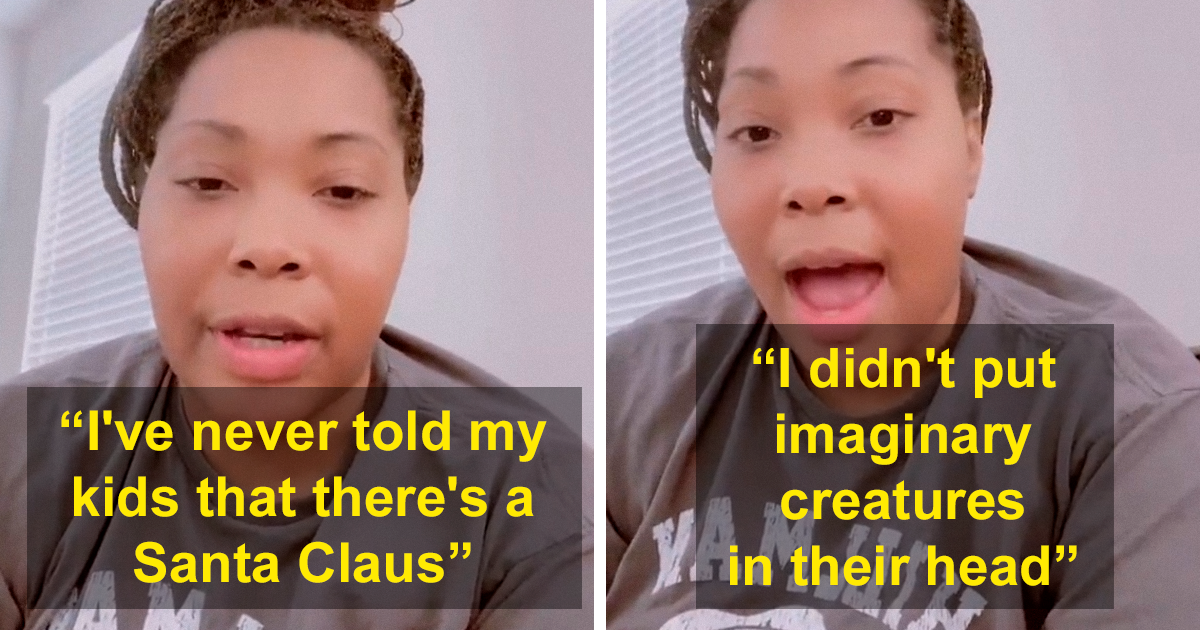
A mom says she is not going to lie to her kids about Santa Claus or the Easter Bunny, and suddenly the internet is acting as if she personally unplugged the North Pole, canceled spring, and kicked over every basket of jelly beans in America.
The debate sounds silly at first. Santa wears velvet. The Easter Bunny has no documented employment history. Nobody has ever successfully explained how a rabbit carries chocolate eggs without a tiny logistics team. Yet the argument touches something surprisingly emotional: how parents balance honesty, imagination, family tradition, religion, consumerism, and the very serious business of keeping childhood magical without turning the living room into a courtroom.
Some parents believe telling children that Santa and the Easter Bunny are real is a harmless, joyful tradition. Others feel uncomfortable presenting fantasy as fact, especially when kids are taught that lying is wrong. The mom at the center of the criticism represents a growing group of parents who are not anti-fun, anti-Christmas, or anti-candy. They simply want to frame these characters as stories, games, or cultural traditions rather than literal beings who sneak into homes and judge children’s behavior.
So, is refusing the Santa myth honest parenting or holiday buzzkill behavior? The real answer is more nuanced than a social media comment section would like to admit.
Why This Parenting Debate Hits Such a Nerve
Santa Claus and the Easter Bunny are not just fictional characters. In many families, they are emotional shortcuts to childhood itself. Santa means cookies on a plate, stockings by the fireplace, suspiciously familiar handwriting on gift tags, and parents whispering at midnight while stepping on wrapping paper like burglars with a Target receipt.
The Easter Bunny brings its own brand of chaos: baskets hidden behind curtains, plastic eggs under couch cushions, and one forgotten chocolate rabbit discovered in July looking like it survived a desert expedition.
Because these traditions are tied to family memories, criticism can feel personal. When a parent says, “I’m not telling my child Santa is real,” some people hear, “Your childhood was built on fraud.” That is not usually what the parent means. Still, holiday traditions are emotional property. People defend them the way they defend recipes, sports teams, and the correct way to load a dishwasher.
The Mom’s Argument: Honesty Comes First
The most common argument from parents who skip the Santa and Easter Bunny myths is simple: they do not want to knowingly tell their children something false.
For these parents, the issue is not imagination. Their kids can still watch Christmas movies, decorate trees, hunt eggs, read stories, and leave carrots out for fun. The line is crossed when adults insist that the magical figure is literally real, especially if the child asks directly.
“If They Ask, I’ll Tell the Truth”
Many honesty-first parents do not walk into preschool shouting, “Attention, tiny citizens, Santa is your parents.” Their approach is usually softer. They may say, “Santa is a fun story people pretend together,” or “Some families play Santa, and some families don’t.”
This keeps the door open for imagination without requiring a parent to double down when a child notices that Santa’s wrapping paper looks exactly like the roll in the hall closet.
Concern About Trust
Another concern is trust. Parents spend years teaching children to be honest, then turn around and stage elaborate seasonal evidence: eaten cookies, handwritten notes, reindeer footprints, hidden baskets, fake bunny tracks, and sometimes even an elf acting like a tiny surveillance intern.
Some children laugh when they discover the truth. Others feel embarrassed or betrayed. Most reactions fall somewhere in the middle. Still, for parents who value direct honesty as a family rule, the risk of a child feeling tricked is enough to avoid the myth altogether.
The Critics’ Argument: Let Kids Have Magic
Critics of the no-Santa approach often argue that childhood is already short. Bills, traffic, taxes, and the horrifying realization that laundry regenerates forever will arrive soon enough. Why rush children out of wonder?
To these parents, Santa and the Easter Bunny are not cruel lies. They are playful stories that families temporarily inhabit together. A child who believes Santa came down the chimney is not necessarily being deceived in a damaging way; they are participating in a cultural ritual full of warmth, generosity, and sparkle.
Fantasy Can Be Healthy
Child-development experts often emphasize that pretend play is valuable. Imaginative play helps children practice language, cooperation, problem-solving, emotional regulation, and perspective-taking. A child pretending to be a doctor, dragon, astronaut, or very strict restaurant manager is not wasting time. They are building mental muscles.
That does not automatically prove parents should present Santa as real. But it does show that make-believe itself is not the enemy. The key question is whether a family treats Santa as joyful pretend or as an unquestionable truth backed by adult-level cover-ups.
Traditions Create Family Glue
Holiday rituals can become part of a family’s shared language. Years later, grown children may not remember every gift, but they remember the feeling: the smell of cinnamon, the sound of wrapping paper, the thrill of finding eggs, the annual debate over who ate Santa’s cookies. Traditions become emotional bookmarks.
For many families, Santa and the Easter Bunny are less about deception and more about creating a season where ordinary rooms feel enchanted. The critics worry that removing those characters removes a kind of cultural sparkle.
What Child Psychology Suggests
The research does not support extreme panic on either side. Experts generally agree that pretend play is beneficial, but they also acknowledge that families can choose different approaches to fantasy figures without ruining their children.
Young children naturally engage in magical thinking. They may believe thoughts, wishes, or rituals can influence the world. This is normal in early childhood and often shows up in play, storytelling, and holiday excitement. Believing in Santa for a while is not usually considered traumatic. At the same time, choosing not to teach Santa as real is also a reasonable family decision.
The “Good List” Problem
One part of the Santa tradition deserves closer inspection: the idea that Santa is always watching and gives better gifts to “good” children. It may sound like a convenient behavior tool, but it can create confusion and unfairness.
For example, one child may receive an expensive game console while another receives socks, even though both behaved like normal children: adorable one minute, emotionally opposed to pants the next. If Santa rewards goodness, children may wonder why gifts differ so much between families. That can accidentally connect morality to money.
Parents who keep Santa can avoid this by making Santa gifts small, focusing on generosity rather than worthiness, and never using Santa as a seasonal police officer. “Santa is watching” may work for five minutes, but it also makes Santa sound like a festive security camera with cookie breath.
Santa, Easter Bunny, Religion, and Consumerism
For some families, the objection is religious. They want Christmas to focus on the birth of Jesus and Easter to focus on resurrection, not a gift-delivering man or an egg-hauling rabbit. Other families are not religious but dislike how commercialized holidays have become.
Santa can easily become the mascot of consumer expectation. The Easter Bunny can turn a spring holiday into a sugar parade with ears. That does not mean these traditions are bad, but it explains why some parents want to separate celebration from consumption.
A family might still exchange gifts, decorate, cook, attend services, host egg hunts, or watch classic movies while saying, “These characters are part of the story people tell, not real visitors.” That approach allows children to understand culture without requiring belief.
How Parents Can Keep the Magic Without Lying
The best solution may not be choosing between brutal honesty and full theatrical deception. Many families find a middle path.
Call It a Family Game
Parents can explain Santa and the Easter Bunny as games families play together. This keeps wonder alive while protecting honesty. A child can still leave cookies for Santa, but the family understands it as pretend, just like dressing up for Halloween.
Let the Child Lead
When a child asks, “Is Santa real?” parents can respond, “What do you think?” This does not dodge the question forever; it helps the parent understand whether the child wants facts, reassurance, or just a little more time in the magic zone.
Teach Respect for Other Families
Children who know the truth should also learn kindness. “We do not believe Santa is real, but some families pretend in a special way. We do not spoil their game.” That lesson is bigger than Santa. It teaches respect, tact, and the valuable life skill of not announcing every fact at maximum volume in a grocery store.
What If Your Child Finds Out and Feels Hurt?
If a child discovers the truth and feels upset, the worst response is to laugh it off. Adults may see it as harmless fun, but a child may feel genuinely embarrassed. A better response is calm and validating:
“I understand why you feel upset. We played Santa because we wanted to make Christmas feel magical, not because we wanted to hurt you. The love behind the gifts was always real.”
That last part matters. The character may not be real, but the effort was. The hidden presents, the filled baskets, the late-night wrapping, the egg dye on the kitchen counter, the half-eaten cookie: those were acts of care.
Experiences Families Recognize in the Santa and Easter Bunny Debate
Many families have lived some version of this debate, even if they never posted about it online. One parent might remember feeling devastated after learning Santa was not real, while another remembers laughing and immediately demanding to know who ate the cookies. These different memories shape how people raise their own children.
Consider the family that chooses honesty from the beginning. Their child still decorates the tree, watches holiday movies, and enjoys opening presents. When relatives ask whether Santa is coming, the child says, “Santa is pretend, but we play along.” At first, Grandma looks as if someone replaced her eggnog with lemon juice. Then she realizes the child is not miserable. The child is excited about pancakes, cousins, snowman pajamas, and the fact that wrapping paper makes an excellent floor monster. The holiday survives.
Another family fully embraces Santa. They use special wrapping paper, leave flour footprints near the fireplace, and write notes in dramatic curly handwriting. Their kids are enchanted. Years later, when the oldest figures it out, the parents invite that child to become part of the magic for younger siblings. Suddenly, the child is not just losing Santa; they are joining the backstage crew. That transition can turn disappointment into pride.
A third family lands in the middle. They never say, “Santa is definitely real,” but they also do not correct every mention. When the child asks how one bunny visits every house, the parent says, “That is part of the fun mystery.” When the child asks directly, “Are you the Easter Bunny?” the parent smiles and says, “I help make Easter special.” This answer is honest enough for the moment and gentle enough for the child’s heart.
Then there are blended families, where one parent grew up with Santa and the other did not. These conversations can get surprisingly intense. One parent hears “no Santa” and fears a dull childhood. The other hears “Santa is real” and worries about broken trust. The compromise might be simple: Santa is a story, gifts come from real people, and the family still enjoys stockings, cookies, lights, music, and a ridiculous number of marshmallow chicks.
The most awkward experiences often happen outside the home. A child who knows the truth may announce it at school with the confidence of a tiny investigative journalist. A child who believes may ask why Santa brought another kid fewer gifts. A parent may panic when a grandparent says, “Santa is watching,” after the family specifically retired the surveillance-Santa model. These moments are uncomfortable, but they are also teachable. Families can use them to talk about kindness, privacy, generosity, and how different homes celebrate differently.
In the end, the happiest holiday memories rarely depend on whether parents chose myth or no myth. They depend on warmth, attention, consistency, and love. Kids remember who showed up. They remember who made cocoa, who hid eggs badly, who sang too loudly, who let them tape ornaments to the wall because “the wall looked lonely.” Santa and the Easter Bunny can be part of that magic, but they are not the source of it. The source is the family creating meaning together.
Conclusion: Honest Parenting and Holiday Magic Can Coexist
The mom criticized for refusing to lie about Santa or the Easter Bunny is not necessarily stealing childhood. She is making a parenting choice based on honesty, trust, and family values. Parents who keep the myths alive are not automatically dishonest villains in festive sweaters either. They are often trying to create wonder, joy, and tradition.
The healthiest approach is less about proving one side right and more about being thoughtful. Do not use magical characters to shame children. Do not mock families who celebrate differently. Do not force a child to keep believing after they are clearly ready for the truth. And if you choose honesty from the start, remember that imagination still deserves a seat at the holiday tablepreferably next to the cookies.
Children do not need a literal Santa or a biologically confusing bunny to experience magic. They need adults who are present, playful, trustworthy, and willing to make ordinary days feel special. That is the real holiday miracle. No chimney required.