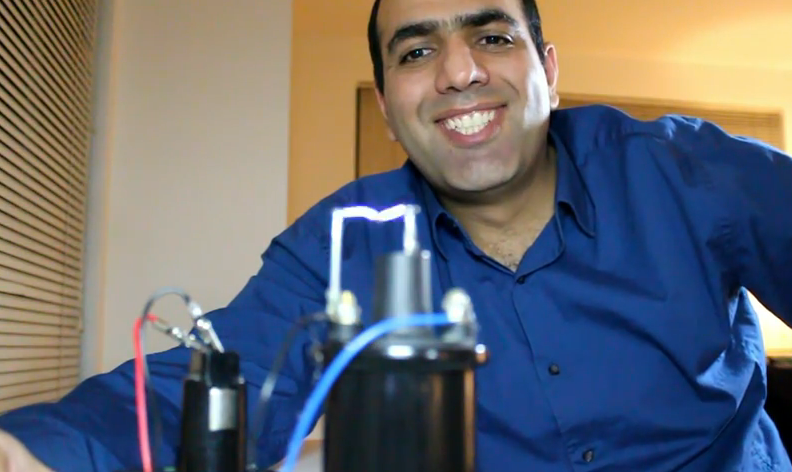
The phrase “[Mehdi’s] Shocking Stun Gun Tutorial” sounds like the kind of title that makes the internet collectively lean forward and whisper, “This is either science or a very bad afternoon.” If you have ever watched Mehdi Sadaghdar of ElectroBOOM, you already know the formula: electricity, comedy, educational chaos, and a reminder that sparks are not confetti. But here is the important twist: a shocking video about electricity should not become a how-to guide for building, modifying, or using a stun gun.
This article takes the safer and smarter route. Instead of treating the topic as a weapon tutorial, we’ll use it as a springboard to talk about electrical safety, why high-voltage demonstrations can be misleading, what viewers should understand before trying any electronics project, and why legal and ethical responsibility matters. Think of this as the article version of a rubber mat, safety goggles, and a friend saying, “Maybe don’t touch that.”
Who Is Mehdi, and Why Do People Watch His Shocking Experiments?
Mehdi Sadaghdar, widely known as ElectroBOOM, built a huge audience by turning electrical engineering into slapstick education. His videos often show mistakes, sparks, exaggerated reactions, and “don’t do this” moments that make complex concepts easier to remember. The secret sauce is that he does not simply explain electricityhe makes it theatrical. A capacitor becomes a plot twist. A wire becomes a villain. A circuit diagram becomes a comedy script with consequences.
That format is entertaining, but it also creates a problem: viewers may confuse staged or expert-controlled demonstrations with casual DIY projects. Mehdi’s background gives him technical context that most viewers do not have. Behind a funny clip may be years of knowledge about circuits, current paths, protective equipment, isolation, measurement, risk management, and emergency planning. In other words, what looks like “oops, sparks!” may actually sit on top of a lot of engineering experience.
Why a “Stun Gun Tutorial” Is Not a Normal Electronics Project
A stun gun is not comparable to building a blinking LED, repairing a loose battery holder, or learning how a switch works. It is a device designed to deliver an electrical shock to a person or animal. That instantly moves the topic out of ordinary hobby electronics and into safety, legality, ethics, and injury risk. Even when a device is marketed as “non-lethal,” that does not mean “harmless,” “toy-like,” or “safe for experimentation.”
Electrical effects on the body can depend on many factors, including contact conditions, duration, body path, health conditions, moisture, and surrounding hazards. A shock can also cause secondary injuries: a fall, a panic reaction, burns, or harm to someone with a medical device or heart condition. The internet loves simple phrases like “it’s the amps, not the volts,” but real electrical safety is not a bumper sticker. It is more like a legal document written by lightning.
The Main Lesson: Watch, Learn, Do Not Replicate
The best takeaway from shock-based content is not “I should try that.” It is “I should understand why that was dangerous.” Educational creators often use extreme examples because they are memorable. A tiny spark in a controlled demonstration may help explain insulation, resistance, grounding, or stored energy. But copying the dramatic part without understanding the invisible safety controls is like watching a cooking show and deciding to flambé dinner with a leaf blower.
Electrical Safety Basics Every Viewer Should Know
Electricity is useful because it moves energy efficiently. That is also why it deserves respect. In homes, schools, workshops, and garages, common risks include damaged cords, overloaded outlets, exposed conductors, wet environments, old wiring, and devices that have been modified without proper knowledge. Good electrical safety is less glamorous than a spark, but it is much better for keeping eyebrows in their original factory condition.
1. Do Not Treat Shock as Entertainment in Real Life
Online videos can make electrical mishaps look funny because the editor cuts to the reaction, the creator laughs, and everyone moves on. Real shock incidents are not edited for comedy. They can involve burns, muscle injury, heart rhythm problems, breathing difficulty, falls, and long-term complications. Even a “small” shock should be taken seriously if symptoms appear afterward.
2. Respect Stored Energy
One of the most overlooked dangers in electronics is stored energy. Some devices can retain charge after being unplugged. That means “off” does not always mean “safe.” This is especially relevant when people open power supplies, old electronics, camera flashes, microwave ovens, or other equipment that was never meant for casual tinkering. The safest rule for beginners is simple: do not open or modify high-energy equipment.
3. Keep Water and Electricity Far Apart
Water can make electrical hazards worse by lowering resistance and increasing the chance of current taking a dangerous path. Bathrooms, kitchens, garages, pools, and outdoor spaces require extra caution. Ground-fault circuit interrupters, commonly known as GFCIs, are designed to reduce shock risk in certain areas, but they are not a permission slip to be careless. Safety devices help; they do not make physics take a vacation.
4. Use Certified Equipment, Not Mystery Gadgets
Cheap, poorly labeled, or modified electrical devices can hide serious hazards. If a gadget has no clear certification, no reliable documentation, or looks like it was assembled during a thunderstorm, step away. This applies to chargers, adapters, extension cords, power strips, and novelty electronics. A bargain is not a bargain if it comes with smoke, sparks, or an awkward conversation with the fire department.
Legal and Ethical Issues Around Stun Guns
Laws about stun guns and other electronic self-defense devices vary by state, city, age, location, and circumstances. Some places restrict possession, carrying, sale, or use. Schools, government buildings, airports, and private venues may have strict rules even where ownership is otherwise legal. Anyone considering a self-defense device should understand that “I saw it online” is not a legal defense.
Ethics matter too. A device designed to shock another person is not a prank item, a science fair shortcut, or a dramatic prop for social media. Misuse can harm someone, create panic, lead to criminal consequences, or escalate a conflict. Responsible safety education should reduce harm, not turn it into content.
What a Safe “Tutorial” Should Teach Instead
A responsible article or video about shock devices should not teach construction or operation. Instead, it should teach viewers how to evaluate risk, understand basic electrical principles, recognize unsafe claims, and avoid dangerous imitation. That is the better version of a tutorial: not “how to shock,” but “how not to get shocked, sued, injured, or remembered in a cautionary slideshow.”
Safe Learning Topic: Voltage, Current, and Resistance
Beginners can learn electricity safely through low-voltage educational kits, simulations, classroom labs, and basic circuits using components designed for learning. Concepts like voltage, current, resistance, continuity, insulation, and grounding can be explored without touching hazardous devices. A battery-powered LED circuit can teach more than enough for a beginnerand it is far less likely to turn the desk into a tiny disaster movie.
Safe Learning Topic: Reading Warning Labels
Warning labels are not decoration. They exist because someone, somewhere, discovered the hard way that a particular hazard is real. Labels about shock, fire, heat, battery risk, and water exposure should be taken literally. If a device says not to open it, that is not a challenge from the manufacturer. It is advice from people who know what is inside.
Safe Learning Topic: Emergency Awareness
If someone experiences an electrical shock, the priority is safety and emergency help. Do not rush into danger or touch someone who may still be in contact with a live source. Call emergency services when there are serious symptoms, burns, loss of consciousness, chest pain, confusion, breathing problems, or any uncertainty. First aid training from recognized organizations is far better than improvising from memory during a stressful moment.
How to Watch ElectroBOOM-Style Content Responsibly
The healthiest way to watch shocking science content is with curiosity and skepticism. Ask: What is the real lesson here? What safety measures are off-camera? What experience does the creator have? What would happen if a beginner tried this without training? Good educational entertainment should make you more cautious, not more reckless.
Mehdi’s comedy works because the danger is obvious. The spark, the jump, the shout, and the dramatic pause all point toward one big idea: electricity deserves respect. The comedy is the wrapping paper; the warning is the gift. Admittedly, it is a gift that buzzes ominously, but still.
Common Myths About Electrical Shock
Myth 1: “High Voltage Always Means Instant Disaster”
Not every high-voltage situation is the same. Static electricity can involve high voltage but very brief energy transfer. However, that does not mean high voltage is safe. The context matters: available energy, contact duration, pathway through the body, environment, and equipment design all affect risk.
Myth 2: “Low Voltage Is Always Safe”
Low voltage is generally safer for learning, but “safer” is not the same as “risk-free.” Batteries can overheat, short circuits can burn, and damaged devices can still cause injury. Even beginner projects should use proper supervision, correct parts, and common sense.
Myth 3: “If a Creator Survived It, I Can Try It”
This is one of the internet’s most dangerous ideas. A trained creator may understand what went wrong, how to reduce risk, and when to stop. A viewer may only see the funny result. Copying the surface of a demonstration without the knowledge behind it is like copying a magician by sawing your coffee table in half and hoping the rabbit knows CPR.
Specific Examples of Safer Alternatives
If the topic interests you because you enjoy electronics, there are many safer projects that teach real principles without crossing into weapon territory. Build a simple continuity tester with a supervised kit. Use a breadboard to learn LED polarity. Explore Ohm’s law with a simulator. Learn how fuses and circuit breakers protect wiring. Study how GFCI outlets reduce shock risk. These projects may not produce dramatic sparks, but they build actual skill.
If the topic interests you because of personal safety, focus on prevention first: situational awareness, leaving unsafe places early, traveling with trusted people, knowing emergency contacts, and following local laws. Self-defense is not just about gadgets. Often, the best safety tool is a boring plan made before anything scary happens.
Experience Notes: What This Topic Teaches Viewers in Real Life
The most useful experience connected to a “Shocking Stun Gun Tutorial” is not the thrill of watching electricity misbehave. It is the moment after the laugh, when you realize the video has quietly improved your respect for risk. Many people discover electronics through creators like Mehdi because the content feels approachable. Instead of a dry lecture, you get a memorable scene: a warning, a mistake, a reaction, and then an explanation. That combination sticks.
A viewer might start by clicking for entertainment and leave with a better understanding of why wires are insulated, why wet hands are a bad idea, why homemade high-energy devices are not beginner projects, and why professional safety rules exist. That is the magic of good science communication. It sneaks learning into your brain while your brain is busy laughing.
From a writer’s perspective, this topic is also a reminder that SEO content has responsibilities. A title with words like “shocking,” “stun gun,” and “tutorial” can attract curiosity, but curiosity should not be exploited in a way that puts readers at risk. The better editorial choice is to satisfy the search intent safely: explain the concept, discuss the creator, describe the risks, clarify the legal concerns, and redirect readers toward safer learning. That keeps the article useful without becoming a hazard manual.
In practical terms, the best experience is the “pause before doing” habit. You watch a dramatic electrical demonstration and ask yourself three questions: Do I fully understand what is happening? Do I have the proper training and equipment? Could this hurt someone or break the law? If any answer is uncertain, the project stops there. That pause is not fear; it is intelligence wearing a hard hat.
Another real-world lesson is that humor can make safety more memorable. People often ignore plain warnings because they feel repetitive. But a funny demonstration can make the danger vivid. The trick is remembering that the joke is not permission. The joke is the highlighter. It draws attention to the part that matters: electricity is powerful, human bodies are not test equipment, and a viral clip is not a substitute for training.
For parents, teachers, and young electronics fans, this topic can become a useful conversation starter. Instead of saying, “Never watch that,” a better approach is, “Let’s talk about what made that dangerous and what safe project could teach the same idea.” That turns curiosity into education. A student who wants sparks may actually be asking for a more exciting way to learn physics. Give them simulations, supervised kits, and real explanations. Keep the weaponized gadgets out of the lesson plan.
Ultimately, the experience surrounding Mehdi-style shock content is about respect. Respect for science. Respect for safety rules. Respect for the difference between entertainment and instruction. And, of course, respect for the humble off switchone of humanity’s finest inventions, right up there with pizza and spell-check.
Conclusion
[Mehdi’s] Shocking Stun Gun Tutorial is best understood as a warning-shaped learning opportunity, not a step-by-step project. Shock devices are risky, legally complicated, and inappropriate for casual experimentation. The smarter lesson is electrical safety: understand hazards, avoid imitation, use safe educational tools, and treat online demonstrations as entertainment with an important caution label attached.
If a video makes electricity look funny, enjoy the comedybut remember the serious message underneath. Sparks are great on birthday candles, not in your hands. Learn the science, respect the danger, and leave shock devices out of DIY culture.