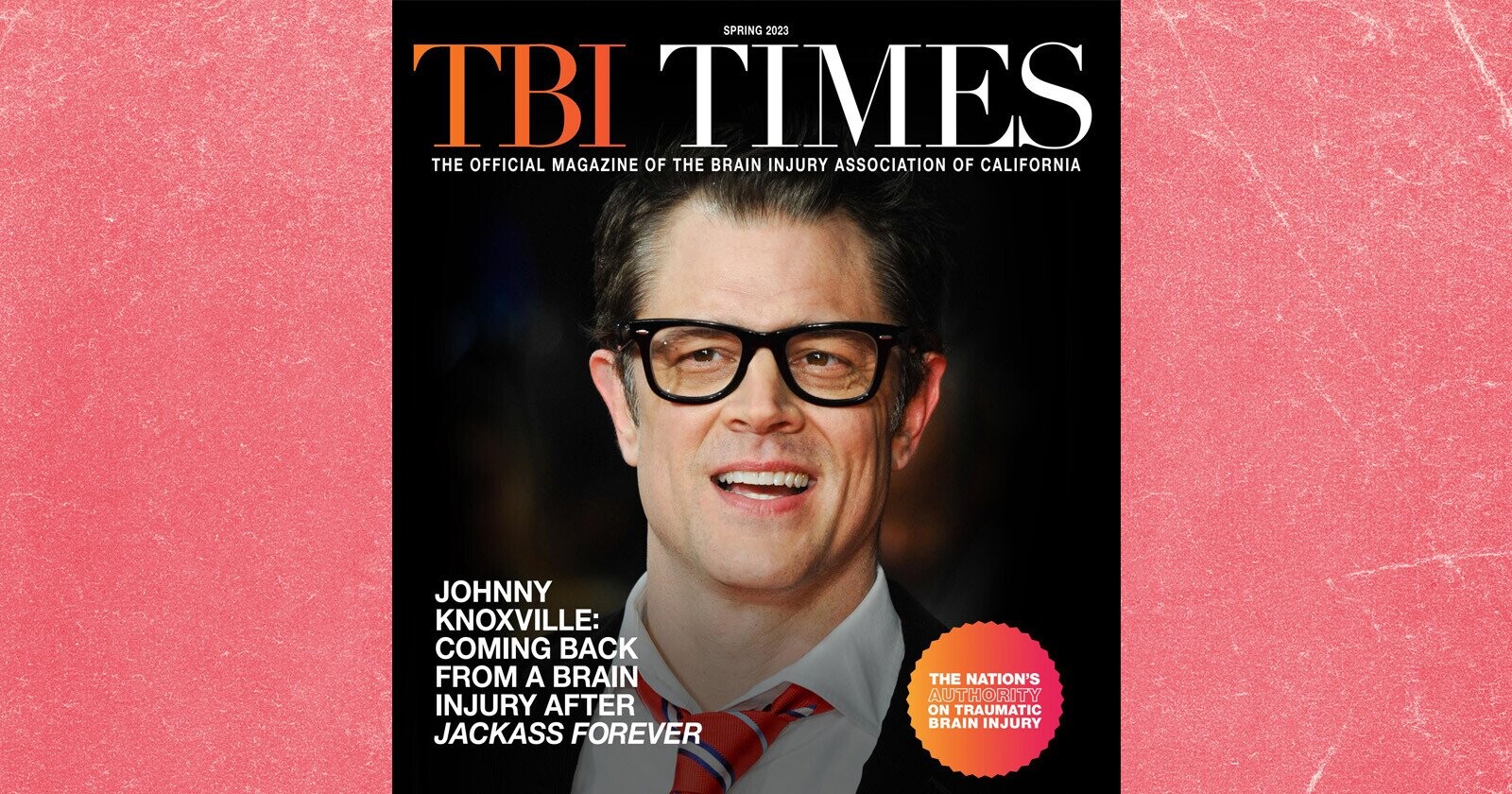
Johnny Knoxville has spent more than two decades turning the human body into a comedy instrument, and not the gentle kind, like a ukulele. More like a shopping cart launched down a hill with fireworks taped to the handle. So when a brain injury publication featured him as a kind of accidental poster boy for traumatic brain injury awareness, the internet reacted with the same energy as a doctor looking at an X-ray and saying, “Well, that explains a lot.”
The headline sounds like a joke because, honestly, it is built like one. Knoxville, co-creator and star of Jackass, became famous by doing things most people would only attempt after losing a bet, a helmet, and possibly several supportive relatives. But behind the slapstick, the bulls, the tasers, the crashes, and the legendary grin is a serious conversation about concussions, traumatic brain injury, recovery, aging, and what happens when a career in chaos finally sends the bill.
This is not just a story about a celebrity getting hurt. It is a strangely perfect pop-culture case study in how audiences laugh at pain, how performers normalize danger, and how even the world’s most committed professional bad-idea enthusiast eventually has to listen when his brain says, “Buddy, we need a meeting.”
Why Johnny Knoxville Became the Internet’s Favorite Brain Injury Example
The phrase “Johnny Knoxville is literally a brain injury magazine’s poster boy” took off because it felt almost too on-the-nose. Knoxville has suffered a long list of injuries during his career, including multiple concussions, broken bones, and the infamous bull-related trauma from Jackass Forever. When a publication connected to traumatic brain injury awareness highlighted him, the joke wrote itself: if there were a Mount Rushmore of entertainers who turned head trauma into box-office material, Knoxville would be carved in sunglasses.
But the story lands because it contains two truths at once. First, Knoxville’s career is absurdly funny. Second, traumatic brain injuries are not funny at all. That tension is exactly why the topic matters. Fans have watched him smile through injuries that would make most adults cancel the week, sell the house, and become indoor people. Yet the long-term effects of head trauma do not care about charisma, movie budgets, or how perfectly timed a pratfall is.
The Bull Stunt That Changed Everything
The most discussed injury in Knoxville’s recent history came during the filming of Jackass Forever, released in 2022. In the stunt, Knoxville faced a bull while dressed in matador-style gear. The bull charged, launched him into the air, and he landed violently. The final medical scorecard included a concussion, brain hemorrhage, broken wrist, and broken rib. That is not a stunt result; that is a grocery list written by an emergency room.
Knoxville later described the hit as one of the worst he had ever taken. He said his cognitive abilities declined afterward, and he reportedly went through treatment and a long recovery process. For someone whose brand was built around taking punishment with a grin, this injury was different. It was not just another bruise for the highlight reel. It affected his thinking, mood, and sense of safety.
That distinction is important. A broken wrist can be cast, photographed, joked about, and eventually forgotten. A brain injury can linger in ways that are harder to see. Memory problems, mood changes, concentration issues, fatigue, sleep disruption, headaches, dizziness, and emotional swings can all show up after a concussion or traumatic brain injury. The audience may see the impact. The person living with it feels the aftermath.
What Is a Traumatic Brain Injury?
A traumatic brain injury, often shortened to TBI, happens when an external force disrupts normal brain function. That force could be a fall, a car crash, a sports collision, an explosion, or, in Knoxville’s case, being introduced to a bull at extremely poor velocity. A concussion is generally considered a mild traumatic brain injury, though “mild” can be a misleading word. It describes the initial medical classification, not how harmless the experience feels.
Symptoms can appear immediately or develop later. Some people feel foggy, dizzy, nauseated, sensitive to light, unusually tired, emotional, irritable, or unable to concentrate. Others may have headaches, memory gaps, sleep problems, balance issues, or changes in mood. Most people recover, but repeated concussions can make recovery longer and more complicated.
That is where Knoxville’s story becomes more than celebrity trivia. He did not suffer one isolated bump in an otherwise gentle life of crossword puzzles and low-impact gardening. His public career involved repeated impacts, falls, collisions, and high-risk physical comedy. The brain can recover from many injuries, but it does not come with an unlimited warranty.
The Comedy of Pain Has a Cost
Jackass worked because it felt real. It was not polished Hollywood danger. It was a group of friends laughing too hard while doing things that looked both stupid and weirdly poetic. The show arrived on MTV in 2000 and quickly became a cultural phenomenon. Johnny Knoxville, Spike Jonze, Jeff Tremaine, Steve-O, Chris Pontius, Wee Man, and the rest of the crew turned backyard chaos into a franchise.
The formula was simple: set up a stunt, let someone suffer, laugh together, repeat. The magic was not just the pain. It was the camaraderie. The audience laughed because the performers laughed first. They made injury look like friendship language. Someone would get launched, slapped, shocked, bitten, sprayed, or flattened, and the surrounding crew would collapse in laughter like philosophers discovering the true meaning of dumb.
But comedy can disguise consequences. A concussion does not become healthier because it gets a laugh. A brain hemorrhage does not become safer because the camera operator got a great angle. Jackass was always honest about danger in one senseit never pretended the stunts were painless. Yet it also trained viewers to see bodily damage as part of the punchline.
Why Repeated Concussions Are Different
One concussion is serious. Multiple concussions raise the stakes. Medical experts warn that people with a history of repeated mild traumatic brain injuries may experience longer recovery times and more severe symptoms. Problems with concentration, memory, headaches, balance, mood, and sleep can become more persistent. The risk is not just the dramatic moment of impact; it is the cumulative load.
Think of the brain as the world’s most important gelatin dessert, except it controls your memories, personality, coordination, emotions, and ability to remember why you walked into the kitchen. It floats inside the skull, cushioned by fluid, but it is still vulnerable to rapid movement, rotation, and force. When the head is hit or the body is violently accelerated, the brain can shift, stretch, or suffer microscopic damage.
Knoxville’s career makes this easy to visualize because the impacts are so visible. Bulls, ramps, boxing gloves, falls, explosions, and prank equipment leave no mystery about where the injury came from. But many TBIs happen in ordinary ways: slipping in a bathroom, crashing a bike, falling during sports, hitting your head in a car accident, or being knocked down at work. Knoxville is the loud, televised version of a much broader health issue.
Knoxville’s “No More Head Hits” Era
As of the latest public interviews around the upcoming final Jackass film, Knoxville has made it clear that head impacts are now off the table. He has joked that he can still endure other ridiculous things, but he cannot risk another concussion. That line is funny in the very Knoxville way: responsible, but only from the neck up.
There is something oddly moving about that boundary. Knoxville built a career by ignoring sensible limits, then became famous enough that the limits became part of the story. Saying “I cannot get hit in the head anymore” is not weakness. It is survival. It is also a reminder that aging changes the physics of comedy. What looked wild at 30 can look medically terrifying at 50.
Fans may still want mayhem, but the performers are not action figures. They are adults with families, scars, medical records, and brains that have been through the equivalent of a demolition derby with laugh tracks. Knoxville’s willingness to step back from head trauma is not the end of comedy. It is the beginning of a smarter version of it.
The Strange Cultural Legacy of Jackass
Jackass sits in a rare place in entertainment history. It was crude, dangerous, immature, and often disgusting. It was also original, oddly sincere, and built around genuine friendship. Critics who once dismissed it as trash eventually recognized its timing, physical commitment, and influence. The franchise shaped internet stunt culture before social media turned everyone with a ring light into a possible emergency contact.
That influence has a complicated side. Many fans understood the warning: do not try this at home. Some did not. The Jackass team had producers, medics, safety planning, controlled environments, and professional experience, even when the final product looked like a backyard dare invented by raccoons. Online imitators often have none of those protections.
Knoxville becoming associated with brain injury awareness may be accidental, but it is also useful. He represents the fun, danger, denial, glamour, and cost of repeated head trauma in one instantly recognizable package. He is not a medical spokesperson in a lab coat. He is a cultural warning label wearing aviators.
What Knoxville’s Story Teaches About Brain Injury Awareness
1. You Do Not Have to Black Out to Have a Concussion
Many people assume a concussion only counts if someone loses consciousness. That is false. A person can remain awake and still have a concussion. Confusion, headache, dizziness, nausea, memory trouble, vision issues, or feeling “off” after a hit can all be warning signs.
2. Symptoms Can Change Over Time
Concussion symptoms are not always immediate. Someone might feel okay at first, then develop headaches, emotional changes, sleep trouble, or concentration problems days later. That delayed effect is one reason head injuries should be monitored carefully.
3. Rest Matters, But So Does Medical Guidance
Recovery often includes physical and cognitive rest at first, followed by a gradual return to normal activity. However, persistent symptoms deserve medical attention. Trying to “tough it out” after a brain injury is not heroic. It is how small problems sometimes become larger ones.
4. Repeated Impacts Are a Serious Warning Sign
Knoxville’s case stands out because of the number of head injuries he has discussed over the years. Repeated concussions can increase the chance of prolonged recovery and long-term issues. The brain does not award bonus points for commitment to the bit.
Why the “Poster Boy” Joke Works
The joke works because Knoxville has always presented himself as both fearless and fully aware of the absurdity. He is not a superhero pretending pain is imaginary. He is a comedian who laughs at the ridiculousness of getting hurt for entertainment. That honesty makes him likable. It also makes the consequences more sobering.
When people call him a brain injury magazine’s poster boy, they are not simply mocking him. They are recognizing the bizarre perfection of the match. Knoxville has lived through the exact risks that brain injury advocates warn about, but in a public, cinematic, highly meme-able form. He is both the cautionary tale and the guy who would probably make a face while reading the cautionary tale aloud.
Still, the best version of the joke should not erase the seriousness. Brain injury survivors often deal with invisible symptoms that friends, employers, and even family may struggle to understand. Knoxville’s fame brings attention to an issue many people face without cameras, interviews, or public sympathy.
The Audience Has Grown Up Too
Another reason this conversation feels different now is that the audience has aged with Jackass. Fans who laughed as teenagers in 2000 are now adults with jobs, children, back pain, and a much more intimate relationship with ibuprofen. Watching Knoxville get hurt at 30 felt rebellious. Watching him risk brain damage in his 50s feels different. The laugh catches in the throat.
That does not mean fans love him less. It may mean they understand the cost more clearly. Steve-O and other cast members have publicly expressed concern about watching Knoxville take head hits. The tone around the franchise has shifted from “Can you believe he did that?” to “Please do not let that man meet another bull.” Growth is real, even when it arrives wearing a cup and a helmet.
Experiences Related to Johnny Knoxville, Brain Injuries, and the Moment the Laugh Gets Complicated
Anyone who grew up with Jackass probably has a memory of watching Knoxville do something spectacularly foolish and thinking two thoughts at once: “That is hilarious” and “I hope his insurance company is not watching.” The show made pain communal. Friends gathered around televisions, repeated the stunts verbally, and laughed at the sheer commitment. It felt less like polished entertainment and more like being invited into the world’s most irresponsible group chat.
But as people get older, the experience changes. The same stunt that once looked like harmless chaos starts to look like a medical bill with background music. A fall is no longer just a fall. It is neck alignment, concussion protocol, physical therapy, and someone’s spouse asking why this needed to happen. Knoxville’s brain injury story captures that emotional shift perfectly. It reminds former teenage fans that the body keeps receipts, and the brain is the strict accountant in the back office.
There is also a personal lesson in how people handle limits. Many of us have a version of “I used to be able to do that.” Maybe it is playing pickup basketball without stretching, staying awake for two days, riding a skateboard, lifting something too heavy, or pretending stress is not slowly turning our brains into browser tabs. Knoxville’s version is extreme because his job involved bulls and explosions. But the principle is familiar: maturity often means learning which old habits are no longer funny, useful, or survivable.
His story also helps explain why brain injuries can be emotionally confusing. If a person breaks an arm, everyone sees the cast. If a person has a concussion, they may look normal while feeling foggy, anxious, exhausted, irritable, or unlike themselves. That invisibility can make recovery lonely. Knoxville talking openly about cognitive decline, mood struggles, and the need to avoid future head hits gives the public a more realistic picture. Recovery is not always a dramatic hospital montage. Sometimes it is months of small adjustments, medical appointments, fear, frustration, and learning to trust your own mind again.
For fans, the healthiest takeaway is not “never laugh at physical comedy.” Physical comedy has existed forever, from silent films to wrestling bumps to someone slipping on a banana peel in a cartoon. The takeaway is that real bodies are not cartoons. If someone hits their head, gets confused, vomits, cannot remember what happened, has worsening headaches, or seems unusually emotional or sleepy, the correct response is not “walk it off.” It is “get checked.” Comedy can wait. The brain cannot be replaced on Amazon Prime.
Knoxville remains funny because he is still Knoxville: charming, self-deprecating, reckless in spirit, and apparently built from denim, mischief, and questionable judgment. But his newer boundary around head trauma may be one of the most important things he has modeled. The man who made a career out of saying yes to terrible ideas has finally shown the power of saying no to one specific terrible idea: another concussion. That is not the death of Jackass. That is the punchline growing a conscience.
Conclusion: The Poster Boy We Did Not Expect, But Probably Needed
Johnny Knoxville becoming a brain injury magazine’s poster boy is funny because it is obvious. It is meaningful because it is true. His career has been a wild experiment in pain, friendship, showmanship, and questionable physics. Yet his most serious injuries have turned him into an unlikely ambassador for a message that deserves attention: head trauma matters.
The Jackass legacy will always include laughter, shock, and a truly alarming number of groin-related incidents. But Knoxville’s brain injury story adds another layer. It shows that even professional daredevils have limits, that concussions are not punchlines, and that growing older sometimes means protecting the one organ responsible for remembering where you parked.
So yes, Johnny Knoxville is literally a brain injury magazine’s poster boy. It is absurd. It is perfect. It is also a reminder to take brain health seriously, even when the warning arrives wearing sunglasses and smiling like he just heard someone say, “What could possibly go wrong?”
Note: This article is written for entertainment and general educational purposes. It is not medical advice. Anyone who experiences a head injury, concussion symptoms, worsening headache, confusion, vomiting, loss of consciousness, seizure, weakness, or unusual behavior should seek professional medical care immediately.