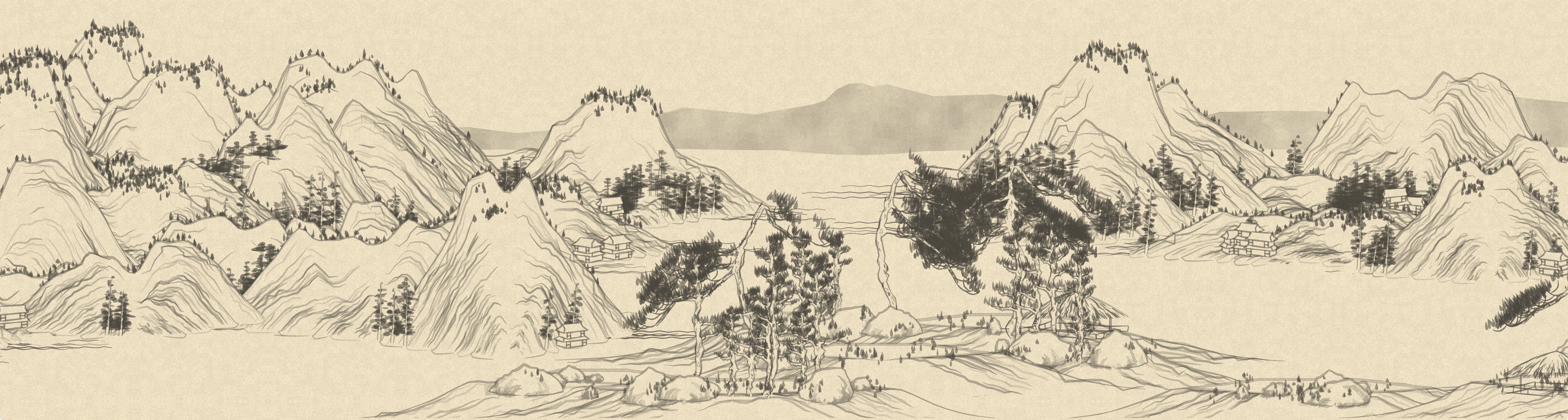
Some digital art shouts for attention. It flashes, loops, refreshes, pings, and practically begs you to look at it like a toddler holding a kazoo. An infinitely scrolling E-Ink landscape does the opposite. It sits quietly on the wall, looking almost like ink on paper, while generating a Chinese-inspired mountain-and-water scene that keeps moving and never repeats. It is calm, clever, and just a little bit magicallike a screensaver that went to art school and learned manners.
The idea became widely noticed through a maker project by Dheera Venkatraman, who built an E-Ink picture frame using a 10.3-inch e-paper display, a Raspberry Pi Zero, and a forked version of Lingdong Huang’s procedural {Shan, Shui}* generator. The result is an electronic artwork inspired by traditional Chinese landscape scrolls, but instead of showing a fixed image, the frame creates an endless, slowly scrolling world of mountains, rivers, mist, trees, boats, cliffs, and tiny architectural details.
The charm is not just that the image moves. The charm is that it does not feel like a normal screen. E-Ink is reflective, paper-like, and low-power. It does not blast light into the room. It does not look like a tablet pretending to be décor. It looks more like a mysterious print that happens to have a tiny robot monk inside, painting new scenery when nobody is watching.
What Is an Infinitely Scrolling E-Ink Landscape?
An infinitely scrolling E-Ink landscape is a generative art display that continuously produces new visual content instead of replaying a pre-made animation. In this case, the landscape is inspired by Shan Shui, a traditional East Asian style of landscape painting whose name is often translated as “mountain-water.” The visual language usually includes dramatic mountains, flowing rivers, trees, bridges, pavilions, mist, and quiet empty space.
Traditional handscroll paintings are meant to be experienced gradually. The viewer unrolls one section while rolling up the previous section, creating the feeling of traveling through a painted world. A digital version can borrow that same idea and push it into new territory. Instead of a scroll that is ten, twenty, or thirty feet long, the E-Ink landscape can keep going as long as the software and hardware keep working.
Why “Never Repeats” Matters
When a display repeats, the viewer eventually notices the loop. The waterfall returns. The same mountain appears. The same little boat floats by like it forgot its appointment. A never-repeating landscape avoids that problem by using procedural generation. The artwork is produced by rules, randomness, and code rather than by a single stored image.
Procedural generation is common in video games, simulations, and creative coding. Instead of drawing every rock by hand, the artist-programmer designs a system that can create many believable rocks. Instead of painting one mountain range, the code can construct endless variations based on shapes, noise, curves, scale, layering, and composition rules. The art is not random chaos; it is guided randomness. Think of it as jazz, but with pixels and fewer saxophones.
The Real Project Behind the Idea
The project that popularized this concept uses a 10.3-inch E-Ink display mounted inside a picture frame. A Raspberry Pi Zero acts as the small computer behind the scenes, running the generative landscape software. The visual source is related to Lingdong Huang’s {Shan, Shui}*, a browser-based procedural generator that creates vector-format Chinese landscape imagery.
One reason the project feels so satisfying is the match between content and medium. A Chinese-inspired ink landscape naturally benefits from black, white, and grayscale tones. E-Ink displays are not ideal for fast video or flashy color effects, but they are excellent for quiet, high-contrast, paper-like images. A misty mountain scroll on E-Ink feels intentional, not compromised.
The hardware is also wonderfully approachable. A Raspberry Pi Zero is small enough to hide inside a frame and capable enough to run lightweight creative software. A Waveshare-style 10.3-inch e-paper display provides high resolution, wide viewing angles, and grayscale output. Put those together with a frame, power supply, driver board, and some careful mounting, and the result becomes a digital art object that does not look like a gadget showroom escaped into your living room.
Why E-Ink Works So Well for Generative Art
E-Ink, also called electronic paper or e-paper, is different from LCD and OLED display technology. It is reflective rather than backlit, meaning it uses ambient light to remain visible. In bright rooms, it can look crisp and natural. In dim rooms, it behaves more like paper: if there is not enough light, you need a lamp. This may sound like a limitation, but for wall art, it is part of the appeal.
E-Ink is also bistable. Once an image appears on the screen, it can remain visible without continuous power being used to hold the pixels in place. Energy is mainly consumed when the image changes. That makes e-paper displays especially attractive for clocks, calendars, signage, shelf labels, dashboards, and art frames that do not need sixty frames per second of visual drama.
A Screen That Does Not Feel Like a Screen
Most digital frames look digital. Even when they display beautiful artwork, the glow gives them away. They feel like small televisions wearing wooden disguises. E-Ink avoids that problem. It has no bright backlight, no shiny glare, and no obvious “device” feeling. For an art object inspired by ink painting, that matters.
The infinitely scrolling E-Ink landscape succeeds because it embraces slowness. It does not try to turn e-paper into a gaming monitor. It lets the screen be what it is: quiet, deliberate, reflective, and patient. The slower refresh becomes part of the artwork’s personality. The landscape does not sprint across the frame. It drifts.
Procedural Landscape Art: Code as a Brush
The most interesting part of the project is not only the display. It is the way software becomes a brush. In traditional painting, the artist makes marks directly. In procedural art, the artist creates a set of rules that make marks. The final image is still shaped by human intention, but it emerges through an algorithmic process.
In a generative Shan Shui-style landscape, the code may determine mountain silhouettes, ridge lines, textures, water paths, tree placement, architectural details, and atmospheric spacing. The magic is in balancing order and surprise. Too much order, and the image feels mechanical. Too much randomness, and the image looks like a printer sneezed. The best generative systems live between those extremes.
Why Vector Art Helps
Vector-style generation is useful because it describes shapes mathematically rather than storing every pixel from the beginning. This allows the landscape to be rendered at different sizes and resolutions. It also supports clean lines, scalable details, and smooth transitions. For an E-Ink display with crisp black-and-white output, that is a practical advantage.
The landscape can be generated in sections, allowing the frame to show one portion while preparing another. As the scroll advances, new terrain appears. The viewer gets the sensation of traveling through a world that is being painted just ahead of the eye.
The Cultural Beauty of the Digital Handscroll
The idea of a scrolling landscape is not new. Chinese handscrolls have invited viewers into long, horizontal journeys for centuries. Unlike a Western painting hung on a wall and seen all at once, a handscroll is often viewed section by section. The experience is intimate and temporal. You do not simply look at the scene; you move through it.
An E-Ink version updates that experience for the age of small computers and creative coding. It does not replace historical painting, and it should not pretend to. Instead, it shows how an old viewing format can inspire new forms of digital art. The slow reveal of a handscroll becomes the endless reveal of a procedural display.
This is where the project becomes more than a technical trick. It connects hardware, software, and art history. The result is a wall-mounted object that asks a surprisingly poetic question: What happens when a traditional scroll no longer has a beginning or an end?
How the Hardware Comes Together
A typical setup for an infinitely scrolling E-Ink landscape includes four main parts: the e-paper display, a compact computer, display-driving hardware, and a physical frame. The display provides the canvas. The Raspberry Pi Zero runs the software. The driver board handles communication between the Pi and the E-Ink panel. The frame hides the electronics and makes the whole thing feel like an intentional piece of décor.
The 10.3-inch display size is large enough to feel like art but small enough to remain manageable for a DIY build. High-resolution e-paper panels can show fine linework, and grayscale support helps create depth in mountains, mist, and water. Because E-Ink does not need a glowing backlight, the finished frame can hang comfortably in a living room, hallway, studio, café, library, or office.
Challenges Makers Should Expect
The concept is elegant, but building one is not plug-and-play in the “my toaster has Wi-Fi” sense. E-paper displays can be sensitive to refresh timing, ghosting, waveform behavior, and partial update limitations. The frame needs enough space for the driver board, cable routing, and power. The software may need adjusting for resolution, orientation, refresh intervals, and display compatibility.
There is also the question of speed. E-Ink is not designed for smooth video animation. If the scroll moves too quickly, the display may look choppy or distracting. If it updates too often, power usage rises and ghosting may become more noticeable. The sweet spot is slow, calm, and meditative. In other words, the opposite of social media.
Why This Project Feels Modern Without Feeling Noisy
The modern home already has enough glowing rectangles. Phones glow. TVs glow. Laptops glow. Even refrigerators have started acting like mission control panels. An E-Ink art frame offers a different kind of digital presence. It is dynamic without being demanding. It changes without shouting. It can be technical and tasteful at the same time, which is harder than it sounds.
The infinitely scrolling E-Ink landscape also fits into a larger trend: people want technology that blends into their environment instead of dominating it. Paper-like displays, low-power smart signage, e-paper dashboards, and digital art frames all point in the same direction. The next wave of ambient technology may not be brighter, louder, and faster. It may be quieter, slower, and more intentional.
Practical Uses Beyond Wall Art
While the project is primarily artistic, the same principles can be applied elsewhere. A generative E-Ink display could show weather-inspired landscapes, daily poetry, ambient calendars, meditation prompts, generative maps, or seasonal artwork. A café could use one as a subtle mood piece. A library could display slowly changing literary quotes with landscape backgrounds. A hotel lobby could use e-paper art to create atmosphere without adding another glowing screen.
The key is matching the content to the medium. E-Ink works best when the image can change slowly and remain useful or beautiful between updates. It is not the right choice for sports highlights, fast ads, or anything that requires instant motion. But for contemplative visual experiences, it is almost perfect.
SEO and Search Interest Around E-Ink Art Frames
Search interest around E-Ink displays has expanded beyond e-readers. People now look for e-paper calendars, Raspberry Pi E-Ink projects, low-power dashboards, smart home displays, digital signage, and minimalist art frames. The phrase “Infinitely Scrolling E-Ink Landscape Never Repeats” sits at the crossroads of several growing topics: generative art, maker culture, e-paper technology, creative coding, and digital décor.
This makes the subject especially attractive for readers who enjoy unusual technology with a human touch. It is not just a gadget article. It is an art article, a hardware article, a software article, and a design article all wearing the same elegant grayscale robe.
Experiences Related to an Infinitely Scrolling E-Ink Landscape
The experience of living with an infinitely scrolling E-Ink landscape is different from using most digital devices. It does not ask you to interact with it. It does not reward tapping, swiping, liking, saving, or subscribing. It simply exists in the room and changes at its own pace. That small shift changes the relationship between person and screen.
During the day, the display benefits from natural light. Near a window, the grayscale mountains can look surprisingly close to printed ink. The ridges appear crisp, the white space feels intentional, and the lack of backlight makes the whole object feel calm. It is the kind of thing someone might notice only after entering the room for the second time. Then they stop and ask, “Wait, did that picture change?”
At night, the experience becomes more dependent on room lighting. A lamp nearby can turn the frame into a quiet focal point. Without enough light, it fades like paper in a dark corner, which is not a failure so much as a reminder that e-paper belongs to the physical world. It does not overpower the room. It participates in it.
Visitors tend to react in stages. First, they assume it is a print. Then they notice the scroll. Then they ask whether it is a video. When they learn that the landscape is generated and never repeats, the mood changes from “nice frame” to “tiny art wizard.” The object invites conversation because it is both understandable and mysterious. Everyone understands a landscape. Not everyone expects one to be created forever by code.
For makers, the experience includes a satisfying blend of craft and debugging. Mounting the display cleanly inside a frame feels like woodworking met electronics for coffee. Getting the software to render correctly feels like persuading a small computer to become a landscape painter. Adjusting refresh timing, image contrast, and scroll speed becomes part of the artistic process. The final artwork is not only what appears on the screen; it is also the result of many invisible decisions.
There is also a strangely therapeutic quality to slow generative art. A normal screen encourages urgency. This kind of display encourages noticing. A tiny pavilion appears near a river. A mountain ridge rises. A blank misty valley passes through. Nothing demands a reaction. The viewer is free to ignore it, return later, and find something new.
That is the real strength of the infinitely scrolling E-Ink landscape. It makes technology feel less like a task and more like weather. It is present, changing, and alive in a quiet way. In a home or workspace full of alerts, tabs, chargers, and blinking LEDs, that calmness is not just pleasant. It is almost rebellious.
Conclusion
Infinitely Scrolling E-Ink Landscape Never Repeats is a beautiful example of what happens when old art traditions meet modern maker tools. By combining a paper-like E-Ink display, a Raspberry Pi Zero, and procedural Shan Shui-inspired code, the project creates an artwork that feels ancient and futuristic at the same time.
Its success comes from restraint. It does not use E-Ink as a poor substitute for a video screen. It uses e-paper for what e-paper does best: quiet images, crisp contrast, low power, and a printed feeling. The never-repeating landscape turns a wall frame into a slow journey, reminding us that digital art does not have to be loud to be alive.
Note: This article is written for web publishing and synthesized from real information about E-Ink display technology, Raspberry Pi-based maker projects, procedural generative art, and Chinese handscroll landscape traditions. External source links are intentionally not included in the article body for a cleaner publishing format.