“`
Some artists begin with a blank canvas. I begin with a canvas that has already lived a little. Maybe it was a thrift-store floral painting with suspiciously aggressive roses. Maybe it was an abandoned student project. Maybe it was one of my own “almost good” pieces that sat in the corner judging me silently. Whatever its past life, I see it as raw material, not failure.
My mixed media art is built from upcycled canvases, cut-up magazines, layers of paint, scraps of paper, and the joyful chaos of “Wait, what if this tiny picture of a teacup becomes a moon?” It is part collage, part painting, part treasure hunt, and part emotional recycling program. Instead of buying a brand-new canvas every time inspiration knocks, I reuse what already exists and let the old surface talk back.
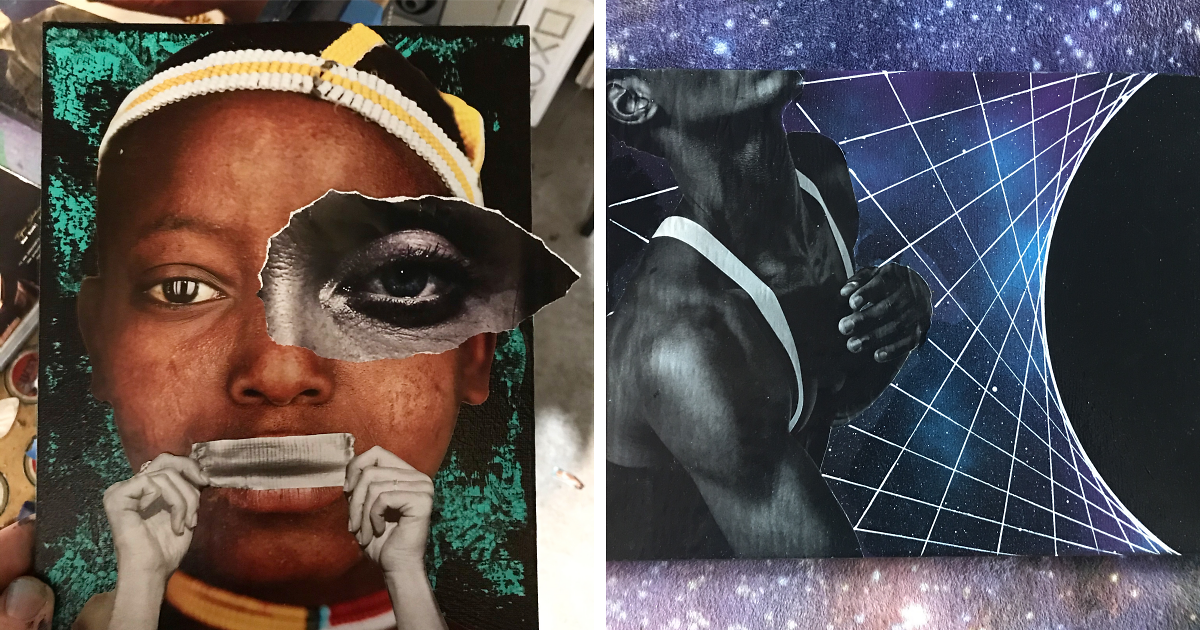
The result is a series of 20 pieces that combine magazine collage, acrylic paint, texture, color, and a little bit of studio mischief. Each artwork begins with fragments: a fashion ad, a food photo, a torn headline, an old landscape, a brushstroke that went rogue. Then the pieces are rearranged into something new. That is the magic of upcycled canvas art: nothing is wasted, and everything gets a second chance to be dramatic.
Why Upcycled Canvas Art Feels So Alive
Upcycled canvas art has a different energy from work made on a pristine surface. A new canvas politely waits for instructions. An old canvas has opinions. It may already have ridges, stains, colors, pencil marks, or textures hiding under the top layer. When I paint over it, sand it, scrape it, or glue paper onto it, the piece becomes a conversation between what was there and what I want to create now.
This is why upcycling is more than a budget-friendly art hack. It changes the creative process. Instead of asking, “What should I make from nothing?” I ask, “What can this become?” That small shift opens the door to surprise. A blue background from the previous painting might turn into an ocean. A lumpy patch of old paint might become part of a mountain. A mistake might become the best texture in the room, which is both encouraging and deeply annoying.
There is also a sustainability angle. Reusing canvases, old magazines, packaging, postcards, and paper scraps reduces the need for new materials and keeps usable items out of the trash. The art world has a long history of using found materials, from collage and assemblage to contemporary mixed media. Today, that tradition feels especially relevant because many artists are thinking not only about what they make, but also about what they consume while making it.
The Beauty of Cutting Up Magazines
Magazines are tiny museums of accidental poetry. A single page can contain a lipstick ad, a desert, a shoe, a celebrity eyebrow, and a headline that says something like “Fresh Starts,” which is basically begging to be glued onto an upcycled canvas. When I cut them apart, I am not just collecting images. I am collecting colors, textures, moods, typography, patterns, and little visual jokes.
Magazine collage works because printed images already carry meaning. A glossy flower feels different from a painted flower. A cut-out eye brings immediate tension. A fragment of a kitchen table can become architecture. A perfume bottle can become a skyscraper. When these pieces are placed next to brushy paint, they create a playful friction between the mass-produced and the handmade.
That friction is the heart of mixed media collage. Paint can soften the edges of a cut-out. Paper can sharpen a loose abstract background. A strip of text can turn a pretty composition into a story. The best pieces often happen when the materials disagree at first and then somehow become friends, like roommates who both label the almond milk.
My Process: From Old Canvas to Finished Mixed Media Artwork
1. Choosing the Canvas
I look for canvases with good bones. The image on top does not matter much, because most of it will be covered. What matters is the frame, the surface tension, and whether the canvas can survive another round of creative behavior. Thrift stores, yard sales, studio cleanouts, and “I swear I’ll finish this someday” piles are great sources.
2. Preparing the Surface
Sometimes I sand the old canvas lightly. Sometimes I paint over it with gesso. Sometimes I leave parts exposed because the existing colors are too interesting to hide. If there is a thick texture already on the surface, I may build around it rather than fight it. Upcycling is not about erasing the past completely. It is about giving the past better lighting.
3. Collecting Magazine Fragments
I cut out images by color families, themes, and shapes. I keep piles of faces, flowers, skies, hands, food, architecture, animals, and strange little objects that make no sense until they suddenly do. A picture of a spoon may sit in my collage box for months before becoming a crescent moon. This is why artists keep scraps. We are not hoarding; we are conducting research with scissors.
4. Building the Composition
Before gluing anything down, I move the pieces around like a puzzle with no correct answer. I ask simple questions: Where does the eye go first? Is the composition balanced? Does the image feel too crowded? Is there a quiet place for the viewer to rest? Then I ignore at least one of my own answers and try something weird.
5. Adding Paint
Paint is what ties everything together. I use it to create backgrounds, shadows, outlines, washes, and expressive marks. Acrylic paint is especially useful because it dries quickly, layers well, and forgives the impatient. A thin glaze can push magazine pieces into the background. A bold brushstroke can make the whole piece feel alive. A tiny painted detail can turn a random cut-out into a character.
6. Sealing the Work
Once the collage is dry, I seal the surface with a suitable medium or varnish. This protects the paper, reduces lifting edges, and gives the finished artwork a more unified surface. It is the artistic equivalent of saying, “Everyone behave. We are in public now.”
20 Picture Ideas Inside the Series
Because this collection is built around 20 pictures, each piece explores a slightly different mood. Some are dreamy. Some are loud. Some look like they drank espresso and reorganized the universe.
1. The Garden That Escaped the Frame
This piece uses floral magazine cut-outs, green paint, and an old landscape canvas. The original background peeks through in small patches, making the garden feel like it is growing out of memory.
2. The Woman With a Paper Moon
A portrait fragment becomes the center of a surreal night scene. The moon is cut from a silver-toned advertisement, proving that even luxury marketing can have a second career in astronomy.
3. Kitchen Table Galaxy
Food photography, painted stars, and abstract shapes transform everyday domestic images into a cosmic still life. It is what happens when dinner forgets it is dinner.
4. City of Borrowed Windows
Architectural scraps from magazines become a stacked cityscape. Paint adds shadows, weather, and movement, while the upcycled canvas texture gives the buildings a worn urban feel.
5. The Bird Made of Headlines
Cut-up words form the feathers of a bird, creating a piece about noise, news, and the strange beauty of communication. It is less “breaking news” and more “flying news.”
6. Blue Room With Floating Chair
A chair clipped from an interior design spread floats in a painted blue space. The piece plays with scale and mood, turning furniture into a quiet little existential crisis.
7. The Forest Wears Lipstick
Beauty-ad colors mix with tree shapes and earthy paint. The result is humorous but strangely elegant, like nature getting ready for a very glamorous photoshoot.
8. Portrait of a Thought
Instead of showing a realistic face, this collage layers eyes, hands, text, and painted marks to suggest inner life. It is messy, human, and far more relatable than a perfect selfie.
9. Orange Afternoon
This warm abstract piece uses orange, coral, and gold magazine scraps over a repainted canvas. The old surface creates depth underneath the bright new composition.
10. Tiny Door to Somewhere Else
A small doorway cut from a travel magazine becomes the focus of a large abstract canvas. Paint turns the surrounding space into a dreamlike passage.
11. The Fish That Read Fashion Magazines
Patterned paper forms fish scales, while watery paint creates movement. It is playful, colorful, and slightly ridiculous in the best possible way.
12. A Map of Feelings I Refuse to Explain
Lines, blocks of color, and bits of text create an emotional map. There are no labels, because feelings rarely come with helpful street signs.
13. The Red Chair Argument
A bold red chair sits against a chaotic painted background. It looks like it has strong opinions and possibly a podcast.
14. Window Full of Weather
Clouds, curtains, rain-like paint drips, and layered paper create a moody interior scene. It is cozy, dramatic, and ideal for anyone who enjoys staring out windows meaningfully.
15. The Cat Who Became a Planet
A cat image is blended into an abstract circular form with paint and paper. The final result is funny, strange, and completely believable if you have ever lived with a cat.
16. Yellow Noise
This piece is built from yellow magazine scraps, painted marks, and bits of typography. It feels energetic, bright, and slightly too caffeinated.
17. The House With Too Many Memories
Old home decor images become a layered house shape. Paint adds shadows and texture, turning a simple structure into a story about memory and belonging.
18. Paper Flowers After Midnight
Dark paint and bright botanical cut-outs create a floral piece with a nocturnal mood. It is romantic, but not in a predictable greeting-card way.
19. The Traveler’s Pocket
Maps, tickets, food images, and travel fragments are layered into a compact visual diary. It feels like emptying your bag after a trip and discovering the trip is still talking.
20. The Canvas That Would Not Behave
This final piece celebrates the stubbornness of materials. Torn paper, visible old paint, rough edges, and bold marks all remain part of the finished artwork. It is not polished into silence. It is allowed to be alive.
Why Mixed Media Collage Connects With Viewers
People respond to collage because it feels familiar and surprising at the same time. We recognize the pieces: a face, a chair, a flower, a headline, a scrap of blue sky. But once those pieces are rearranged, they become unfamiliar enough to make us look twice. That double take is powerful.
Collage also mirrors modern life. Our days are already made of fragments: messages, images, ads, memories, screenshots, errands, jokes, worries, and half-finished thoughts. Mixed media art takes that fragmentation and gives it structure. It says, “Yes, everything is a little chaotic, but lookwe can still make a composition.”
Upcycled materials add another layer of meaning. They remind viewers that beauty does not always require newness. A canvas can be reused. A magazine can become color. A failed painting can become the underpainting for something better. That message feels hopeful without being overly sentimental. It is optimism with glue on its fingers.
Tips for Making Your Own Upcycled Canvas Collage
Start small. Choose one old canvas, a few magazine pages, scissors, glue, and paint. Do not try to create a masterpiece immediately. Try to create momentum. Pick a simple theme, such as “dream garden,” “strange portrait,” or “tiny city.” Limit your colors if the process feels overwhelming.
Pay attention to contrast. Mix large shapes with small details. Combine smooth magazine paper with rough paint. Place busy areas next to quiet spaces. Let some edges be crisp and others blend into the background. The goal is not to cover every inch with excitement. Too much excitement becomes visual shouting, and nobody wants a canvas that yells before coffee.
Use good adhesive and let layers dry. If the paper wrinkles, do not panic. Sometimes wrinkles add texture. If an edge lifts, glue it back down. If the composition looks terrible halfway through, congratulations: you have reached the traditional middle stage of nearly every artwork ever made.
Most importantly, allow the materials to surprise you. Magazine collage is not fully controllable, and that is the point. The scissors slip. The paint drips. A scrap lands upside down and suddenly looks better. The best mixed media pieces often come from listening to the materials instead of forcing them to obey a perfect plan.
Studio Experiences: What Upcycling Canvases Has Taught Me
Working with upcycled canvases has changed the way I think about art, waste, and creative confidence. In the beginning, I treated old canvases like backup options. They were what I used when I did not want to “waste” a new surface. Over time, I realized they were not second-best at all. They were more interesting. They carried texture, history, and a built-in invitation to experiment.
One of the biggest lessons has been learning not to fear covering things up. When you paint over an old image, you are not destroying it. You are transforming it. Sometimes a faint color from the original painting remains visible under the new layers, and that ghost image gives the final piece depth. I love those moments because they remind me that creativity is rarely a clean reset. It is usually a pile of decisions, revisions, accidents, and recoveries.
Cutting up magazines has also trained my eye. I now notice color everywhere: the blue shadow in a perfume ad, the orange glow in a recipe photo, the weirdly perfect gray in a car tire. Before collage, I looked at magazines for content. Now I look at them as raw visual material. A page about gardening might become a landscape. A watch advertisement might become a sun. A model’s sleeve might become part of a mountain range. This habit makes the world feel more useful and more playful.
There is a practical benefit, too. Upcycling makes art-making less precious. When materials are expensive, it is easy to freeze up. You feel pressure to make something “worthy” of the canvas, which is a terrible mood for creativity. Reusing old canvases lowers the stakes. If the surface already had a previous life, I feel freer to experiment, fail, scrape, repaint, glue, and try again. The canvas has survived worse. It can handle me.
I have also learned that limitations are not enemies. Having only certain magazine colors or an awkward canvas size can push the work in unexpected directions. A shortage of blue paper might force me to paint the sky instead. A damaged corner might become a reason to add texture. A strange old background might inspire the entire palette. Constraints make the piece more specific, and specific art is often more memorable than perfect art.
Another experience that keeps me returning to this process is the emotional satisfaction of rescue. There is something deeply pleasing about taking an unwanted object and making it desirable again. It feels like giving the material a compliment after everyone else has ignored it. That does not mean every upcycled piece becomes brilliant. Some become lessons. Some become future layers. Some become the reason I step away and eat a snack before making further decisions. But even the difficult pieces teach patience.
Finally, upcycled mixed media art has reminded me that creativity is not about having the fanciest supplies. It is about attention. It is about seeing potential where others see clutter. It is about asking better questions: What can this become? What happens if I turn it sideways? What if the old painting underneath is not a problem, but a partner? That mindset extends beyond the studio. It makes everyday life feel more open, more resourceful, and a little more magical.
Conclusion: Old Canvases, New Stories
Upcycling canvases, cutting up magazines, and layering paint is more than a technique. It is a way of seeing. It turns discarded images into new narratives and transforms forgotten canvases into fresh visual experiences. The process is sustainable, expressive, affordable, and wonderfully unpredictable.
In these 20 mixed media artworks, the materials are not hidden behind the final image. They are part of the story. The magazine scraps still carry traces of their original world. The paint adds motion and emotion. The reused canvas gives the work history. Together, they create art that feels layered, imperfect, bold, and alive.
That is why I keep returning to this process. It reminds me that art does not always begin with something new. Sometimes it begins with something overlooked, something cut apart, something painted over, something waiting patiently in a corner. Give it scissors, glue, paint, and a little imagination, and suddenly it has a second life worth looking at.
SEO Tags
“`
Note: This article is written as original publish-ready web content inspired by real mixed media, collage, upcycling, and creative reuse practices.
“`