Note: This is an original, publication-ready HTML article based on real bird photography, ethical wildlife practices, conservation context, and the field-studio approach associated with contemporary bird portraiture.
Birds are everywhere, yet somehow they remain suspiciously good at avoiding the spotlight. One second, a robin is posing like a tiny feathered celebrity; the next, it has vanished behind three leaves and a twig, leaving you with a blurry photo that looks like Bigfoot joined a birdwatching club. That is exactly why unusual bird photography feels so magical. It slows the moment down. It brings the subject closer. It lets people notice the shine in a bird’s eye, the architecture of a wing, the comedy of a tilted head, and the quiet drama of a creature most of us usually see for two seconds before it says, “Nope,” and exits the scene.
The project behind the title I Take Pictures Of Birds So That People Can See Them Like Never Before (27 Pics) belongs to a fascinating visual tradition: bird portraiture that blends art, science, patience, and a respectful understanding of living subjects. Instead of treating birds as decorative dots in the distance, this approach frames them as individuals. Each bird becomes a character, a design masterpiece, and a reminder that nature has been doing high fashion long before humans discovered runway lighting.
Why Bird Photography Still Stops People Mid-Scroll
Bird photography works because birds are both familiar and strange. We see them in parks, backyards, wetlands, forests, beaches, and city sidewalks. They sing above traffic, steal crumbs with Olympic confidence, and somehow make migration look casual. But when photographed carefully, birds reveal details that everyday viewing usually misses: feather barbs, translucent wing edges, delicate feet, precise beaks, and expressions that range from royal dignity to “I know what you did with those binoculars.”
Good bird photography also taps into something bigger than beauty. Birds are indicators of environmental health. Many species depend on specific habitats, migration routes, food sources, and nesting conditions. When bird populations decline, it often signals stress in ecosystems that humans also rely on. That means a powerful bird portrait is not just a pretty picture. It can be a small invitation to care.
The Field-Studio Method: Nature Meets Portrait Studio
One reason these bird images feel so different is the field-studio idea. In this method, the photographer creates a controlled studio environment close to the natural setting, often in cooperation with researchers who are already studying birds. The goal is not to drag nature into a human world for convenience. The goal is to create a brief, carefully managed space where a bird can be photographed closely, calmly, and then released.
That changes the visual language completely. Instead of a distant bird hidden in branches, the viewer sees the bird against a clean background, often with a thoughtfully chosen perch, balanced lighting, and space around the subject. The result feels part scientific plate, part formal portrait, part dream sequence. It is sharp and documentary, yet theatrical. It says, “Here is a bird,” but also, “Look again. No, really. Look.”
This kind of work requires planning before the shutter ever clicks. The perch matters. The light matters. The backdrop matters. The camera position matters. Most importantly, the bird’s comfort matters. A live bird is not a prop. It is a wild animal having a very brief encounter with the camera, and the entire setup must respect that reality.
What Makes These 27 Bird Pictures Feel Different?
The phrase “like never before” is not just dramatic internet seasoning. The images stand out because they remove visual clutter while preserving the bird’s living presence. Many wildlife photos rely on environment: reeds, sky, water, leaves, snow, or golden-hour blur. Those elements are beautiful, but they can compete with the subject. A clean studio-like frame allows the viewer to study the bird itself.
In a series of 27 bird portraits, viewers might encounter species such as the hoopoe, waxwing, kingfisher, warbler, wagtail, flycatcher, goldfinch, robin, redstart, and other small birds that often flicker through the world too quickly for the human eye to fully appreciate. Seen close up, a common-looking bird may suddenly become extraordinary. A gray-brown body reveals subtle gradients. A small yellow chest becomes a burst of sunlight. A black eye becomes an entire mood.
1. The Gaze Becomes the Story
Bird eyes are powerful. They are bright, alert, and often slightly judgmental, which is fair because humans do keep pointing expensive tubes at them. In these portraits, the bird’s gaze creates a surprising emotional connection. The viewer is not simply observing the bird; the bird appears to be observing the viewer back. That quiet exchange gives the photograph its spark.
2. Feathers Become Architecture
A feather is not just “soft stuff.” It is an engineered structure built for flight, insulation, display, camouflage, and survival. Close photography reveals overlapping layers, tiny color shifts, and patterns that can look painted by a very patient artist with an extremely tiny brush.
3. Movement Becomes Sculpture
Birds are famously uncooperative models. They hop, lean, ruffle, stretch, and launch themselves into the air just when the composition looks perfect. But that unpredictability is part of the magic. A raised wing or twisted pose can turn a photograph into sculpture. The bird is not frozen like an object; it is paused mid-thought.
The Art and Science Behind Bird Portraits
The best bird photography does not treat science and art as enemies. In fact, they make excellent roommates, as long as science does not leave unlabeled specimen jars in the sink. Bird portraiture can borrow from ornithology, field research, taxonomy, conservation, and museum traditions while still creating emotional, visually rich artwork.
Scientific bird study often uses careful observation, identification, documentation, and sometimes bird banding or ringing conducted by trained professionals under proper permits. Artists who work near this world can bring a different kind of attention. They ask not only, “What species is this?” but also, “What does this bird’s presence feel like? How does its body hold light? What does its gaze do to us?”
That is why these photographs can resemble classic natural history illustrations while also feeling contemporary. The plain background echoes scientific clarity, but the composition, lighting, and emotional tension belong to fine art. It is less like flipping through a field guide and more like meeting 27 tiny ambassadors from a world we keep forgetting to notice.
Ethical Bird Photography: The Shot Is Never Worth Harm
Bird photography comes with responsibility. A great image should never come at the expense of the bird’s safety. Ethical wildlife photography means keeping distance when needed, avoiding nest disturbance, respecting habitat, limiting stress, and never forcing behavior for the sake of drama. The best photographers know when to press the shutter and when to back away.
This matters especially around nests, roosts, feeding sites, rare birds, and sensitive habitats. A bird that is repeatedly flushed from a nest may lose precious energy or leave eggs and chicks vulnerable. A beach-nesting bird disturbed by people may abandon a resting or nesting area. A tired migrant needs food and recovery, not a paparazzi scrum with telephoto lenses.
Ethical practice also means being honest in editing. Cropping, exposure adjustments, and color correction can improve an image, but over-editing can misrepresent the bird. Composite images should be labeled clearly. Wildlife photography is most powerful when the viewer can trust what they are seeing.
How Photographers Capture Birds Like This
You do not need a museum-grade field studio to improve your own bird photography. You do, however, need patience, observation, and the ability to accept that birds run the schedule. Here are core techniques inspired by professional bird photography:
Study Bird Behavior First
Before taking pictures, watch. Birds often repeat patterns. A flycatcher may return to the same perch. A kingfisher may hunt from a favorite branch. A bathing bird may flap its wings afterward. When you learn behavior, you stop chasing and start anticipating.
Use Light Like a Storytelling Tool
Morning and late afternoon light often produces warmer, softer images with better feather detail. Harsh midday sun can create blown highlights and heavy shadows, especially on birds with white or glossy plumage. A good bird photo often begins with the humble decision to wake up early, which is tragic but effective.
Leave Space in the Frame
Cropping too tightly can make a bird look trapped. Leaving space in front of the bird gives the image direction and breathing room. If the bird is looking or moving to the right, extra room on the right side often feels natural. Think of it as giving the bird a little visual runway.
Focus on the Eye
If the eye is sharp, the photo feels alive. If the eye is soft, the image can feel off even when the feathers are detailed. In bird photography, the eye is the handshake, the headline, and the tiny glossy portal to the bird’s attitude problem.
Choose Backgrounds Carefully
A clean background can transform a photo. Even in the wild, changing your angle slightly may turn a messy scene into a smooth wash of color. Watch for branches cutting through the head, bright distractions, or clutter that steals attention from the subject.
Suggested Captions for a 27-Picture Bird Gallery
A strong web gallery needs more than images. Captions help readers slow down, understand what they are seeing, and stay engaged. Here are 27 caption-style ideas inspired by close bird portraiture:
- Hoopoe in Profile: A crown of feathers turns this bird into nature’s tiny monarch.
- Waxwing Portrait: Smooth plumage and a masked face create a look that is almost cinematic.
- Ochre-Bellied Flycatcher: A small bird with quiet color and a surprisingly commanding stare.
- Green Kingfisher: Compact, sharp, and built like a jewel with wings.
- Sense of Wonder: A delicate pose that turns stillness into personality.
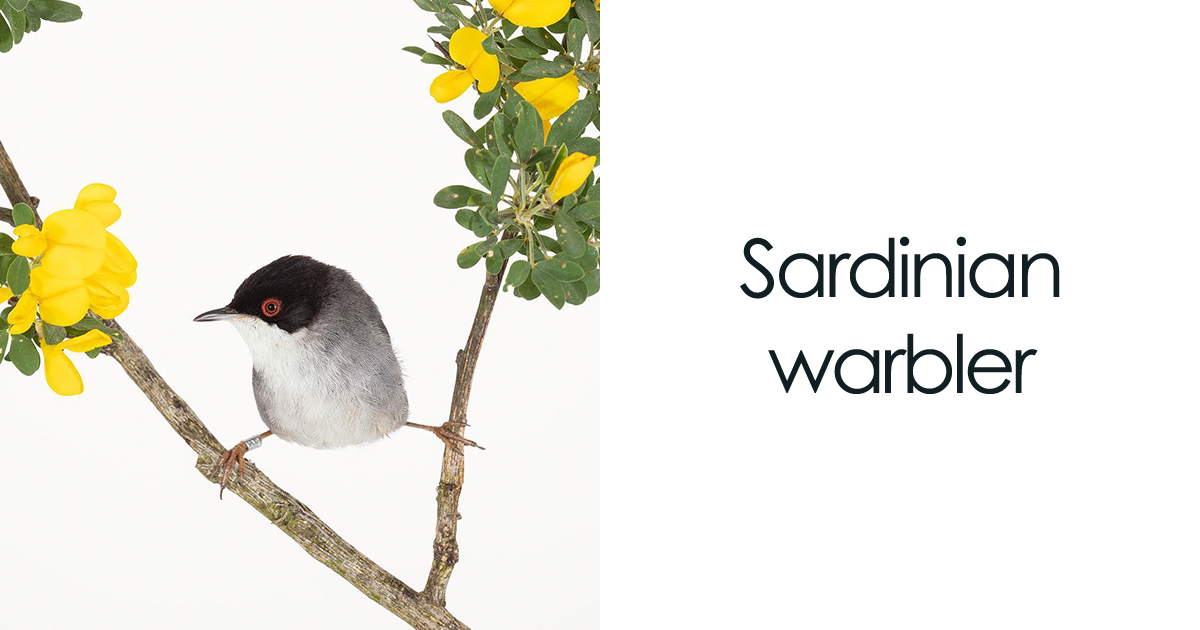
- Sardinian Warbler: A flexible perch moment that proves birds invented dramatic posing.
- Days of Departure: A flock-inspired image that hints at migration and movement.
- Freezing Rain: A cool-toned portrait with the quiet mood of winter.
- Spot-Crowned Euphonia: Tropical color in a tiny body, proof that small birds can make a loud visual statement.
- European Goldfinch: Red, black, yellow, and white arranged with effortless elegance.
- European Pied Flycatcher: A black-and-white study in contrast and alertness.
- Warm Front: Soft atmosphere gives the bird a painterly glow.
- Eurasian Blue Tit: Spring color wrapped in a small, lively frame.
- Winds Blow South: Movement and posture suggest weather passing through the frame.
- Blue-Black Grosbeak: Deep color gives the portrait a rich, velvety presence.
- Sunflower: A warm composition where bird and perch feel perfectly matched.
- Variable Seedeater: A bold stance that looks one whistle away from giving orders.
- Gentle Breeze: A soft, balanced portrait that celebrates subtle feather tones.
- Golden-Crowned Spadebill: A tiny bird with a bright head and enormous charm.
- Common Whitethroat: A simple pose that reveals delicate structure and character.
- Yellow Wagtail: A flash of yellow that feels like sunlight learned to perch.
- Common Redstart: A graceful portrait with warm tones and fine detail.
- Wood Warbler: A gentle green-and-yellow subject with a calm, watchful look.
- Spotted Flycatcher: Understated colors prove that quiet birds can be visually stunning.
- Strong Breeze From North East: A wind-shaped moment full of motion and attitude.
- Silent Spring: A title that nods to beauty, fragility, and environmental memory.
- Common Chiffchaff: A small bird with a big presence when seen up close.
Why These Photos Matter in a Conservation Age
Beautiful bird portraits can do something statistics alone often cannot: they make people feel the subject. Numbers tell us that birds face pressure from habitat loss, climate change, window collisions, pesticides, invasive species, and disrupted migration routes. But an image of a single bird looking directly at us can make those problems feel personal.
This is where art becomes useful without becoming preachy. A viewer may arrive for the beauty and leave with curiosity. What species is that? Where does it live? Is it common? Is it declining? What does it eat? How can I help? A photograph can open the door. Knowledge walks in afterward, hopefully wiping its feet first.
Bird photography also helps people value ordinary species. Conservation attention often goes to rare or dramatic animals, but common birds matter too. Sparrows, warblers, finches, blackbirds, swallows, robins, and other familiar species form part of everyday ecosystems. When photography makes a “normal” bird look extraordinary, it reminds us that common does not mean disposable.
Experience Notes: What Photographing Birds Teaches You
Spending time with bird photography changes the way you move through the world. At first, you notice only the obvious things: a flash of blue, a loud call, a bird landing on a fence. Then your senses sharpen. You begin to hear different layers of sound in the morning. You recognize the scratchy chatter of a small bird in shrubs, the clean whistle of a songbird on a wire, the wing rush of pigeons lifting together from a roof. Suddenly the neighborhood is not just streets and buildings. It is a living map of perches, feeding routes, shadows, hiding places, and tiny dramas.
The biggest lesson is patience. Birds do not care that your camera battery is full, your settings are perfect, and your coffee has reached the sacred temperature. They appear when they appear. Sometimes the best shot happens after forty minutes of absolutely nothing. Sometimes the bird lands beautifully, turns into perfect light, opens its beak, and then a leaf ruins everything. Bird photography teaches humility with feathers attached.
It also teaches respect for distance. Beginners often think the secret is getting closer. Experienced photographers learn that the better secret is making the bird feel safe enough to behave naturally. A relaxed bird preens, stretches, calls, feeds, looks around, and returns to its own rhythm. A stressed bird flees. The difference shows in the image. Natural behavior has a softness and honesty that forced behavior never does.
Another valuable experience is learning to appreciate imperfect weather. Cloudy days can soften contrast. Wind can lift feathers and create personality. Mist can simplify a background. Snow can turn an ordinary perch into a stage. Even rain, which is excellent at making photographers question their life choices, can create reflective surfaces and delicate mood. The weather is not always the enemy. Sometimes it is the art director, and yes, it may be a little dramatic.
Photographing birds also deepens your relationship with color. You start to see that brown is not one color. It is cinnamon, chestnut, sand, coffee, smoke, bark, bronze, and warm gray. Black feathers may flash blue, green, or purple. White plumage may hold cream, silver, or pearl. A bird that seemed plain at a distance becomes a lesson in subtle design when seen through a lens.
Most of all, bird photography teaches wonder without ownership. You can prepare, wait, compose, and press the shutter, but the bird gives the moment. It owes you nothing. When it stays for one second longer than expected, when it looks into the lens, when it lifts its wings and light catches every feather, the image feels less like something you took and more like something you were allowed to witness. That feeling is why people keep returning to parks, marshes, forests, and backyards with cameras in hand. They are not only chasing pictures. They are practicing attention.
Conclusion
I Take Pictures Of Birds So That People Can See Them Like Never Before (27 Pics) is more than a catchy title. It describes the real power of thoughtful bird photography: making the familiar feel astonishing again. Through close portraiture, careful lighting, ethical methods, and deep observation, birds become more than background wildlife. They become individuals with posture, texture, expression, and presence.
In a fast-scrolling world, these images ask us to slow down. They remind us that beauty is not always hidden in remote wilderness. Sometimes it is perched nearby, wrapped in feathers, weighing less than a handful of coins, and staring back as if it has known all along that humans are the strange ones.