Some travel stories begin with a train ticket, a croissant, and a cheerful map. This one begins with silence, ivy, locked-away history, and the strange feeling that someone simply stepped out of a room and forgot to come back for decades. A historic abandoned castle in France is already the kind of phrase that makes the imagination put on a velvet cape. Add “everything left behind,” and suddenly we are not just looking at architecturewe are peeking into a time capsule with chandeliers.
This story centers on a mysterious French château often discussed online under the nickname “Chateau Secret.” It has been photographed and shared widely because of its dreamlike exterior and rooms still filled with furniture, books, religious objects, old beds, dining spaces, a library, a chapel, and the kind of staircase that looks like it is waiting for a dramatic movie entrance. But behind the viral images is a deeper story about French heritage, private property, preservation, misinformation, and why abandoned places attract millions of curious eyes.
Before we step into the imagined tour, one important note: abandoned does not mean ownerless, open, legal to enter, or safe. Historic buildings can be fragile, privately owned, protected, dangerous, or all four at once. The best way to enjoy places like this is through legal photography, heritage organizations, museums, public tours, and properly licensed images. In other words, admire the mysterybut do not become the person in the horror movie who says, “Let’s just check the basement.” Nobody likes that person.
The Allure of an Abandoned French Castle
France is practically a professional at making stone look romantic. Across the country, châteaux rise from forests, riversides, vineyards, and sleepy villages. Some are world-famous, polished to museum perfection. Others are privately owned, partly restored, hidden behind walls, or slowly losing a wrestling match with rain, roots, and time. The word “château” itself can describe anything from a fortified medieval castle to a grand country residence, which is why one French château may look battle-ready while another looks prepared to host a very expensive dinner party.
The abandoned castle in this story is fascinating because it feels lived-in and deserted at the same time. That contradiction is what makes “everything left behind” photography so powerful. A bare ruin tells us that history happened. A room with a bed still made, a piano waiting upstairs, a dining table gathering dust, and books sitting in a library whispers something more personal: people had routines here. They cooked. They read. They entertained guests. They probably argued about curtains. Then, somehow, the daily rhythm stopped.
What the 17 Pics Reveal
The original photo set became popular because it did not show only broken walls or dramatic ivy. It showed domestic spacesrooms that still looked recognizable. That is what makes the images so compelling. The castle is not simply an empty shell. It is a place where the evidence of private life remains visible.
1. The Castle Exterior
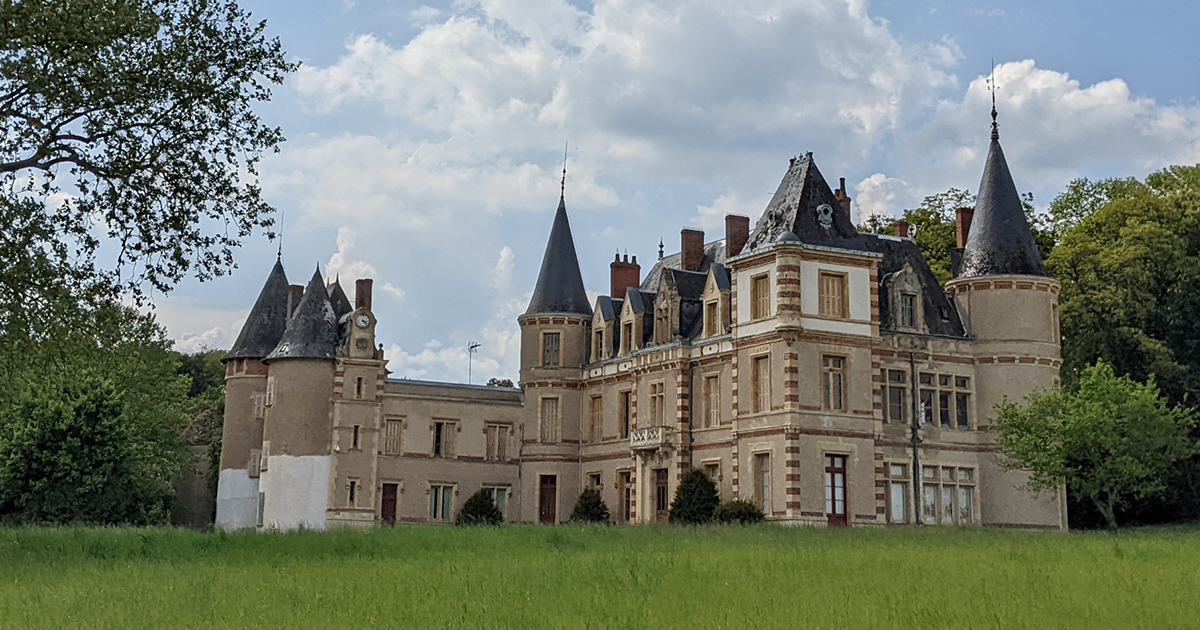
The exterior is the first hook: stone walls, old windows, and a shape that feels halfway between fairy tale and family estate. Nature softens the scene, wrapping the structure in the quiet drama that only abandoned buildings can create. It looks majestic, but also vulnerable, like a grand old actor waiting for one final curtain call.
2. The Main Living Quarters
The living rooms show why abandoned interiors fascinate people. Furniture remains in place, but the room no longer functions as a room. Dust becomes part of the décor. Silence becomes the loudest object. It is not hard to imagine conversation once bouncing off the walls, followed now by the tiny sound of plaster aging in the corners.
3. Downstairs Living Space
The downstairs areas feel less formal and more human. These rooms suggest ordinary movement: sitting, resting, crossing from one part of the château to another. In a castle, even an ordinary room can feel theatrical. A chair by a wall becomes a character. A faded rug looks like it has opinions.
4. Downstairs Bedroom
A bedroom in an abandoned château is always a little haunting, not because it needs ghosts, but because bedrooms are private. They hold the quietest details of a life. When one is left behind, it raises the question that fuels every good mystery: why did nobody take this?
5. A Living Space Frozen in Routine
Some spaces appear almost paused rather than ruined. That is the magicand the sadnessof time-capsule interiors. They do not look staged for a museum. They look interrupted. The result is more intimate than a polished tour, though far more fragile.
6. The Kitchen
Kitchens are the least royal rooms in any castle, which is exactly why they matter. They remind us that even historic estates ran on practical work: meals, storage, cleaning, repairs, and the daily labor that kept grand architecture from becoming a very fancy pile of stones.
7. The Main Dining Room
The dining room is where the imagination really starts misbehaving. Who sat there? What meals were served? Was anyone ever late and forced to apologize while pretending they had not just wandered in from a nap? Dining rooms in old houses carry the social life of a family, and when they are abandoned, they feel like conversation has been sealed into the walls.
8. The Main Staircase
A château staircase is never just a staircase. It is an announcement. In abandoned photography, staircases also become symbols of uncertainty: they lead upward into shadow, age, and rooms whose stories may be half-preserved or already lost.
9. A Piano Upstairs
A piano left in an abandoned home is almost too poetic for its own good. It suggests music, evenings, lessons, guests, or a family member practicing the same piece until everyone else considered moving to the barn. When the instrument is silent, the absence feels louder than a wrong note.
10. A Master Bedroom
The master bedroom adds another layer of intimacy. Large rooms in old estates often blend comfort with display. They were not just places to sleep; they were statements about status, taste, inheritance, and identity. When such a room is abandoned, it feels like a portrait without a face.
11. The Library
The library may be the emotional heart of the castle. Books left behind create instant curiosity. Were they read carefully, collected for prestige, inherited, forgotten, or simply too heavy to move? A library in decay is a reminder that knowledge can survive on paper, but paper is still mortal.
12. Sewing Machines in the Library
The presence of sewing machines adds a practical, oddly charming detail. Castles are often imagined as places of banquets and velvet, but real homes are full of mixed uses. A library with sewing machines says: this was not only a showpiece. It was a working home, with projects, repairs, and daily tasks.
13. Another Upstairs Bedroom
Multiple bedrooms suggest generations, guests, family branches, caretakers, or periods of reuse. Abandoned houses rarely belong to one clean chapter. They are layered. A château may begin as a fortified residence, become a noble family home, shift into a vacation property, and eventually become a preservation headache with excellent windows.
14. The Chapel Inside the Castle
A private chapel is one of the clearest signs that the estate belonged to a world where religion, status, and domestic life were closely connected. Chapels inside châteaux were not decorative afterthoughts. They reflected belief, family ceremony, and social identity.
15. Forgotten Decorative Details
Beyond the major rooms, the smaller details often matter most: frames, textiles, lamps, cracked mirrors, patterned wallpaper, and carved wood. These are the details that make an abandoned château feel less like a ruin and more like a memory with furniture.
16. Signs of Nature Returning
Abandoned castles rarely decay politely. Moisture enters. Plants creep. Roofs fail. Stone darkens. Paint loosens. Nature does not hate architecture; it simply has no respect for property lines. The visual result can be beautiful, but the reality is structural risk and expensive repair.
17. The Final View
The final image in any abandoned castle series usually leaves viewers with mixed feelings. Wonder, sadness, curiosity, and frustration all arrive together. We love the beauty of decay, but we also know decay is not harmless. Every romantic ruin was once somebody’s responsibility.
The Real History Behind the Viral Mystery
Online stories about abandoned castles often grow extra legends the way old walls grow moss. One widely shared claim connected this château to a Titanic passenger, suggesting the property had been frozen in time since 1912. Later fact-checking found that claim unsupported. The better-documented story points instead to Château de la Chasseigne, a historic property in the Nièvre area of France with roots stretching back centuries and a more complicated modern ownership history.
That matters because abandoned places are especially vulnerable to myth. A dramatic story travels faster than a careful one. “A family left for the Titanic and never returned” sounds like a movie poster. “A historic property changed hands, later owners added objects, and the building fell into neglect” sounds like a municipal file folder wearing reading glasses. But the second version is often closer to reality.
The most responsible way to write about places like this is to separate visual atmosphere from verified history. The rooms may look frozen in time, but not every object is necessarily original to the oldest period of the house. Furniture can be moved in. Estates can be staged, reused, emptied, sold, neglected, or partially restored over many decades. A château can be historic without every chair in it being a museum artifact.
Why Are Some French Châteaux Abandoned?
The short answer is money. The long answer is money wearing a powdered wig and carrying a stack of repair invoices. Historic castles are expensive to heat, insure, repair, secure, document, and adapt to modern rules. A leaking roof in an ordinary house is annoying. A leaking roof in a château can become a financial opera in three acts.
Inheritance can also complicate ownership. Large estates may pass through families until the cost becomes impossible. Some owners live abroad. Some properties are tied up in legal disputes. Some are protected, which can preserve historical integrity but also make renovation more complex. And some sit in regions where tourism is not strong enough to fund restoration through ticket sales, events, or hospitality.
France has a major heritage system, with thousands of protected buildings and objects. That protection is important, but protection alone does not magically fix stone, timber, roofing, drainage, plaster, wiring, windows, or centuries of weather. Preservation requires skilled labor, long-term planning, and a budget that does not faint at the sight of scaffolding.
Abandoned Beauty vs. Preservation Reality
There is a tension in abandoned castle photography. The decay is visually stunning. Peeling paint, dusty chandeliers, old books, and ivy-covered walls create images that people love. But if the goal is heritage, decay is not the happy ending. It is the warning sign.
Some French châteaux have found new life through restoration campaigns, crowdfunding, private investment, cultural tourism, or adaptive reuse. Château de la Mothe-Chandeniers is one famous example of a ruined French château that gained worldwide attention through a crowdfunding effort. Other properties become hotels, museums, event venues, educational sites, or carefully restored private homes.
Still, not every château can become the next viral restoration success. Location, condition, ownership, legal status, and repair cost all matter. A castle may be beautiful enough for Instagram and still too fragile, remote, or expensive for an easy rescue. Historic preservation is less like waving a magic wand and more like arguing with a roof for ten years.
The Ethics of Urban Exploration
Urban exploration, often called urbex, has become popular because it offers a glimpse into places outside normal public life. The best urbex photography can document endangered architecture and raise awareness before buildings disappear. But irresponsible attention can also damage the very places people claim to admire.
Sharing exact locations, forcing entry, removing objects, vandalizing interiors, or treating private property like a theme park can accelerate destruction. Once a site goes viral, it may attract crowds, theft, graffiti, break-ins, and safety incidents. That is why many responsible photographers avoid revealing addresses and emphasize the principle of taking only photographs and leaving the place unchanged.
There is also the simple issue of danger. Old buildings may contain unstable floors, falling plaster, broken glass, hidden holes, mold, asbestos, unsafe stairs, or wildlife that has absolutely not signed up to be part of your photo essay. The romantic version of urbex has golden light and antique furniture. The realistic version may include tetanus and a very awkward conversation with authorities.
What This Castle Teaches Us About Memory
The reason this abandoned French castle captured attention is not only that it is beautiful. It is that it makes time visible. Most of us move through homes while they are alive with noise and purpose. We rarely see what happens when purpose leaves but objects remain.
A dining room without diners, a chapel without prayers, a piano without music, and a library without readers all ask the same question: what remains after people move on? The answer is not simple. Sometimes objects remain because they are forgotten. Sometimes because they are too heavy. Sometimes because inheritance is messy. Sometimes because the emotional weight is heavier than the furniture.
That is why abandoned places feel so powerful. They turn private life into archaeology. They remind us that homes are temporary arrangements between people, objects, money, weather, and time. Even castlesespecially castlesare not permanent without care.
Experience: What It Feels Like to Encounter a Historic Abandoned Castle
Seeing a historic abandoned castle in France, even through photographs, is different from looking at a polished tourist landmark. A restored château tells you what people want remembered. An abandoned château shows you what time refuses to edit neatly. The experience is messy, beautiful, and strangely emotional.
The first feeling is usually awe. There is the scale of the building, the age of the stone, the elegance of the windows, and the sense that the place once mattered deeply to someone. You imagine carriages, formal dinners, family portraits, servants moving through corridors, children running where silence now gathers. It is easy to romanticize, because castles practically beg to be romanticized. They stand there like architectural novels.
Then the second feeling arrives: discomfort. When everything is left behind, the place no longer feels like a simple ruin. It feels personal. A chair is not just a chair; it is a clue. A bed is not just a bed; it is a boundary you suddenly feel you should not cross. A library is not just a pretty room; it is a collection of choices made by people who are no longer there to explain themselves. The experience becomes less about “Wow, what a cool abandoned place” and more about “This was someone’s life, and I am looking at its leftovers.”
The third feeling is curiosity, and this is where abandoned castles become dangerously addictive for the imagination. You want to know who lived there, who left, what happened, why the furniture remained, whether the owners planned to return, and why nobody saved the place earlier. But curiosity needs discipline. Without verification, it turns into rumor. That is how online myths are born. One dramatic claim gets repeated, decorated, and shared until the invented version becomes more famous than the truth.
The fourth feeling is sadness. Not dramatic sadness, necessarily, but a quieter kind. Historic buildings are not renewable in the usual sense. Once original woodwork is stolen, once rain destroys a ceiling, once a fire starts, once vandals break what survived for centuries, something irreplaceable can vanish. A castle may look strong from the outside, but neglect is patient. It does not need to win quickly. It only needs enough winters.
Finally, there is gratitude. Photographs of places like this can preserve a visual record and remind people why heritage matters. They can inspire restoration, research, donations, and public interest. But the best response is not to rush out searching for the location. It is to support legal preservation, visit open historic sites, respect private property, and remember that mystery does not require trespassing to be meaningful.
In the end, the abandoned castle is more than a set of 17 beautiful pictures. It is a lesson in how quickly grandeur becomes fragile, how easily stories become distorted, and how much responsibility comes with looking at the past. The castle may be silent, but it is not empty. It is full of evidence: of wealth, taste, neglect, rumor, memory, and the stubborn hope that somebody, someday, might care enough to save what remains.
Conclusion
The story of “I Found A Historic Abandoned Castle In France With Everything Left Behind (17 Pics)” works because it combines everything readers love: mystery, architecture, history, atmosphere, and the irresistible feeling of opening a door into another century. But the real value of the story is not just in the dust or the drama. It is in the reminder that heritage survives only when people protect it.
Abandoned châteaux may look magical online, but behind the beauty are legal, ethical, financial, and preservation challenges. The best way to honor these places is not to expose them, invade them, or turn them into viral treasure hunts. It is to understand them, document them responsibly, support restoration where possible, and let the past remain more than content.
Note for publication: Use only original, licensed, or properly credited photographs. Do not republish copyrighted images from photographers or media outlets without permission. Avoid publishing exact addresses of vulnerable abandoned properties.