Drawing all the Winx Club girls sounds simple until you remember one tiny detail: these fairies do not believe in “simple.” They arrive with wings, sparkle, personality, dramatic hair, color-coded magic, and enough outfit energy to make a fashion intern cry into a sketchbook. Still, that is exactly why I wanted to draw them. Bloom, Stella, Flora, Musa, Tecna, and Aisha are not just characters from a magical-girl cartoon; they are six very different visual challenges wrapped in glitter, friendship, and high-stakes fairy drama.
Winx Club, created by Iginio Straffi, first became known for its mix of fantasy adventure, school-life storytelling, friendship, fashion, and magical transformations. The series follows Bloom, a girl from Earth who discovers she is a fairy and studies at Alfea, a magical school where she meets the girls who become the Winx Club. For artists, that setup is basically a treasure chest. Each girl has a distinct power, personality, color palette, silhouette, and mood. In other words, drawing all of them is less like making one fan-art piece and more like surviving a very sparkly final exam.
Why Drawing the Winx Club Girls Is So Addictive
The best fan art starts with affection, but it survives on observation. The Winx girls are memorable because they are designed to be instantly recognizable. Bloom has fiery energy and heroic warmth. Stella radiates confidence, sunlight, and fashion-girl chaos. Flora is soft, natural, and graceful. Musa has rhythm and attitude. Tecna is sleek, futuristic, and logical. Aisha brings athletic strength, fluid movement, and wave-inspired power.
That variety makes the group satisfying to draw. If all six had the same visual energy, the project would become repetitive. Instead, every character forces a new decision. Do I make Bloom’s pose bold or emotional? Should Stella look like she is posing for a magazine cover she personally invented? How do I make Flora gentle without making her boring? How do I show Musa’s musical edge without turning her into a walking stereo? And Tecnahow many sharp angles can one fairy outfit handle before my hand files a complaint?
The Winx Club Fan Art Challenge: Six Girls, Six Personalities
When I started this Winx Club drawing project, I did not want to copy the original designs line for line. Fan art is more interesting when it respects the source material while adding a personal twist. The goal was to keep each fairy recognizable but let my own art style breathe. That meant simplifying some details, exaggerating others, and choosing poses that matched each girl’s personality.
I treated the lineup almost like a character-design study. Before drawing clean lines, I focused on silhouettes. A strong silhouette helps a viewer recognize a character even without color. Bloom needed a confident center-of-the-team shape. Stella needed a glamorous, open pose. Flora needed flowing lines. Musa needed rhythm and asymmetry. Tecna needed structure. Aisha needed motion and strength. Once those shapes worked, the rest of the design became much easier.
Bloom: The Fire at the Center
Bloom was the natural starting point. As the Fairy of the Dragon Flame, she carries the emotional heart of the story. Her character is tied to discovery, identity, courage, and the classic “wait, I have magical powers?” moment that every fantasy fan secretly wants to experience while taking out the trash.
For Bloom, I leaned into fire-inspired movement. Her hair, pose, and expression needed warmth without looking too aggressive. Red, orange, and blue are essential parts of her visual identity, so I used them as anchors. The hardest part was balancing softness with power. Bloom should look approachable, but she also needs that “I can save the Magic Dimension before lunch” confidence.
Drawing Tip From Bloom
When drawing a lead character, avoid making them generic just because they are central. Bloom works because her design has a clear theme: flame, courage, and emotional growth. Fan artists can learn a lot from that. A main character should feel like a person, not just the poster in the middle.
Stella: Sunshine, Style, and Main Character Behavior
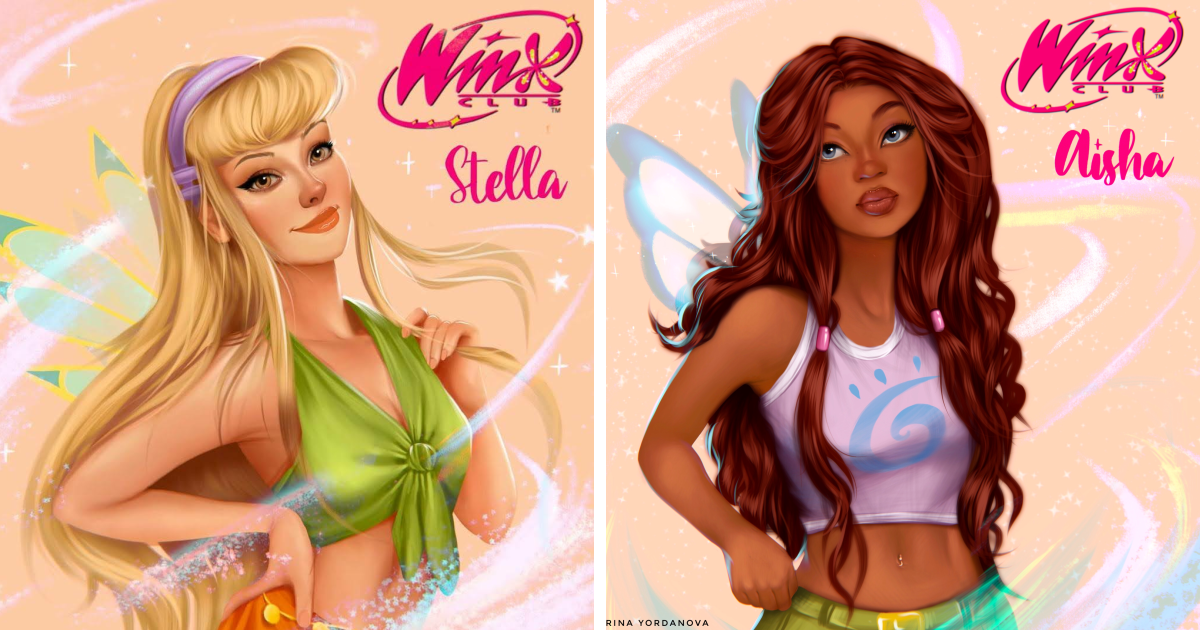
Stella was pure fun to draw because subtlety has never been her biggest hobby. As the Fairy of the Shining Sun and princess of Solaria, she is bright, dramatic, stylish, and wonderfully expressive. She is also the kind of character who would absolutely tell you your outfit is “almost cute” and then fix it in three seconds.
Her drawing needed a confident pose, big energy, and fashion-forward details. I made her lines more playful and added a little extra attitude in her expression. Stella’s color palette naturally leans toward yellows, oranges, and warm light tones, so I used those to make her pop. She is not just “the blonde one.” She is the sparkle alarm clock of the group, and the drawing had to say that immediately.
Drawing Tip From Stella
Fashion can reveal character. Stella’s outfit choices should feel bold and intentional. When drawing her, accessories and posture matter as much as facial features. If she does not look like she chose the outfit, approved the lighting, and scheduled applause, something is missing.
Flora: Soft Lines, Strong Presence
Flora might look like the easiest fairy to draw because her personality is gentle, but that is a trap. Gentle characters are difficult because they can become visually flat if the artist plays everything too safe. As the Fairy of Nature, Flora needs softness, but she also needs life, detail, and quiet strength.
I used flowing hair, curved lines, and plant-inspired shapes to capture her energy. Her palette works beautifully with pinks, greens, and earthy tones. I wanted her pose to feel calm but not passive. Flora is kind, but she is not wallpaper. She is the friend who will comfort you, grow a vine wall, and politely stop a monster from ruining everyone’s afternoon.
Drawing Tip From Flora
Soft characters still need structure. Flora’s design becomes stronger when delicate lines are paired with clear shapes. Leaves, petals, and natural curves can guide the entire composition without overwhelming it.
Musa: Rhythm in a Pose
Musa, the Fairy of Music, needed a drawing that felt alive. Music is movement, so a stiff pose would not work. I focused on gesture first, trying to make the body language feel like a beat had just dropped somewhere off-screen.
Her design has always had a cool, stylish edge. I used sharper angles, a more energetic stance, and a slightly mischievous expression. Musa should look like she has headphones in, opinions ready, and no patience for nonsense. Her color palette often plays with reds, purples, and deep tones, which helped create contrast with Flora’s softer look and Stella’s brightness.
Drawing Tip From Musa
If a character is connected to music, draw the rhythm before the details. The tilt of the shoulders, bend of the knees, and direction of the hair can make the viewer feel sound even in a silent image.
Tecna: The Geometry Fairy
Tecna was the most technical challenge, which feels appropriate. As the Fairy of Technology, she has a futuristic identity that separates her from the more organic designs in the group. Her shapes are cleaner, sharper, and more digital. Drawing her after Flora felt like switching from gardening gloves to a laser keyboard.
For Tecna, I used angular shapes, sleek lines, and a controlled pose. Her short hair and tech-inspired outfit make her silhouette unique, so I tried not to soften her too much. The key was making her look intelligent and cool without making her expression emotionless. Tecna is logical, but she is still part of a deeply emotional friendship story.
Drawing Tip From Tecna
Use shape language carefully. Straight lines, triangles, and geometric forms can suggest technology, precision, and intelligence. Just remember to add enough personality so the character does not look like a Wi-Fi router with wings.
Aisha: Motion, Water, and Strength
Aisha, also known as Layla in some versions, brought a completely different energy to the lineup. As the Fairy of Waves, she needed movement, confidence, and athletic grace. Water is fluid, but Aisha is also strong and determined, so the drawing had to balance flow with power.
I gave her a dynamic pose and used curves that suggested waves without turning the whole image into a swimming lesson. Her color palette works beautifully with greens, blues, and aquatic tones. Aisha is not just graceful; she is action-oriented. She looks like she could dance, fight, swim, and still have better posture than everyone else in the room.
Drawing Tip From Aisha
When drawing water-themed characters, avoid making everything too soft. Water can crash, twist, and surge. Aisha’s design becomes more exciting when fluid lines are paired with athletic structure.
What Makes the Winx Girls So Good for Fan Art?
The Winx Club girls are excellent subjects because they combine clear themes with flexible designs. Each character has a recognizable magical identity, but there is enough room for reinterpretation. Artists can draw them in classic fairy form, modern fashion, casual outfits, fantasy armor, chibi style, semi-realistic portraits, or even editorial-style illustrations. The characters can survive many artistic approaches because their core identities are strong.
That is one reason Winx Club fan art remains popular. The franchise has fashion, friendship, fantasy, nostalgia, and colorful transformation sequences. It appeals to people who grew up with the series and to newer viewers discovering the magical world through streaming, reboots, clips, and online fandom. Drawing the Winx girls is not just a nostalgia project; it is a way to study character design through a cast that already understands visual branding better than most social media managers.
My Art Process: From Sketch to Final Lineup
I began with rough thumbnails for all six girls. This step was messy, fast, and deeply unglamorous. There were floating heads, broken hands, questionable knees, and at least one Stella pose that looked less like “solar princess” and more like “lost tourist at a mall.” But thumbnailing is where the best decisions happen. It lets you test ideas before committing to details.
After choosing poses, I moved into cleaner sketches. At this stage, I checked proportions and made sure the characters looked like they belonged in the same collection. This is important in a group fan-art piece. Even if each girl has a different personality, the style must feel consistent. Line weight, face structure, eye shape, and rendering style all need to speak the same visual language.
Color came next. I built each palette around the character’s established identity, then adjusted saturation so the final lineup would not look like a box of markers exploded during a fairy emergency. Bloom and Stella needed warmth. Flora needed natural softness. Musa needed contrast. Tecna needed cool digital clarity. Aisha needed aquatic energy. The final trick was making sure no character disappeared when placed beside the others.
The Hardest Part Was Keeping Everyone Unique
One of the biggest challenges in drawing all the Winx Club girls is avoiding same-face syndrome. Because the characters share a stylized magical-girl foundation, it is easy to accidentally give them identical expressions and features. To prevent that, I changed eye shapes, smiles, posture, and body language.
Bloom’s expression became open and determined. Stella’s was playful and confident. Flora’s was warm. Musa’s had attitude. Tecna’s was focused. Aisha’s was bold and energetic. These small differences matter. A lineup should feel like a group of friends, not six clones who raided different sections of the same costume store.
Why Winx Club Still Inspires Artists
Winx Club has lasted because it understands the power of transformationnot just magical transformation, but emotional and visual transformation. The characters grow, change outfits, unlock new powers, face threats, and support one another through dramatic fantasy problems that are somehow easier to solve than group projects in real life.
For artists, the series offers endless inspiration. The wings invite shape design. The powers invite color studies. The outfits invite fashion experimentation. The friendships invite expressive posing. Even the villains, especially the Trix, offer another world of sharp, dramatic design possibilities. Once you draw the Winx girls, it is dangerously easy to think, “Maybe I should draw the villains too.” That is how sketchbooks become magical contracts.
of Personal Experience: What I Learned Drawing All The Winx Club Girls
Drawing all the Winx Club girls taught me that fan art is not just about making something pretty. It is about paying attention. Before this project, I thought I knew the characters well enough. Bloom equals fire, Stella equals sun, Flora equals plants, Musa equals music, Tecna equals technology, Aisha equals waves. Easy, right? Not exactly. Those are labels, not personalities. The real work started when I asked how each girl would stand, smile, move, and take up space on the page.
Bloom reminded me that a leader does not always need the loudest pose. Her strength comes from sincerity. I tried a few dramatic action poses, but the one that worked best had warmth in it. Stella, on the other hand, demanded drama. Every time I toned her down, she looked wrong, like someone had turned off the sun and replaced it with a desk lamp. Flora taught me patience. Her design needed softness, but too much softness made the drawing sleepy. Adding clearer plant shapes and a stronger posture helped her feel gentle but present.
Musa was the most fun in the sketching stage because her personality came through quickly. A tilted pose, sharper expression, and rhythmic flow made her click. Tecna was the opposite. I had to slow down and think about every angle. Her design punished lazy lines. If the shapes were not clean, she lost her futuristic charm. Aisha pushed me to think about motion. Her drawing improved once I stopped posing her like a statue and started imagining water moving around her.
The funniest part of the project was realizing how often hair causes problems. Fairy hair does not obey physics; it negotiates with it. Bloom’s hair wanted to become fire. Stella’s wanted to become sunlight. Flora’s wanted to become a botanical curtain. Musa’s wanted rhythm. Tecna’s short hair was a relief until I remembered her outfit had sharper details. Aisha’s hair needed movement without hiding her face. By the end, I had developed deep respect for animators who have to make these designs move frame by frame. My wrist sent them a thank-you card.
The project also reminded me why group illustrations are so rewarding. A single character drawing can be beautiful, but a full lineup tells a bigger story. When all six girls were finally placed together, their differences made the image stronger. The warm colors, cool tones, soft curves, sharp angles, playful expressions, and bold poses started working like a visual chorus. That is the magic of Winx Club fan art: each fairy shines on her own, but together they create the sparkle storm.
Conclusion: The Magic Is in the Differences
Drawing all the Winx Club girls was a colorful lesson in character design, nostalgia, and creative patience. Bloom, Stella, Flora, Musa, Tecna, and Aisha each required a different artistic approach, and that is what made the project exciting. Their powers are distinct, their personalities are memorable, and their designs offer endless room for interpretation.
Whether you are a longtime Winx fan, a digital artist, a sketchbook beginner, or someone who simply appreciates magical-girl fashion that refuses to be quiet, drawing the Winx Club girls is a rewarding challenge. It teaches you to think about color, pose, silhouette, expression, and storytelling. It also teaches you that wings are beautiful, dramatic, and occasionally a personal attack on your patience.
In the end, the project was not just about drawing six fairies. It was about celebrating why these characters still matter: friendship, individuality, confidence, creativity, and the belief that every girl in the group deserves her own spotlight. And maybe her own glitter budget.
Note: This article is an original, SEO-friendly fan-art essay based on publicly available information about Winx Club, its main characters, and practical character-design principles.