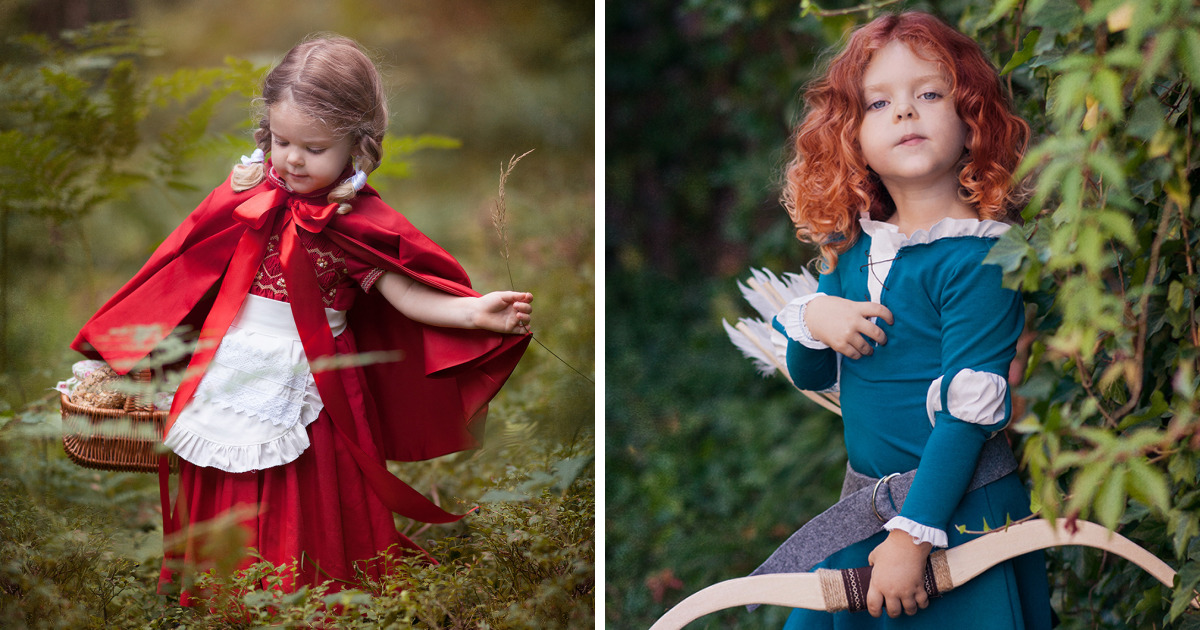
Some families collect fridge magnets. Some collect baseball cards. Mine apparently collects impossible photo ideas that begin with a perfectly innocent sentence like, “What if you were a moon princess riding a dragon made of laundry?” That is how Part 2 of our magical picture-making adventure really begins: not with expensive gear, a studio budget, or a suspiciously obedient child actor, but with a messy house, a weirdly specific idea, and children who are fully committed to the bit for about seven minutes.
And honestly? Seven minutes is plenty.
Creating magical pictures with children is not really about producing flawless fantasy portraits. It is about turning imagination into a family ritual. The camera becomes part sketchbook, part time capsule, part proof that childhood is not a small thing at all. It is giant. It is loud. It is glitter-covered. It is very often wearing rain boots with a superhero cape for no logical reason. When parents lean into that energy instead of fighting it, the results feel richer than traditional posed photos. They feel alive.
That is the heart of this second chapter. The first round of magical images may have been about novelty, but Part 2 is where the project grows up a little. The costumes may still be ridiculous. The editing may still involve fake moonlight, floating books, and the occasional sparkly nonsense cloud. But the deeper goal becomes clearer: to make creative family photography that celebrates collaboration, memory, and play instead of perfection.
Why Magical Family Photography Feels So Powerful
Children naturally understand fantasy better than adults do. Adults tend to ask, “How will this work?” Kids ask, “Can the fox wear a crown?” One of those questions is useful. The other is excellent.
That playful instinct is exactly why magical photography works so well as a family project. When children help build a scene, pick props, invent characters, or decide the backstory, the image stops being something done to them and becomes something made with them. That difference matters. It changes the energy in front of the camera. Instead of a child being told to smile in an itchy outfit under suspicious lighting, they become the author of a tiny visual world.
And that world does more than look cute in a social post. It gives kids a chance to practice storytelling, problem-solving, and self-expression. A cardboard castle is never just a cardboard castle. It is design. It is play. It is negotiation. It is, “No, Mom, the unicorn would never stand there.” When families create fantasy portraits together, they are also building trust, attention, and shared language around creativity.
That is why these images often feel bigger than the frame itself. A magical picture captures not only what the child looked like, but who they were becoming in that season: brave, silly, dreamy, bossy, curious, dramatic, and possibly determined to bring a plastic lizard into every scene.
What Makes Part 2 Better Than Part 1
If Part 1 was about discovering the idea, Part 2 is about understanding the rhythm. By now, I know not to schedule a fairy-tale photoshoot fifteen minutes before lunch. I know that a cape tied too tightly becomes an international crisis. I know that the best prop is often the cheapest one. I also know that children can smell overplanning from three rooms away.
The biggest upgrade in this second round is simple: I stopped trying to control every detail.
That changed everything.
Instead of beginning with a polished final image in my head, I now begin with a loose mood. Maybe we want something woodland and mysterious. Maybe we want a pirate queen on a rainy afternoon. Maybe we want a scene that feels like a bedtime story if the bedtime story had better boots and more fog. Once the mood is set, my children help invent the rest. They choose the object they care about most, the pose that feels natural, and the little story twist that makes the picture theirs.
This is where the “magic” stops being an effect and starts being a process. The process is the real treasure. Editing can add stars, glow, texture, and cinematic drama later. But the spark in the image almost always comes from the child having a real stake in the story.
How We Build the Picture Before We Touch the Camera
Start with a tiny story, not a giant production
The easiest way to create magical pictures with children is to start absurdly small. One scene. One character. One emotion. A child holding a lantern in a hallway can become a mysterious forest explorer. A bowl of water on a patio can become a mermaid lagoon if the light is right and nobody asks too many practical questions. Children do not need realism; they need a reason to believe for ten glorious minutes.
Let props do less than you think
There is a common temptation in fantasy family portraits to overbuy props. Resist it. A velvet curtain, a thrifted hat, paper stars, a branch from the yard, and a flashlight can carry an image farther than a cart full of craft-store panic. In fact, limited materials often lead to better ideas because kids start improvising. Improvising is where originality lives.
Use locations that already belong to your life
Some of our favorite images happen in places that would never impress anyone on paper: the hallway, the front steps, the patch of weeds behind the garage, the corner by the window where the cat judges us. But familiar spaces are useful because children feel relaxed in them. Relaxed children are expressive children. Expressive children make interesting pictures.
Keep the plan flexible enough to survive childhood
If your original plan collapses because someone spills juice on the fairy wings, congratulations, you are doing family photography correctly. The best photos often arrive after the plan breaks. A serious pose becomes a laugh. A “failed” shot becomes the favorite. A costume slips, a sibling interrupts, a dog wanders in, and suddenly the image has soul.
The Practical Side: How to Photograph the Magic Without Losing Your Mind
Now for the less glamorous but wildly important truth: children move. Constantly. Even the ones who were “just sitting there” are somehow already in another room by the time you adjust your settings. So while the imagination side matters, the practical side matters too.
Natural light is your best co-creator. Window light indoors and early evening light outdoors are both forgiving and cinematic. If the sun is harsh, move into shade or turn the scene so the light wraps softly across the child’s face. You want the image to feel dreamy, not like the child is being interrogated by a celestial flashlight.
It also helps to shoot more frames than your perfectionist heart would normally allow. Children blink, wiggle, burst into interpretive dance, and dramatically abandon the mission. Taking several photos in a row increases your odds of catching that one expression where everything clicks. For action shots, a faster shutter speed can keep the wonder sharp rather than blurry. For calmer images, step back, simplify the background, and let one strong detail carry the mood.
And perhaps most important of all: let them play. When children are asked to “perform” magic, they stiffen. When they are allowed to play magic, they become it. Ask them to walk, search, whisper to the moon, tiptoe past a dragon, or guard a secret door. Actions are easier than poses. Story beats are easier than commands. “Look mysterious” is a difficult assignment. “You just heard a giant friendly owl in the trees” is better.
Why These Pictures Matter for Kids
These photo sessions are fun, yes, but they also do some quiet developmental heavy lifting. When children help imagine and build scenes, they practice making choices, solving visual problems, and expressing ideas that do not fit neatly into ordinary conversation. They are learning to see possibility in ordinary materials. A blanket becomes weather. A stool becomes a mountain. A spoon becomes a wand because apparently we are all very committed to low-budget enchantment now.
That kind of creative work gives children room to try ideas without the pressure of a single right answer. It is open-ended, which is one reason it feels so energizing. There is no worksheet with a correct dragon. There is only your dragon, and maybe it wears rain boots.
There is also something powerful about children seeing their inner worlds treated as worthwhile. When a child says, “Can I be a sea captain who talks to stars?” and the adults respond by helping make that image real, the message lands deep: your ideas matter. Your imagination is not disposable. Your pretend world is worthy of attention.
That message sticks.
It can also strengthen family bonds in a surprisingly practical way. Shared creative projects generate conversation, laughter, negotiation, and memory. Long after the final image is edited, children remember the making of it: the cardboard sword that bent in half, the leaf crown that kept falling apart, the sibling who was supposed to be a noble assistant but mostly made fart jokes in the background. These details become family folklore. And family folklore is one of the great invisible glues of childhood.
Ideas for Your Own Magical Pictures With Kids
The Moon Reader
Put a child near a window with a stack of books, a blanket, and a flashlight bouncing off a white wall or sheet. Add warm socks, messy hair, and the expression of someone who definitely knows spells but is not currently accepting questions.
The Backyard Explorer
Use a magnifying glass, boots, a jar with fairy lights, and the patchiest part of your yard. If the grass is unimpressive, all the better. Mystery loves low expectations.
The Hallway Mermaid
A blue sheet, some reflective foil, and a fan can do outrageous things. Add a shell necklace and the confidence to say, “Yes, this beige hallway is now the ocean.”
The Toy Kingdom
Let your child arrange a scene with dolls, blocks, stuffed animals, or action figures and then place themselves inside that world as ruler, rescuer, or occasional troublemaker. This works especially well because kids already know the politics of toy society better than adults ever will.
The Family Story Portrait
Instead of making the child the only subject, build an image around a shared family activity: baking, gardening, reading, camping in the living room, or building a fort. Add one magical twist in editing later, such as floating lanterns, exaggerated stars, or a glowy window. The result feels grounded and whimsical at the same time.
What I Have Learned About Editing the Wonder
Editing matters, but not in the way people sometimes think. Editing is not there to rescue a lifeless image. It is there to support an image that already has a heartbeat. If the expression feels false, adding mist will not fix it. If the story feels flat, glitter is not a personality trait.
What editing can do beautifully is amplify mood. It can deepen shadows, soften edges, warm skin tones, enrich color, and add a sense of narrative atmosphere. Used lightly, it gives the image a storybook quality. Used too heavily, it makes the child look like they live in a candle-scented wallpaper sample. Subtlety wins.
I have learned to keep the child recognizable. Freckles should stay. Smiles should stay. Awkward little details should stay. The best creative family photos still feel like your real child, not a polished stranger with magical lighting and suspiciously adult cheekbones.
500 More Words From Behind the Scenes
There was one evening in particular that perfectly explains why I keep doing this. We had planned a fairly simple image: one child in a cape, holding a lantern, standing in the yard at dusk. Nothing dramatic. No smoke machine. No elaborate props. Just a soft little scene with a storybook mood. I had already pictured the final result in my head, which was my first mistake, because children have no respect for your private cinematography.
The cape was “too pokey.” The lantern was “not magical enough.” The boots were apparently wrong on a philosophical level. My younger child wanted to be in the picture too, but only as a wolf. We did not have a wolf costume. We had a gray sweatshirt and a winter hat with one floppy ear. This was, in their opinion, plenty.
So we pivoted. The scene changed from “lonely lantern child at dusk” to “mysterious traveler followed by a highly unconvincing but deeply committed wolf.” It was better immediately. The older child stopped posing and started acting. The younger one began sneaking through the grass and growling with Shakespearean dedication. I stopped trying to force elegance into the frame and started chasing energy instead.
That is when the best moments happened. A sideways glance. A conspiratorial grin. A hand reaching backward to include the “wolf” without breaking character. None of those details were in my original plan. All of them made the image feel true.
Later, when I edited the photo, I added a little mist, deepened the twilight tones, and let the lantern glow brighter than it had in real life. But I left the ridiculous wolf hat exactly as it was. It made the whole picture work. It reminded me that family magic is rarely polished. It is almost always slightly crooked, frequently improvised, and far better because of it.
Another day, we tried an indoor setup during a rainstorm. I was convinced we could create an enchanted library scene in the living room. The children were mostly convinced we could create a blanket fort and then ignore me. We compromised by turning the blanket fort into the enchanted library. Books were stacked everywhere. A teacup became an “ancient potion vessel.” One child insisted that a stuffed rabbit was the librarian. Frankly, the rabbit had presence.
What struck me most was how seriously they took the storytelling once they were allowed to shape it. They debated who had discovered the secret book. They invented rules for entering the fort. They whispered lines to each other and changed poses without being asked because they understood the world we were building together. For a while, the room stopped being a room. It became a stage, then a story, then a memory in progress.
That is the experience I think many parents are really chasing, even if they say they just want pretty photos. Pretty is nice. But connection is better. Wonder is better. The feeling that your children trusted you enough to make something imaginative together, and that you were present enough to notice who they were inside that play, is better.
These magical pictures have given me more than images. They have taught me to slow down. To listen more carefully when my children describe an impossible idea. To treat their pretend worlds as invitations instead of noise. To understand that creativity at home does not need to look sophisticated to be meaningful. Sometimes it is spectacular. Sometimes it is hilarious. Sometimes it is held together by tape, crumbs, and blind optimism. But when it works, it gives childhood a frame without trapping it.
And that, more than the edits, props, or final applause from the internet, is why I keep making magical pictures with my children. Not because every shot is perfect, but because every session leaves behind a little proof that imagination lived here.
Conclusion
I Create Magical Pictures With My Children (Part 2) is ultimately not just about fantasy photography. It is about collaboration, memory, and the everyday art of taking children seriously when they dream out loud. The best images do not come from forcing kids into polished scenes. They come from inviting them to build the story with you, then being flexible enough to follow where that story goes.
So yes, use the lantern. Use the crown. Use the cape, the books, the boots, the blanket fort, and the brave little toy dragon with one missing wing. But use them as tools, not trophies. The real magic is the relationship inside the frame. When your child feels seen, heard, playful, and free, the picture starts to glow before you even open your editing software.
That is the kind of family image worth keeping. Not just because it looks magical, but because it remembers how the magic was made.