Note: This guide is written for web publishing in standard American English. Play on a clear table, keep drinks far away, and do not aim kicks at anyone’s facepaper football is a classic game, not a tiny triangular missile program.
Introduction: The Greatest Game Ever Played on a Desk
Paper football is one of those beautifully simple games that proves you do not need batteries, Wi-Fi, a gaming chair, or a dramatic theme song to have fun. All you need is a sheet of paper, a flat surface, two competitive people, and enough self-control not to argue for five minutes about whether the football was “clearly hanging over the edge.” Spoiler: someone will argue anyway.
Also called flick football, finger football, or tabletop football, paper football is loosely inspired by American football. Instead of running plays on a grass field, players flick a folded paper triangle across a table and try to land it partly over the opponent’s edge without letting it fall. Score a touchdown, attempt an extra point, celebrate like you just won the Super Bowl, and then do it all again.
This step-by-step guide explains how to make a paper football, how to set up the game, how to score, and how to improve your flicking technique. Whether you are teaching kids, planning an indoor activity, filling time before a real football game, or reviving a cafeteria classic from your school days, this guide will help you play paper football the right wayplus a few fun house-rule variations.
What You Need to Play Paper Football
Before the championship begins, gather a few basic supplies. The beauty of this game is that the materials are probably already sitting within arm’s reach, quietly waiting for their athletic destiny.
- One sheet of letter-size paper, notebook paper, or printer paper
- Scissors, or careful tearing along a crease
- A flat table, desk, countertop, or smooth playing surface
- Two players
- A pencil and paper for scorekeeping, or a notes app
- Optional: markers to decorate the football
- Optional: cardboard, straws, craft sticks, LEGO bricks, or your hands for goalposts
Thinner paper is easier to fold and flick, while heavier paper can make a more durable football. Printer paper works well for beginners because it folds cleanly and creates a sturdy triangle. Notebook paper is also a classic choice, especially if you want the nostalgic “I definitely made this during study hall” look.
How to Play Paper Football: 9 Steps
Step 1: Fold the Paper Lengthwise
Start with a standard sheet of paper. Fold it in half lengthwise, crease it firmly, and then cut or tear along the crease. You only need one long half-sheet to make one football. The other half can become a backup football, because sooner or later someone will flick the first one under a couch, behind a cabinet, or into the mysterious land where missing socks also live.
Take one half-sheet and fold it lengthwise again so it becomes a long, narrow strip. Press the crease with your finger so the paper stays flat. A clean fold matters because uneven paper can make the football wobble, spin awkwardly, or behave like it has personal issues.
Step 2: Create the First Triangle Fold
Hold the paper strip vertically. Take one bottom corner and fold it diagonally toward the opposite edge to form a small triangle. The goal is to create a tight, even triangle with clean edges. This first fold sets the shape for the entire football, so take an extra second to line it up.
If the triangle is crooked, do not panic. You have not ruined game day. Simply unfold and try again. A good paper football should be compact, flat, and triangular, with enough thickness to slide across the table but not so bulky that it refuses to move.
Step 3: Keep Folding Triangles Up the Strip
Continue folding the triangle upward, flipping it over itself again and again along the strip. Each fold should maintain the same triangular shape. Think of it like wrapping a tiny paper flag around itself, except the final product will be used for sports glory instead of decoration.
As you fold, keep the edges aligned. Loose folds can create air pockets, and air pockets can make the football bounce strangely. A little bounce is fun; a football that suddenly swerves into a cereal bowl is less fun.
Step 4: Tuck the Final Flap
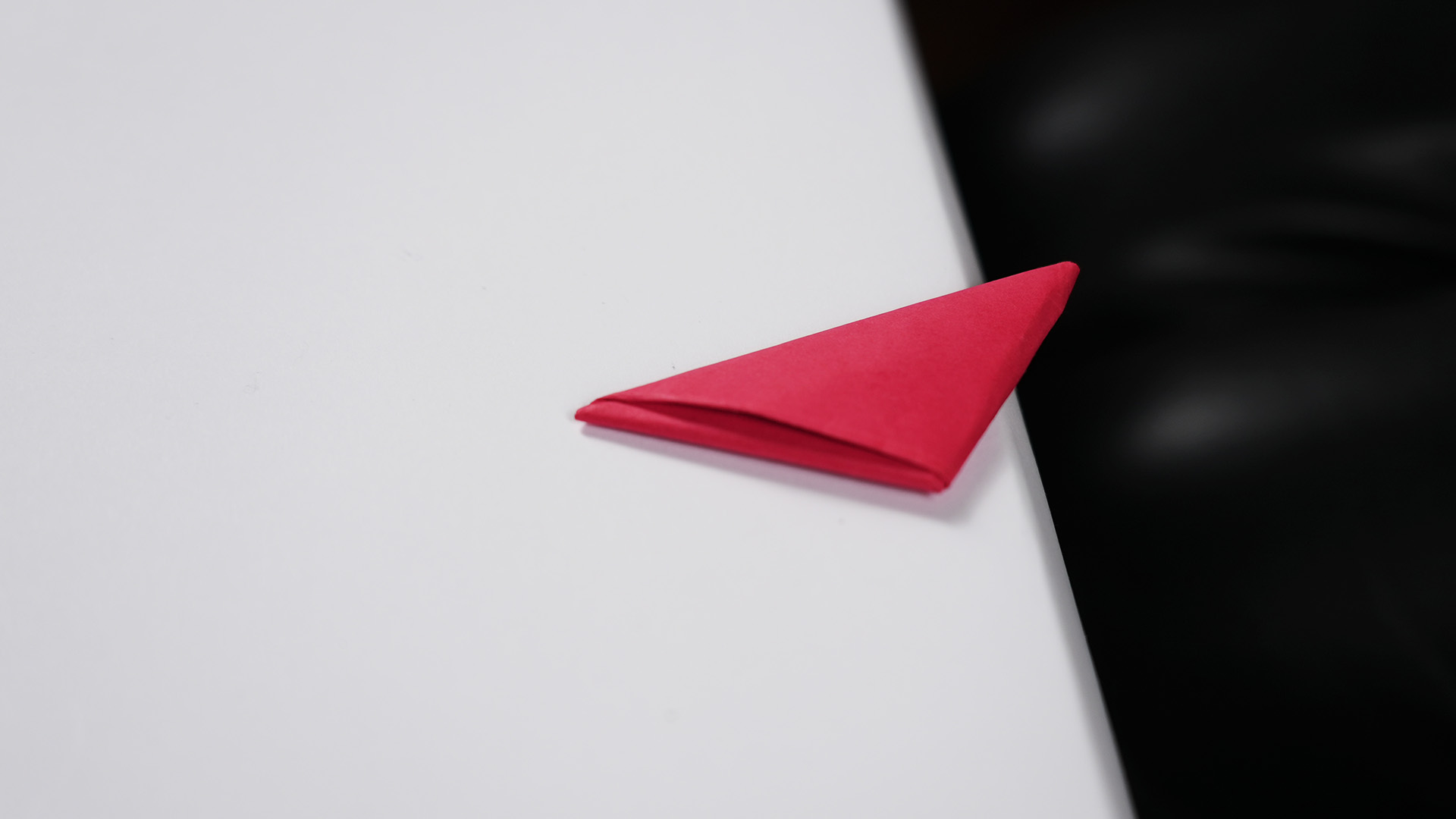
When you reach the end of the strip, you will usually have a small flap of paper left. Fold that flap into a triangle shape, then tuck it into the pocket created by the earlier folds. This locks the football together without tape.
Flatten the triangle gently between your fingers. It should look like a small, firm wedge. If it pops open, the final flap may be too large or folded at the wrong angle. Trim a tiny bit if needed, then tuck it again. You can also decorate the football with marker lines to make it look like a miniature pigskin, because even paper athletes deserve uniforms.
Step 5: Set Up the Playing Field
Choose a table with enough length for flicking. A dining table, classroom desk, coffee table, or kitchen counter can work. Clear away drinks, phones, laptops, plates, and anything breakable. Paper football becomes much less charming when the opening kickoff knocks iced coffee into a keyboard.
Each short end of the table represents an end zone. The object is to flick the football so part of it hangs over your opponent’s edge without falling off. That edge is the goal line. If the football drops to the floor, the touchdown does not count, and your opponent usually takes possession.
Step 6: Decide Who Starts
Use a coin toss, rock-paper-scissors, or the highly scientific method of “youngest player goes first.” The first player places the paper football near their own edge and flicks it toward the opponent’s side. Some players start with a kickoff by balancing or tapping the ball onto the field; others simply begin with a regular flick. Choose one method before the game begins so nobody suddenly invents a rule after missing badly.
Also decide how the game ends. You can play to a target score, such as 21 points, or use a time limit, such as five or ten minutes. For younger players, a shorter game keeps the energy high. For adults with suspiciously competitive personalities, a time limit prevents the phrase “one more round” from becoming a legally binding contract.
Step 7: Flick the Football Down the Table
To move the football, place one finger behind it and flick forward with a quick, controlled motion. Some players use the index finger; others prefer the middle finger or thumb. The key is control. Do not slap the football. Do not shove it with your whole hand. And definitely do not palm it across the table like a secret agent sliding a folder in a spy movie.
Players take turns flicking the football toward the opposite end. In simple rules, each player gets one flick at a time. In football-style rules, a player may get four downs, or four chances, to score before possession changes. The four-down version adds strategy: do you go for the touchdown, take a careful setup flick, or attempt a field goal before losing possession?
Step 8: Score a Touchdown
A touchdown happens when the paper football comes to rest with part of it hanging over the opponent’s edge of the table without falling. The football must be balanced on the edge. If it drops off, no touchdown. If it is fully on the table, no touchdown. If it is barely hanging and both players squint at it like art critics, use a ruler, card, or straight edge to check.
A standard touchdown is worth six points. For example, if you land the football perfectly on your opponent’s edge, you earn six points and may attempt an extra point. This keeps the game close to American football scoring while still being simple enough for kids, families, or office break-room legends.
Step 9: Kick Extra Points and Keep Score
After a touchdown, the scoring player gets an extra-point attempt. The opponent forms goalposts by touching both thumbs together and pointing both index fingers upward. The thumbs create the crossbar, and the index fingers become the uprights. The kicker stands the paper football upright, holds it lightly with one finger, and flicks it with the other hand toward the goalposts.
If the football travels between the uprights, the kicker scores one extra point. In some house rules, players can also attempt a field goal during regular play for three points. Field goals are more challenging because the football must fly cleanly through the goalposts. Keep score honestly, rotate turns fairly, and remember: sportsmanship is part of the game. Trash talk may be allowed, but only if it is funny and not mean. “Your flick has the accuracy of a sleepy raccoon” is acceptable. Personal insults are not.
Simple Scoring Rules for Paper Football
Paper football scoring can be as basic or as detailed as you want. Beginners should start with the classic scoring system:
- Touchdown: 6 points
- Extra point: 1 point after a touchdown
- Field goal: 3 points, if you choose to allow it
For an easy game, play until someone reaches 21 points. A typical score might look like 14–7 after two touchdowns with successful extra points. If you are playing with younger children, you can simplify the game even more: touchdown equals 1 point, first to 5 wins. The goal is fun, not a tax audit.
What Happens If the Football Falls Off the Table?
If the football falls off the side or end of the table without scoring, possession usually changes to the other player. The opponent starts from their side of the table. This rule rewards accuracy and prevents players from launching the football with the force of a weather event.
What If the Football Stops in the Middle?
If the football stops in the middle of the table, play continues from that spot. In one-flick rules, the other player takes a turn. In four-down rules, the same player may continue until they score, run out of downs, or lose possession according to the house rules.
Tips to Get Better at Paper Football
Use Less Power Than You Think
Most beginners flick too hard. The perfect shot is not a rocket launch; it is a smooth, controlled slide. Aim for the last third of the table, not the next ZIP code. A softer flick often gives you a better chance of landing the football on the edge.
Keep the Football Flat
A warped football will not glide well. Flatten it before each game and refold any loose corners. If the paper becomes too soft or bent, make a new football. Paper is affordable. Pride is expensive.
Practice the Edge Shot
The hardest part of paper football is getting the triangle to stop partly over the edge. Practice by placing the football halfway down the table and taking repeated shots at the end zone. Try different finger positions and speeds until you learn how the football reacts.
Agree on Rules Before Playing
Paper football has many variations, and that is part of the fun. Some players allow four downs. Some play one flick per turn. Some allow field goals from anywhere. Some require the football to hang over the edge by a visible amount. Decide before kickoff so the game does not become a courtroom drama starring two people and a folded receipt.
Fun Variations for Kids, Families, and Game Day
Once you know the basic rules, you can customize the game. For a classroom or family activity, let players decorate their footballs with team colors. For a football party, create a tournament bracket. For younger kids, make wider cardboard goalposts so extra points are easier. For older players, narrow the goalposts and increase the challenge.
You can also build a mini field with yard lines drawn on poster board. Add end zones, team names, and a scoreboard. A simple paper football game suddenly feels like a tiny stadium, minus the parking fees and the person behind you yelling about the referee.
Another fun variation is the “best of five kicks” challenge. Each player gets five field goal attempts, and the highest score wins. This is quick, easy, and perfect when you do not have time for a full game. It also helps players practice the upright kick, which is the trickiest and funniest part of paper football.
Common Mistakes to Avoid
- Using a messy playing surface: Crumbs, sticky spots, and uneven textures can ruin the slide.
- Flicking too hard: Power without control usually sends the football off the table.
- Making a loose football: Tight folds create better movement and durability.
- Changing rules mid-game: This is how friendly games become dramatic documentaries.
- Standing too close to the goalposts: Give the kicker a fair shot and keep your hands still.
Experience Notes: What Playing Paper Football Teaches You
The funniest thing about paper football is how quickly people take it seriously. At first, everyone acts casual. “It is just a paper triangle,” someone says. Two minutes later, that same person is leaning over the table, calculating angles, questioning wind resistance in a room with no wind, and demanding a replay because the football “was definitely interfered with by the table grain.” Paper football has a magical way of turning normal people into tiny-table coaches.
From experience, the best games happen when the rules are simple and the mood is light. If you are playing with kids, do not overload the game with too many football terms at once. Start with the basics: flick the football, try to land it on the edge, score a touchdown, kick an extra point. Once everyone understands that, add field goals, downs, or a time limit. Kids enjoy the folding part almost as much as the game, especially when they get to decorate their football with stripes, team names, or dramatic lightning bolts that surely improve speed by at least 400 percent.
Playing with adults is a different kind of comedy. Adults tend to remember paper football from school, which means every player arrives with their own sacred rulebook stored somewhere in childhood memory. One person will insist that each player gets four downs. Another will say every flick alternates. Someone else will claim that field goals are allowed only from the player’s own side. None of these versions are wrong. Paper football is a folk game, which means house rules are part of its charm. The trick is to agree before the first flick.
The most useful skill is touch. A beginner usually tries to blast the football across the table, but the winning move is often a controlled flick that slows down near the edge. Think of it less like throwing a football and more like rolling a golf putt. The table surface matters, too. Smooth wooden tables create fast games. Plastic folding tables can be unpredictable. Glass tables are slick, dramatic, and slightly dangerous for anyone who celebrates with too much elbow movement.
Paper football is also a sneaky teaching tool. It teaches hand-eye coordination, patience, fair play, measurement, angles, and probability without feeling like homework. It is a great indoor activity for rainy days, football watch parties, family gatherings, classrooms, camps, and office breaks. Best of all, nobody needs to be athletic to enjoy it. The smallest player can beat the biggest player with one perfect flick. That is the glory of paper football: a tiny folded triangle, a table, and the eternal belief that the next shot is absolutely going in.
Conclusion
Learning how to play paper football is easy, but mastering it takes practice, touch, and a healthy sense of humor. Start by folding a tight triangle, choose a smooth table, decide on your rules, and flick with control instead of brute force. Score touchdowns by landing the football partly over the opponent’s edge, kick extra points through finger goalposts, and keep the game friendly.
Paper football remains popular because it is fast, cheap, portable, and surprisingly competitive. It turns ordinary paper into a game, ordinary tables into stadiums, and ordinary players into very serious analysts of edge physics. Whether you are playing with kids, friends, coworkers, or family on game day, the rules are simple: fold, flick, score, laugh, and play again.