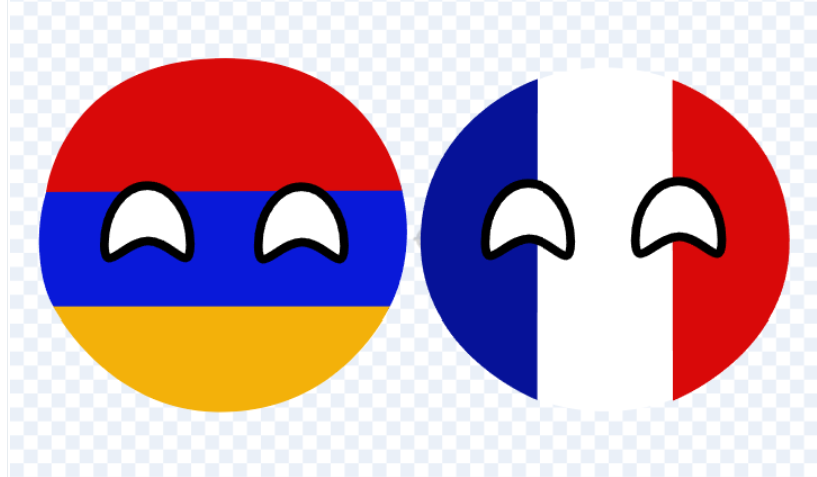
Learning how to draw Countryballs is wonderfully uncomplicated: choose a country, borrow the visual language of its flag, add two expressive eyes, and give your spherical diplomat a personality. No anatomy lessons are required, and nobody will ask why your character has no elbows.
Countryballsalso known as Polandball charactersare minimalist cartoons that personify countries, regions, and historical entities. Although the artwork looks simple, recognizable Countryball drawings depend on accurate flag details, readable expressions, confident outlines, and a few community traditions. The following 12-step Countryball drawing tutorial works for pencil and paper, a mouse, a stylus, or nearly any digital drawing app.
What You Need Before Drawing Countryballs
Traditional artists only need paper, a pencil, an eraser, a black pen, and colored pencils or markers. Digital artists can use a basic raster drawing program with a hard-edged brush, an eraser, a fill tool, and layers. Expensive software is optional; artistic enthusiasm and a functioning undo button are much more valuable.
- A reliable image of the country’s current official flag
- A pencil or pressure-sensitive digital brush
- A black pen or opaque inking brush
- Colors that closely match the national flag
- A separate sketch layer when working digitally
- A clean background with room for accessories or dialogue
How to Draw a Countryball in 12 Easy Steps
Step 1: Choose a Country and Research Its Flag
Start with a country whose flag you can reproduce clearly. France, Germany, Japan, Ukraine, and Poland are approachable choices for beginners because their designs use large shapes and limited colors.
Consult a dependable flag reference instead of drawing from memory. Check the stripe order, symbol placement, proportions, and current design. Mixing up two similar tricolors is remarkably easy. One reversed color can turn your confident Romanian ball into a confused Chad ball before it has even opened its eyes.
Step 2: Plan the Character’s Size and Position
Lightly mark the space the Countryball will occupy. Leave enough room for eyes, accessories, shadows, and speech bubbles. A single portrait usually looks balanced when the ball fills roughly half to two-thirds of the canvas.
For a comic panel, sketch every character’s location before adding details. Place the most important Countryball where viewers will notice it first, and avoid squeezing dialogue into whatever tiny corner survives afterward.
Step 3: Draw a Loose, Imperfect Circle
Sketch a rounded body using several light strokes. The shape does not need to be mathematically perfect. In fact, the classic Polandball aesthetic favors a hand-drawn outline over a flawless circle made with an ellipse tool.
Allow slight bumps and asymmetry, but keep the silhouette clearly recognizable as a ball. If it resembles a potato, gently refine the sides. If it resembles an excellent potato, save that design for later and start another sketch.
Step 4: Map the Flag Design Onto the Body
Draw light guides for stripes, fields, crosses, stars, crescents, or other emblems. Imagine that the flat flag has been wrapped across the front of a sphere. Simple horizontal bands can remain mostly straight, although subtly curved lines may suggest volume in a more polished style.
Do not add black borders between adjoining flag colors unless the real design or your chosen art style requires them. The outer contour and eye outlines should remain the strongest lines.
Step 5: Position Two Large White Eyes
Place two vertical white eyes on the upper-middle portion of the ball. Traditional Countryball eyes have black outlines but no pupils, eyelashes, or detailed irises. Their simplicity is precisely what makes them so expressive.
Vary the shapes slightly to avoid a lifeless copy-and-paste appearance. Keep both eyes large enough to remain readable at thumbnail size, especially if the final drawing will appear in a comic or social media post.
Step 6: Create an Expression With Eye Shapes
Countryballs usually communicate emotion through their eyes rather than mouths. Tilt the eyes inward for anger, narrow them for suspicion, curve their lower edges for sadness, or widen them for surprise. One raised eye can suggest confusion or skepticism.
Test the expression by temporarily hiding the flag details. If the emotion is still understandable, the design is working. This limitation encourages clear visual storytellingand saves everyone from drawing teeth.
Step 7: Refine the Flag’s Main Colors
Apply the correct flag colors carefully. On paper, color in one direction to reduce streaks. In a digital program, place the colors on a layer beneath the outline and eyes. Layers make corrections far easier when a fill tool becomes adventurous.
Preserve strong contrast between neighboring sections. Avoid excessive gradients, glossy highlights, or textures if you want a traditional meme appearance. Flat colors keep the character readable and allow the flag to do most of the identification work.
Step 8: Simplify Complicated Symbols
Coats of arms, eagles, seals, and clusters of stars can become illegible on a small Countryball. Reproduce their essential silhouette, colors, and placement without cramming in every microscopic detail. Simplification is not carelessness; it is visual editing.
Draw recognizable symbols yourself rather than pasting a downloaded emblem onto the character. A slightly imperfect handmade eagle usually fits the style better than a razor-sharp official seal floating on top like an expensive sticker.
Step 9: Ink the Outer Contour and Eyes
Trace the final body and eye shapes with a confident black line. Use a medium or thick brush that remains visible after the image is resized. Slight variations in line weight can make the drawing feel energetic, but avoid so much wobble that the border appears electrically charged.
Digital artists should ink on a fresh layer above the sketch. Traditional artists can wait for the ink to dry before erasing pencil marksa modest delay that prevents an exciting but unwanted gray smear.
Step 10: Add an Identifying Accessory
An optional accessory can reveal personality or help distinguish characters with similar flags. Countryball art frequently uses hats, glasses, food, tools, or culturally recognizable objects. The United Kingdom is often shown with a top hat and monocle, while the United States commonly wears dark sunglasses.
Choose accessories thoughtfully. Favor relevant historical, geographic, or cultural references rather than demeaning stereotypes. Research an unfamiliar country before turning the first random search result into its entire personality.
Step 11: Add a Ground Shadow or Simple Background
A small oval shadow beneath the character prevents it from appearing suspended in empty space. Use a neutral gray or a transparent dark tone, keeping the effect subtle. A darker area near the ball and a softer outer edge create believable contact with the ground.
For a comic, add only the background details needed to establish the location or support the joke. A few shapes can suggest a room, border crossing, battlefield, meeting hall, or space station without competing with the characters.
Step 12: Clean Up, Review, and Export
Erase sketch marks, close accidental gaps, remove color outside the outline, and inspect important flag symbols. Zoom out to check readability, then flip the canvas horizontally. Flipping exposes uneven shapes that your eyes may have politely stopped reporting.
Save an editable master file with its layers intact. Export a PNG for crisp web graphics and transparent backgrounds, or a high-quality JPEG when the artwork contains a full background. Before posting, view the image at its intended display size and confirm that the flag and expression remain recognizable.
Important Countryball Conventions to Know
The original Polandball style grew through online comics and eventually acquired numerous unwrittenand sometimes very writtenrules. Artists do not follow all of them everywhere, but knowing the major conventions helps you understand why certain drawings look more authentic to longtime fans.
- Draw the ball freehand rather than using a perfect circle tool.
- Use plain white eyes with black outlines and no pupils.
- Avoid arms, legs, mouths, and detailed human anatomy in traditional designs.
- Draw flag elements and props rather than inserting existing images.
- Show Polandball with red above white, reversing Poland’s official white-over-red flag.
- Recognize intentional exceptions: Nepal may keep its unusual flag shape, while some recurring characters are cubes, rectangles, or other forms.
These conventions are part of the meme’s visual vocabulary, not a test of artistic worth. If your goal is a personal illustration rather than a rule-governed community submission, clarity, humor, and respectful creativity matter more than perfect compliance.
Common Countryball Drawing Mistakes
Using the Wrong Flag Layout
Similar colors do not mean identical flags. Verify whether stripes are vertical or horizontal and where each emblem belongs. When drawing Polandball, remember that the meme traditionally reverses Poland’s official flag on purpose; reversing most other flags is simply an accident.
Making the Eyes Too Small
Tiny eyes weaken the expression and disappear when the picture is reduced. Treat the eyes as the character’s face, acting system, and emotional résumé. Give them enough room to perform.
Adding Too Many Details
Countryball design relies on visual economy. Excessive shading, facial features, textures, and accessories can bury the flag. Ask whether each detail improves recognition, emotion, or storytelling. If it does none of those jobs, let it enjoy an early retirement.
Confusing Rough With Careless
A freehand outline can be charming without being unreadable. Deliberate imperfections support the traditional style, whereas unfilled gaps, accidental marks, and muddy colors make the work look unfinished. Casual-looking art still benefits from careful cleanup.
Experiences and Lessons From Drawing Your First Countryballs
A typical beginner’s first Countryball seems almost suspiciously easy. You draw a circle, add two eyes, apply a flag, and expect to finish before your beverage notices you have left. Then the circle leans to one side, the eyes disagree about where they live, and the flag’s central emblem demands the precision of a miniature mural. This is where the real learning begins.
The first useful experience is discovering that simple characters expose every decision. A realistic illustration can hide a weak line beneath texture or shading. A Countryball has nowhere to conceal it. Its outline, color blocks, and eyes must carry the entire image. Beginners often improve quickly because they receive immediate visual feedback: if the emotion is unclear, changing the eye angle produces an obvious result.
Drawing several countries also becomes an unexpected geography lesson. Flags that seemed familiar reveal details that memory quietly discarded. You begin noticing different shades of blue, off-center crosses, changing star counts, and coats of arms positioned closer to the hoist. Checking reliable references becomes a habit, and recognition improves with every character.
One especially helpful practice session is to draw the same simple Countryball six times with different emotions. Keep the body and flag unchanged, then create happiness, anger, worry, boredom, surprise, and suspicion using only the eyes. The exercise demonstrates how a few millimeters of tilt can change an entire personality. It also teaches consistency without requiring six complicated designs.
Another common experience is the temptation to over-polish. A digital artist may smooth the circle, generate perfectly identical eyes, add cinematic lighting, and finish with a reflection worthy of a new automobile. The result can look attractive but lose the scrappy charm associated with traditional Countryball comics. After experimenting, many artists settle on a useful compromise: freehand shapes and flat colors supported by clean layers and careful editing.
Complex flags provide a different kind of lesson. The first attempt to reproduce an intricate seal at a tiny scale may end in a colorful knot. The second attempt usually goes better because the artist identifies the emblem’s dominant silhouette and removes details that cannot survive resizing. This skill transfers to logos, icons, editorial cartoons, and character design. Simplification becomes a deliberate technique rather than a reluctant surrender.
Creating a short comic introduces storytelling challenges. Two beautifully drawn Countryballs cannot rescue a panel if readers do not know who speaks first or why the scene matters. Planning character positions and dialogue before inking prevents crowded speech bubbles and awkward empty areas. A three-panel structure works well for practice: establish the situation, create conflict, and deliver the visual punch line.
Finally, sharing artwork teaches that Countryball audiences have different expectations. Some viewers enjoy highly polished fan art; others prefer strict classic conventions. Reading a community’s rules before submitting avoids preventable frustration. Constructive feedback about flag accuracy, readability, or composition can be valuable, while purely personal preferences can remain exactly thatpreferences.
The most satisfying experience is watching a basic sphere become recognizable without a written label. When viewers identify the country, understand the emotion, and catch the joke in a few seconds, the minimalist design has succeeded. Your early circles may wobble, but wobble is not defeat. Around here, it is practically part of the passport.
Conclusion
To draw a successful Countryball, combine an accurate flag reference, a lively freehand outline, bold white eyes, clean colors, and one clear emotion. Start with a simple national flag, practice multiple expressions, and add props or backgrounds only when they strengthen the character or story. The style is accessible enough for a first-time cartoonist but flexible enough to support elaborate comics, history jokes, animations, and original fan art.
Most importantly, keep experimenting. A Countryball does not need anatomical realism or flawless geometry. It needs to be recognizable, expressive, and entertainingwhich is excellent news for anyone whose circles have opinions of their own.