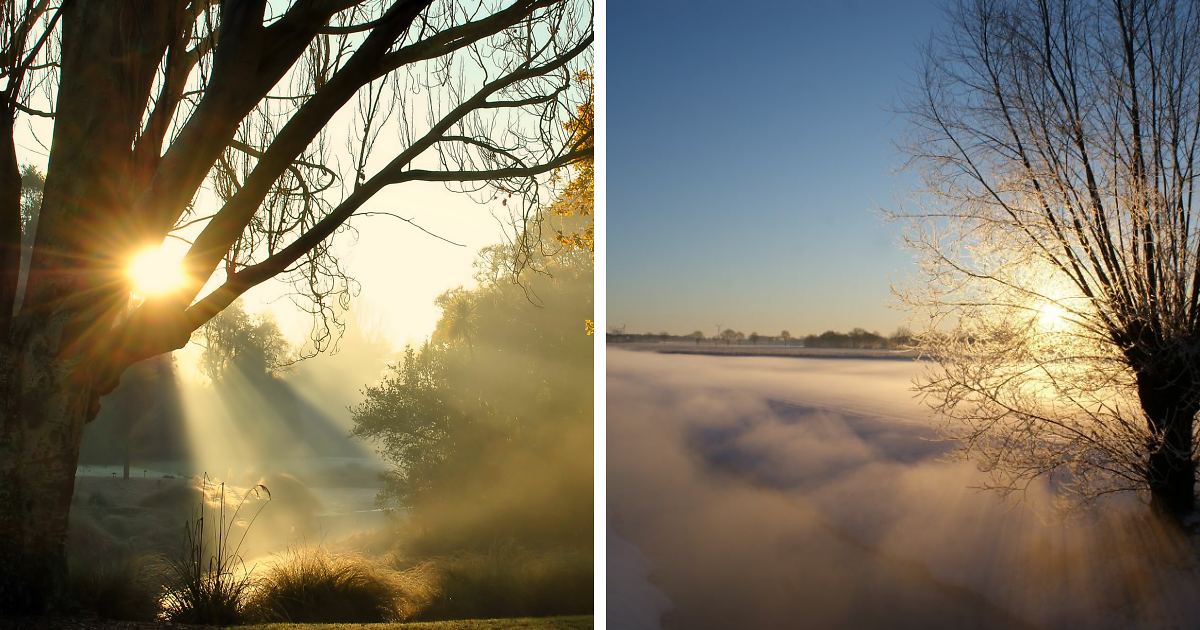
There are two kinds of people in this world: people who leap out of bed to catch first light, and people who believe sunrise is a rumor invented by productivity influencers. But every now and then, even the sworn enemies of early mornings step outside, see the sky turning peach, gold, and pink, and suddenly understand why the internet keeps falling in love with sunrise photos.
That is exactly why a prompt like “Hey Pandas, Post Your Pictures Of Sunrise” works so well. It sounds simple, but it taps into something bigger than photography. A sunrise picture is not just a pretty sky. It is proof that someone was there. Awake. Looking up. Possibly holding coffee with one hand and a phone with the other while trying not to trip over wet grass like a cinematic goblin.
This article explores why sunrise photos hit people right in the feelings, what separates a scroll-past image from a stop-and-stare one, and how to take better sunrise shots whether you use a phone, a mirrorless camera, or sheer stubbornness. If you have ever wanted to post your own dawn masterpiece without sounding like a greeting card, this guide is for you.
Why Sunrise Photos Never Get Old
Sunrise has built-in drama. The light is softer than midday, the colors are warmer, and the whole scene feels like the world is still deciding what kind of day it wants to be. That uncertainty is part of the charm. One morning gives you a buttery golden horizon. Another gives you moody blue fog. Another goes full theatrical and throws streaks of red and orange across the clouds like the sky just discovered special effects.
There is also a psychological reason sunrise photos resonate. A sunrise suggests beginnings. It hints at routine, hope, travel, recovery, solitude, or fresh starts. That is why two people can take wildly different sunrise pictures and both feel honest. One person posts a peaceful beach scene. Another posts a city skyline with construction cranes and steam. Both are saying, in their own way, “I was here when the day began.”
And let’s be honest: sunrise photos come with a tiny bragging right. They say, “Yes, I did get up early, and yes, I would like a little applause.” That does not make them less meaningful. It makes them human.
What Makes a Sunrise Photo Worth Posting?
1. Light comes first
The best sunrise images are not always the most exotic ones. You do not need a volcano, a yacht, or a cliffside cabin with suspiciously perfect blankets. What matters most is light. Soft, directional morning light can transform ordinary scenes into memorable ones. A parking lot puddle can become a mirror. Bare tree branches can become graphic shapes. A row of rooftops can suddenly look poetic instead of “aggressively suburban.”
2. Weather is not your enemy
Many beginners wait for clear skies and then wonder why the result feels flat. Some of the strongest sunrise photos happen when the weather gets involved. Thin clouds catch color. Mist adds layers. Fog creates mystery. Even haze can soften the scene in a way that feels dreamy instead of harsh. A little atmosphere often gives the sunrise somewhere to perform.
3. Story beats perfection
A technically perfect sunrise photo can still feel empty if it says nothing. Meanwhile, a simple shot of sunlight cutting through a window, a field, a dock, or a sleepy neighborhood can land harder because it feels personal. The question is not only “Is the sky beautiful?” It is also “What does this morning feel like?”
4. Composition matters more than gear
Yes, camera settings help. No, gear is not the magic bean. A strong composition will do more for your image than an expensive lens used with chaotic energy. Look for a foreground subject, leading lines, reflections, silhouettes, or a clean horizon. Give the viewer a place to enter the frame. Otherwise, even a spectacular sunrise can become a giant wallpaper sample.
How to Capture Better Sunrise Pictures
Arrive before the good part starts
The funniest thing about sunrise photography is that the “sunrise” often starts before the sun actually appears. The sky can develop color well before the sun clears the horizon, and that early glow is often gentler, moodier, and more interesting than the bright burst that comes later. If you show up at the exact sunrise time, you may already be late to the party.
Use simple, reliable settings
If you are using a dedicated camera, keep your approach practical. A low to mid-range ISO often works well in sunrise conditions because the light is limited, but you still want clean detail. A tripod helps when shutter speeds get slower. If your camera allows it, tap to expose for the brighter part of the sky and then adjust as needed so your image does not turn into a glowing blob with no detail. On a phone, holding still and avoiding overexposure already gets you halfway to a better shot.
Try silhouettes on purpose
Sunrise is a great time to stop fighting contrast and use it creatively. A person on a hill, a tree line, birds on a wire, or a pier jutting into the water can all become striking silhouettes. Instead of trying to brighten every shadow, let the dark shapes anchor the scene. This gives the eye structure and makes the color in the sky feel even more dramatic.
Look for layers
The strongest dawn images often have depth: something in the foreground, something in the middle, and something farther away. This could be grass, a lake, and mountains. It could be a fence, a field, and the horizon. It could be a coffee mug on a balcony with an awakening city behind it. Layers make a photo feel lived in rather than merely observed.
Keep your horizon straight
A crooked horizon is one of those little mistakes that can quietly sabotage a good image. The sky can be magnificent, your framing can be strong, your timing can be perfect, and then the ocean looks like it is sliding off the planet. Check your edges before you post. Future you will be grateful.
Do not edit the life out of it
Sunrise is already dramatic. You do not need to crank saturation until the sky looks like a sports drink. A little contrast, a touch of warmth, and careful highlight control usually go much farther than aggressive editing. Keep the mood, keep the detail, and resist the urge to make every cloud look like it was sponsored.
Stay safe, even for a beautiful sky
Sunrise photography has one sneaky challenge: you are often moving around in dim light, near roads, water, rocks, trails, or unfamiliar viewpoints. That means basic safety matters. Pull over safely if you are driving. Watch your footing. Do not back toward cliffs while staring at your screen like a heroic fool in a commercial. A good sunrise photo is great. A good sunrise photo with all your bones still organized properly is better.
Creative Ideas for a “Hey Pandas, Post Your Pictures Of Sunrise” Submission
If you want your sunrise post to feel fresh instead of generic, start with the experience, not just the sky. Here are a few angles that work well:
The quiet neighborhood sunrise
Not every memorable photo needs a dramatic travel destination. A sleepy street, porch light, mailbox, bicycle, or row of houses can create a charming sense of place. Ordinary settings often feel surprisingly intimate at dawn.
The foggy field or misty lake
Mist adds instant atmosphere. If you find low fog over a field or water, keep your composition simple and let the softness do the heavy lifting.
The road-trip sunrise
Gas station coffee, windshield glow, empty highway, first light in the rearview mirror. That is not just a photo. That is a whole mood.
The city sunrise
Glass buildings catching pink light, steam rising from rooftops, train platforms waking up, traffic signals blinking under a brightening sky. Urban sunrise shots can feel cinematic in a completely different way than beach or mountain images.
The human detail
A pair of boots by the dock, someone wrapped in a blanket, a dog waiting by the trail, a hand holding a warm mug. Tiny details often make a sunrise picture feel like a memory instead of a postcard.
How to Write a Caption That Does Not Sound Like a Fortune Cookie
The internet has seen enough captions about “new beginnings” to last until the heat death of the universe. That does not mean heartfelt captions are bad. It just means specific beats generic every time.
Instead of writing, “Every sunrise is a blessing,” try something like:
“Got up grumpy, came home grateful.”
“Taken five minutes before my coffee became a medical necessity.”
“The sky looked like it had somewhere important to be.”
“Worth the alarm. Barely. But worth it.”
A good caption adds texture. It can be funny, reflective, or simple. It does not need to sound profound. It just needs to sound like you.
Why the Best Sunrise Photos Feel Personal
The real reason a community prompt like “Hey Pandas, Post Your Pictures Of Sunrise” works is that sunrise photography sits at the intersection of beauty and memory. People are not just sharing colors. They are sharing where they were, who they were with, what they were feeling, and what kind of morning it became.
One person posts a photo from a vacation they saved for all year. Another posts a sunrise seen from a hospital parking lot after a long night. Someone else shares first light over a farm, a winter street, a beach boardwalk, or a hiking trail that nearly defeated their knees. The skies may look different, but the emotional logic is the same: dawn makes people notice things. It asks them to pause. That pause is often what viewers respond to most.
In other words, the best sunrise photos are rarely just about the sun. They are about attention. They show that for one brief moment, a person stopped scrolling, stopped rushing, and looked at the world while it was still warming up.
Sunrise Experiences: 500 More Words From the First-Light Crowd
There is a very specific feeling that comes with chasing a sunrise, and it usually begins the night before with optimism that borders on fiction. You set an alarm. You tell yourself this is absolutely happening. Tomorrow you will become the kind of person who rises before dawn, stretches gracefully, and heads out the door with intention. Then the alarm goes off, and the version of you who made that decision feels like a complete stranger.
But somehow, if you do get up, the whole world feels different. Streets are quieter. The air is cooler. Even familiar places seem temporarily rewritten. A grocery store parking lot at noon is just a parking lot. At sunrise, it can hold long shadows, pink reflections on car windows, and the weirdly peaceful hum of a town not fully awake yet. That is part of the magic. Sunrise does not always transform the grandest landscapes. Sometimes it redeems the ordinary.
People who photograph sunrise regularly will tell you that the experience becomes part ritual, part gamble. You can check the weather, scout a location, and bring all the right gear, but the sky still makes the final decision. Some mornings are explosive, full of color and layered clouds that look painted on. Other mornings are subtle. Pale blue. Silvery gray. Quiet. The trick is learning that “quiet” is not the same as “boring.” A modest sunrise can feel more intimate than a spectacular one.
There is also something deeply satisfying about being early to beauty. Sunrise rewards patience in a way modern life usually does not. You stand there in half-darkness, waiting, listening, adjusting your framing, second-guessing your life choices, and then suddenly a thin line of light appears. The clouds catch. The edges of the landscape sharpen. Birds start moving. The first warm tone slips across whatever is in front of you. It is not loud. It is not instant. That slow reveal is exactly why it feels meaningful.
And then there are the personal associations. Sunrise photos often end up tied to stories people never mention in the caption. A family trip. A breakup recovery walk. A solo drive. A camping weekend. A morning before a wedding. A day that started badly and improved. A day that started beautifully and stayed that way. The image becomes a receipt for a private moment. Viewers may admire the color, but the photographer remembers the wind, the cold fingers, the smell of coffee, the wet grass, or the silence.
That is why so many sunrise images linger even when they are simple. They do not have to be technically perfect. Sometimes the horizon is not ideal. Sometimes the shadows are messy. Sometimes the composition is more heartfelt than polished. But you can feel the sincerity in them. They carry evidence of presence. Someone woke up, stepped outside, and noticed the day arriving. In a culture full of rushed content, that kind of noticing still feels rare.
So when people answer a prompt like “Hey Pandas, Post Your Pictures Of Sunrise”, they are not only posting nice scenery. They are contributing little proof that wonder still interrupts routine. And maybe that is why sunrise photos continue to work. They remind us that beauty does not always require a ticket, a trend, or a perfect plan. Sometimes it just requires an early alarm, a little luck, and the willingness to look east before the rest of the world gets noisy.
Conclusion
“Hey Pandas, Post Your Pictures Of Sunrise” is more than a cheerful internet prompt. It is an invitation to notice, to remember, and to share a version of the world that feels briefly softer than usual. The best sunrise photos do not win because they are the most edited, the most expensive, or the most dramatic. They win because they feel real.
If you want your sunrise shot to stand out, arrive early, use the light you get, look for story in the foreground, and keep the edit honest. Most of all, do not wait for some mythical perfect morning. Start with the sunrise outside your own window, at your local park, from your balcony, on the way to work, or in the middle of a sleepy road trip. The internet may love spectacular skies, but people remember photos that make them feel something.
So yes, by all means: post your pictures of sunrise. Just make sure they carry a little of your morning with them.