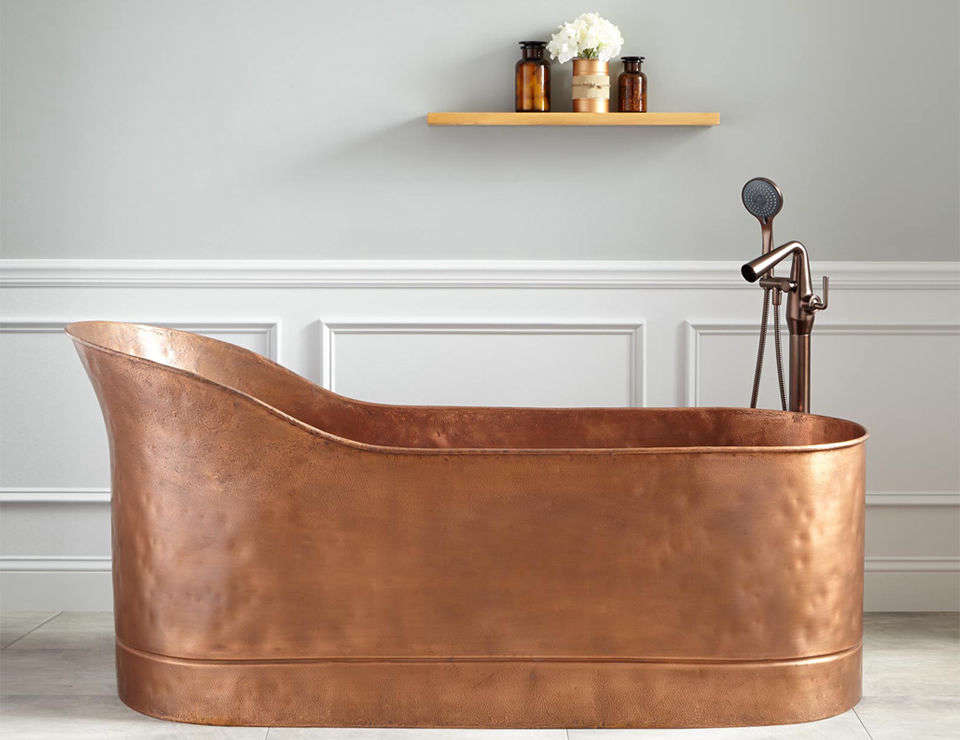
The Henrick Textured Copper Slipper Tub is not the kind of bathtub that quietly stands in the corner and hopes someone notices it. This is a tub with a personality. It has warmth, texture, curves, a rustic antique copper patina, and enough visual drama to make a plain white bathroom suddenly feel like it owns a boutique hotel membership card.
At first glance, the Henrick looks like a luxury statement piece. Look closer, and it also makes practical sense for homeowners who want a freestanding soaking tub with character, comfort, and long-term durability. Its oval slipper profile offers a raised back for reclining, while the hammered copper surface gives the bathtub a handmade look that feels less “factory aisle” and more “carefully chosen centerpiece.”
In a world full of glossy acrylic tubs that all seem to have attended the same design seminar, the Henrick textured copper slipper tub brings a different kind of charm. It is rich without being flashy, rustic without feeling rough, and elegant without demanding that your bathroom also wear a tuxedo.
What Is the Henrick Textured Copper Slipper Tub?
The Henrick is a freestanding copper slipper bathtub designed with a raised end, oval basin, hammered texture, and antique copper patina. It measures approximately 67 inches long, 27-1/4 inches wide, and 32 inches high, making it a generous soaking tub without becoming a full-blown indoor swimming pool. The interior length is about 63 inches, and the interior width is about 23-1/4 inches, which gives many bathers enough room to stretch out comfortably.
The product specification lists a 16-gauge copper construction, hammered treatment on both the exterior and interior, an end drain placement, no tap deck, and no faucet drillings. That means the tub is meant to pair with either a freestanding tub filler or a wall-mounted faucet, rather than a deck-mounted faucet. In design terms, this is good news: the tub keeps its clean sculptural shape, and the faucet becomes part of the overall bathroom composition.
The Henrick also includes optional drain and overflow configurations, depending on the setup. Its listed water depth is approximately 17-1/4 inches to the rim and 14-1/2 inches to overflow. In plain English, it is built for soaking, not just for quickly rinsing off while wondering why your towel is across the room.
Why Copper Makes This Tub Feel Special
Copper has a warmth that many bathroom materials struggle to imitate. Stone feels grounded, porcelain feels classic, acrylic feels practical, but copper feels alive. Its surface naturally changes over time, developing a patina that deepens, darkens, and shifts based on use, moisture, cleaning habits, and the surrounding environment.
This “living finish” is one of the biggest reasons people fall in love with a copper slipper tub. The antique copper patina on the Henrick already gives it an aged, collected look, but the surface will continue gaining character. Small variations, deeper tones, and subtle color movement are not flaws. They are the copper doing copper things. Think of it as the bathtub equivalent of a leather jacket that looks better after real life has happened to it.
Hammered Texture Adds Beauty and Forgiveness
The Henrick’s hammered texture is not just decorative. A textured copper bathtub can help disguise small water spots, fingerprints, and natural patina changes better than a perfectly smooth, mirror-like surface. The hammered finish catches light in different directions, creating movement and depth. In a bathroom with soft lighting, it can look especially dramatic, almost like the tub is glowing from within.
This texture also helps the Henrick feel artisan-made. Even when installed in a polished modern bathroom, the hammered copper adds a human touch. It softens sharp tile lines, balances sleek glass showers, and gives the room a focal point that does not need a neon sign saying, “Please admire me.”
The Slipper Shape: Comfort With a Little Theater
A slipper tub gets its name from its raised back, which resembles the curved shape of an old-fashioned slipper. The design is not only attractive; it is also comfortable. The elevated end supports the shoulders, neck, and upper back better than many flat-ended tubs. For people who see bathing as a small ceremony rather than a chore, that raised end matters.
The Henrick’s single-slipper design works especially well when the tub is placed so the raised back faces a feature wall, window, fireplace, or decorative niche. The lower end keeps the silhouette open, while the high end creates a natural lounging position. Add a floor-mounted tub filler nearby, and suddenly the bathroom starts whispering things like “spa retreat” and “you deserve eucalyptus.”
Best Bathroom Styles for the Henrick Copper Slipper Tub
The Henrick Textured Copper Slipper Tub is versatile, but it does have a strong visual voice. It works best in bathrooms where the tub is allowed to be a focal point rather than squeezed between busy design elements. Here are several styles where it can shine.
Rustic and Farmhouse Bathrooms
In rustic or farmhouse spaces, the Henrick feels right at home. Pair it with wood vanities, stone floors, oil-rubbed bronze fixtures, linen curtains, and warm wall colors. The copper patina plays beautifully with reclaimed wood and natural textures. This is the kind of bathroom where a candle, a wooden stool, and a folded towel can look like a magazine shoot, even if there is a rubber duck hiding somewhere off-camera.
Transitional Bathrooms
For transitional bathrooms, the Henrick adds contrast. It can sit against white subway tile, marble-look porcelain, or painted wall paneling and provide warmth where the space might otherwise feel too crisp. A copper slipper tub can keep a white bathroom from becoming sterile, which is excellent because nobody wants their relaxation space to resemble a dental office.
Modern Organic Bathrooms
Modern organic design loves natural materials, warm neutrals, imperfect textures, and calming shapes. The Henrick fits that mood nicely. Use large-format stone tile, brushed brass or matte black fixtures, soft beige walls, and minimal accessories. The copper becomes the centerpiece, while everything else quietly supports it.
Installation Considerations Before You Buy
A copper slipper tub is a serious design upgrade, but it is not a “drop it anywhere and hope for the best” purchase. Before choosing the Henrick, homeowners should think through floor support, plumbing placement, faucet style, clearance, and maintenance expectations.
Weight and Floor Support
The Henrick is listed at about 200 pounds uncrated and around 310 pounds crated. That does not include water or a person soaking in it. While copper tubs are often lighter than cast iron tubs, they still require planning. A contractor or plumber should confirm that the floor can comfortably support the filled tub, especially in second-story bathrooms.
Faucet Planning
Because the Henrick has no tap deck and no faucet drillings, the faucet must come from the floor or the wall. A freestanding tub filler creates a luxurious look and allows flexible placement, but it needs proper rough-in work. A wall-mounted faucet can be elegant and space-saving, but the tub must be positioned accurately so the water lands where it should. Water missing the tub is not a design feature; it is a mop subscription.
Drain and Overflow Choices
The Henrick has an end drain placement and optional overflow configuration. That detail matters because drain alignment affects installation cost and planning. If replacing another freestanding tub, compare the existing plumbing location with the Henrick’s drain position before ordering. Moving plumbing can be done, but it is better to discover that during planning than after the tub is already sitting in the bathroom like a beautiful copper question mark.
How to Care for a Copper Slipper Tub
Caring for a copper bathtub is refreshingly simple, as long as you resist the urge to attack it with every cleaner under the sink. Mild soap, warm water, and a soft cloth are usually enough for routine cleaning. After bathing, rinse the surface and dry it with a soft towel to reduce mineral spots, especially in areas with hard water.
Avoid abrasive cleaners, steel wool, harsh scrub pads, bleach, acidic cleaners, and strong chemical drain products. Copper is a softer metal, and aggressive cleaning can strip or unevenly brighten the patina. Vinegar and lemon may be heroes in some cleaning blogs, but on copper they can be tiny citrus villains.
Should You Polish a Copper Tub?
Polishing is mostly an aesthetic choice. If you love a brighter copper glow, a copper-safe polish or wax may help preserve that look. If you prefer the deeper antique finish, let the patina develop naturally. Many homeowners choose copper specifically because it changes over time, so trying to freeze it in a brand-new state can defeat the point.
For a tub like the Henrick, which already has an antique copper patina and hammered texture, a gentle approach is usually best. Clean it regularly, dry it after use, and let the finish age gracefully. The goal is not to make it look untouched. The goal is to make it look loved.
Pros and Cons of the Henrick Textured Copper Slipper Tub
Pros
The biggest advantage of the Henrick is its visual impact. It can transform a bathroom from ordinary to memorable with one installation. The copper surface adds warmth, the slipper shape supports comfortable reclining, and the hammered texture gives the tub handcrafted appeal. Copper also conducts heat well, which can help the tub feel warm and inviting during a long soak.
Another benefit is uniqueness. Natural patina variations mean the tub will not look exactly like every other bathtub on the block. If you enjoy materials that age with character, copper is one of the most rewarding choices.
Cons
The Henrick is not ideal for someone who wants a perfectly uniform finish forever. Copper changes. That is part of the charm, but it can surprise people who expect showroom consistency year after year. It also requires careful cleaning habits. The routine is easy, but the wrong products can affect the finish.
Installation can also be more involved than a standard alcove tub. Freestanding faucet placement, drain alignment, and floor support all require attention. This is a tub that rewards planning. It does not reward “we’ll figure it out later,” a phrase that has caused many renovation budgets to quietly weep.
Design Tips for Making the Henrick Tub Stand Out
To make the Henrick shine, give it breathing room. A freestanding copper tub looks best when it has space around it, even if that space is modest. Avoid crowding it with too many competing finishes. If the tub is the star, let the rest of the bathroom become the excellent supporting cast.
Choose fixtures that complement the antique copper patina. Matte black can create bold contrast. Oil-rubbed bronze feels traditional and warm. Brushed brass can work beautifully if the tones are balanced carefully. Chrome is possible, but it may feel cooler and more modern than the tub itself.
For walls and floors, natural-looking materials usually work best. Consider limestone-look tile, warm white walls, soft gray stone, handmade ceramic tile, or wood-look porcelain. The goal is to create a room that feels calm, layered, and tactile.
Who Should Choose the Henrick Textured Copper Slipper Tub?
This tub is a strong choice for homeowners who want their bathroom to feel personal, warm, and distinctive. It is ideal for someone who appreciates natural materials and does not panic when a finish evolves over time. It is also a good fit for bathrooms where the tub can become a sculptural centerpiece.
It may not be the best fit for homeowners who want a low-cost basic bathtub, a built-in shower-tub combination, or a surface that stays visually identical forever. The Henrick is not trying to be invisible. It is trying to make bath time feel like an event.
Real-Life Experience: Living With a Henrick Textured Copper Slipper Tub
Imagine walking into the bathroom at the end of a long day and seeing the Henrick sitting there under soft lighting. The first thing you notice is the color. It is not flat brown, not orange, not gold, but a shifting mix of warm copper, darker patina, and hammered highlights. In the morning, it may look earthy and grounded. At night, with a small wall sconce or pendant nearby, it can look almost amber.
The first soak feels different from using a standard tub. The raised slipper back encourages you to lean into the bath instead of sitting stiffly upright like you are attending a meeting with bubbles. The oval interior feels smooth and open, and the copper surface warms quickly enough to feel inviting. If the room is quiet, the whole experience becomes surprisingly calming. The tub does not just hold water; it sets a mood.
Daily care is less dramatic than people expect. After the water drains, a quick rinse and wipe-down keeps the surface looking good. The trick is consistency. If water sits around the drain or along the lower edge, mineral marks can appear. They usually are not a disaster, but drying the tub makes life easier. A soft towel nearby becomes part of the routine, like hanging up a bathrobe or pretending you will not check your phone for the next hour.
Guests notice the tub immediately. A copper slipper tub has that effect. People may ask whether it is antique, custom-made, or difficult to maintain. The answer is usually: it looks special, it behaves well if treated gently, and no, it does not require a butler named Winston to polish it every Thursday. Mild soap and soft cloths do most of the work.
The patina becomes part of the relationship. At first, every small change may feel important. A brighter spot near the rim, a darker area near the drain, a subtle shift where water often reststhese details can make a new owner nervous. Over time, though, those changes start to feel like character. The tub stops being a showroom object and becomes part of the home’s daily rhythm.
One of the best experiences is decorating around it. A small teak stool beside the tub can hold a towel, book, or candle. A simple bath tray can add function without hiding the copper. Plants with deep green leaves look excellent nearby because green and copper are natural friends. Even plain white towels seem more luxurious next to the warm metal surface.
The Henrick also teaches a useful design lesson: one strong piece can do more than ten average ones. Instead of filling a bathroom with excessive decor, this tub provides the drama on its own. Keep the surroundings thoughtful and restrained, and the whole room feels intentional.
In everyday use, the Henrick Textured Copper Slipper Tub is best understood as both fixture and furniture. It is practical, yes, but it is also emotional. It invites slower evenings, better lighting, and the occasional moment of pretending your bathroom is a private spa hidden in the mountains. That may sound slightly theatrical, but honestly, if a bathtub cannot add a little theater to life, what are we even renovating for?
Conclusion
The Henrick Textured Copper Slipper Tub is a memorable choice for homeowners who want comfort, craftsmanship, and design impact in one freestanding bathtub. Its 67-inch slipper shape, antique copper patina, hammered texture, and deep soaking proportions make it more than a bathroom fixture. It becomes the room’s centerpiece.
Like all copper bathtubs, it asks for gentle care and realistic expectations. The finish will evolve. The patina will shift. The tub will gain personality with use. For many people, that is exactly the point. The Henrick is not about sterile perfection; it is about warmth, relaxation, and a bathroom that feels collected rather than copied.
If you want a freestanding copper tub that brings rustic elegance, spa-like comfort, and a little “yes, I absolutely made the right design decision” energy, the Henrick deserves serious consideration.