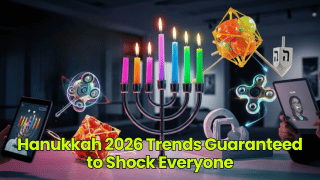
Hanukkah 2025 arrived with candles, latkes, dreidels, chocolate gelt, and a surprisingly modern question: how do you celebrate an ancient Festival of Lights in a world obsessed with TikTok tablescapes, budget hacks, personalized gifts, and kitchen gadgets that look like they were designed by a very ambitious spaceship?
Observed from the evening of Sunday, December 14, 2025, through nightfall on Monday, December 22, 2025, Hanukkah gave families eight nights to gather, eat, laugh, remember, and maybe argue lovingly about whether the latkes are better with applesauce or sour cream. Spoiler: the correct answer is “yes.”
This year’s Hanukkah trends were not about replacing tradition. They were about making tradition feel more personal, practical, joyful, and shareable. The biggest “shock” was not that people suddenly abandoned classic menorahs or grandma’s brisket. It was that the most meaningful celebrations often mixed heritage with modern habits: handmade decor, smarter spending, bolder food, cozy hosting, and gifts that actually matched real life.
Why Hanukkah 2025 Felt Different
Holiday shoppers in 2025 were more careful, more intentional, and more allergic to wasting money on gifts that end up in a closet next to the forgotten exercise bands. Inflation concerns, early sales, online browsing, and in-store comparison shopping shaped how Americans approached the season. For Hanukkah, that translated into thoughtful gifts, practical treats, and smaller but warmer gatherings.
At the same time, people wanted celebrations that looked good, felt good, and did not require a full production crew. The result was a Hanukkah season full of personality: embroidered napkins, blue-and-silver decor with warmer tones, modern menorahs, themed dessert boards, DIY gelt, and family nights built around games instead of endless shopping.
Trend 1: Personalized Hanukkah Gifts Became the Main Event
Personalization was one of the strongest holiday trends of 2025, and Hanukkah was a perfect match. Instead of grabbing random gifts for all eight nights, families leaned into custom items that felt more emotional. Think engraved kiddush cups, personalized menorahs, monogrammed blankets, name-stamped recipe cards, embroidered kitchen towels, and custom family ornaments for interfaith homes.
The appeal is obvious. A personalized gift says, “I thought about you,” while a generic gift card sometimes says, “I panicked in aisle seven.” To be fair, gift cards were also popular in 2025, especially because they help people stay within a budget. But the most memorable gifts blended practicality with personality: a cookbook marked with family notes, a framed photo from last year’s menorah lighting, or a custom dreidel set for the kids.
Trend 2: The Modern Menorah Took Over the Table
The menorah remained the heart of Hanukkah, but 2025 brought a noticeable rise in statement designs. People looked for menorahs that could sit proudly in a window and still look beautiful on a dinner table. Ceramic menorahs, sculptural brass designs, minimalist stone pieces, colorful glass, and handmade artisan styles all gained attention.
This trend does not water down tradition. It highlights it. A beautiful menorah can become a family object that carries memories year after year. In 2025, the “shock” was how many households treated the menorah less like seasonal storage-bin decor and more like a centerpiece with actual design power.
Trend 3: Hanukkah Decor Got Warmer, Cozier, and Less Predictable
Blue, white, and silver are still Hanukkah classics, but 2025 decor stretched the palette. Navy, cream, brass, deep teal, soft gold, warm wood, and handmade textures entered the chat. The overall look was less “party aisle explosion” and more “cozy winter dinner with excellent snacks.”
Families used velvet ribbons, linen runners, ceramic candleholders, woven baskets, and layered textiles to create a more elevated atmosphere. Some borrowed from broader 2025 home trends: vintage pieces, hand-drawn place cards, thrifted serving trays, and decor that looked collected rather than bought in one frantic cart.
Small Decor Ideas That Worked in 2025
A few simple ideas made a big impact: a tray for candles and matches, a bowl of gelt on the entry table, handwritten blessings displayed near the menorah, blue glassware, natural greenery, and kids’ handmade paper dreidels. None of these require a mansion, a decorator, or a loan application.
Trend 4: Latkes Became a Whole Personality
Latkes have always been iconic, but in 2025 they became a playground. Classic potato latkes stayed strong, because some traditions are classics for a reason. But cooks also experimented with sweet potato latkes, zucchini latkes, scallion pancake-inspired latkes, loaded latkes with smoked salmon, and spicy versions with harissa or chili crisp.
The best trend was the latke board. Instead of serving one platter, hosts created build-your-own spreads with sour cream, applesauce, smoked fish, herbs, pickled onions, roasted vegetables, hot honey, and little bowls of toppings. It looked fancy, tasted amazing, and let guests pretend they were making responsible choices while eating fried potatoes. Beautiful.
Trend 5: Sufganiyot Went Gourmet
Jelly doughnuts will never go out of style, but Hanukkah 2025 saw sufganiyot get more creative. Bakeries and home cooks played with fillings like custard, chocolate, pistachio cream, raspberry, caramel, and citrus curd. Mini sufganiyot also became popular because they are cute, easy to serve, and allow everyone to say, “I’ll just have one,” before quietly eating four.
For home celebrations, doughnut kits and dessert boards made the holiday feel interactive. A tray of sufganiyot with powdered sugar, sauces, sprinkles, and fruit gave kids something fun to decorate and adults something fun to “supervise.”
Trend 6: Experience Gifts Beat Clutter
One of the biggest 2025 gift trends was the rise of experiences. Instead of buying more things, people gave cooking classes, museum memberships, concert tickets, craft workshops, restaurant gift cards, family movie nights, and local adventures. For Hanukkah, this worked especially well because eight nights can become eight chances to make memories.
A simple experience gift can be more powerful than an expensive object. A “latke night coupon” from a child, a promise to visit grandparents, or tickets to a local Hanukkah concert can feel more meaningful than another gadget with an app nobody wants to download.
Trend 7: DIY Hanukkah Came Back Strong
Crafting had a major moment in 2025, and Hanukkah benefited from it. Families made homemade gelt, painted dreidels, created paper garlands, decorated candle boxes, and designed handmade cards. DIY was not just about saving money. It was about slowing down.
In a season full of online carts and delivery notifications, making something by hand felt refreshing. Even imperfect crafts carried charm. A slightly crooked handmade dreidel ornament has more personality than a perfect plastic decoration. It says, “A real human made this,” which is increasingly rare and oddly luxurious.
Trend 8: Practical Gifts Became Cool
Practical gifts used to have a reputation problem. Nobody wanted to unwrap socks and pretend to be thrilled. But 2025 changed that. People wanted useful gifts with style: cozy slippers, quality cookware, reusable water bottles, smart kitchen tools, pantry treats, coffee subscriptions, soft throws, books, and small home upgrades.
For Hanukkah, practical gifting made sense. Eight nights do not need eight expensive surprises. Many families chose one meaningful gift, a few small treats, and shared experiences. That approach felt calmer, kinder to the budget, and much less likely to produce a mountain of packaging.
Trend 9: Food Gifts Became the Safest Crowd-Pleaser
Food-forward gifts were everywhere in 2025. Hanukkah gift baskets, rugelach boxes, chocolate gelt, specialty olive oils, coffee, tea, baking kits, spice blends, and dessert samplers all fit the holiday beautifully. Food gifts work because they are festive without requiring someone to find shelf space forever.
The best food gifts felt connected to the holiday: a latke-making kit, a sufganiyot decorating set, a Jewish cookbook, a box of handmade chocolates, or a basket built around “eight nights of snacks.” Honestly, an eight-night snack plan may be the closest humanity has come to perfect organization.
Trend 10: Social Media Made Hanukkah More Visual
Social platforms influenced how people styled their Hanukkah tables, wrapped gifts, arranged candles, and plated food. That does not mean every celebration needed to look like a lifestyle shoot. In fact, the best 2025 content felt lived-in: kids lighting candles, grandparents telling stories, latkes disappearing too fast, and someone’s dog staring deeply at a brisket.
Still, visual details mattered. Hosts used matching gift wrap, candlelight, dessert boards, and short videos to share the holiday with friends and family. The key was balance. Hanukkah is not a content assignment. The phone can capture the light, but it should not become the guest of honor.
Trend 11: Interfaith and Inclusive Celebrations Became More Thoughtful
Many American families celebrate across traditions, cultures, and backgrounds. In 2025, more households looked for ways to make Hanukkah clear, welcoming, and respectful for guests who may not know the customs. Hosts printed short explanations of the blessings, invited guests to ask questions, and explained the meaning behind lighting the menorah.
This kind of inclusion matters. It allows Hanukkah to be shared without being flattened into generic winter decor. The strongest celebrations kept the Jewish meaning at the center while making room for friends, neighbors, and extended family to participate with respect.
Trend 12: Giving Back Returned to the Spotlight
Hanukkah is a celebration of light, dedication, and resilience, and many families used the holiday as a reminder to help others. In 2025, charitable giving, toy drives, food donations, and community service appeared alongside parties and gifts. Some families dedicated one night to tzedakah, choosing a cause together and donating as a household.
This trend may not be flashy, but it is powerful. It teaches children that celebration is not only about receiving. It is also about bringing light into places that need it. That message never goes out of style.
What These Trends Say About Hanukkah 2025
The real story of Hanukkah 2025 was not that everyone suddenly needed designer candles or gourmet doughnuts. The deeper shift was toward meaning. People wanted celebrations that felt beautiful but not fake, festive but not financially reckless, traditional but not frozen in time.
Hanukkah trends in 2025 showed that families are rethinking what makes a holiday memorable. It is not always the biggest gift, the fanciest table, or the most viral dessert. Sometimes it is the small ritual repeated with love: adding one candle each night, singing familiar songs, passing the applesauce, laughing at a bad dreidel spin, and watching the room get brighter.
Personal Experiences and Real-Life Hanukkah 2025 Inspiration
One of the best ways to understand Hanukkah 2025 trends is to imagine how they played out in real homes. Picture a family preparing for the first night. The menorah is polished, the candles are ready, and someone is already hovering near the kitchen asking when the latkes will be done. The answer, of course, is “soon,” which in holiday cooking means anywhere from five minutes to one emotional lifetime.
Instead of trying to make every night huge, many families found joy in giving each evening a small theme. Night one might be traditional: candle lighting, blessings, classic latkes, and a family story about Hanukkah memories from childhood. Night two could be craft night, with kids painting dreidels or making cards for relatives. Night three might be food-gift night, where everyone shares a favorite treat. By night four, everyone is full, happy, and possibly wondering if potatoes count as a love language.
A practical Hanukkah 2025 experience might include one evening focused on giving back. A family could choose a local food pantry, animal shelter, school supply drive, or community fund and talk about why helping others matters. This turns the holiday into more than a cozy family event. It becomes a lesson in responsibility, gratitude, and shared light.
Another memorable experience is the modern latke bar. This is exactly what it sounds like: a glorious little buffet where crispy latkes become the foundation for toppings. Kids can keep things simple with applesauce. Adults can try sour cream, herbs, smoked salmon, roasted vegetables, or spicy sauces. Someone will create a combination that should probably be illegal but tastes amazing. That is the magic of a good holiday table: it gives everyone permission to experiment.
Gift experiences also made Hanukkah feel less cluttered. Instead of handing out random items each night, parents and grandparents could give small envelopes with promises inside: a baking day, a bookstore trip, a museum visit, a movie night, or a family walk to see holiday lights. These gifts cost less than many physical presents, but they often become the memories people keep.
For hosts, Hanukkah 2025 was a reminder that atmosphere matters more than perfection. A warm table, enough chairs, good food, and a few thoughtful details can beat an overdesigned setup every time. Handwritten place cards, a simple runner, a bowl of gelt, and candlelight can make even a small apartment feel special. Nobody remembers whether the napkins matched perfectly. They remember who made them laugh.
The most meaningful experience is often the quietest one: standing near the menorah after the candles are lit. The room settles. The flames flicker. People stop moving for a moment. In a busy year, that pause can feel surprisingly powerful. It is a reminder that trends are fun, but the heart of Hanukkah remains steady. The light grows night by night, and everyone gets to gather around it.
So yes, Hanukkah 2025 had trends that might shock people: gourmet doughnuts, modern menorahs, experience gifts, DIY decor, practical presents, and latke boards that deserve their own fan club. But the biggest surprise was how well these trends supported the old truths. Families still wanted connection. They still wanted meaning. They still wanted food hot enough to burn their fingers slightly because patience is apparently not part of the recipe.
Conclusion
Hanukkah 2025 proved that tradition and trend can sit at the same table without fighting over the last latke. The year’s strongest ideas were personal, warm, practical, and experience-driven. People wanted gifts with meaning, decor with soul, food with personality, and celebrations that felt human instead of overproduced.
The best Hanukkah trends were not about showing off. They were about bringing more light into the home: one candle, one story, one shared meal, one thoughtful gift, and one slightly chaotic family moment at a time.
Note: This article is based on real Hanukkah 2025 dates, common Jewish holiday traditions, and observed 2025 U.S. holiday trends in gifting, retail, food, home decor, crafting, and experience-based celebrations. No raw source links are embedded in the publishable article body.