Small furniture has a big job. It has to survive cereal spills, superhero landings, crayon negotiations, and the occasional “I’m not tired” conference held under the table. That is why the 10 Grain stool and desk still feel interesting today: they were designed as children’s furniture that did not look like it had escaped from a cartoon factory.
The phrase “Furniture: 10 Grain Stool and Desk” points back to a charming moment in modern kids’ design, when parents wanted pieces that were playful, practical, durable, and good-looking enough to live in the main house instead of hiding in a corner of the playroom. The 10 Grain Slice Step Stool and Lounge Desk fit that mood perfectly. They were compact, clever, and shaped with the kind of simple confidence that says, “Yes, I am for kids, but adults may admire me too.”
What Made the 10 Grain Stool and Desk Special?
10 Grain was known for clean-lined children’s furniture with a modern attitude. Instead of treating kids’ rooms as places where good design goes to nap, the brand leaned into molded plywood, birch veneer, bright finishes, and multifunctional shapes. The result was furniture that could help a child climb, draw, sit, pretend, and rearrange the room without making the space feel cluttered.
The Slice Step Stool: A Little Lift With Big Personality
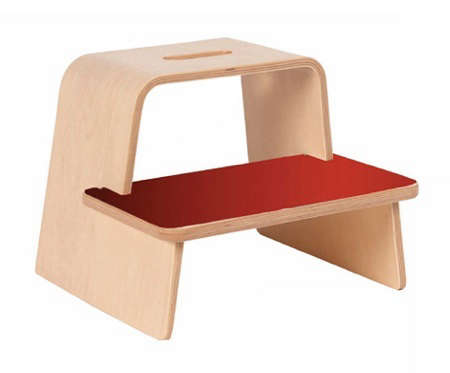
The Slice Step Stool was designed as a simple step-up piece for kitchens, bathrooms, and play areas. Its appeal was not complicated: children are short, counters are tall, and independence is thrilling. A good step stool turns toothbrushing, handwashing, helping with snacks, and reaching a bookshelf into tiny daily victories.
The design used plywood and birch veneer, giving it a warm, natural feel while keeping the form modern. A grab handle made it easier to move, and the stool’s compact size helped it work in apartments, family kitchens, and children’s rooms where every square foot has already filed a complaint.
The Lounge Desk: Desk, Chair, Easel, and Imagination Station
The 10 Grain Lounge Desk was the more shape-shifting sibling. It could function as a child’s desk, a low chair, or even a casual easel with a little creative setup. With dimensions around 25 inches long, 20 inches high, and 16 inches deep, it was small enough for children yet sculptural enough to look intentional in a modern home.
That multifunctional quality is the real lesson. Kids rarely use furniture in only one way. A desk becomes a spaceship control panel, a drawing studio, a snack counter, a reading nook, and, during dramatic moments, a place to rest one’s forehead after losing a game of memory cards. Furniture that welcomes flexibility simply makes more sense.
Why Modern Parents Still Like This Kind of Furniture
The best children’s furniture respects two truths at the same time: children are small, and children are growing fast. A piece should be scaled for them today but useful enough to avoid becoming obsolete next month. That is where the 10 Grain stool and desk shine as design ideas, even if the original pieces are now more vintage find than everyday retail item.
It Supports Independence
A well-designed stool gives children access to everyday routines. Instead of needing help every five minutes, a child can wash hands, reach art supplies, or help stir pancake batter. Of course, adult supervision still matters, especially around kitchens and bathrooms, but appropriately scaled furniture can make daily life smoother for everyone.
It Saves Space
Small homes need furniture that works harder than a coffee maker on Monday morning. A stool that tucks away and a desk that doubles as seating make sense in apartments, shared bedrooms, play corners, and family rooms. This is why multifunctional kids’ furniture continues to be popular: it solves real problems without demanding a dedicated “activity wing.”
It Looks Good Outside the Playroom
Many parents want children’s furniture that can live in shared spaces. The kitchen, living room, and home office often become part-time classrooms, art studios, and puzzle laboratories. A simple wood stool or molded plywood desk blends more easily with adult furniture than oversized plastic pieces in colors visible from space.
Materials: Why Plywood and Birch Veneer Make Sense
Plywood has a long history in modern furniture because it can be strong, lightweight, and shaped into elegant curves. In children’s furniture, those qualities matter. A piece should be durable enough for daily use but light enough for an adult to move quickly when the floor becomes a train station, dinosaur park, or mysterious blanket city.
Birch veneer adds warmth and visible grain. That grain is part of the charm: it keeps the furniture from looking sterile. Wood also ages with character. A tiny scuff on a child’s stool is not always a tragedy. Sometimes it is the archaeological record of a Saturday morning.
What to Check When Buying Similar Furniture Today
If you are shopping for a 10 Grain-inspired stool or desk today, look beyond the cute photo. Check the product dimensions, weight capacity, finish, edge treatment, and stability. For composite wood products such as plywood, MDF, or particleboard, U.S. shoppers should look for TSCA Title VI compliance, which relates to formaldehyde emission standards. That may sound less exciting than “adorable reading corner,” but it is much more useful at checkout.
Also inspect the finish. Smooth edges, sealed surfaces, and easy-clean coatings are essential for kids’ rooms. Children are talented product testers. They will find rough corners, weak joints, wobbly legs, and any surface that stains when exposed to applesauce.
Ergonomics: Cute Is Not Enough
A child’s desk should not just look good in a photo. It should support comfortable use. When children sit for drawing, reading, homework, or computer time, their feet should be supported, their shoulders relaxed, and their work surface at a height that does not force them to hunch. A chair or stool that leaves feet dangling may look harmless, but it can make sitting uncomfortable and distract a child from the task.
Simple Fit Test for a Child’s Desk Setup
Use this quick test: when the child sits, feet should rest flat on the floor or on a stable foot support. Knees should bend comfortably. Elbows should land near the work surface without shoulders rising toward the ears. If the child looks like a tiny office worker trying to use a giant conference table, the setup needs adjustment.
The 10 Grain concept works well because it keeps children’s proportions in mind. Low, approachable, lightweight furniture encourages kids to use the piece naturally. The goal is not to create a miniature corporate workstation. The goal is to create a place where drawing a purple horse with six legs feels comfortable and important.
Safety First: Stools and Desks Need Stability
Any child’s stool or desk should be stable, well-built, and used on a flat surface. Step stools deserve extra attention because children may climb, bounce, lean, and test gravity with professional enthusiasm. Choose stools with a broad base, non-slip feet, strong joints, and a height appropriate for the child’s age and ability.
Furniture tip-over prevention is also important in children’s spaces. Tall furniture, storage units, mirrors, and televisions should be secured with proper anti-tip hardware. A small stool or desk may not need anchoring, but the furniture around it might. A beautiful room is only successful if it is also safe.
Practical Safety Checklist
- Place step stools only on dry, level floors.
- Avoid using stools near hot surfaces, sharp tools, or open drawers.
- Check screws, joints, and handles regularly.
- Choose rounded edges and smooth finishes for young children.
- Anchor tall furniture and heavy storage pieces in children’s rooms.
- Teach children that stools are for standing, not jumping practice.
How to Style a 10 Grain-Inspired Stool and Desk
The easiest way to style modern children’s furniture is to avoid overdecorating it. Let the shape and material do the work. A small wood stool looks great beside a bathroom vanity, tucked under a kitchen island, or placed near a bookshelf. A compact desk can become a drawing station with a wall-mounted paper roll, a few cups for pencils, and a washable mat underneath.
For a Minimalist Kids’ Room
Pair natural wood furniture with white walls, soft rugs, and open storage. Keep toys in low bins so children can access them independently. The stool can act as a seat, a step, or a side table for bedtime books. The desk can hold art supplies without becoming a mountain range of markers.
For a Colorful Playroom
If you prefer color, use the furniture as the calm center of the room. Add bright cushions, framed children’s art, patterned storage baskets, and a cheerful task lamp. A simple stool or desk balances the energy so the room feels playful, not chaotic.
For a Shared Family Space
In a living room or kitchen corner, choose pieces that echo the adult furniture. Birch, oak, walnut, white, and soft gray finishes usually blend well. Keep supplies in one tray or basket so the child’s area can be cleaned quickly when guests arrive or when someone finally admits the glue stick is missing.
Care and Maintenance
Wood and plywood furniture can last for years with basic care. Dust with a soft cloth, wipe spills quickly, and avoid leaving wet cups, paint water, or snack bowls on the surface for long periods. Use coasters, pads, or washable mats when the desk becomes an art station. If the finish is painted, test cleaners in a hidden area before wiping the whole piece.
For children’s furniture, maintenance is not about keeping every surface perfect. It is about keeping the piece safe, clean, and pleasant to use. A few marks are normal. A loose joint, cracked panel, or peeling finish should be fixed immediately.
Buying Guide: What to Look for in a Similar Stool and Desk
Because original 10 Grain pieces may be hard to find, many shoppers look for similar modern children’s furniture. The best alternatives share the same values: compact size, strong materials, rounded edges, stable construction, and a design that can serve more than one purpose.
For the Stool
Look for a wide base, easy-grip handle, non-slip feet, and a height that helps the child reach sinks or shelves without encouraging risky climbing. Avoid stools that feel top-heavy or rock when pressed from the side. A child will press from the side. A child will press from every side. This is known as quality assurance.
For the Desk
Choose a work surface large enough for paper, books, and art supplies, but not so large that it overwhelms the room. Rounded corners are helpful, especially for younger children. If the desk doubles as seating or an easel, check how easily it changes function and whether the design remains stable in each position.
For Long-Term Value
Neutral finishes and sturdy construction usually age better than trend-heavy designs. A well-made stool can move from bathroom to kitchen to bedside table. A small desk can become a craft table, puzzle station, or reading nook. The more roles a piece can play, the longer it stays useful.
Why the 10 Grain Stool and Desk Still Matter
The lasting appeal of the 10 Grain stool and desk is not only about nostalgia. It is about a design philosophy: children deserve furniture that is functional, beautiful, and scaled for real life. These pieces remind us that kids’ furniture does not need to be loud to be playful. It can be quiet, clever, durable, and still full of personality.
In a market crowded with disposable pieces, the 10 Grain idea feels refreshingly thoughtful. Make it useful. Make it strong. Make it small enough for children. Make it attractive enough for adults. Then let the child decide whether it is a desk, a stool, a stage, a fort wall, or the headquarters of an imaginary detective agency.
Real-Life Experiences With a 10 Grain-Style Stool and Desk
The first thing you notice when living with a small stool and desk is that children do not ask permission from furniture. Adults see categories: stool, desk, chair, table. Children see possibilities. A stool becomes a helper tower for brushing teeth in the morning, a seat for putting on sneakers, a tiny table for crackers, and occasionally a royal platform for announcing that socks are uncomfortable.
A compact desk has the same magic. Place it near a window and it becomes an art studio. Put it beside a bookshelf and it becomes a reading station. Add a roll of paper and a few crayons, and suddenly the child is “working,” which mostly means drawing circles, asking for tape, and explaining that the blue blob is actually a whale wearing pajamas. That is the charm of well-designed kids’ furniture: it does not dictate play. It supports it.
In daily family life, the best part of a 10 Grain-inspired setup is how easily it moves. A lightweight stool can travel from bathroom to kitchen without becoming a household event. The desk can shift from bedroom to living room when a child wants company. This flexibility is especially helpful in small homes, where a dedicated playroom may be as mythical as a laundry basket that folds clothes by itself.
Parents also appreciate furniture that does not visually shout. A simple wood stool can sit in the kitchen without making the room feel like a preschool classroom. A molded plywood-style desk can blend with modern, Scandinavian, midcentury, or minimalist interiors. That matters because children’s things already multiply quickly. One tasteful, hardworking piece is better than five pieces that each do one job badly.
There is also an emotional side. Children love having furniture that feels truly theirs. A correctly scaled desk invites ownership. They sit down more naturally, spread out their paper, organize pencils in their own mysterious system, and begin. The work may be a drawing, a sticker collection, a block plan, or a very serious letter to a stuffed animal. Whatever it is, the furniture gives them a place to focus.
Of course, real life adds comedy. The stool will be used to reach something you did not expect. The desk will collect crumbs. Someone will test whether washable markers are truly washable. The answer is usually “mostly.” But durable, easy-clean furniture handles these moments with grace. It becomes part of the family routine instead of another fragile object adults have to protect from childhood.
That is the true experience of furniture like the 10 Grain stool and desk: it makes children more independent while making the home more organized. It gives kids a place to participate, create, and explore. And if the piece looks good while doing all that, wonderful. Good design should make life easier, not just prettier. Though prettier certainly does not hurt.
Conclusion: Small Furniture, Smart Design
The 10 Grain stool and desk remain worth discussing because they capture what great children’s furniture should be: useful, safe, flexible, attractive, and ready for daily adventure. The Slice Step Stool gave children a practical boost, while the Lounge Desk offered multiple ways to sit, draw, play, and imagine. Together, they represent a thoughtful approach to kids’ furniture that still feels relevant in modern homes.
Whether you are searching for vintage 10 Grain pieces or shopping for similar designs, focus on stability, child-friendly proportions, quality materials, smooth edges, and long-term usefulness. The best stool or desk is not simply the cutest one in the room. It is the one your child uses every day, the one that survives the chaos, and the one that quietly helps your home work better.
Note: This article is written for web publication and synthesizes historical product context, modern furniture safety principles, ergonomic guidance, material considerations, and practical family-use experience without inserting source links into the article body.