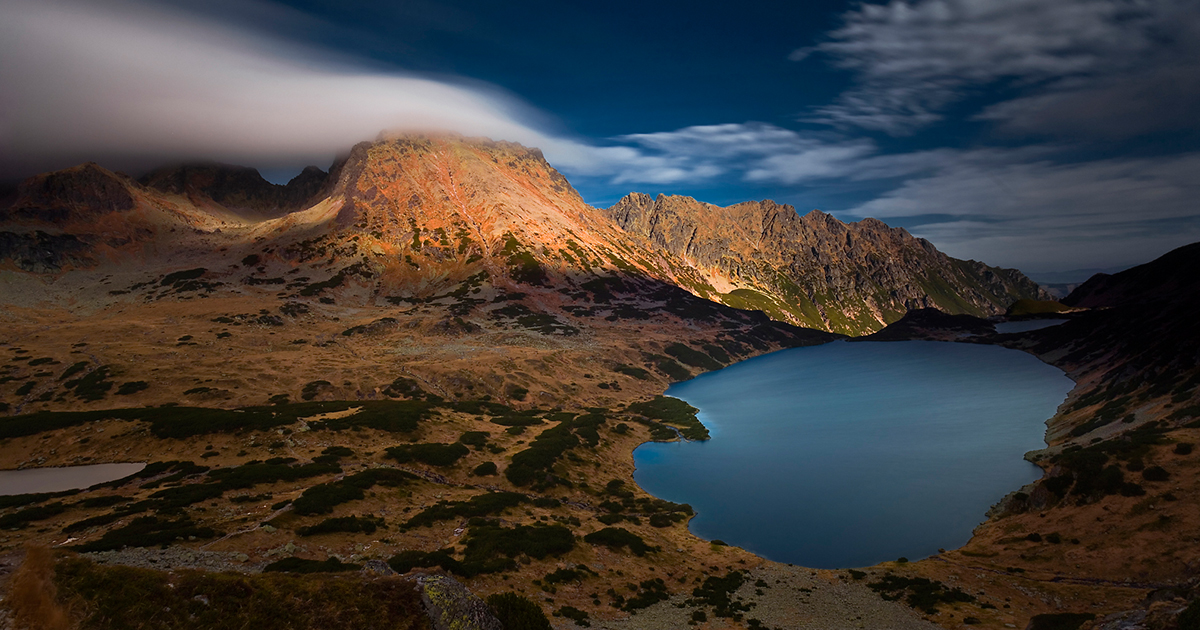
For the past decade, I have returned to the Polish Tatra Mountains with the same two items in my backpack: a camera and a wildly optimistic belief that the weather forecast will be correct. One of those things has consistently delivered.
The Tatras are not the tallest mountains in Europe, but they have a remarkable talent for making you feel very small. Their granite peaks rise sharply above Zakopane, their valleys hide cold lakes like Morskie Oko and Czarny Staw, and their trails can turn from a pleasant morning stroll into a full-body negotiation with wind, rain, chains, mud, and your own questionable life decisions.
For ten years, I have climbed, hiked, waited, shivered, photographed, and occasionally eaten too much oscypek after long days in the mountains. The Polish Tatras have changed my photography more than any camera upgrade ever could. They taught me that the best image is not always the sharpest one, the bluest one, or the one that gets the most likes. Sometimes, the best photo is simply the one you managed to take before a storm arrived and turned your tripod into a lightning rod with ambition.
This is my story of a decade spent climbing and photographing the Polish Tatra Mountains: the peaks, the valleys, the weather, the mistakes, and the moments that made me keep coming back.
Why the Polish Tatra Mountains Never Get Old
The Polish Tatras sit along the border between Poland and Slovakia and form the highest part of the Carpathian Mountains. From the foothill town of Zakopane, the range looks almost theatrical: jagged ridges, dark forests, open meadows, and steep slopes that appear to have been designed by a particularly dramatic landscape architect.
What makes the Tatras special is how quickly the scenery changes. You can begin the day walking through spruce forest, pass grazing sheep and mountain huts, cross a flower-filled meadow, and end the afternoon standing beneath a cliff face that looks more like the Alps than the image many visitors have of Poland.
The mountains also reward repetition. My first visit was all about famous locations: Morskie Oko, Kasprowy Wierch, Giewont, and the trails above Zakopane. I wanted postcard views, wide landscapes, and grand summits. I was basically a walking refrigerator magnet with hiking boots.
Over time, I began noticing smaller things. A crooked tree catching morning fog. A marmot watching hikers with the judgmental expression of a retired professor. The way low clouds move through the valleys after rain. The tiny yellow flowers that somehow survive in places where I would complain about the walk from a parking lot.
The Polish Tatra Mountains are not a destination you “complete.” They are a place you slowly learn.
A Decade of Climbing, Hiking, and Chasing Light
The First Years: Photographing Everything That Moved
During my early years in the Tatras, I photographed almost everything. A mountain goat? Click. A wooden hut? Click. A cloud that vaguely resembled a dragon? Thirty-seven clicks.
I carried too much gear, planned too little, and often arrived at viewpoints at the worst possible time of day. Midday mountain light can be brutal. It flattens granite, washes out skies, and makes every hiker look like they are starring in a sunscreen commercial.
Still, those early trips were important. They taught me the geography of the range and helped me understand how the light moves through the valleys. I began learning which trails faced east, where evening shadows arrived first, and how quickly a “mostly sunny” forecast could become “why is hail bouncing off my backpack?”
Learning to Wait for Weather
The Tatras taught me patience, mostly because they gave me no alternative. You can hike for hours toward a summit, reach the ridge, and discover that the entire world has been replaced by fog. Your dramatic panorama becomes a portrait of a gray wall.
At first, I found that frustrating. Later, I realized that weather is part of the story. Fog creates mystery. Rain darkens rock and deepens forest colors. Snow transforms familiar ridges into something almost prehistoric. A valley after a storm can be more interesting than a cloudless summit view.
Some of my favorite photographs from the Polish Tatras were taken on days when I nearly stayed home. They are not always the obvious “hero shots.” They are quieter images: hikers disappearing into mist, wet boots beside a mountain shelter, sun breaking through clouds for thirty seconds before vanishing again.
Photography in the Tatras is less about controlling nature and more about learning when to stop arguing with it.
The Places That Shaped My Mountain Photography
Morskie Oko: The Lake Everyone Knows for a Reason
Morskie Oko is one of the best-known places in the Polish Tatras, and yes, it can be busy. On popular days, the trail feels like a family reunion where nobody knows each other but everyone has the same hiking poles.
But popularity does not make a place less beautiful. The lake sits beneath dramatic peaks, and when the water is calm, the reflections can be almost absurdly perfect. Early autumn is especially rewarding, when cooler air, changing forest color, and softer light add depth to the scene.
I have photographed Morskie Oko in sunshine, rain, fog, snow, and one memorable morning when the wind made the lake look like it had developed a personal grudge against reflections. Every time, it looked different.
Rysy: A Summit That Demands Respect
Rysy, the highest peak in Poland, is one of those places that appears in countless hiking dreams and a few regretful group chats. The route is physically demanding, steep in places, and requires solid preparation, appropriate footwear, enough food and water, and a realistic understanding of your own fitness.
For photographers, Rysy offers an enormous reward: high alpine terrain, ridges, lakes, and a sweeping view across the Tatras. But the mountain is not a studio. Weather can change quickly, crowds can slow progress, and exposed sections deserve full concentration.
I learned not to rush for photographs on Rysy. The most important image is not the summit selfie. It is the image you take safely, after checking your footing, checking the weather, and remembering that mountain photography should never become mountain foolishness.
Hala Gąsienicowa: Where the Tatras Feel Like Home
Hala Gąsienicowa has a different personality. It is open, spacious, and surrounded by rugged peaks, but it also feels welcoming. The area is a wonderful base for photographing mountain huts, rocky slopes, shifting weather, and long evenings when the ridges seem to hold the last light forever.
For years, I returned here whenever I needed to reset my creative brain. The composition possibilities are endless: wooden buildings against granite walls, hikers on winding paths, clouds sliding over ridgelines, and pockets of light moving across the grass.
It taught me that a photograph does not need a summit to feel powerful. Sometimes, a trail leading into the mountains is enough.
The Five Polish Lakes Valley: Drama Without a Special Effects Budget
The Valley of Five Polish Lakes feels like a place where every weather system comes to rehearse. Waterfalls, granite slopes, alpine lakes, wind, clouds, and sudden shifts in light make it a dream for landscape photography.
I have spent entire afternoons there waiting for a single break in the clouds. When it finally arrives, sunlight can sweep across the lake surface and turn the valley from moody gray to glowing silver in seconds.
That is one reason I love photographing the Tatras. The mountains do not hand you beauty on a schedule. They make you earn it through walking, waiting, and occasionally eating a squashed sandwich while sitting on a rock.
What Ten Years of Mountain Photography Taught Me
Pack Less, Notice More
At the beginning, I believed more equipment meant better photographs. I packed multiple lenses, filters, accessories, cables, backup batteries, emergency snacks, extra snacks, and snacks for the snacks.
Now I carry less. A reliable camera body, a versatile lens, a lightweight tripod when needed, spare batteries, weather protection, and a few essentials are usually enough. The lighter my pack, the more I pay attention to the landscape instead of wondering why my shoulders are filing a formal complaint.
Minimal gear has also helped me work faster. Mountain light changes quickly. If you spend ten minutes choosing lenses, the sun may disappear behind a ridge and take your perfect composition with it.
The Best Lens Is Not Always the Widest One
Wide-angle photos are popular in the mountains because they capture big views. But after years in the Tatras, I found that telephoto and medium focal lengths often tell stronger stories.
A tighter composition can isolate layers of ridges in mist, reveal a hiker crossing a distant trail, or capture light touching a single section of rock. Instead of photographing the entire mountain, sometimes it is better to photograph the moment the mountain gives you.
The Tatras are full of details: weathered stone, old wooden fences, mountain flowers, icy streams, boots on a trail, and mist hanging between trees. Those details make a travel story feel personal.
Weather Protection Is Not Optional
Mountain weather has no interest in your expensive camera. Rain, wind, snow, dust, and cold can appear faster than expected. A weatherproof cover, dry bag, microfiber cloth, and common sense are more valuable than most photography gadgets.
I have photographed in drizzle with my camera tucked under my jacket, in winter cold that drained batteries with impressive speed, and in wind strong enough to make tripod use feel like a negotiation with physics.
Protecting your camera matters, but protecting yourself matters more. Cold hands make poor decisions. Wet clothing can become dangerous. Tired legs make exposed trails more serious. No photograph is worth ignoring safety warnings or pushing into unsafe conditions.
Climbing Responsibly in the Polish Tatras
The Polish Tatra Mountains are spectacular, but they are not a theme park with better scenery. Trails can be steep, weather can change rapidly, and certain routes involve chains, exposure, loose rock, or long descents that feel much harder after a full day of climbing.
After ten years, my biggest lesson is simple: plan conservatively. Check official trail updates and weather conditions before leaving. Carry a map, enough water, food, layered clothing, and a fully charged phone. Start early enough to finish in daylight, but always respect current park rules regarding trail access and nighttime closures.
Stay on marked trails. Do not shortcut switchbacks for a better photo. Do not climb over barriers. Do not approach wildlife for a close-up portrait. A chamois does not need your encouragement, and a marmot definitely does not want to become an unpaid model for your social media feed.
Camping is restricted in Tatra National Park, and visitors should use designated accommodations or mountain shelters rather than improvising an overnight adventure. The mountains are protected for a reason: they are home to fragile plants, wildlife, and landscapes that cannot recover from millions of careless footsteps.
Technical climbing, winter climbing, and exposed ridge routes require proper training, appropriate equipment, and honest self-assessment. A guided trip can be a smart choice for visitors without local experience. The Tatras reward confidence, but they punish overconfidence with ruthless efficiency.
The Emotional Side of Photographing Mountains
People often ask why I keep going back to the same mountains. There are easier places to photograph. There are warmer places. There are locations where the coffee is closer to the parking lot.
But the Tatras became a kind of visual diary for me. I can look at an old photograph and remember exactly what happened that day: the friend who forgot gloves, the storm that forced us to turn around, the sunlight that lasted less than a minute, the silence after the last hikers left the valley.
Over ten years, the mountains became familiar without becoming predictable. I recognized trails, ridges, huts, and viewpoints, but every visit brought a new combination of weather, season, light, and emotion.
That is the strange beauty of mountain photography. You return hoping to recreate a photograph you loved, then discover that the mountain has already moved on. It gives you something different. Often, it gives you something better.
Extra Field Notes: 500 More Words From a Decade in the Tatras
One of my favorite habits over the years has been returning to the Tatras outside the obvious peak season. Summer is beautiful, of course, but it is also busy. The trails near Zakopane can feel like a moving festival of backpacks, trekking poles, and people asking whether they are “almost there.” The honest answer is usually no. In the mountains, “almost there” is a philosophical concept.
Late September and early October often bring a different mood. The air feels sharper, mornings arrive colder, and the mountains begin to shift toward autumn. The forests below the peaks change color, while the higher ridges retain their severe gray character. This contrast creates some of my favorite Polish Tatra photographs: golden trees below, dark rock above, and low clouds moving through the middle like a cinematic fog machine.
Winter is another world entirely. Snow softens the lower valleys but makes high terrain much more serious. I have learned that winter mountain photography requires a different mindset. It is not simply summer hiking with prettier scenery and more layers. Snow can hide trail markings, cover chains, create icy surfaces, and change the difficulty of familiar routes. A trail that feels manageable in August can become a technical winter objective when conditions turn cold.
For that reason, I no longer treat winter photography as a solo adventure unless the route is simple, conditions are stable, and I have the right experience. There is no shame in turning back. In fact, turning back has become one of my most useful skills. It has preserved my energy, my equipment, and probably several pairs of knees.
I also began photographing people differently. In my early years, I tried to avoid hikers in my landscape images. I wanted untouched wilderness, clean foregrounds, and dramatic empty scenes. Later, I understood that people can add scale and emotion. A single hiker crossing a ridge can show how enormous the mountain is. A group resting near a hut can communicate fatigue, friendship, and the human side of travel.
The key is respect. I do not photograph strangers in vulnerable situations or turn someone’s difficult moment into content. Mountain photography should not treat people as props. Sometimes the best choice is to lower the camera and offer help, directions, water, or a few encouraging words.
After ten years, I still come to the Tatras for the big views. I still feel a rush when the clouds open above a valley or when evening light touches a summit. But I now appreciate the in-between moments even more: wet boots drying near a shelter, steam rising from tea on a cold day, the sound of a stream beneath a forest path, and the quiet relief of reaching the trailhead before darkness.
The Polish Tatra Mountains have given me thousands of photographs. More importantly, they have given me perspective. They remind me that the world is large, weather is stronger than ego, and every successful mountain day ends with the same underrated achievement: getting home safely with a full memory card and enough energy left to eat dinner.
Final Thoughts: A Mountain Story Still in Progress
For ten years, I have climbed and photographed the Polish Tatra Mountains, yet I still feel like I have only scratched the surface. There are valleys I want to revisit, trails I want to walk in a different season, and photographs I have not yet learned how to make.
The Tatras remain one of the most rewarding places in Europe for mountain photography, hiking, and outdoor adventure. They offer iconic peaks, alpine lakes, changing weather, rich highland culture, and enough visual drama to keep a photographer busy for a lifetime.
But the real reason to return is not simply to capture a beautiful image. It is to experience the mountains with humility. To walk slowly. To watch the clouds. To respect the trail. To remember that every great photograph begins with being present long enough to see what the landscape is trying to say.
And sometimes, the landscape says, “Put the camera away. It is raining sideways.”
Note: This is an original first-person editorial feature inspired by real Polish Tatra landscapes, trail conditions, conservation principles, and mountain safety practices. Always check current official weather, trail, rescue, and park guidance before any hike or climb.