Editorial note: This article is for educational purposes only and should not replace a diagnosis from a podiatrist, physical therapist, orthopedic specialist, or other qualified healthcare professional.
Your feet are impressive little engineering departments. Each one has bones, joints, ligaments, tendons, muscles, and a built-in shock-absorption system that somehow handles school runs, grocery trips, workouts, airport sprints, and the occasional “I can totally make it down these stairs in socks” decision. But when your foot rolls too far outward as you walk or run, that engineering department may start sending complaints. That outward rolling pattern is commonly called foot supination, or underpronation.
Foot supination is not always a villain. In fact, a normal amount of supination is part of healthy walking and running. The problem starts when your foot stays too much on the outer edge and does not roll inward enough to distribute impact evenly. Over time, excessive supination can contribute to foot pain, ankle instability, shin discomfort, knee aches, hip strain, and those mysterious shoe-wear patterns that make one sneaker look like it has been chewing gravel for sport.
In this guide, we will break down what foot supination means, why it happens, how to spot it, what problems it may cause, and what you can do about it without panicking or buying every insole on the internet at 2 a.m.
What Is Foot Supination?
Foot supination describes an outward rolling motion of the foot. During a normal step, your heel usually lands slightly on the outside, then the foot rolls inward a bit. That inward roll is called pronation, and it helps absorb shock and spread pressure across the foot.
With excessive supination, the foot does not roll inward enough. Instead, more pressure stays along the outside of the heel, outer midfoot, and smaller toes. Imagine a car that keeps leaning onto the right tires instead of using all four evenly. It may still move forward, but the ride gets rougher, and some parts wear out faster.
Supination vs. Pronation
Pronation and supination are not “good” or “bad” by themselves. They are normal movements. The issue is imbalance.
- Neutral pronation: The foot rolls inward slightly after heel strike, distributing impact efficiently.
- Overpronation: The foot rolls too far inward, often associated with flatter arches.
- Underpronation or supination: The foot rolls outward or stays too much on the outer edge, often associated with higher arches.
A neutral gait is like a well-rehearsed dance. Overpronation and supination are more like dancing at a wedding after someone said, “Just feel the rhythm.” The body can compensate for a while, but eventually, another joint may file a formal complaint.
Why Does Foot Supination Happen?
Foot supination usually develops from a mix of structure, muscle function, footwear, activity habits, and sometimes medical history. In many people, the biggest factor is simply the shape of the foot.
1. High Arches
High arches, also called pes cavus or cavus feet, are strongly linked with supination. A high-arched foot is often less flexible, which means it may not flatten enough during walking to absorb impact. Instead of spreading force across the whole foot, pressure can concentrate on the heel, ball of the foot, and outer edge.
People with high arches may notice that their feet feel stiff, their shoes wear out along the outside edge, or they are more prone to ankle rolls. A high arch is not automatically a problem, but when it comes with pain, instability, calluses, or repeated injuries, it deserves attention.
2. Genetics and Foot Structure
Sometimes supination runs in families. If your parents have high arches, rigid feet, or a history of ankle sprains, your feet may have inherited the same blueprint. Thanks, genetics. You got the eye color, the family chin, and possibly the outer-edge shoe wear.
Foot structure can influence how weight travels from heel to toe. A rigid arch, a heel that tilts inward or outward, a forefoot alignment issue, or limited joint mobility can all affect gait mechanics.
3. Tight Calves or Achilles Tendon
A tight calf muscle or tight Achilles tendon can limit ankle motion. When the ankle cannot move comfortably, the foot may compensate by rolling outward. This is especially noticeable during walking, running, jumping, or climbing stairs. Tightness may develop from long hours of sitting, wearing high heels, skipping warmups, or training hard without enough mobility work.
4. Previous Foot or Ankle Injuries
An old ankle sprain can change the way you walk, especially if it never fully healed. If the ligaments remain loose or the muscles around the ankle are weak, the foot may feel unstable and drift toward the outside. This can create a cycle: supination increases ankle sprain risk, and repeated sprains can increase instability, which encourages more supination.
5. Neuromuscular Conditions
In some cases, a very high arch or progressive cavus foot can be related to nerve or muscle conditions. Examples may include Charcot-Marie-Tooth disease, cerebral palsy, stroke-related changes, spinal conditions, or other neuromuscular disorders. This does not mean every person with supination has a neurological condition. Most do not. However, a rapidly changing foot shape, worsening weakness, balance problems, or a strong family history of high arches should be evaluated by a clinician.
6. Unsupportive or Worn-Out Shoes
Shoes do not create every gait issue, but they can make existing problems louder. Worn-out sneakers, shoes with poor cushioning, narrow toe boxes, stiff soles, or uneven heel wear can increase pressure on the outside of the foot. For supinators, shoes often wear down along the outer heel and outer forefoot. When the shoe tilts outward, it may encourage the foot to keep doing the same thing.
7. Training Errors
Runners, hikers, dancers, court-sport athletes, and people who suddenly increase activity may notice symptoms of supination more quickly. Too much mileage, too many hills, hard surfaces, poor recovery, or switching shoes abruptly can overload the foot and ankle. The body is adaptable, but it prefers advance notice before you decide to become a weekend marathoner.
Common Signs of Foot Supination
Foot supination can be subtle. You may not feel your foot rolling outward, but your body may leave clues.
- Wear on the outer edge of your shoes, especially the heel
- High arches or very narrow-looking footprints
- Frequent ankle rolling or ankle sprains
- Pain on the outside of the foot or ankle
- Heel pain or ball-of-foot pain
- Calluses under the outer foot or ball of the foot
- Shin splints or calf tightness
- Knee, hip, or lower back discomfort after walking or running
- Feeling unstable on uneven ground
A quick at-home clue is the shoe-wear test. Place your shoes on a flat surface and look from behind. If they tilt outward or the outer sole is more worn down, supination may be part of your walking pattern. This is not a medical diagnosis, but it is a useful hint.
What Problems Can Excessive Supination Cause?
When the foot stays too much on its outer edge, it may not absorb shock efficiently. That extra force has to go somewhere, and it often travels upward through the ankle, shin, knee, hip, or back.
Ankle Sprains and Instability
Supination can make the ankle more likely to roll outward. This can strain or tear ligaments on the outside of the ankle. People with repeated ankle sprains may develop chronic instability, which makes them feel as if the ankle might “give way.”
Peroneal Tendon Problems
The peroneal tendons run along the outside of the ankle and help stabilize the foot. High arches and repetitive ankle motion can increase stress on these tendons. Irritation may cause pain, swelling, weakness, or a snapping feeling around the outer ankle.
Plantar Fasciitis
Plantar fasciitis is irritation of the thick band of tissue along the bottom of the foot. Supination may contribute because a rigid, high-arched foot can place extra strain through the heel and arch. Pain is often worse with the first steps in the morning or after sitting.
Stress Fractures
Because supination can concentrate impact on smaller areas of the foot, some people may be more vulnerable to stress reactions or stress fractures, especially when training volume increases too quickly. Persistent pinpoint pain, swelling, or pain that worsens with activity should be checked.
Knee, Hip, and Back Pain
Your feet are the foundation for the rest of your body. If that foundation tilts outward, the leg may rotate differently, changing stress at the knee, hip, and lower back. This does not mean every sore knee is a foot problem, but gait mechanics can be one piece of the puzzle.
How Is Foot Supination Diagnosed?
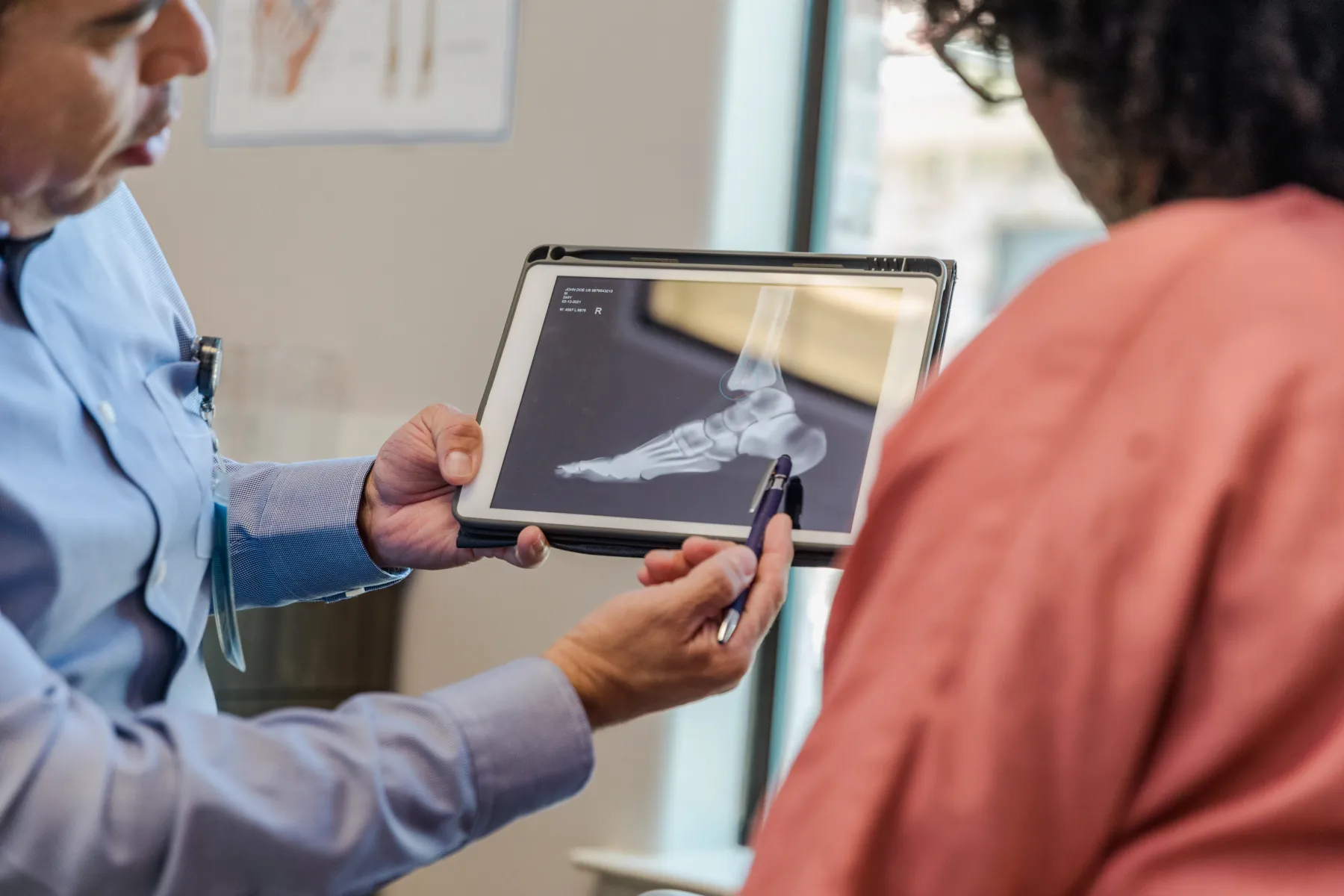
A healthcare professional may evaluate foot supination by examining your feet while standing, watching you walk, checking shoe wear, testing ankle mobility, and assessing strength and balance. A podiatrist, physical therapist, sports medicine clinician, or orthopedic specialist may also ask about your pain pattern, activity level, previous injuries, family history, and footwear.
In some cases, imaging such as X-rays, ultrasound, or MRI may be used if there is concern about a fracture, tendon injury, arthritis, structural deformity, or another condition. For many people, however, a careful physical exam and gait assessment are enough to guide conservative treatment.
Can Foot Supination Be Fixed?
The better question is: can excessive supination be managed, reduced, or made less painful? Often, yes. The goal is not to force every foot into a textbook-perfect shape. The goal is to improve comfort, distribute pressure more evenly, reduce injury risk, and help you move with confidence.
Choose the Right Shoes
People who supinate often do better with neutral, cushioned shoes rather than heavy motion-control shoes designed for overpronation. Look for shock absorption, a stable heel counter, enough room in the toe box, and a sole that does not tilt outward. Running shoes should usually be replaced when the cushioning and tread are worn, especially if the outer edge looks flattened or slanted.
Consider Insoles or Orthotics
Over-the-counter insoles may help support the arch, cushion the heel, and guide pressure more evenly across the foot. Some people need custom orthotics, especially if they have significant pain, very high arches, repeated injuries, or structural issues. The best orthotic is not always the hardest or most expensive one. It is the one that matches your foot, activity, and symptoms.
Stretch the Calves and Feet
Gentle stretching can help if tight calves or Achilles tendons are contributing to supination. Helpful options may include calf stretches, soleus stretches, plantar fascia stretches, and rolling the bottom of the foot over a ball. Stretching should feel like a firm pull, not like your muscle is negotiating a hostage situation.
Strengthen the Foot and Ankle
Strength work can improve control and stability. Common exercises include calf raises, resisted ankle eversion with a band, towel curls, short-foot exercises, single-leg balance drills, and controlled step-downs. If you have pain or a history of ankle sprains, a physical therapist can help you choose safe progressions.
Improve Balance and Proprioception
Proprioception is your body’s sense of where it is in space. After ankle injuries, this sense can become less reliable. Balance exercises help retrain the ankle and foot to react quickly. Standing on one leg, using a balance pad, or practicing controlled movements on uneven surfaces can be helpful when done safely.
Adjust Training Gradually
If symptoms appear after increasing running, hiking, or gym activity, reduce load temporarily. Build mileage, speed, hills, and plyometrics gradually. Your feet are loyal employees, but they do not appreciate surprise overtime.
When Should You See a Doctor?
Make an appointment with a healthcare professional if you have persistent pain, repeated ankle sprains, swelling, numbness, weakness, sudden changes in foot shape, difficulty walking, or pain that does not improve with rest and footwear changes. Seek prompt care if you suspect a fracture, cannot bear weight, or have severe swelling after an injury.
Children with high arches, frequent tripping, pain, weakness, or a family history of neuromuscular disease should also be evaluated. Early assessment can help identify whether the foot shape is simply a variation or a sign of something that needs treatment.
Simple At-Home Checks for Supination
The Wet Footprint Test
Wet the bottom of your foot and step onto cardboard or dark paper. A very narrow connection between the heel and forefoot may suggest high arches, which are often linked with supination. This test is not perfect, but it is a good starting clue.
The Shoe-Wear Test
Check the soles of your shoes. More wear on the outside edge may point toward supination. Uneven wear can also mean the shoe itself is no longer helping you move well.
The Mirror Walk Test
Walk naturally past a mirror or record a short video from behind. Look for whether your ankles roll outward or whether the outer edge of the foot seems to carry most of the load. Do not overanalyze one step. Look for repeated patterns.
Real-Life Experiences: What Foot Supination Feels Like Day to Day
Foot supination is one of those issues that often sneaks into daily life quietly. It may not announce itself with dramatic music. Instead, it shows up as little annoyances that are easy to ignore. A person may notice that the outside of their shoes wears down faster than the inside. At first, this seems like a shoe problem. Then the next pair does the same thing. And the next. Eventually, the shoe rack starts looking like a crime scene where every sneaker was attacked from the outer heel.
One common experience is outer ankle fatigue after long walks. Someone might feel fine during the first mile, then notice a dull ache around the outside of the ankle or along the outer foot. On uneven sidewalks, trails, grass, or gravel, the foot may feel less stable. The person may become strangely aware of every pebble, slope, and sidewalk crack. Friends are admiring the scenery; the supinator is silently calculating ankle-roll risk like a tiny insurance adjuster.
Runners often describe supination as a harsh landing. Instead of feeling smooth and springy, each foot strike may feel sharp, especially in shoes with too little cushioning. The calves may tighten quickly. The outer edge of the foot may feel overloaded. After a few weeks of training, shin discomfort, heel pain, or ball-of-foot soreness may appear. This is especially common when someone increases mileage quickly or switches to minimalist shoes without giving the body time to adapt.
Another everyday clue is the search for comfortable shoes. People with high arches and supination may dislike flat, flimsy shoes because they provide little shock absorption. Dress shoes, sandals, and unsupportive slip-ons can feel stylish for the first hour and like medieval foot punishment by dinner. A cushioned neutral walking shoe may feel dramatically better, not because it “fixes” the foot overnight, but because it reduces impact and gives the foot a more stable platform.
Some people also notice that standing is worse than walking. A rigid, high-arched foot may place pressure on specific points, especially the heel and forefoot. After standing in a line, working on hard floors, or attending an event where chairs apparently went extinct, the feet may feel sore and tired. Calluses may form under the ball of the foot or along the outer edge where pressure is highest.
The emotional side is real too. Repeated ankle rolls can make a person cautious. They may avoid certain shoes, sports, hikes, or workouts because they do not trust their ankles. That hesitation is understandable. The good news is that many people improve with the right combination of footwear, strengthening, mobility, balance training, and professional guidance when needed. Supination does not mean your feet are broken. It means your movement pattern may need better support, smarter loading, and a little more respect for the fact that your feet are carrying the whole operation.
Conclusion
Foot supination, or underpronation, happens when the foot rolls outward too much or does not roll inward enough during walking or running. It is commonly associated with high arches, rigid foot structure, tight calves, previous ankle injuries, neuromuscular conditions, worn-out shoes, and training overload. While mild supination may not cause symptoms, excessive supination can increase stress on the outer foot and ankle, leading to pain, instability, plantar fasciitis, peroneal tendon issues, stress injuries, and discomfort higher up the body.
The solution is not to shame your feet into behaving. The solution is to understand your mechanics and support them wisely. Cushioned neutral shoes, appropriate insoles or orthotics, calf stretching, ankle strengthening, balance training, and gradual activity changes can all help. If pain persists, your ankles keep rolling, or your foot shape is changing, a podiatrist or orthopedic specialist can help identify the cause and create a treatment plan that actually fits your feetnot someone else’s internet-famous arch.